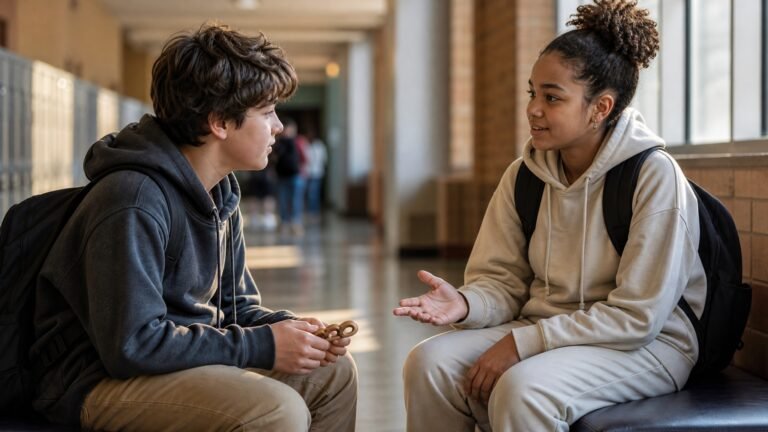
A ninth grader slams a locker after a comment in the hallway. A seventh grader shuts down, arms crossed, after losing a point in a game, then mutters something that earns a referral. For many teens, anger arrives fast and leaves a mess behind it: damaged friendships, consequences at school and a growing belief that they are simply “an angry person.”
The right anger management activities for teens can change that story. Teens do not need to be told to calm down. They need to understand what anger is doing in their bodies and minds, notice it earlier, and practice responses that work in the real moments of their lives. This guide shares practical activities for middle and high school counselors, therapists, psychologists and teachers, with sample language, a group plan and ideas you can use in individual sessions, small groups or classroom lessons.
Why Anger Management Looks Different for Teens
Activities that work well with younger children, such as puppets or naming an anger character, can feel babyish to a teenager. (If you work with younger students, our post on the Anger Monster activity covers that age group.) Adolescents are building independence and identity, and they are highly aware of how they look to peers. Being singled out for “anger management” can feel embarrassing before the first session even starts.
A few principles help activities land with this age group:
- Respect their intelligence. Explain the why behind each skill. Teens are more likely to use a strategy they understand.
- Treat anger as valid. Anger often signals that something feels unfair, threatening or disrespectful. The goal is to manage how it is expressed, not to get rid of it.
- Offer choice. Let teens pick which calming strategies to try and which scenarios to role-play.
- Keep it private where it matters. Avoid asking a student to share personal triggers in front of a group before trust is built.
- Stay trauma-informed. Some teens who struggle with anger have experienced stress or adversity. Curiosity about what happened works better than judgment about what they did.
For a broader look at how teens build regulation skills, see our guide to emotional regulation for teens.
Start With Understanding: Anger Is a Signal
Most teens have heard “don’t get angry” far more often than they have heard an explanation of what anger is. Opening with psychoeducation gives them language and lowers defensiveness.
The Anger Iceberg
Draw an iceberg with a small tip above the waterline. Anger sits on top, the part everyone sees. Below the surface, students brainstorm the feelings that often sit underneath: embarrassment, hurt, worry, jealousy, feeling left out, exhaustion, feeling disrespected. Then ask each student to privately circle the two or three that most often sit under their own anger.
Sample language: “Anger is real, and it is usually protecting something. When you look under the surface, what do you notice is often there for you?”
Mapping Body Warning Signs
Give students an outline of a body and ask them to mark where they notice anger first: a hot face, clenched jaw, tight fists, a racing heart, a loud voice. Then add a simple 1 to 10 scale beside it. At 3, the warning signs are small. At 7, it is hard to think clearly. At 10, the reaction has already happened.
The aim is to help teens notice the early signs so they can act at a 3 or 4 rather than a 9. Ask: “What is your first clue that you are heading up the scale? What do other people notice before you do?”
Try this in your next session: Picture a student who says anger “comes out of nowhere.” Walk back through a recent incident together, minute by minute. Ask what happened just before, what their body felt like and what they were thinking. Most teens discover there were warning signs. Write them on a sticky note the student keeps in a planner or phone case.
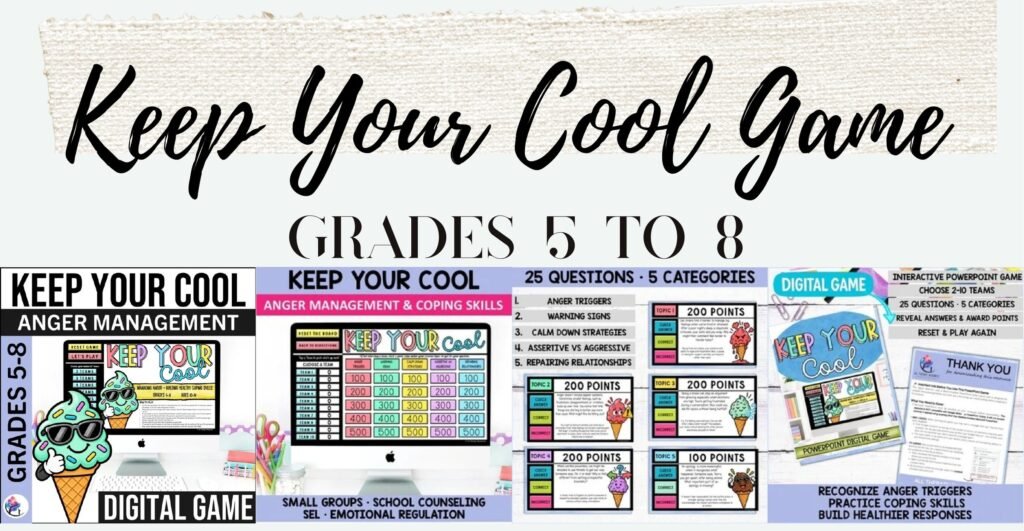
If you want a ready-to-play way to teach these early skills, our Keep Your Cool Anger Management Game is an interactive digital game for grades 5 to 8. Teams work through 25 real-life questions across five categories: anger triggers, warning signs, calm-down strategies, assertive versus aggressive responses and repairing relationships. Every answer comes with a teaching point, so it works well as a lively opener for a new group or as a review game toward the end of a unit. From our counseling room to yours, it is a simple way to get quieter students talking about anger without anyone being put on the spot.
Activities That Build Self-Awareness
Once teens understand anger as a signal, they can start to notice their own patterns. These activities draw on cognitive behavioral principles, which link what we think, feel and do. Our post on the CBT triangle explains that framework in more detail.
Trigger Tracking
Ask students to keep a short log for one week. Each entry has four columns: what happened, what I thought, how strong my anger was (1 to 10) and what I did. Keep it brief so it actually gets done. A notes app works well for many teens.
When you review it together, look for patterns rather than mistakes: “It looks like mornings before school are harder. What is happening then?” Patterns help teens plan ahead for predictable hard moments.
Hot Thoughts and Cool Thoughts
Teens often react to the story they tell themselves about an event, not just the event itself. Teach the difference between hot thoughts, which pour fuel on anger, and cool thoughts, which are more balanced and still honest. Students practice catching a hot thought and writing one cooler alternative.
| Situation | Hot thought | Cool thought |
|---|---|---|
| A friend doesn’t reply to a message for hours | “They’re ignoring me on purpose.” | “They might be busy. I can ask later.” |
| A teacher calls out your name for talking | “She always picks on me.” | “I was talking. I don’t like being called out, but I can handle it.” |
| Someone bumps you in the hallway | “He did that to start something.” | “It’s crowded. It was probably an accident.” |
| You lose a game in PE | “This is so unfair. Everyone cheated.” | “I’m frustrated because I wanted to win. Next game is a new chance.” |
Cool thoughts are not about pretending everything is fine. If a situation truly is unfair, the cool thought might be: “This isn’t okay, and I’ll talk to someone about it once I’ve calmed down.”
Activities That Build Calm-Down Skills
Understanding anger matters, but teens also need tools they can use in the moment. Practice these when students are calm, so the skills are familiar when they are needed.
The Pause Plan
Teach a short sequence teens can remember under pressure. One option, drawn from dialectical behavior therapy, is the STOP skill: Stop, Take a step back, Observe what is happening inside and around you, and Proceed with a choice you won’t regret. Another is the Stop, Think, Go strategy, which works well for students who need a simpler structure.
Role-play the pause using low-stakes scenarios first. Then ask: “What would help you actually pause at school? Is it walking away, putting your hands in your pockets, or counting in your head?”
A Menu of Calming Strategies
Different teens calm down in different ways. Offer a menu and let each student test a few over the week:
- Slow breathing, such as breathing out for longer than breathing in
- Movement: a quick walk, wall push-ups or stretching
- Grounding: naming five things you can see and four you can hear
- Music with headphones, where school rules allow
- Writing or drawing the feeling instead of saying it out loud
- Asking for a short break with an agreed signal
A Personal Cool-Down Plan
Finish this part of the work with a one-page plan each teen creates: my early warning signs, my top three calming strategies, where I can go at school, who I can talk to and what I will say to ask for a break. Share it with relevant staff, with the student’s agreement, so adults respond consistently.
Try this in your next session: Picture a student who storms out of class when frustrated. Together, agree on a break signal, such as placing a card on the desk, and a set place to go for five minutes. Rehearse it once when the student is calm: “Show me what you’ll do. Where will you go? What will you do when you get there? How will you come back?” Planned breaks replace walking out with a safer, agreed option.
For a hands-on group activity at this stage, our Volcano, Cloud and River Anger Management Game for Teens uses three symbols to guide discussion: the volcano for intense emotions and control, the cloud for calming down and letting go, and the river for channeling anger into constructive problem-solving. Teens spin, draw question cards and talk through real situations, which makes it easy to connect calming strategies to their own lives. One counselor shared, “My students enjoyed playing the game after learning more about anger and how to deal with it in their lives.” It suits middle and high school groups and individual sessions.

Activities for Speaking Up and Repairing Relationships
Many teens have only two settings when they feel wronged: explode or stay silent. Teaching assertive communication gives them a third option that protects their dignity and their relationships.
Assertive vs Aggressive Role-Plays
Read a scenario aloud and ask students to give three possible responses: passive, aggressive and assertive. Then practice the assertive version out loud. A simple frame helps: “I feel ___ when ___. I need ___.”
Example scenario: a group member keeps taking credit for your work. Aggressive: “You’re a liar and everyone knows it.” Assertive: “I feel frustrated when my part gets presented as yours. I need us to tell the teacher who did which section.”
Repair Conversations
Anger sometimes leads to words or actions teens regret. Teaching repair is just as important as teaching prevention. Walk students through a short repair script: name what you did, acknowledge the impact, say what you will do differently and ask what would help. Practicing this in a calm setting makes it far easier to use later. Our article on restorative practices in schools shares more ways to support repair at a schoolwide level.
Running an Anger Management Group for Teens
Small groups give teens a chance to learn that they are not the only ones who struggle, and to practice skills with peers. A few practical steps make groups run smoothly:
- Screen thoughtfully. Use teacher nominations and a brief student interview. Mix students with different strengths so the group isn’t made up entirely of the most escalated students.
- Follow consent processes. Inform families and follow your school or district’s procedures for group participation.
- Set group norms together. Confidentiality (with its limits explained clearly), respect and the right to pass.
- Keep sessions predictable. A check-in, a short teaching point, an activity, practice and a take-away skill.
- Measure progress. A short pre and post self-rating, plus teacher feedback, helps show what changed.
Here is a sample six-session outline you can adapt:
| Session | Focus | Sample activity |
|---|---|---|
| 1 | Getting started and norms | Group agreements, anger iceberg |
| 2 | Triggers and warning signs | Body map and 1 to 10 scale |
| 3 | Thoughts that fuel anger | Hot thoughts and cool thoughts practice |
| 4 | Calming strategies | Strategy menu and pause plan role-plays |
| 5 | Speaking up and repair | Assertive vs aggressive scenarios, repair scripts |
| 6 | Bringing it together | Personal cool-down plan and celebration of progress |
Want more ready-to-run group material? Browse our small group curriculum collection, or read our guide to planning a small group counseling curriculum.
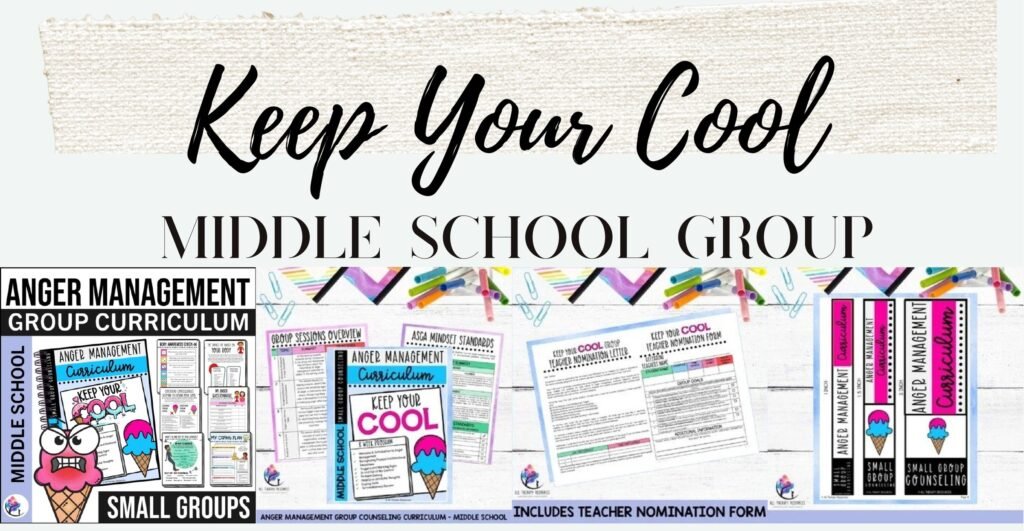
If you would rather start with a complete plan, our Keep Your Cool Anger Management Small Group Counseling Curriculum for Middle School is an ASCA-aligned program for students aged 11 to 14. It includes a note to counselors, objectives and goals, a group session overview, a teacher nomination letter and form, and interactive session activities focused on managing anger, building emotional regulation and strengthening relationships. One reviewer wrote that they “Used for multiple anger management groups. Students were engaged and interested in the content.” Another shared that they are using it with several school groups as part of a proactive plan to reduce physical and verbal aggression.
When Anger Signals Something More
For some teens, frequent or intense anger can be connected to other challenges, such as anxiety, depression, trauma, learning difficulties or stress at home. If anger is persistent, escalating or affecting safety, consult with your team, involve families as appropriate and refer for further assessment or community mental health support. If a student makes a threat or there is any risk of harm to themselves or others, follow your school or district’s safety and reporting procedures right away.
Frequently Asked Questions
What are good anger management activities for teens?
Effective activities help teens understand anger, notice early warning signs, challenge hot thoughts, practice calming strategies and communicate assertively. Examples include the anger iceberg, body mapping, trigger tracking, hot and cool thought practice, role-plays and a personal cool-down plan.
How do you talk to a teenager about anger without them shutting down?
Start by validating that anger is a normal emotion and often signals that something feels unfair or hurtful. Stay curious rather than critical, avoid lecturing, offer choices and talk side by side, such as during a game or activity, rather than face to face across a desk.
How many sessions should a teen anger management group run?
Many school counselors run groups for six to eight sessions, which allows time to teach, practice and review skills. The right length depends on your students’ needs, your schedule and your school’s processes.
When should a school counselor refer a teen for more support?
Refer when anger is frequent, intense or escalating, when it seriously affects relationships or learning, or when there are safety concerns. Follow your school or district’s procedures and work with families and community providers where appropriate.
Looking for practical, ready-to-use resources to support your anger management work with teens? The All Therapy Resources Membership provides access to a growing collection of thoughtfully developed counseling activities, interactive games, and therapeutic tools designed to save preparation time while supporting meaningful, skill-focused learning.