How can school counselors and teachers help middle school students recognize bullying, navigate peer pressure, and respond safely to harmful behavior? During the middle school years, friendships become increasingly complex, social belonging takes on greater importance, and bullying may involve subtle forms of exclusion, manipulation, and digital harassment.
Effective bullying prevention activities for middle school need to go beyond encouraging students to be kind. Students benefit from explicit instruction, realistic scenarios, opportunities for reflection, and practical strategies for recognizing power imbalances, navigating peer relationships, and seeking support.
For school counselors, teachers, and mental health professionals working with Grades 6–8, developmentally appropriate anti-bullying lessons can help students understand the impact of their choices while strengthening communication, empathy, critical thinking, and safe help-seeking skills.
What Does Bullying Look Like in Middle School?
Bullying involves unwanted aggressive behavior characterized by a real or perceived power imbalance and repetition, or the likelihood of repetition.
In middle school, bullying is not always obvious. While physical and verbal bullying may occur, relational aggression and social manipulation can be particularly difficult for adults to recognize.
Common examples of middle school bullying include:
- Relational Bullying: Repeatedly excluding a student, manipulating friendships, or threatening social rejection.
- Verbal Bullying: Persistent insults, humiliation, threatening language, or targeted name-calling.
- Social Bullying: Spreading rumors, encouraging others to isolate someone, or deliberately damaging their reputation.
- Cyberbullying: Using group chats, social media, gaming platforms, or messaging applications to intimidate, humiliate, or harass someone.
- Physical Bullying: Hitting, pushing, damaging belongings, or using physical intimidation.
Not every disagreement between students is bullying. Friendship conflict, occasional unkind behavior, and misunderstandings may require intervention without necessarily involving a pattern of bullying.
However, a single serious incident still deserves an appropriate response, even when it does not meet the formal definition.
Helping middle school students distinguish between conflict, teasing, mean behavior, and bullying is an important foundation for prevention.
Why Bullying Prevention Matters During Middle School
Early adolescence is a period of significant social, emotional, and developmental change.
Students are developing their identities, becoming increasingly aware of peer approval, and navigating changing friendship groups and social expectations.
During this period, concerns about belonging, reputation, and acceptance may influence how students respond to bullying.
Some students may participate in harmful behavior to maintain social status. Others may remain silent because they fear becoming targets themselves.
Students experiencing bullying may demonstrate:
- Increased anxiety about attending school.
- Withdrawal from friendships or social activities.
- Changes in confidence and self-esteem.
- Difficulties concentrating or participating in class.
- Increased emotional distress or irritability.
- Reluctance to attend particular classes or school activities.
- School avoidance or changes in attendance.
A trauma-informed approach recognizes that these responses may reflect distress, although they can also have other causes.
Bullying prevention must prioritize student safety, meaningful adult intervention, and supportive school environments rather than placing responsibility on students to manage bullying independently.
Bullying Prevention Activities for Middle School Students
Middle school students benefit from activities that encourage discussion, perspective-taking, decision-making, and practical application.
Rather than relying exclusively on worksheets or definitions, effective anti-bullying activities should help students explore realistic situations they may encounter in classrooms, friendship groups, and online environments.
1. Understanding Bullying, Power, and Social Influence
One of the most important concepts in bullying prevention is the role of power.
Power imbalances may involve physical strength, social status, popularity, access to information, group influence, or perceived vulnerability.
Middle school students can explore questions such as:
- What makes bullying different from an ordinary disagreement?
- How can social status influence peer relationships?
- Why might someone participate in bullying to gain acceptance?
- How can a group reinforce harmful behavior?
- What should students do when someone is repeatedly targeted?
Activity Idea: Bullying or Conflict?
Present students with several realistic scenarios involving friendship disagreements, teasing, social exclusion, and repeated intimidation.
Ask them to identify whether each situation represents conflict, bullying, or another form of harmful behavior.
Encourage students to explain their reasoning by considering repetition, power imbalance, intention, and impact. Intent can be relevant to understanding an incident, but it should not be used to dismiss the harm experienced by another student.
Ready-to-Use Middle School Bullying Prevention Lessons
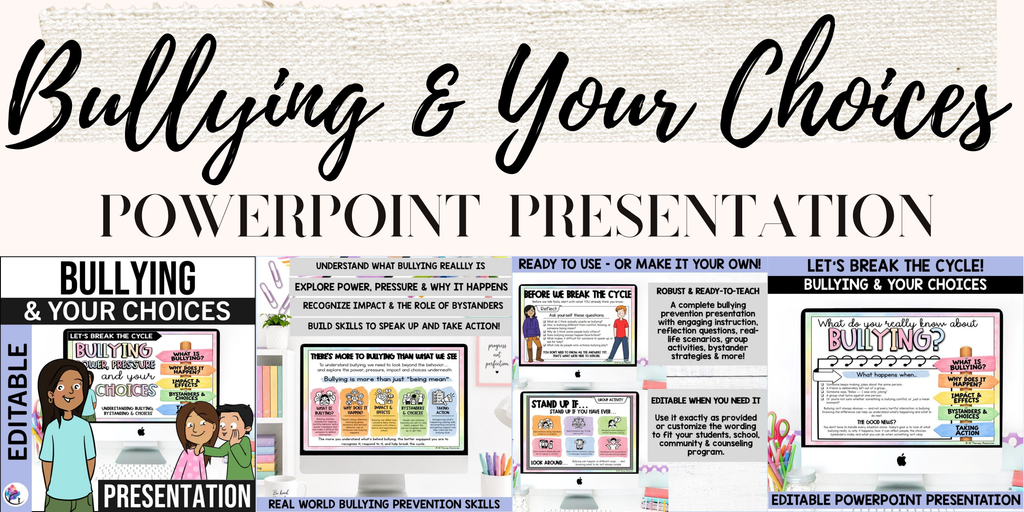
Our Bullying & Your Choices: Bullying, Power, Pressure & Your Choices interactive presentation provides a structured approach to teaching students about bullying, power imbalances, peer pressure, and the impact of harmful behavior.
The editable presentation incorporates realistic scenarios, guided discussions, and interactive activities exploring bystander choices, cyberbullying, reporting, and help-seeking.
Designed to encourage critical thinking rather than simply telling students to be kind, the activities support meaningful conversations about responsibility, safety, and the influence of peer behavior.
2. Teaching Peer Pressure and Group Dynamics
Peer pressure can be particularly influential during middle school, when students may feel a strong need to belong to a friendship group.
Students sometimes participate in bullying, gossip, exclusion, or teasing because they fear losing friendships or social standing.
Others may recognize that behavior is harmful but feel uncertain about how to respond.
Middle school peer pressure activities can help students:
- Recognize direct and indirect peer pressure.
- Understand how group behavior influences individual decisions.
- Identify supportive and unhealthy friendship patterns.
- Practice respectful refusal and boundary-setting.
- Recognize when peer loyalty conflicts with personal values.
- Identify safe ways to seek adult support.
Activity Idea: The Pressure to Belong
Present students with this scenario:
A group of friends begins making jokes about another student in a group chat. One student feels uncomfortable but worries that speaking up will result in being excluded from the friendship group.
Ask students to consider:
- What types of pressure are present?
- Why might it be difficult to disagree with the group?
- What choices could the student make?
- Which responses would be safest?
- When would adult support be appropriate?
Encourage students to identify several possible responses rather than assuming there is one correct way to handle every situation.
Peer Pressure and Anti-Bullying Scenario Activities
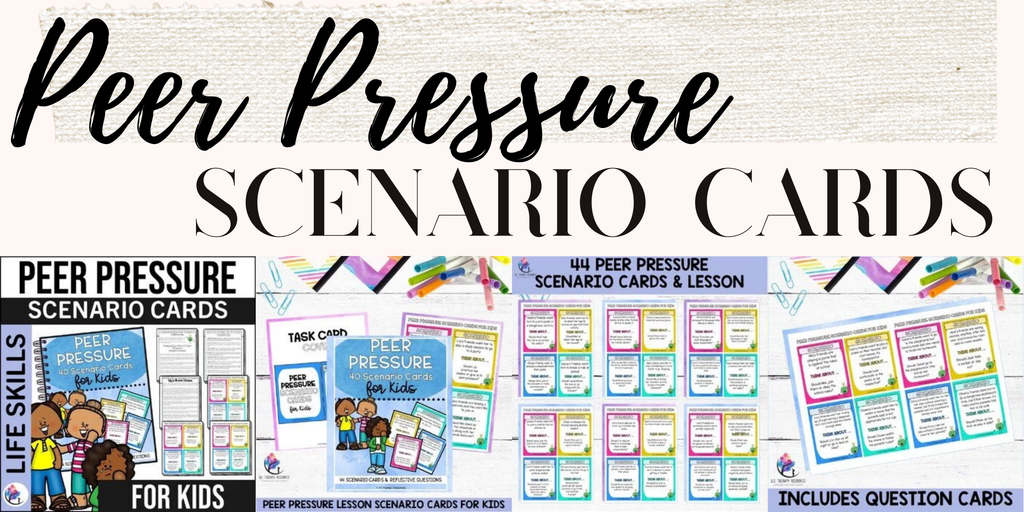
Our Peer Pressure & Anti-Bullying Activities – Friendship & Relationship Building resource includes 44 scenario and question cards exploring peer influence, healthy friendships, decision-making, and social relationships.
The activities encourage students to reflect on realistic situations, consider different perspectives, and develop strategies for responding to pressure without compromising their personal boundaries or safety.
These ready-to-use activities can complement middle school counseling groups, classroom lessons, and social-emotional learning programs.
3. Bystander Intervention and Safe Upstander Strategies
Bystanders play an important role in bullying dynamics.
Students who witness bullying may reinforce the behavior, remain uninvolved, offer support, or seek help from an adult.
However, middle school students should not be expected to confront someone engaging in bullying, particularly when doing so could place them at risk.
Effective bystander education focuses on identifying safe, realistic, and developmentally appropriate responses.
Practical Bystander Activities for Middle School
Bystander Choices
Present a bullying scenario and ask students to identify different roles people might play, including those who encourage the behavior, remain silent, offer support, or report concerns.
What Could You Do?
Ask students to generate several safe responses, such as checking on the targeted student afterward, declining to participate, or speaking privately with a trusted adult.
Reporting Versus Gossiping
Explore the difference between sharing information to embarrass someone and reporting harmful behavior to protect another student’s safety.
Trusted Adult Mapping
Encourage students to identify multiple adults they can approach if they experience or witness bullying.
Activity Idea: The Group Chat Dilemma
A student notices that several classmates are repeatedly sharing embarrassing comments about another student in a private group chat.
Discuss:
- What makes this situation potentially harmful?
- How might the targeted student feel?
- What risks could arise from responding publicly?
- What safe options are available?
- How could a trusted adult help?
The emphasis should remain on safety, appropriate reporting, and reducing harm rather than encouraging students to intervene in potentially unsafe situations.
4. Restorative Practices and Middle School Community Circles
Restorative practices can support positive relationships, classroom belonging, and meaningful discussions about responsibility and the impact of behavior.
Preventative community circles provide opportunities for students to reflect on shared expectations, peer relationships, inclusion, and respectful communication.
They can be particularly valuable in middle school, where changing friendships and social hierarchies may influence classroom dynamics.
Using Community Circles for Bullying Prevention
Community circle discussions might explore:
- What makes someone feel included or excluded?
- How do rumors affect relationships?
- What does accountability look like?
- How can students respond when friendships change?
- What does it mean to respect someone’s boundaries?
- How can students help create a safer classroom environment?
Activity Idea: The Ripple Effect of Exclusion
Present a fictional scenario in which a student is repeatedly excluded from group activities.
Ask students to consider the potential effects on the individual, the friendship group, classroom participation, and sense of belonging.
Encourage reflection on what adults and peers could do to reduce harm.
Ready-to-Use Bullying Community Circle Activities
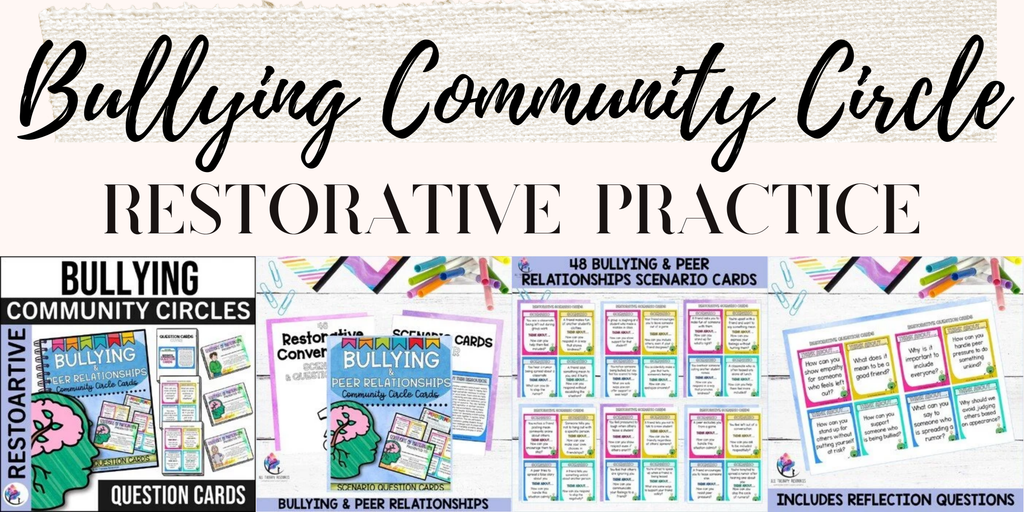
Our Bullying & Peer Relationships Community Circle Resource includes 48 scenario cards and 48 restorative reflection questions designed to support discussions about empathy, inclusion, accountability, and peer relationships.
These activities provide structured opportunities for students to consider the impact of their choices and explore ways to contribute to respectful classroom communities.
They can be used during preventative classroom circles, school counseling lessons, and facilitated small group discussions.
An Important Consideration for Restorative Practices
Restorative practices should never replace appropriate safeguarding or disciplinary responses when bullying involves ongoing intimidation, coercion, or significant power imbalances.
Students who have experienced bullying should not be pressured to participate in mediation, confront the person who harmed them, forgive them, or take responsibility for repairing the relationship.
Any restorative process following bullying must prioritize safety, informed choice, accountability, and appropriate professional judgment.
5. Cyberbullying Prevention Activities for Middle School
Cyberbullying is an important component of middle school bullying prevention.
Students increasingly navigate online friendships, group messaging, gaming communities, and social media environments where harmful behavior can occur beyond the school day.
Cyberbullying may involve:
- Repeated threatening or humiliating messages.
- Sharing embarrassing photographs or screenshots.
- Deliberately excluding someone from online groups.
- Spreading rumors through messaging platforms.
- Impersonating another student.
- Encouraging others to participate in digital harassment.
Because digital communication can be shared quickly and accessed repeatedly, students may find it difficult to escape harmful interactions.
Teaching Digital Citizenship and Online Safety
Middle school digital citizenship activities should explore:
- Recognizing harmful online behavior.
- Understanding digital privacy and consent.
- Identifying the consequences of sharing information.
- Responding safely to online harassment.
- Preserving evidence and reporting concerns.
- Recognizing manipulation and peer pressure online.
- Developing respectful digital communication skills.
Activity Idea: The Screenshot Scenario
A student shares a private message with a friend. The friend takes a screenshot and forwards it to other classmates, who begin making hurtful comments.
Ask students:
- What boundaries have been crossed?
- How might the student who shared the original message feel?
- What responsibilities do students have when receiving private information?
- What could someone do if the messages become harmful?
- When should an adult become involved?
Internet Safety and Cyberbullying Counseling Activities
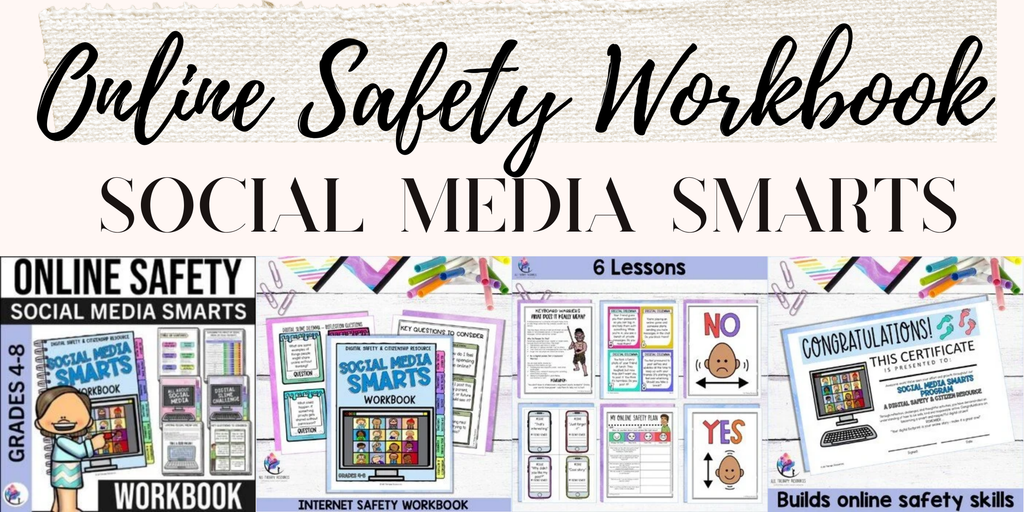
Our Internet Safety & Online Safety – Social Media Smarts Workbook provides six structured lessons exploring social media, online safety, digital dilemmas, communication, and responsible decision-making.
Designed for Grades 4–8, the workbook includes realistic scenarios, role-play opportunities, reflection activities, and practical digital citizenship strategies.
These activities can complement middle school cyberbullying prevention lessons by helping students recognize harmful online behavior and make more informed digital choices.
6. Social Media, Self-Esteem, and Peer Comparison
Middle school students may experience increasing pressure to compare themselves with others, particularly through social media and online interactions.
Social comparison can involve appearance, popularity, friendships, achievements, or perceived social status.
Although social comparison is not inherently bullying, it may contribute to emotional distress, feelings of exclusion, and difficulties with self-esteem.
Students may also feel pressure to seek validation through likes, comments, followers, or online attention.
Helping Middle School Students Recognize the Comparison Trap
School counseling activities can help students:
- Understand how social media influences self-perception.
- Recognize unrealistic or carefully selected online portrayals.
- Identify unhelpful comparison patterns.
- Explore the relationship between thoughts, feelings, and behavior.
- Challenge overly negative beliefs about themselves.
- Develop healthier digital boundaries.
- Recognize that personal worth is not determined by online approval.
Activity Idea: What We See Versus What We Know
Present students with a fictional social media post showing an apparently perfect experience.
Ask them to identify what information is visible and what remains unknown.
Explore how assumptions can influence emotional responses and why online content rarely represents the full picture of someone’s life.
CBT-Informed Social Media and Self-Esteem Activities
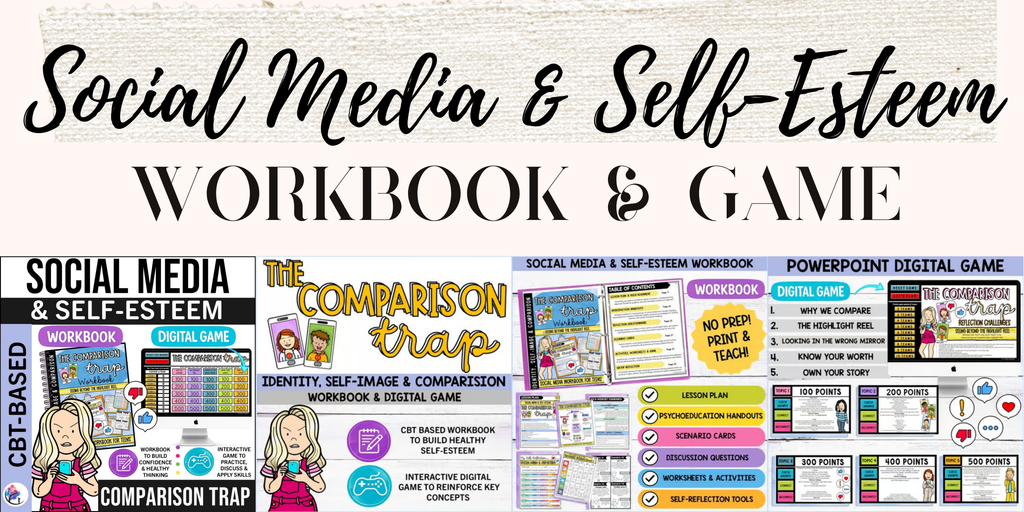
Our Social Media & Self-Esteem Activities – The Comparison Trap combines a CBT-informed workbook with an interactive digital game.
Through psychoeducation, realistic scenarios, guided reflection, and practical activities, students explore social comparison, self-esteem, online behavior, and digital wellbeing.
The resource can complement middle school counseling lessons by helping students examine unhelpful thinking patterns and develop more balanced perspectives about themselves and their online experiences.
7. How School Counselors Can Support Students Experiencing Bullying
School counselors play an important role in prevention, early identification, emotional support, and coordinated responses to bullying.
When students disclose bullying, the initial adult response can influence whether they feel safe seeking help again.
Listen and Validate
Allow students to describe their experiences without interruption, blame, or minimization.
Avoid statements such as “just ignore them” or “you need to stand up for yourself.”
Instead, communicate that their concerns are being taken seriously.
For example:
“Thank you for telling me. You deserve to feel safe at school, and we’re going to work out what support you need.”
Assess Safety and Support Needs
Consider whether the student is experiencing ongoing intimidation, threats, retaliation, emotional distress, or difficulties participating in school.
Follow relevant safeguarding and school reporting procedures.
Develop an Individualized Support Plan
Support plans may include:
- Identifying trusted adults.
- Reviewing supervision and safety arrangements.
- Establishing clear reporting procedures.
- Supporting emotional regulation and coping.
- Considering appropriate classroom adjustments.
- Monitoring ongoing peer interactions.
- Collaborating with families and relevant school personnel.
Counseling can help students process experiences and develop coping skills, but it must not substitute for action to stop bullying.
Follow Up and Monitor
Continue checking whether harmful behavior has stopped and whether the student feels safer.
A successful response should be evaluated through changes in safety and participation, not simply whether an incident has been discussed.
8. Supporting Students Who Engage in Bullying Behavior
Effective bullying prevention also involves responding appropriately to students who engage in harmful behavior.
Responses should establish clear accountability while considering the individual student’s developmental, social, and emotional needs.
Some students may require support with:
- Emotional regulation.
- Impulse control.
- Perspective-taking.
- Peer influence and group dynamics.
- Social problem-solving.
- Respecting boundaries.
- Understanding the impact of harmful behavior.
However, understanding contributing factors does not excuse bullying.
Interventions should combine appropriate consequences, explicit skill development, adult supervision, and monitoring to reduce the likelihood of repeated harm.
Students who have been targeted should not be expected to participate in the intervention process unless doing so is safe, appropriate, and genuinely voluntary.
9. Creating a Whole-School Bullying Prevention Approach
Individual bullying prevention lessons are valuable, but sustainable change requires consistent approaches across the school environment.
A coordinated middle school bullying prevention program should include:
- Clear Definitions: Shared understanding of bullying, conflict, and harmful behavior.
- Explicit Education: Developmentally appropriate lessons on power, peer pressure, bystander behavior, and cyberbullying.
- Safe Reporting Systems: Accessible ways for students to communicate concerns.
- Consistent Adult Responses: Clear procedures for investigating and addressing bullying.
- Supportive Relationships: Opportunities to strengthen belonging, inclusion, and positive peer interactions.
- Targeted Intervention: Appropriate support for students experiencing or engaging in bullying.
- Ongoing Monitoring: Reviewing student safety, incident patterns, and intervention outcomes.
Middle school students are more likely to seek help when they believe adults will listen, respond appropriately, and protect them from retaliation.
10. How to Measure the Impact of Middle School Bullying Prevention Activities
Schools should evaluate prevention efforts by examining more than the number of lessons delivered or activities completed.
Useful indicators may include:
- Students demonstrating improved understanding of bullying and power imbalances.
- Increased knowledge of safe reporting procedures.
- Greater confidence in identifying trusted adults.
- Improved perceptions of school safety and belonging.
- Changes in reported bullying incidents.
- Reduced recurrence of harmful behavior.
- Evidence that reported concerns receive appropriate follow-up.
- Improved student participation and engagement.
An increase in reporting does not necessarily mean bullying has increased. It may indicate that students feel more confident approaching adults.
For this reason, schools should examine several sources of information and interpret outcomes within the broader school context.
Final Thoughts: Building Safer Middle School Communities
Bullying prevention in middle school requires more than awareness campaigns or reminders to be kind.
Students need opportunities to understand power imbalances, recognize harmful peer dynamics, navigate social pressure, and practice safe responses to bullying and cyberbullying.
Interactive anti-bullying lessons, peer pressure scenario cards, community circle discussions, and digital citizenship activities can support this learning when integrated into a coordinated, developmentally appropriate prevention approach.
At All Therapy Resources, we believe effective school counseling activities should be practical, engaging, trauma-informed, and grounded in the realities of students’ social and emotional development.
The goal is to create a school environment where harmful behavior is addressed, students feel confident seeking help, and every young person has the opportunity to develop positive relationships, experience a sense of belonging, and participate in learning without fear of intimidation or exclusion.
Frequently Asked Questions About Bullying Prevention in Middle School
What are effective bullying prevention activities for middle school students?
Effective bullying prevention activities for middle school include scenario-based discussions, peer pressure role-plays, bystander intervention exercises, restorative community circles, and cyberbullying prevention lessons. Activities should help students recognize power imbalances, understand harmful peer dynamics, develop safe response strategies, and identify trusted adults. The most effective approach combines explicit instruction with consistent school-wide prevention practices.
How can teachers prevent bullying in middle school classrooms?
Teachers can help prevent bullying by establishing clear behavioral expectations, teaching respectful communication, monitoring peer interactions, and responding consistently to harmful behavior. Classroom discussions, social-emotional learning activities, and structured opportunities to explore peer pressure can strengthen students’ understanding of bullying. Effective prevention also requires safe reporting procedures, adult accountability, and ongoing collaboration with school counselors and families.
What is the difference between bullying and normal middle school conflict?
Conflict generally involves a disagreement between individuals with relatively equal power, whereas bullying involves unwanted aggressive behavior characterized by a real or perceived power imbalance and repetition, or the likelihood of repetition. Middle school bullying may include repeated exclusion, humiliation, intimidation, rumor-spreading, or cyberbullying. Even when behavior does not meet the definition of bullying, schools should respond appropriately to harmful incidents.
How can school counselors address bullying in middle school?
School counselors can support bullying prevention through classroom lessons, small group counseling, individual student support, peer relationship activities, and collaboration with teachers and families. Counseling interventions may explore emotional regulation, peer pressure, assertive communication, and safe help-seeking. Counselors also play an important role in identifying student needs, supporting safety planning, and monitoring the emotional impact of bullying alongside school-wide responses.
What are some engaging anti-bullying lessons for Grades 6–8?
Engaging anti-bullying lessons for Grades 6–8 include realistic bullying scenarios, peer pressure decision-making activities, group chat dilemmas, bystander role discussions, and interactive presentations exploring power and social influence. Middle school students often benefit from activities that reflect familiar friendship challenges and online experiences while encouraging critical thinking, reflection, and practical problem-solving.
How can schools teach students to respond safely when they witness bullying?
Schools can teach safe bystander intervention by helping students recognize harmful behavior, identify available response options, and understand when adult assistance is necessary. Students might support someone privately, refuse to participate in bullying, or report concerns to a trusted adult. They should never be pressured to confront someone engaging in bullying when doing so could place them at risk.
How can cyberbullying prevention be taught in middle school?
Cyberbullying prevention can be incorporated into digital citizenship lessons that explore online communication, group messaging, privacy, digital footprints, and reporting procedures. Scenario-based activities help students recognize harmful online behavior, consider the impact of sharing content, and practice safe decision-making. Schools should also teach students how to preserve evidence when appropriate and seek adult support when online harassment occurs.
What should schools do when a middle school student reports bullying?
When a student reports bullying, school staff should listen without judgment, assess immediate safety concerns, document relevant information, and follow established safeguarding and reporting procedures. Appropriate responses may include investigating the incident, implementing protective measures, communicating with relevant adults, and monitoring for retaliation or repeated harm. Students should receive ongoing support, and responsibility for stopping bullying must remain with adults and the school.