A student who chews pencil erasers during independent work, crashes into peers in line, or puts their head down after lunch is communicating something through behavior. Sensory diet activities for school give teams a structured way to respond with support rather than repeated correction. When thoughtfully planned, these activities can help students access the sensory input, movement, or calming conditions that make participation more manageable.
A sensory diet is not a list of random movement breaks, and it is not a reward a student must earn. It is an individualized plan of sensory-based supports scheduled across the day or available when a student recognizes a need. In schools, the goal is functional: helping a student arrive at learning, transitions, social participation, and self-management with greater readiness.
What a Sensory Diet Looks Like at School
The term sensory diet is often associated with occupational therapy practice. In a school setting, it generally refers to planned opportunities for sensory input that may support regulation and participation. These supports can involve movement, resistance, touch, visual conditions, sound, oral-motor input, or calming routines. The right combination depends on the student, the environment, and the task ahead.
For one student, a brief delivery job before math may provide the heavy-work input that helps them settle into a seat. Another may become more alert after standing to complete a short task at a counter. A student who is overwhelmed by a noisy cafeteria may need a quieter re-entry routine, while a student who avoids messy materials may benefit from gradual, supported exposure rather than pressure to participate.
The distinction matters. A sensory diet should be based on observable patterns, not assumptions about what a behavior means. Running in the hallway could reflect a need for movement, but it could also signal anxiety, excitement, difficulty with transitions, peer dynamics, or unclear expectations. Sensory strategies work best when they are part of a broader, trauma-informed understanding of the student.
Research into sensory-based interventions has produced mixed findings, and individual responses can vary considerably. Sensory strategies should therefore be selected collaboratively, linked to meaningful participation goals, and regularly reviewed to determine whether they are providing measurable benefits.
Start With Participation, Not a Favorite Activity
Before choosing activities, identify the moments when participation becomes difficult. A practical team conversation might ask: When does the student appear over-alert, shut down, restless, avoidant, or overwhelmed? What happens immediately before those patterns? What conditions seem to help the student recover or re-engage?
Gather input from the student whenever possible. Younger children may point to pictures or choose from simple options such as “move,” “quiet,” “squeeze,” or “take a break.” Older students can often describe the settings that drain their energy, the sensations they cannot ignore, and the supports that feel helpful without drawing unwanted attention.
Caregivers, classroom staff, related service providers, and the student support team may each notice different patterns. Occupational therapy consultation is particularly valuable when sensory needs significantly affect school functioning, when safety concerns are present, or when the team is considering more specialized equipment or strategies. General classroom supports should not replace individualized evaluation or clinical care when those are needed.
The most useful plans connect a strategy to a purpose. Instead of writing “movement break at 10:00,” document the intended outcome: “Before sustained writing, student completes a brief resistance-based classroom job to support body organization and readiness to sit.” This makes the plan easier to monitor and adjust.
Sensory Diet Activities for School Routines
The best school-based options are brief, predictable, and easy for staff to carry out without interrupting instruction. They should also preserve the student’s dignity. A strategy that helps but makes a student feel singled out may not be sustainable, especially in upper elementary, middle, and high school settings.
Arrival and transition supports
Transitions often place high demands on attention, body awareness, and emotional regulation. A consistent arrival routine can reduce uncertainty before the academic day begins. A student might carry a bin of folders, push in chairs, wipe a whiteboard, stack classroom materials, or complete a short hallway errand with an adult-approved purpose.
For students who need a quieter start, a predictable check-in, a visual schedule review, or two minutes in a designated calm space may be more supportive than active movement. Some students benefit from doing a short grounding routine before entering the room, such as noticing five things they can see or taking slow breaths while pressing their feet into the floor.
Classroom-ready movement and resistance
Heavy-work activities involve resistance through muscles and joints. They are often practical in school because they can be embedded into helpful jobs. Options may include:
- Carrying a small stack of books or classroom materials
- Pushing a supply cart with adult guidance
- Moving chairs for a planned classroom task
- Wall push-ups or desk push-downs with clear form and time limits
- Completing animal walks or a brief movement sequence in a designated space
- Using resistance bands or other approved seating tools when they improve, rather than distract from, participation
These activities are not automatically calming for every student. Some students become more energized after intense movement and may need a quieter follow-up activity before returning to academic work. Observe what happens next, not just whether the student enjoys the activity in the moment.
Ready-to-Use Sensory Diet and Heavy Work Activities
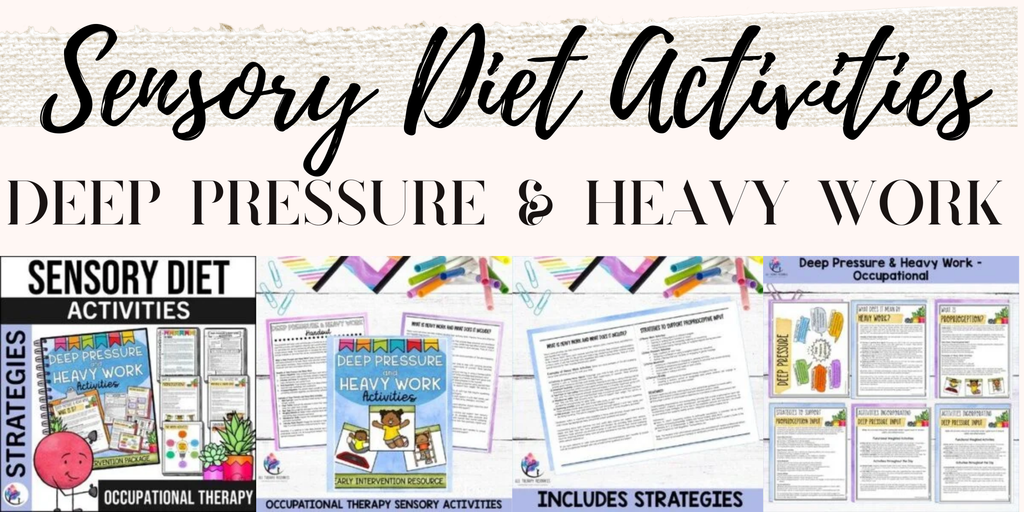
Looking for practical ways to incorporate sensory regulation strategies into the school day? Our Sensory Activities & Sensory Diet – Deep Pressure & Heavy Work resource brings together occupational therapy-informed activities, proprioceptive input strategies, and printable guidance to help educators, therapists, and families plan purposeful sensory experiences.
With ready-to-use activities, classroom and home-based strategies, and practical handouts, the resource offers a convenient starting point for selecting sensory supports that align with individual needs and occupational therapy recommendations.
Supports during seated work
Long periods of sitting can be difficult for students who need frequent movement or body-position feedback. Small adjustments may support access without changing the instructional goal. A student may work standing at a counter for part of an assignment, use a foot support, take a planned stretch break between tasks, or deliver completed work to a designated location.
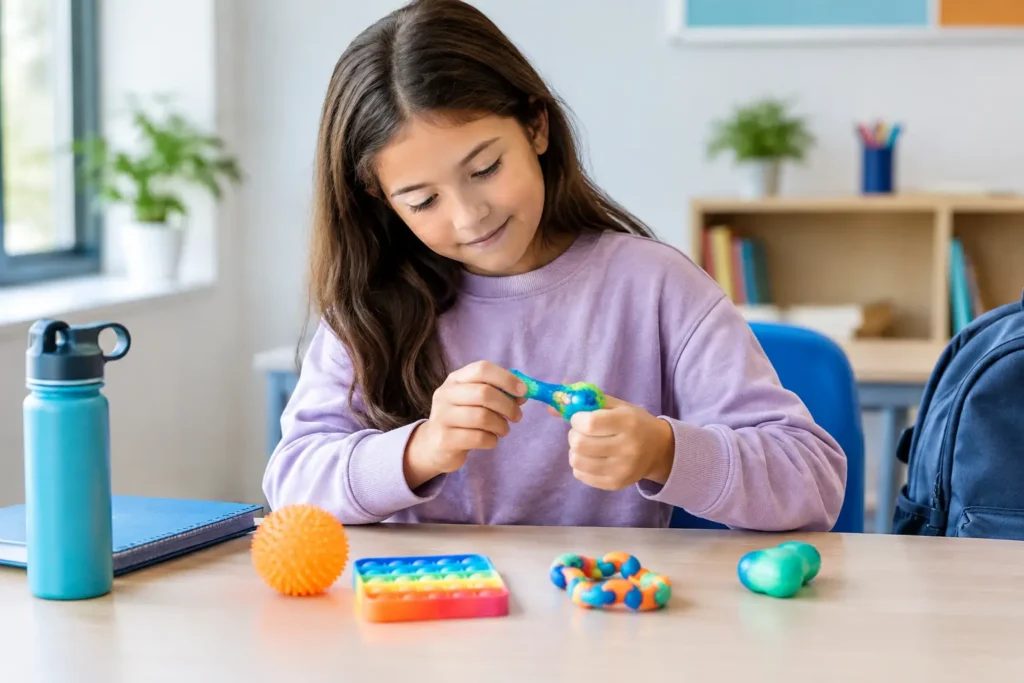
Fidgets can be useful when they are selected and taught intentionally. The most functional option is quiet, easy to manage, and does not require visual attention. Establish clear expectations: the tool stays below the desk or at the work area, does not become a toy, and is put away if it interferes with learning. Some students do better with a non-object option, such as hand presses, chair push-downs, or brief movement jobs.
Supporting Motor Planning, Coordination, and Body Awareness
Sensory-informed classroom support can also involve opportunities to develop body awareness, motor planning, bilateral coordination, and functional movement skills. These areas can influence how students participate in classroom routines, handwriting tasks, and everyday school activities.
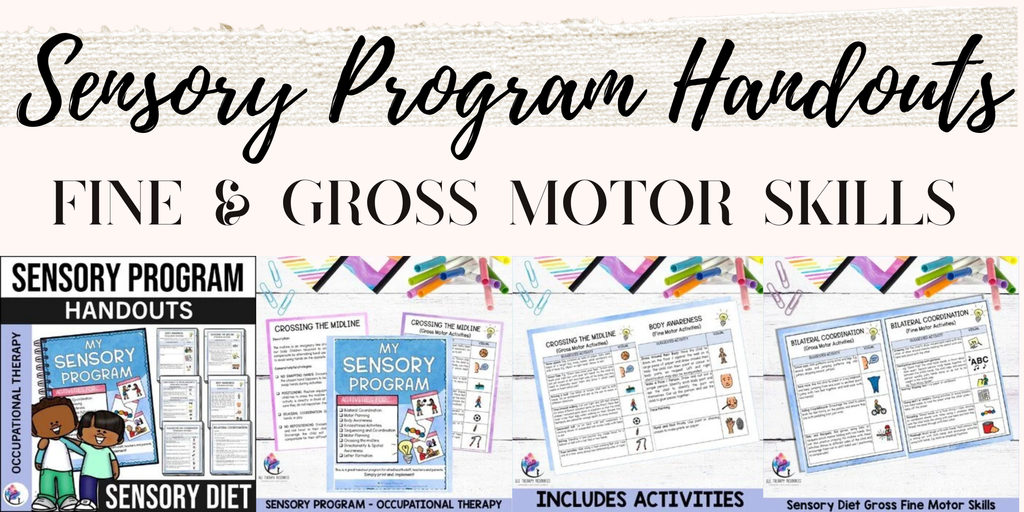
Our Sensory Activities Program – Gross & Fine Motor Skills provides ready-to-use activities and printable handouts exploring motor planning, crossing the midline, sequencing, spatial awareness, and coordination. Designed for educators, therapists, and families, the resource offers practical strategies that can be incorporated into individualized occupational therapy-informed support plans.
Calming and recovery options
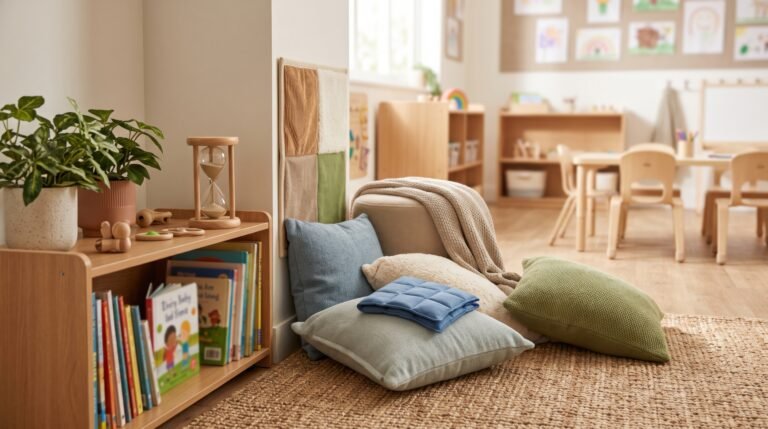
A calm corner is most effective when it is a regulation support, not a place of exclusion. Students should know how to access it, what they can do there, and how they will return to instruction. Depending on the setting, the space may include visual coping prompts, noise-reduction options, simple breathing cards, drawing materials, or a timer.
Keep the area low-demand. A student in distress may not be able to explain feelings, complete a reflection sheet, or talk through a conflict right away. First support regulation and safety. Problem-solving, repair, and skill-building can happen once the student is more available.
Oral and auditory considerations
Some students seek oral input by chewing clothing, pencils, or other items. School teams should address this thoughtfully and follow district procedures, family preferences, health considerations, and individualized recommendations. Safe alternatives, when appropriate and approved, may be considered with relevant professional input. Avoid offering food-based strategies casually, particularly when allergies, medical needs, eating concerns, or classroom policies are factors.
Auditory supports may include access to a quieter work location, noise-reduction headphones during independent work, or advance notice before loud events. Headphones are not appropriate in every situation. Students still need to hear safety directions, and some may become more isolated or less engaged when sound is reduced for too long.
Build a Plan Staff Can Actually Use
A successful sensory plan does not need to be lengthy. A one-page format is often enough: identify the routine, the support, the adult responsible, the student’s choice or cue, and what staff will observe afterward. For example, a plan might include a two-minute movement job before writing, a standing option during independent practice, and a calm-space routine after lunch.
Teach the strategy when the student is regulated, not only during a difficult moment. Practice what the student will say or do: showing a break card, asking to get water, choosing a movement job, or using a visual menu. This reduces the chance that sensory support becomes dependent on adult interpretation alone.
Consistency matters, but flexibility matters too. A student may need more support after an assembly, a schedule change, a conflict, poor sleep, or a demanding assessment. Teams can preserve the routine while adjusting intensity, duration, or location. The student’s response should guide the plan.
Monitor the Outcome, Not Just Compliance
A sensory activity is useful only if it supports a meaningful outcome. Track simple indicators over a few weeks: time needed to begin work, number of prompts, ability to remain in a learning area, recovery after a transition, or the student’s own rating of readiness. Brief notes from staff can reveal whether a strategy is helping, having no clear effect, or making the situation harder.
Avoid framing a support as something a student must “earn” through compliant behavior. Regulation tools are access supports. At the same time, they need reasonable boundaries so they remain safe, feasible, and connected to participation. A student may need a movement break, but not necessarily at the exact second they request it if the class is responding to an emergency direction or preparing for a required transition.
Thoughtful sensory supports send a powerful message: we are paying attention to what helps this student function, not just to what disrupts the routine. When a plan is individualized, practical, and reviewed with care, sensory diet activities can become one more reliable way to help students feel capable, understood, and ready to take part in school.