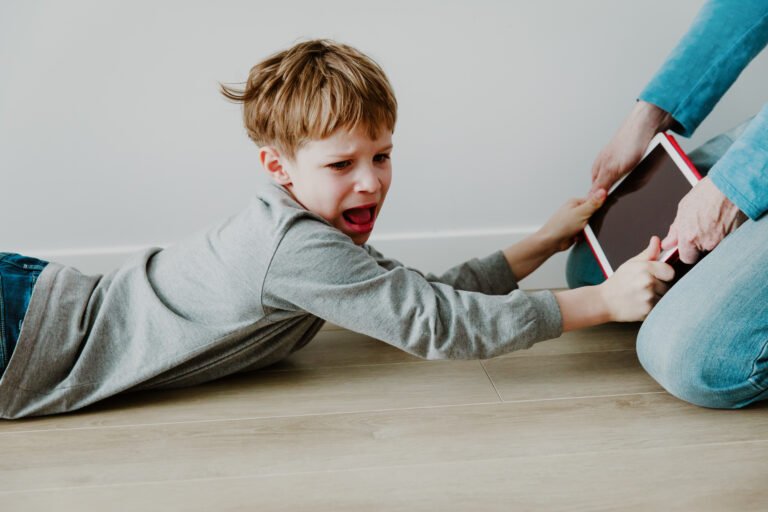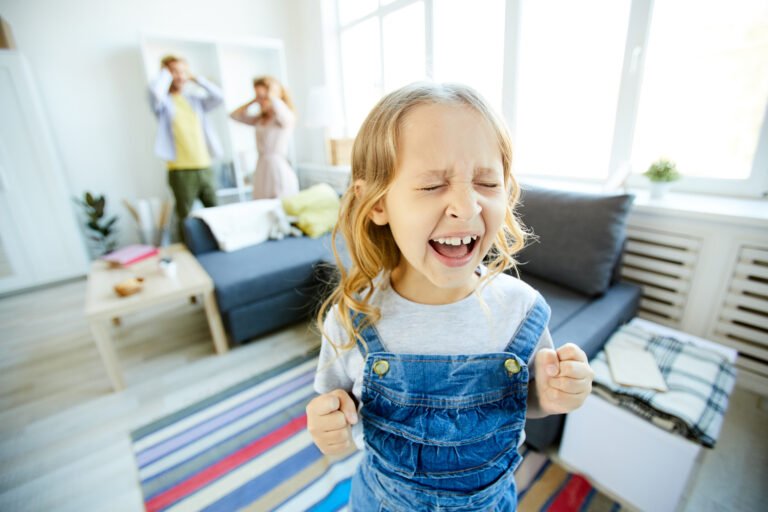

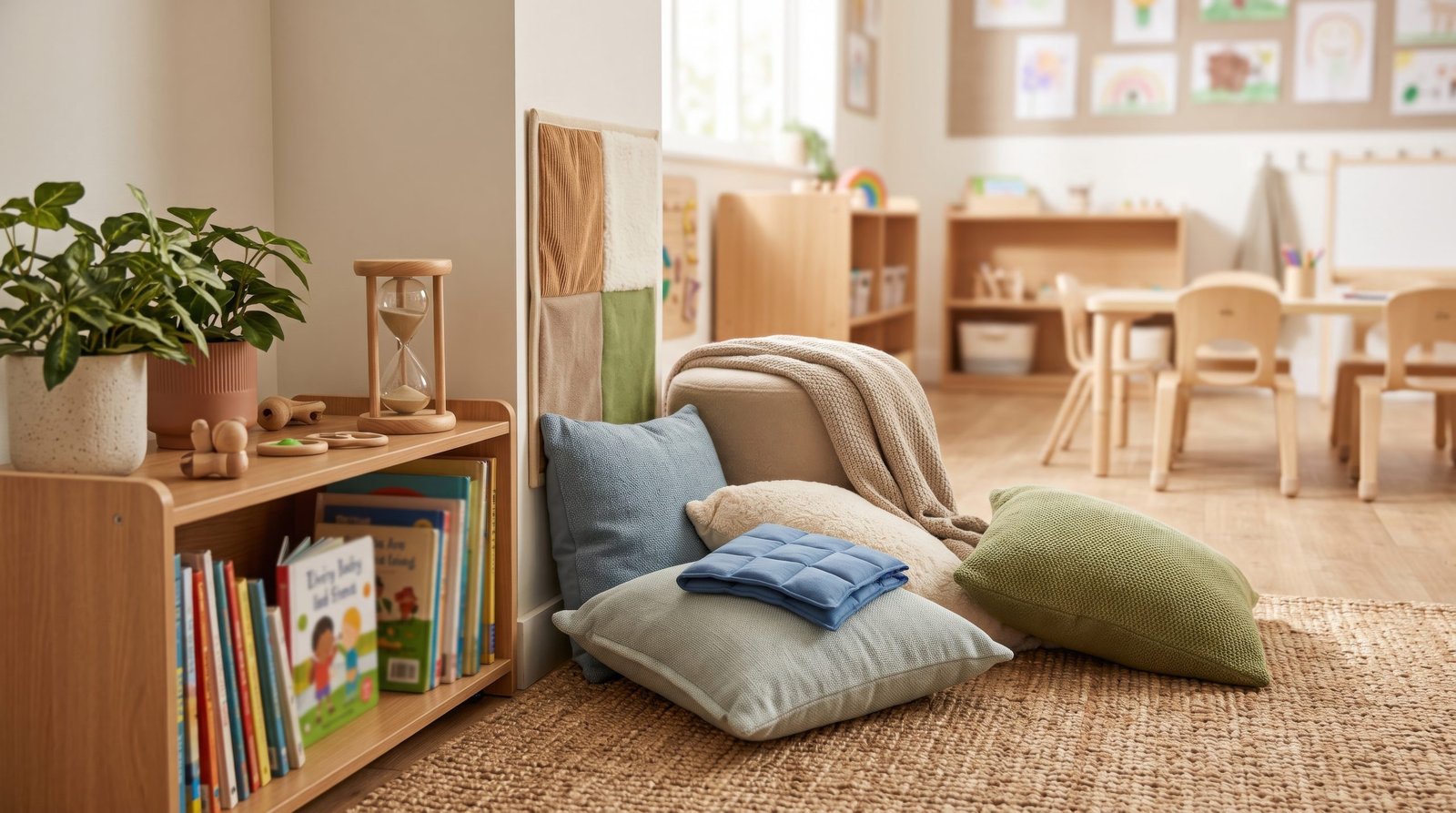
The phrase “Go calm down” has been used in classrooms for decades. Most of us have heard it—or perhaps even said it ourselves. But here’s the problem… Children don’t automatically know how to calm down.
Just as we wouldn’t expect a child to solve a long-division problem without first teaching the necessary skills, we shouldn’t expect children to regulate big emotions without explicit instruction, practice, and support.
That’s where a thoughtfully designed Calm Corner can make an incredible difference.
When implemented well, a calm corner is far more than a cozy space with pillows or fidget toys. It becomes a structured learning environment where children develop emotional awareness, practice regulation strategies, build resilience, and gradually become more independent in managing their emotions.
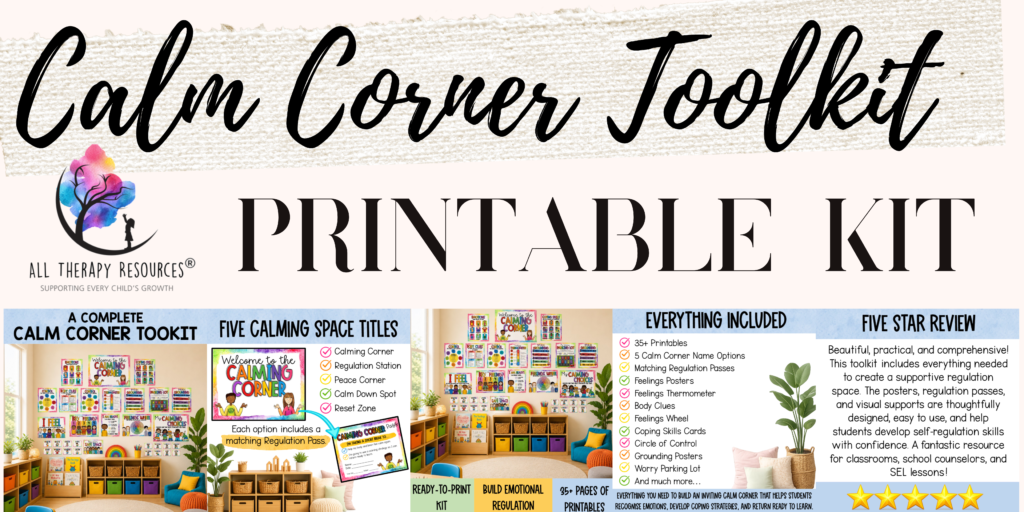
Whether you call it a Calm Corner, Regulation Station, Peace Corner, Reset Zone, or Calm Down Spot, the goal remains the same: to help children feel safe enough to regulate their emotions so they can return to learning, relationships, and problem-solving. Your toolkit supports each of these approaches with flexible signage and resources, allowing educators to choose the language that best suits their classroom or counseling space.
As more schools embrace trauma-informed practice and social-emotional learning (SEL), calm corners are becoming an essential part of classrooms, counseling offices, and intervention spaces. Yet simply placing beanbags and sensory toys in a corner isn’t enough.
A truly effective calm corner is intentionally designed to teach children how emotions work, how to recognize early signs of dysregulation, and what strategies help their unique nervous system recover.
Let’s explore why these spaces matter—and what research tells us every calm corner should include.
Why Emotional Regulation Matters
Every child experiences frustration. Disappointment. Excitement. Worry. Anger. Fear. These emotions are a normal part of being human. The challenge isn’t helping children avoid difficult emotions. The challenge is helping them respond to those emotions in healthy and effective ways.
Emotional regulation refers to our ability to notice, understand, and manage our emotional experiences so we can continue thinking, learning, solving problems, and connecting with others. For many children, this skill is still developing.
Their brains are learning how to move from strong emotional reactions toward thoughtful responses. This process takes years of practice and is influenced by relationships, life experiences, temperament, and opportunities to learn regulation strategies.
When children become overwhelmed, their thinking brain becomes less accessible. You may notice:
- Impulsive behavior
- Shutting down
- Tears
- Anger
- Difficulty following directions
- Trouble solving problems
- Difficulty communicating needs
In these moments, children don’t simply need correction. They need support. Helping children regulate isn’t about removing emotions—it is about helping them develop the skills to move through emotions safely and successfully.
The Science Behind Calm Corners
One of the biggest misconceptions about calm corners is that they are designed simply to help children “calm down.” In reality, they’re designed to help children learn self-regulation.
There’s an important difference. A punishment sends the message: “Your emotions are a problem.”
A regulation space communicates: “Your emotions make sense. Let’s work together to help your brain and body feel safe again.”
From a neuroscience perspective, children experiencing strong emotions often have reduced access to the parts of the brain responsible for reasoning, planning, impulse control, and flexible thinking.
When adults immediately lecture, question, or discipline during these moments, children may not yet be neurologically ready to process those conversations.
Instead, they first need opportunities to regulate their nervous system. Only then can learning and reflection begin. This is one reason trauma-informed schools increasingly emphasize regulation before reasoning.
A calm corner provides children with the opportunity to pause, recognize what they’re experiencing, practice regulation strategies, and return to learning when they’re ready. Importantly, a calm corner should never be viewed as a consequence or “time out.”
Instead, it should be presented as a supportive space available to all children—a message reinforced in trauma-informed guidance for creating regulation spaces.
Calm Corners Teach Skills—Not Compliance
Sometimes calm corners are misunderstood. They’re seen as places where children are sent after misbehaving. While this may appear effective in the short term, it misses one of the greatest opportunities calm corners provide.
The goal isn’t simply quieter classrooms. The goal is emotionally healthier children. An effective calm corner teaches children:
- How to recognize their emotions.
- How emotions feel inside their body.
- Which coping strategies work best for them.
- How to recover after difficult moments.
- How to return to learning with confidence.
Over time, children begin developing independence. Instead of relying on adults to tell them what to do, they begin asking themselves:
“What am I feeling?”
“What does my body need right now?”
“Which strategy usually helps me?”
These questions represent the beginning of lifelong emotional regulation.
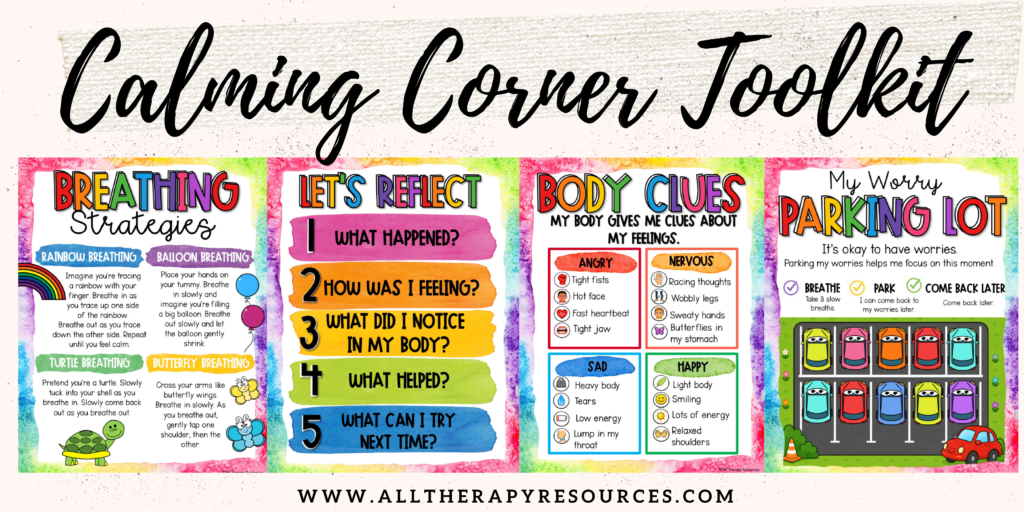
Every Effective Calm Corner Begins With Emotional Literacy
One of the most overlooked parts of emotional regulation is emotional vocabulary. Children cannot effectively regulate emotions they cannot identify. If every uncomfortable feeling is simply labeled as “mad” or “sad,” children have very little information about what they actually need.
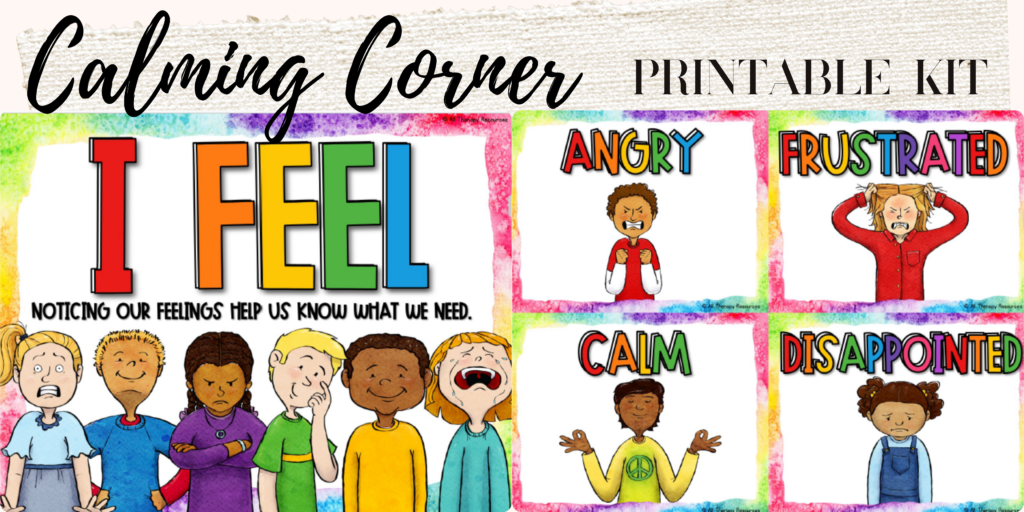
Helping students distinguish between emotions such as frustrated, disappointed, worried, overwhelmed, confused, excited, or embarrassed strengthens emotional awareness and improves regulation. This is why visual supports are so powerful.
Many calm corners include emotion posters, feelings wheels, and emotion cards that encourage children to pause and identify what they’re experiencing before choosing a coping strategy.
Rather than rushing children toward “feeling better,” these tools communicate an important message: Every feeling is welcome. Every emotion has information to teach us.
Your Calm Corner Toolkit reflects this philosophy by including emotions posters, a feelings wheel, and reminders that all emotions are valid while emphasizing that every child can learn the skills needed to regulate, recover, and return ready to learn.
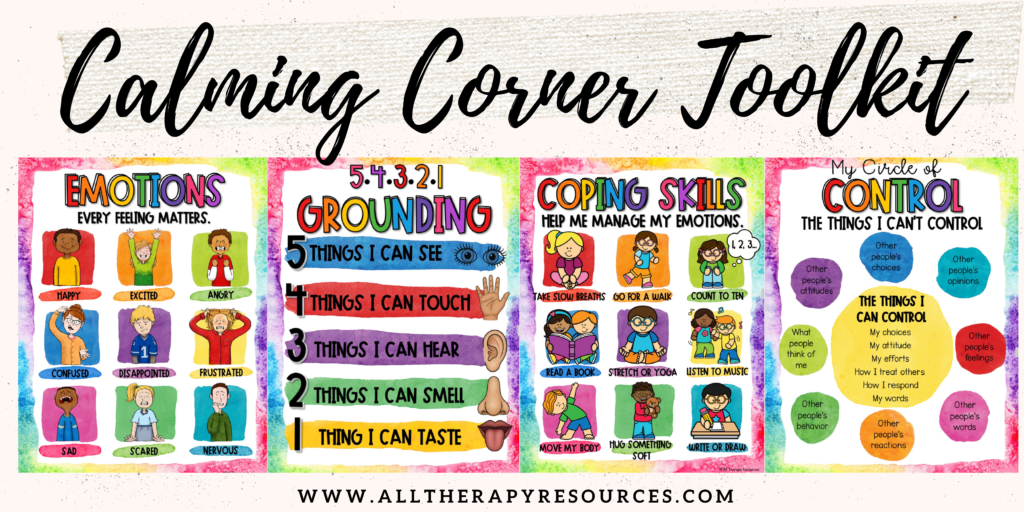
Help Children Notice What Their Body Is Telling Them
Have you ever noticed a child who says, “I’m fine.”
…while their fists are clenched, their breathing is rapid, and tears are welling in their eyes?
Children often recognize emotions after they’ve become overwhelming. Helping students notice early body signals can dramatically improve regulation.
Body awareness (sometimes called interoception) helps children recognize physical cues such as:
- Tight shoulders
- Racing heart
- Butterflies in the stomach
- Warm face
- Shaky hands
- Fast breathing
- Clenched jaw
When children begin noticing these signals earlier, they also gain more opportunities to regulate before emotions escalate. This is why many educators include Body Clues Posters, Feelings Thermometers, and visual intensity scales within their calm corners.
Instead of asking, “Are you angry?” Children can begin asking themselves, “Where is my body telling me I’m starting to feel overwhelmed?”
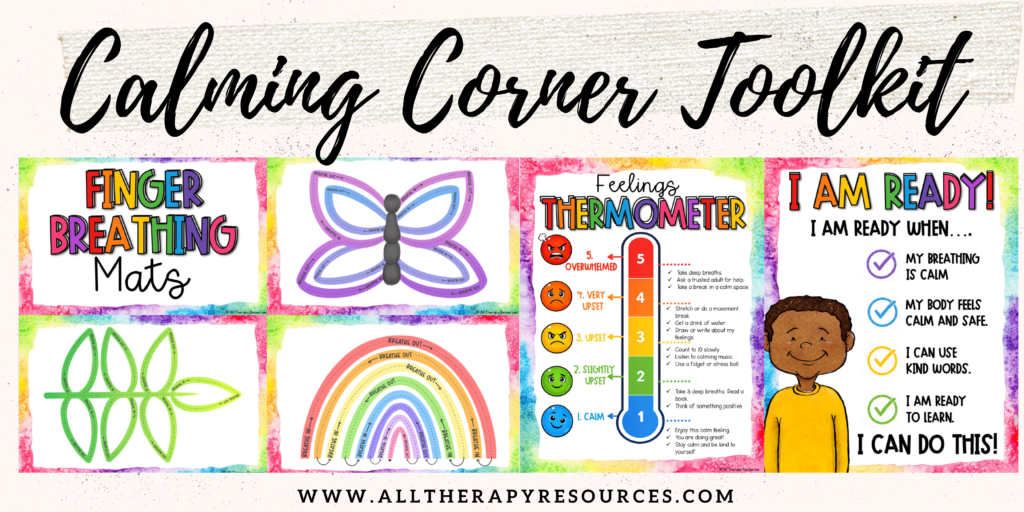
That small shift builds remarkable self-awareness over time. Your toolkit includes body clues visuals that connect emotions with physical sensations, alongside a feelings thermometer and “How Big Is My Feeling?” scale to help children identify both the intensity of their emotions and the regulation strategies that may be most helpful.
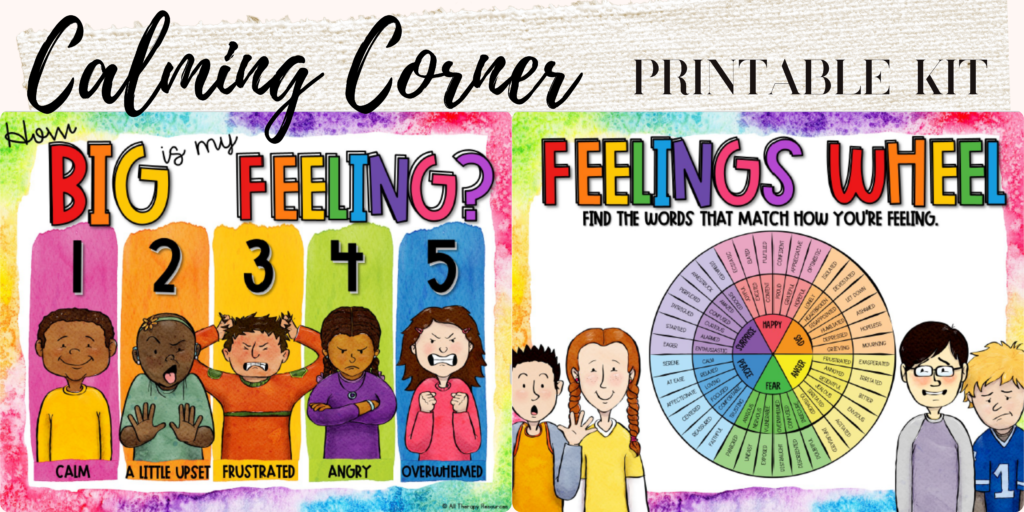
Give Children Choices Instead of Commands
One of the most effective ways to support emotional regulation is by giving children appropriate choices.
When adults repeatedly say: “Calm down.” Children often have no idea what that actually means. Instead, we can ask: “Which strategy would help your body feel safe right now?”
Some children benefit from movement. Others need quiet. Some need breathing. Others need grounding activities or drawing. There is no single regulation strategy that works for every child.
Helping children explore different coping tools encourages flexibility while building confidence in their own ability to manage emotions.
This is why many calm corners include visual coping strategy choice cards that encourage children to select from options such as deep breathing, stretching, reading, walking, listening to music, yoga, counting, drawing, hugging a comfort item, or other calming activities. These visual prompts support independence by shifting the question from “What should I do?” to “Which strategy works best for me?”
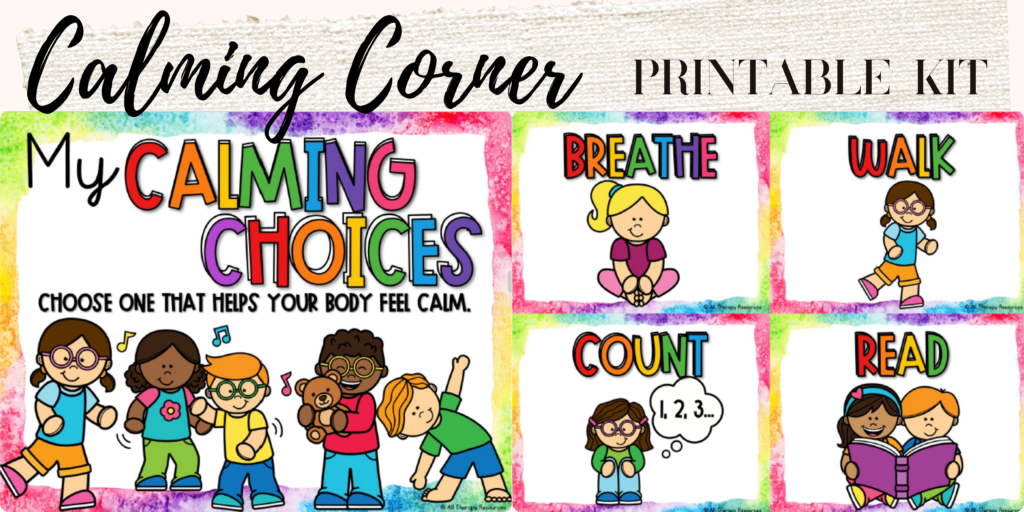
Grounding Activities Help Children Return to the Present Moment
When children become overwhelmed, their brains often become focused on what has already happened or what might happen next. They may replay an upsetting interaction, worry about making another mistake, or feel consumed by emotions that seem too big to manage.
Grounding strategies gently bring their attention back to the present. Rather than trying to “stop” emotions, grounding encourages children to reconnect with their body, surroundings, and senses, helping their nervous system gradually settle.
One of the most widely used grounding techniques is the 5-4-3-2-1 strategy, which encourages children to identify:
- Five things they can see
- Four things they can touch
- Three things they can hear
- Two things they can smell
- One thing they can taste
Simple activities like this help redirect attention while creating opportunities for the thinking brain to re-engage.
Many educators also find success using visual grounding supports that children can independently follow during moments of stress. Your Calm Corner Toolkit includes a 5-4-3-2-1 grounding visual, giving students an easy-to-follow strategy they can return to whenever emotions begin to feel overwhelming.
Breathing Strategies Give Children a Tool They Can Use Anywhere
Breathing is one of the few regulation strategies children can take with them everywhere. The classroom. The playground. The school bus. Home.
Teaching breathing strategies during calm moments allows children to practice before they truly need them. Children often respond particularly well to visual breathing prompts because they transform an abstract concept into something concrete and engaging.
For example, they may slowly trace a rainbow, butterfly, leaf, turtle, snake, or sun while matching their breathing to the movement. These simple visuals help slow breathing naturally while giving children something meaningful to focus on.
The goal isn’t perfect breathing. The goal is helping children discover that slowing the body can help calm the mind. Over time, these small moments of practice become valuable lifelong regulation skills.
Your toolkit includes a variety of breathing strategy posters and finger-tracing breathing mats, allowing children to explore different approaches and discover which techniques work best for them.
Reflection Is Where Real Learning Happens
One mistake I often see is ending the regulation process as soon as the child appears calm. While returning to learning is important, some of the most meaningful growth happens after regulation. Reflection helps children move beyond simply recovering from an emotional moment to understanding it. Questions such as:
- What happened?
- How was I feeling?
- What helped me?
- What might I try next time?
encourage children to develop self-awareness, problem-solving, and emotional insight.
This process isn’t about dwelling on mistakes. It’s about helping children build a stronger understanding of themselves.
Each time children reflect, they strengthen their ability to recognize patterns, identify effective coping strategies, and make thoughtful choices in future situations. That’s one reason I encourage including simple reflection prompts within every calm corner.
Your toolkit includes reflection cards that guide students through this process, helping regulation become a learning experience rather than simply a break from class.
A Calm Corner Should Support Independence
One of the greatest compliments a teacher can receive is hearing a student say, “I think I need to use a calming strategy.”
Rather than waiting for an adult to direct them, students begin recognizing their own emotional needs. This independence develops gradually. Visual supports help make that possible. Simple reminders like:
- “I can take one slow breath.”
- “My feelings are okay.”
- “I can ask for help.”
- “I can choose my next step.”
encourage children to become active participants in their own regulation rather than passive recipients of adult direction.
Affirmations also help children replace self-critical thoughts with more compassionate and realistic ones. Instead of thinking, “I’m bad” they begin learning, “I’m having a hard moment—and I have tools that can help.”
Your Calm Corner Toolkit includes affirmation cards that reinforce resilience, self-compassion, and confidence while reminding students that every feeling is temporary and manageable.
Common Calm Corner Mistakes to Avoid
Although calm corners are becoming increasingly popular, there are several misconceptions that can limit their effectiveness.
Using the Calm Corner as a Punishment
A calm corner should never feel like a consequence. Sending children there because they’ve “misbehaved” can unintentionally communicate that emotions themselves are unacceptable.
Instead, present the space as a supportive resource that every student can access when needed.
Filling the Space With Too Many Distractions
More isn’t always better. An effective calm corner doesn’t need dozens of toys or sensory gadgets.
Instead, focus on intentional tools that teach emotional awareness, regulation, and reflection.
Expecting Children to Know How to Use It
Like any classroom routine, calm corners require explicit teaching. Model the space. Practice using it during calm moments. Role-play different scenarios.
Celebrate children when they recognize their emotions and independently use regulation strategies.
Focusing Only on Behavior
A calm corner isn’t designed simply to stop challenging behavior. Its purpose is to teach emotional regulation, resilience, and lifelong coping skills. When we shift our focus from compliance to skill development, we create far more meaningful learning opportunities.
Introducing Your Calm Corner at the Beginning of the School Year
One of the best times to introduce your calm corner is during the first few weeks of school. Rather than waiting until a child is upset, teach the space while everyone is calm and curious. Walk students through:
- Why the calm corner exists.
- How everyone experiences big emotions.
- What different tools are available.
- When they might choose to use it.
- How they know they’re ready to return to learning.
This proactive approach helps normalize emotional regulation while reducing any stigma associated with using the space. Students quickly learn that using a calm corner isn’t something to feel embarrassed about. It’s simply another strategy that helps them learn successfully.
Bringing It All Together
A calm corner isn’t about decorating a classroom. It’s about creating an environment where children learn one of the most important life skills they’ll ever develop—how to understand, regulate, and respond to their emotions.
When children learn to notice body clues, identify feelings, practice coping strategies, use grounding techniques, reflect on their experiences, and gradually become more independent, they’re building skills that extend far beyond the classroom.
These are skills they’ll carry into friendships, family relationships, future workplaces, and everyday life. That’s why an effective calm corner isn’t just another classroom trend. It’s an investment in children’s long-term emotional wellbeing.
Calm Corner Resources to Help You Get Started
Creating a calm corner doesn’t have to feel overwhelming.
The All Therapy Resources® Calm Corner Toolkit was designed to help counselors, teachers, psychologists, and other helping professionals create a structured, research-informed regulation space that teaches skills—not simply manages behavior.
Rather than focusing on one regulation strategy, the toolkit supports the full emotional regulation process by including resources that help children:
- Develop emotional vocabulary through feelings posters and emotion cards.
- Recognize body clues and understand how emotions feel physically.
- Choose from a variety of healthy coping strategies.
- Practice breathing and grounding exercises.
- Build independence using visual reminders and affirmations.
- Reflect on emotional experiences and identify helpful strategies.
- Learn routines for returning to learning with confidence.
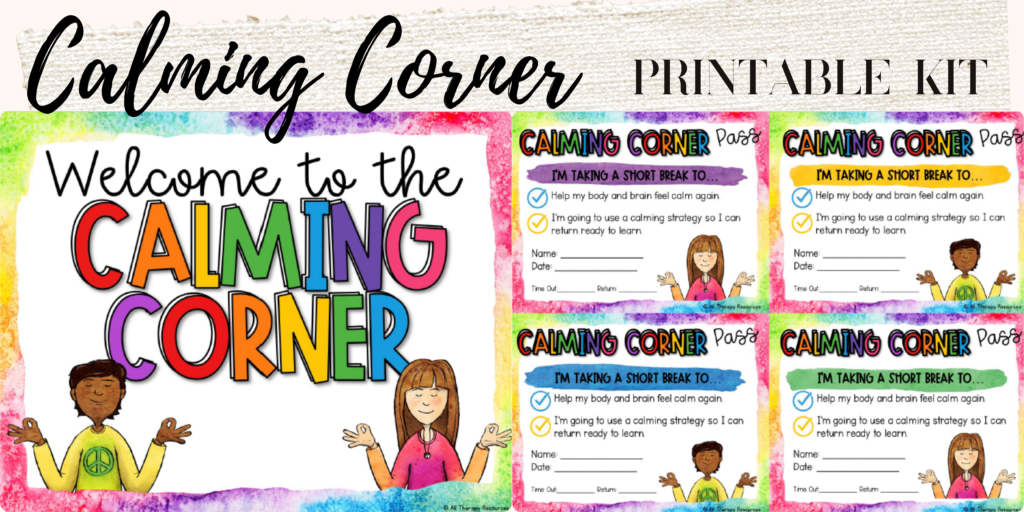
The toolkit also includes flexible signage, allowing educators to choose the language that best suits their setting, including Calm Corner, Regulation Station, Peace Corner, Reset Zone, and Calm Down Spot, along with passes and classroom guides that help establish consistent expectations.
Whether you’re creating your very first regulation space or refreshing an existing one, these resources are designed to support children in developing meaningful self-regulation skills that last far beyond the school year.
Frequently Asked Questions
What is a calm corner?
A calm corner is a dedicated space where children can practice emotional regulation strategies, develop self-awareness, and use coping tools to help them return to learning. Unlike a time-out area, a calm corner focuses on teaching lifelong regulation skills rather than punishing behavior.
What should be included in a calm corner?
An effective calm corner often includes feelings posters, body clues visuals, coping strategy cards, breathing exercises, grounding activities, reflection prompts, affirmations, and visual supports that help children recognize emotions and choose regulation strategies independently.
Are calm corners evidence-based?
While no single calm corner model has been universally validated, many of the practices commonly included—such as emotional literacy, co-regulation, grounding techniques, breathing exercises, and explicit self-regulation instruction—are supported by research in child development, neuroscience, and trauma-informed education.
Can calm corners be used in school counseling offices?
Absolutely. Calm corners work well in classrooms, counseling offices, special education settings, behavior support rooms, and intervention spaces. They provide students with a predictable environment where they can practice regulation skills with adult guidance.
What is the difference between a calm corner and a time-out?
A time-out is typically used as a behavioral consequence to reduce unwanted behavior. A calm corner, by contrast, is a supportive regulation space designed to help children understand their emotions, practice coping strategies, and develop the skills needed to return to learning successfully.
Want Even More Research-Informed Counseling Resources?
If you’re looking to save planning time while creating engaging, evidence-informed counseling programs, the All Therapy Resources® Membership gives you instant access to an ever-growing library of counseling resources designed by helping professionals for helping professionals.
Inside you’ll find:
- Emotional regulation lessons
- Calm Corner Toolkits
- Digital counseling games
- Small group curricula
- Social-emotional learning activities
- Trauma-informed classroom resources
- Coping skills lessons
- Behavior supports
- New resources added every month