

A teen may understand every step of an assignment and still submit it late, lose track of materials, or shut down when the plan changes. That gap is where executive functioning activities for teens can be especially useful. The goal is not to make adolescents more compliant or productive at all costs. It is to give them repeated, supported practice with the skills that help them manage school demands, relationships, responsibilities, and growing independence.
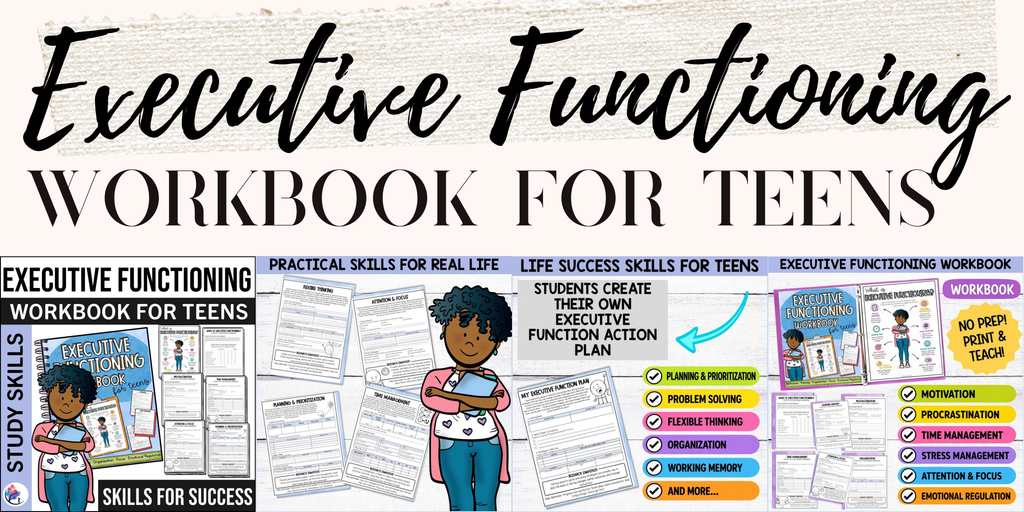
Executive functioning includes planning, organization, task initiation, working memory, time awareness, emotional regulation, flexible thinking, and self-monitoring. These skills develop over time and can look different depending on a teen’s stress level, learning profile, sleep, sensory needs, mental health, and environment. A strong activity makes an invisible skill visible, gives the teen a low-stakes way to practice it, and creates space to reflect on what helped.
Why Executive Functioning Can Look Different in Adolescence
Adolescence brings more freedom, but it also brings more moving parts. Students may be expected to manage multiple teachers, shifting schedules, longer assignments, extracurricular commitments, social expectations, and digital distractions. A teen who did reasonably well with a single classroom routine may struggle when no adult is consistently breaking tasks into steps.
It is also helpful to separate a skill difficulty from a motivation judgment. Avoiding a large project, repeatedly asking what comes next, or becoming distressed after a schedule change can reflect an executive functioning need rather than indifference. Teens are more likely to engage when adults approach these moments with curiosity: What part feels unclear? What is hard about getting started? What would make the next step smaller?
That stance is both practical and trauma-informed. It protects the relationship while giving the professional useful information about the actual barrier.
Choosing Executive Functioning Activities for Teens
The most effective activities are connected to a real demand in the teen’s life. A generic planning game can be a useful warm-up, but it has more value when the teen can later apply the same strategy to an upcoming test, a group project, a therapy goal, or a busy week at home.
Start with one target skill. If a student cannot begin homework, the concern may be task initiation, but it could also involve unclear directions, anxiety about making mistakes, limited working memory, or an environment with too many distractions. A brief conversation and a concrete example often reveal more than a broad question such as, “Why are you not doing your work?”
Keep the challenge achievable. Teens benefit from activities that are demanding enough to require a strategy but not so difficult that they confirm a belief that they are disorganized or incapable. Build in choice when possible, including whether they want to use paper, a whiteboard, a digital tool, or verbal rehearsal.
Executive Functioning Activities for Teens to Use Right Away
1. The Backward Plan Challenge
Give the teen a realistic end goal, such as preparing for a presentation, completing a scholarship application, planning a club event, or getting ready for an appointment. Ask them to begin at the deadline and work backward. What has to be finished the day before? What information or materials are needed first? Where might waiting for someone else create a delay?
This activity strengthens planning, sequencing, and time awareness. The key is to move beyond a simple list of tasks. Help the teen estimate how long each step may take, identify a first action that can be completed in under 10 minutes, and add a buffer for unexpected problems. Compare the original plan with what actually happened later. That reflection teaches more than a perfectly completed worksheet.
2. The Two-Minute Start Experiment
Task initiation is often the hardest part. Invite the teen to choose one avoided task and commit to working on it for only two minutes. Before beginning, ask what makes the task difficult to start. They may name boredom, fear of getting it wrong, uncertainty, fatigue, or the feeling that the task is too large.
Then test one starting support: opening the document, gathering supplies, setting a short timer, writing a rough first sentence, or completing only the first problem. At the end of two minutes, pause rather than automatically requiring more work. Discuss whether the task feels different now and what made the start possible.
This activity should not become a pressure tactic. Its purpose is to help teens notice that beginning can be designed, not simply willed into existence.
3. Working Memory Relay
For this activity, present a short set of directions verbally without showing them in writing. For example: “Choose a topic card, write down two details, place it in the blue folder, and then check the calendar for the next meeting.” Ask the teen to repeat the directions, complete them, and identify which part was easiest to forget.
Gradually adjust the task by adding a distraction, changing the order, or asking the teen to create their own memory support. They might repeat directions aloud, use a brief note, group steps into chunks, or visualize the sequence. This is not a test of intelligence. It is a chance to normalize external supports and help teens identify tools that reduce cognitive load in real situations.
4. Plan B Scenarios
Flexible thinking is easier to discuss when the situation is concrete. Present a scenario with an unexpected change: a partner does not complete their part of a project, practice is canceled, a ride falls through, a teacher changes an assignment requirement, or a planned break is interrupted. Ask the teen to name their first reaction, then generate at least three possible responses.
Some responses may be less effective than others, and that is useful material for discussion. Explore the likely outcome of each option, what support could be requested, and which parts of the situation are within the teen’s control. For students who become overwhelmed by sudden changes, previewing common disruptions and practicing neutral self-talk can make flexibility feel more concrete and less like a demand to “just deal with it.”
Executive functioning also involves making thoughtful decisions, particularly when emotions, stress, or competing priorities influence our choices. Our Balanced Mind: Responsible Decision Making Game provides an interactive way for middle and high school students to explore emotional awareness, flexible thinking, problem-solving, and responsible decision-making through realistic scenarios and guided discussion.
5. The Weekly Energy Map
Traditional planners show where time goes, but they do not always show where energy goes. Have the teen sketch a typical week and mark high-demand periods, lower-energy times, transitions, and restorative activities. Then look together for patterns. Perhaps homework is routinely scheduled after an exhausting practice, or a difficult conversation is attempted when the teen is already overloaded.
Use the map to make one realistic adjustment. That may mean placing a short planning check-in before a demanding class, packing materials the night before, scheduling a regulation break before homework, or moving a task to a time when attention is stronger. This activity connects time management with self-awareness and regulation, which is often more useful than treating scheduling as a purely organizational skill.
Building Cognitive Flexibility Through Interactive Learning
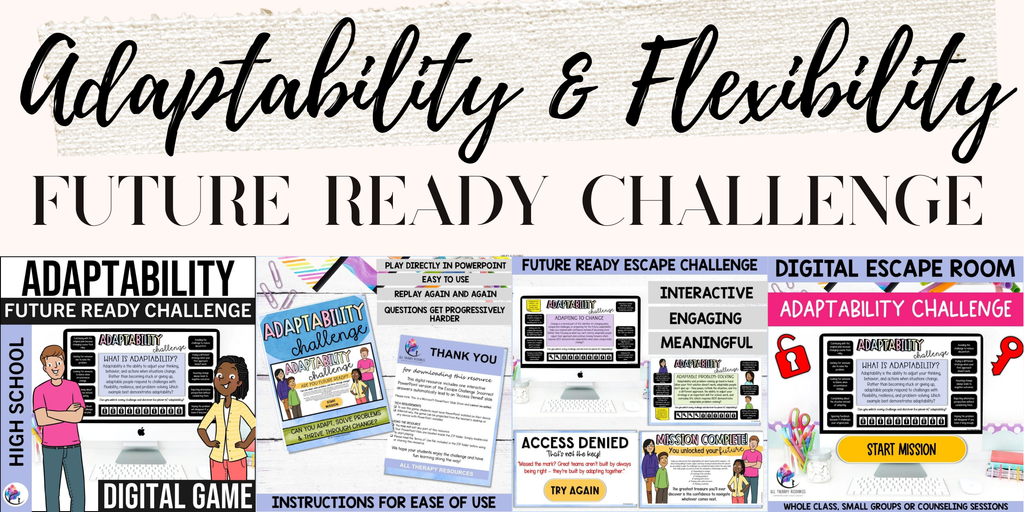
Cognitive flexibility is an important executive functioning skill that helps teenagers adjust their thinking, consider alternatives, and respond to unexpected changes. Interactive challenges provide opportunities to practice these skills while exploring realistic situations in a supportive environment.
Our Adaptability & Flexible Thinking Game brings these concepts into high school counseling and classroom settings through scenario-based questions, psychoeducation, and problem-solving challenges. Students explore adaptability, resilience, decision-making, and emotional regulation while practicing how to approach change with greater flexibility.
Make Practice Fit the Setting
In a school counseling or therapy session, one activity can serve as both intervention and informal assessment. Notice whether the teen needs repeated directions, skips steps, underestimates time, becomes stuck when there is no single correct answer, or has trouble noticing when a strategy is not working. Those observations can guide the next session and support meaningful collaboration with caregivers and school staff when appropriate.
In classrooms or small groups, keep practice brief and embedded in authentic routines. A two-minute backward plan before beginning a long assignment, a visual checklist for a multi-step task, or a quick Plan B discussion after a schedule change can be more sustainable than an occasional standalone lesson.
At home, caregivers can support skill-building by using collaborative language. “What is your plan for remembering that?” is usually more effective than repeated reminders. Still, it depends on the teen. Some adolescents need a visible routine, shared calendar check-in, or direct adult support before they can use a question independently. Scaffolding is not a failure. It is how a skill becomes more manageable over time.
Track Growth Without Making It a Grade
Progress in executive functioning is rarely linear. A teen may independently plan one week and need substantial support the next, particularly during periods of stress, illness, conflict, or academic overload. Track small indicators: how quickly they began, whether they used a strategy, how they responded to a change, and whether they could explain what got in the way.
A simple reflection after an activity can keep the focus on learning: What worked? What was harder than expected? What would you change next time? These questions build metacognition, the ability to think about one’s own thinking, which supports more independent strategy use.
The most meaningful outcome is not a perfectly color-coded planner or a teen who never needs a reminder. It is a young person who can recognize a barrier, choose a support, recover when a plan shifts, and experience themselves as capable of learning what works.