
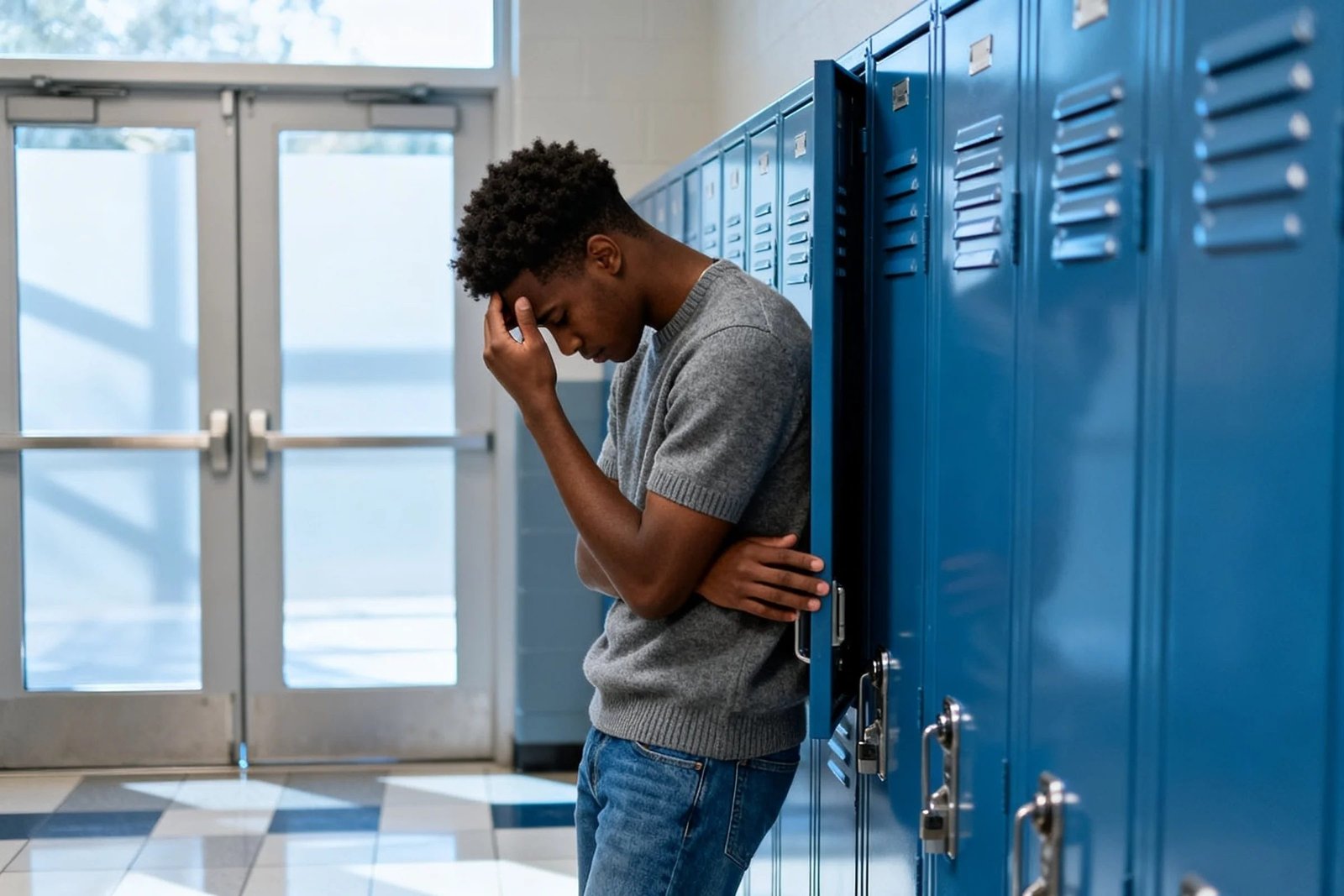
High school mental health activities can give teenagers something incredibly important: the language to understand what is happening inside them and the confidence to know when it might be time to reach out. We talk a lot about supporting teen mental health, but sometimes we forget that students need to be taught what mental health actually means.
For many teenagers, words such as anxiety, stress, depression, burnout and self-care are already part of their everyday vocabulary. They hear them online, from friends and across social media, but hearing the words does not necessarily mean they understand them.
This is where school counselors can play such an important role.
We can create safe, thoughtful opportunities for students to understand mental health without turning every conversation into a clinical assessment. We can help them notice changes, build coping skills, understand when everyday struggles may need more attention and, perhaps most importantly, learn what reaching out for support actually looks like.
Why High School Mental Health Activities Matter
Mental health is not something we should only discuss when a teenager reaches crisis point. Just as we teach young people about physical health before they become unwell, there is value in helping them understand emotional and psychological wellbeing before they desperately need that information.
I think this is one of the most important shifts we can make in school counseling. Instead of mental health conversations only beginning with, “Something is wrong,” they can begin with curiosity.
How am I doing lately? What happens to my body when I feel stressed? What helps me cope? Who are my people? How would I know if I needed more support? These questions help students develop mental health literacy and self-awareness. They also normalize talking about wellbeing as something everyone has, rather than something that only belongs to people experiencing a diagnosed mental health condition.
Mental Health Is Not Simply “Fine” or “Not Fine”
One concept I really like exploring with teenagers is the idea of mental health as a continuum.
We can sometimes talk about mental health as though there are only two possibilities. Someone is either mentally healthy or mentally unwell. Real life is much more complicated.
A teenager might be thriving during one period and struggling during another. They may generally be coping well but experience a difficult week when sleep, stress, relationships and school pressure all collide. Helping students recognize those shifts can be powerful. Instead of asking only, “Am I okay?”, we can help them ask, “Where am I right now, and what might I need?”
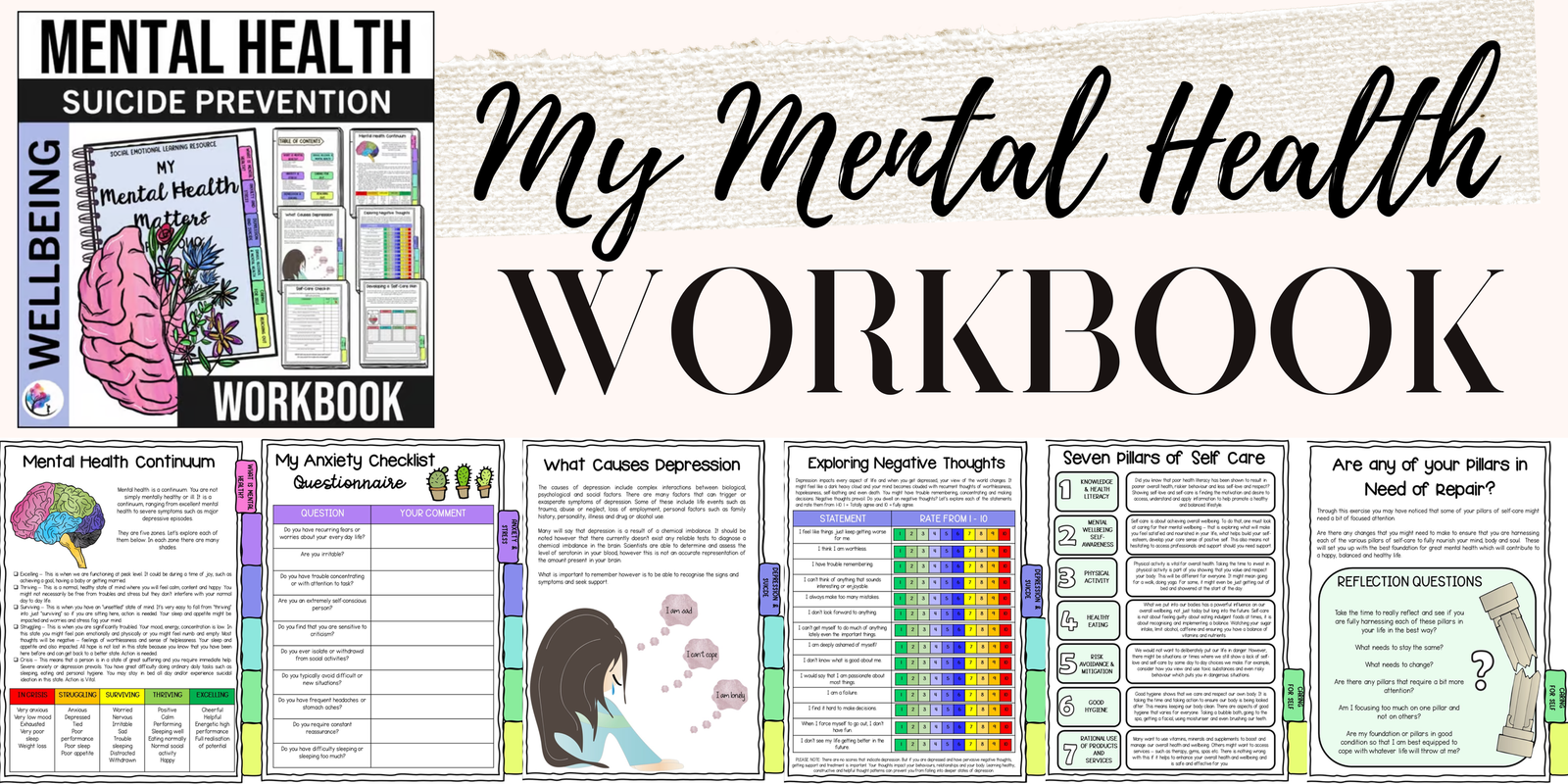
Our Mental Health Matters Portfolio uses a continuum that moves through different mental health states and then invites students to reflect on where they have spent their time across a week. The purpose is not to diagnose themselves, but to begin noticing their own patterns. That kind of self-awareness is a skill students can carry far beyond high school.
High School Mental Health Activities Should Build Language
Teenagers cannot always explain what they are experiencing. Sometimes “I’m stressed” means overwhelmed. Sometimes it means worried, exhausted, angry, under pressure or unable to concentrate.
The more emotional vocabulary students develop, the easier it becomes to communicate what is actually happening. This is particularly useful when exploring anxiety and stress.
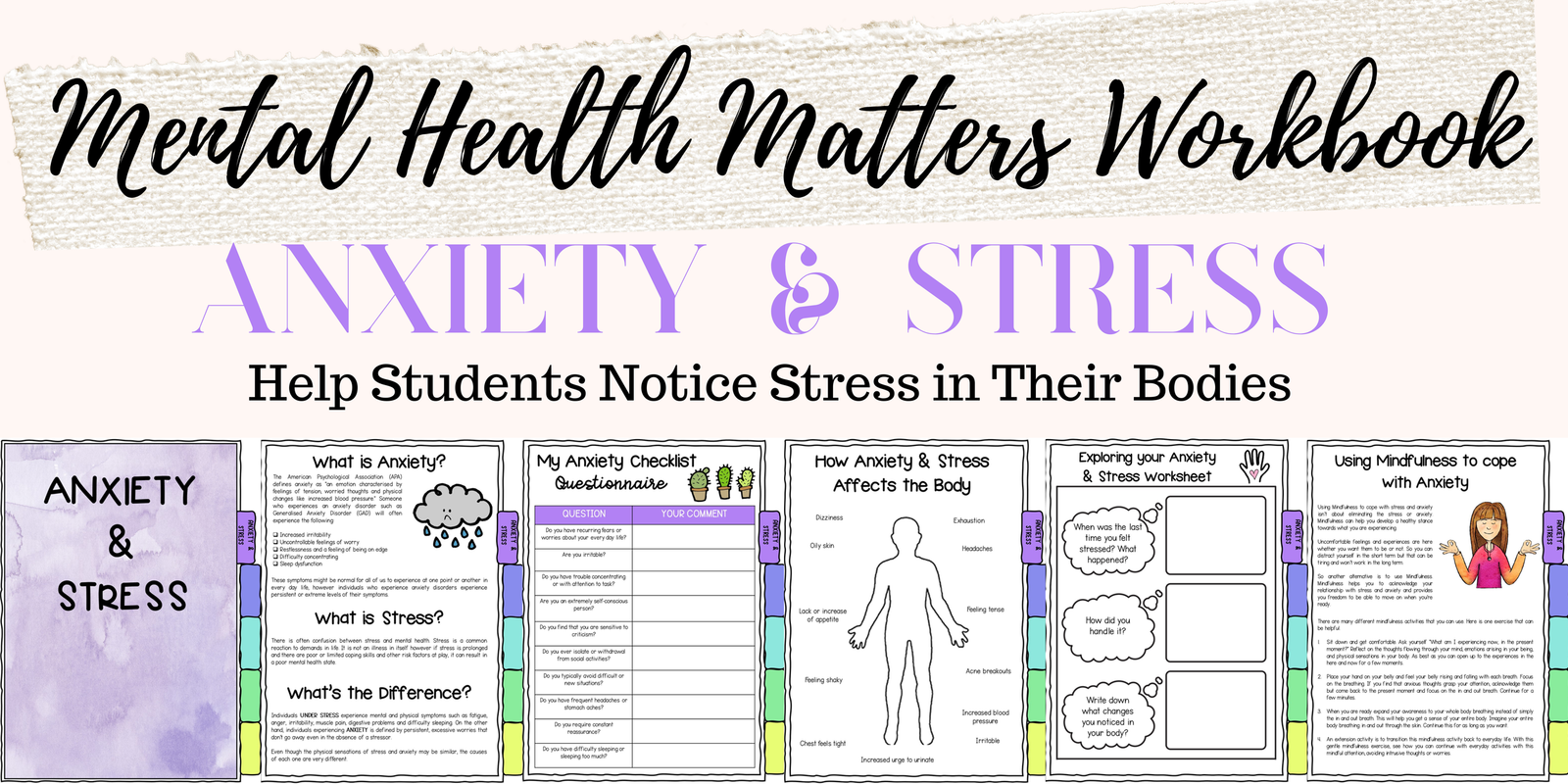
Students can learn that stress and anxiety may feel similar in the body while having different triggers and patterns. They can also begin noticing physical signs such as tension, sleep changes, headaches, changes in appetite or feeling shaky and unsettled.
We are not teaching teenagers to diagnose themselves based on a checklist. We are teaching them to notice. There is a big difference.
7 Powerful High School Mental Health Activities and Strategies
You do not need every mental health lesson to be enormous or emotionally intense. Some of the best high school mental health activities simply give students a structured opportunity to stop and think.
Here are seven approaches I particularly like.
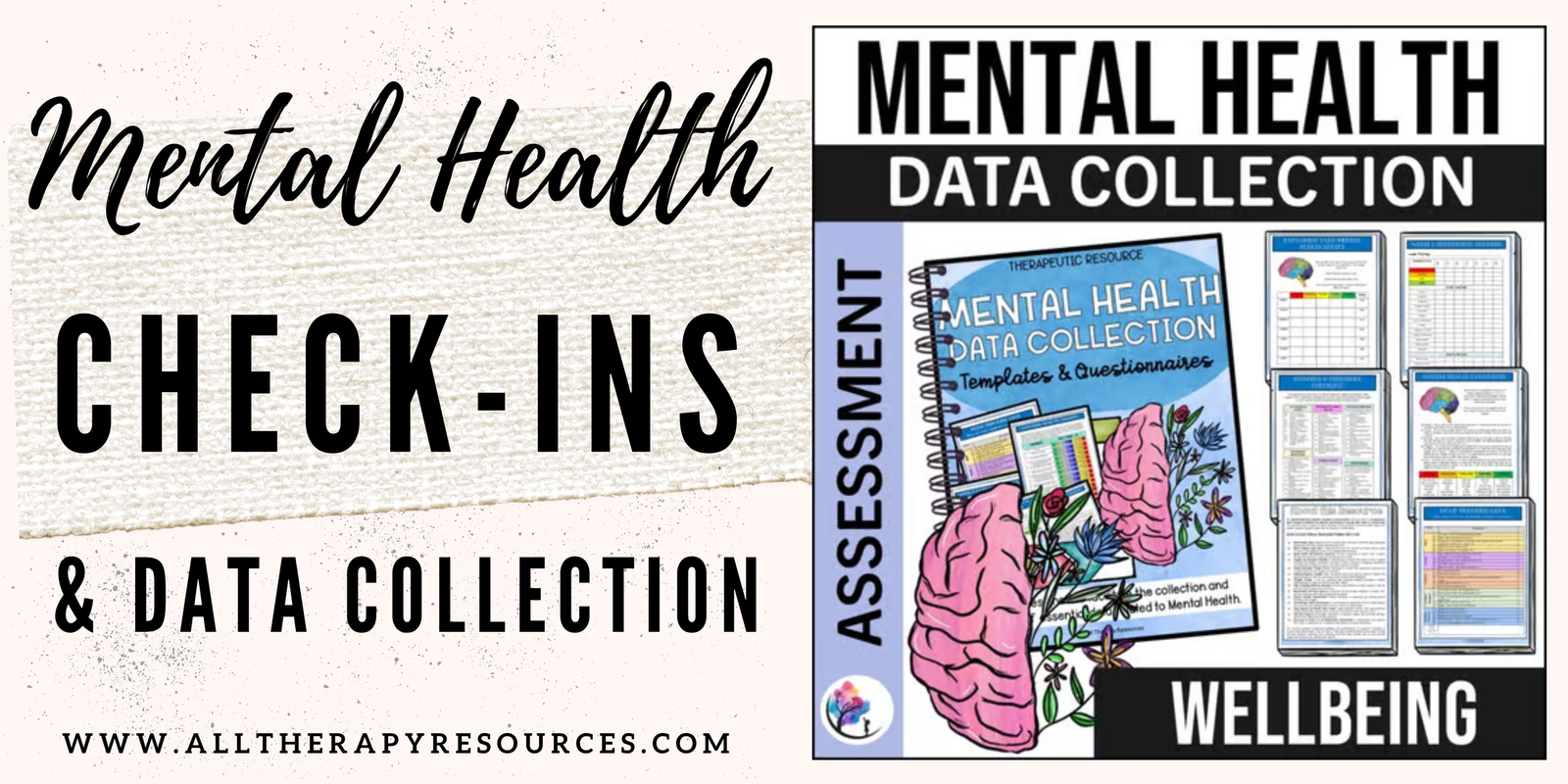
1. Use a Mental Health Continuum Check-In
Instead of asking students only whether they feel “good” or “bad,” introduce the idea that wellbeing can move along a continuum.
Ask students where they feel they have spent most of their time recently. Have they generally felt settled and able to cope? Have they been surviving but finding everyday things harder?
The important part is not assigning a label. The value comes from noticing change. You can then ask, “What helps move you toward feeling more like yourself?” That question moves the conversation naturally toward coping and support.
2. Help Students Notice Stress in Their Bodies
Stress is not only something that happens inside our thoughts. Ask students where they notice stress physically.
Some might notice tension in their shoulders. Others experience headaches, changes in sleep, stomach discomfort, restlessness or difficulty concentrating. Then take the conversation one step further. What usually happens before you notice those signs? This helps students begin connecting situations, thoughts, emotions and physical responses.
The earlier they recognize their own signs of stress, the earlier they may be able to respond.
3. Explore Thoughts Without Treating Them as Facts
Teenagers can have incredibly convincing thoughts. Everyone hates me. I’m going to fail. Nothing is ever going to get better.
A useful counseling activity is helping students separate having a thought from automatically accepting that thought as fact. Ask questions such as: Am I jumping to conclusions? Am I focusing only on the negative? Am I predicting the worst?
The Mental Health Matters Portfolio includes this idea through its Autopilot Thoughts, alternative-thought questions and thought-tracking activities.
The aim is not to tell teenagers to “think positively.” Sometimes things genuinely are difficult. Instead, we are helping students develop a little space between themselves and their thoughts so they can examine them more carefully.
4. Make Self-Care Specific
Tell a teenager to “practice self-care” and you may receive a polite nod without either of you having any idea what that actually means.
Make it concrete. What helps you sleep better? Who helps you feel connected? What helps your body feel better? What gives your brain a break? What boundaries might you need? Self-care does not have to mean bubble baths and face masks, although there is nothing wrong with either.
It can mean sleep, movement, eating regularly, spending time outside, limiting social media, connecting with supportive people, taking a break or asking for professional help when it is needed. Students benefit from understanding that caring for themselves is made up of many small choices rather than one perfect wellness routine.
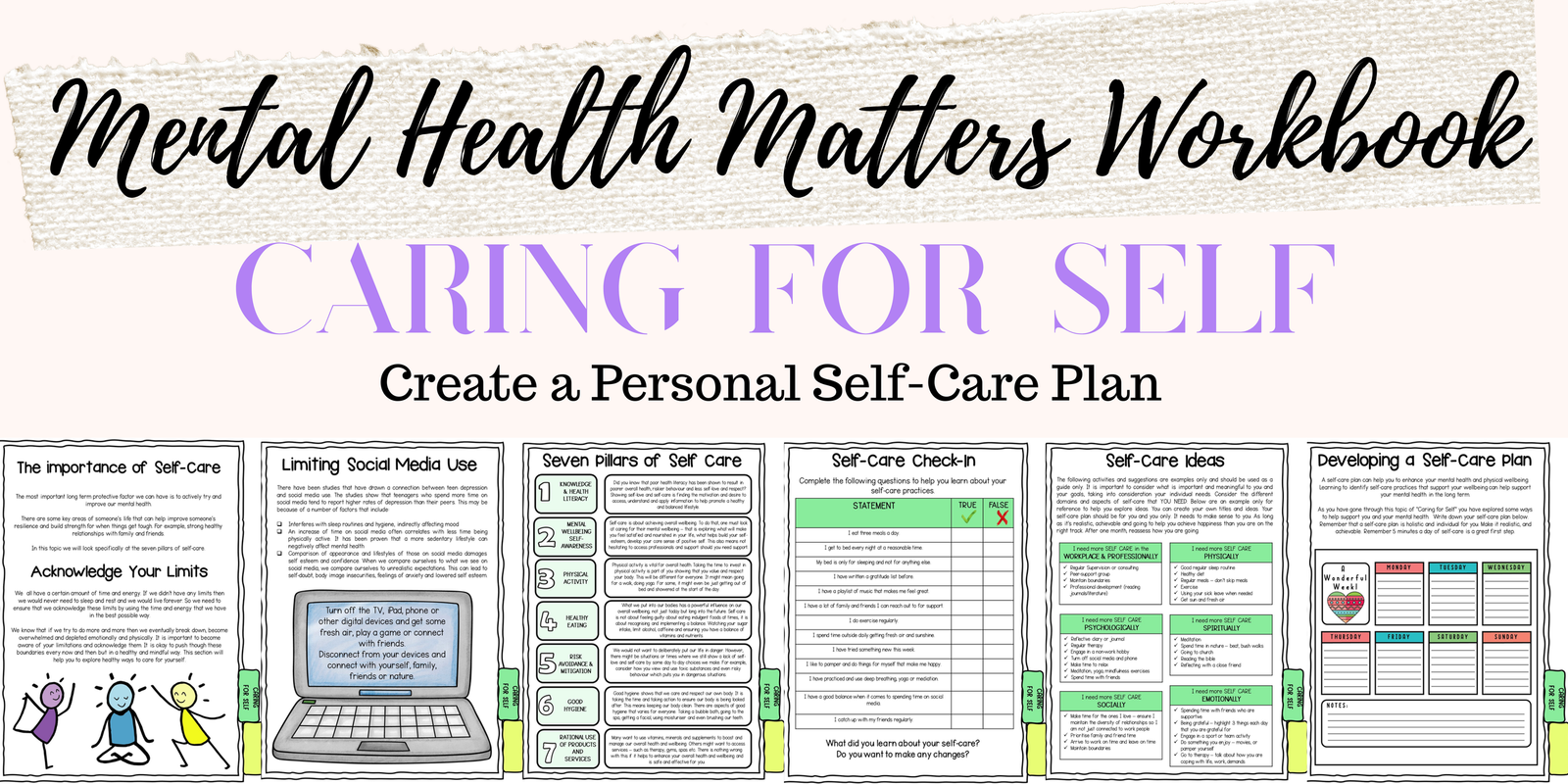
5. Create a Personal Self-Care Plan
Once students identify what supports their wellbeing, help them turn those ideas into something practical. Ask them to choose a few realistic actions they could actually use during the week. Five minutes outside may be realistic.
Going to the gym for two hours every morning when they currently hate exercise probably is not. The Mental Health Matters Portfolio includes a self-care check-in, self-care ideas, a bingo activity and an individual weekly self-care plan.
I particularly like the planning piece because knowing what might help and actually doing it are two very different things. Small and achievable usually wins.
6. Teach Students HOW to Reach Out
We tell teenagers to “reach out” all the time. But do we actually teach them how? This is something I feel quite strongly about.
Asking for help can feel incredibly vulnerable, especially when somebody is already overwhelmed and struggling to find the words. Give students actual language. “I’m not doing very well at the moment and I think I need to talk to someone.” Or: “Could you check in with me tomorrow? Things feel pretty hard right now.”
The portfolio specifically explores reaching out, asking for a check-in, identifying support and creating an action plan. That is important because “ask for help” becomes much more useful when students know what asking can actually sound like.
7. Help Students Identify Their Support Network Before They Need It
Do not wait until a teenager is overwhelmed to ask, “Who could you talk to?”
Explore that question while things are relatively calm.
Who is one trusted adult at school? Who could they approach at home?
Is there another family member, coach, counselor or professional they trust?
Students may also need different people for different situations.
The friend who makes you laugh may not be the person you would approach during a mental health crisis.
Helping students identify their support network ahead of time makes reaching out more concrete.
Mental Health Activities Should Never Force Disclosure
This is particularly important when we are discussing mental health in groups or classrooms. You never really know what every student sitting in front of you has experienced. One student may have personal experience with anxiety. Another may have a parent living with depression. Another may have experienced self-harm, suicide or substance use within their family or friendship group.
We should never assume these topics are theoretical. That is why I prefer high school mental health activities that allow students to reflect without requiring them to disclose deeply personal experiences publicly.
Students can pass. They can write privately. They can discuss hypothetical situations. They can listen.
Participation does not always have to mean telling everyone your story. That choice is part of creating a trauma-informed space.
Talking About Depression Without Making Every Sad Day a Diagnosis
Teenagers need accurate information about depression, but they also need help understanding the difference between experiencing difficult emotions and living with a mental health condition. Feeling sad does not automatically mean someone has depression.
At the same time, persistent changes in mood, interest, energy, sleep, concentration, appetite, social connection or feelings about oneself should not simply be dismissed as “teenage moodiness.” This is where mental health education can help.
We can teach students to notice patterns, duration and impact without encouraging them to diagnose themselves or one another. And if something feels concerning, the next step is not an online quiz or a friend’s opinion. The next step is support from an appropriately qualified adult or professional.
Talking About Suicide Requires Care, Not Silence
Suicide is one of the topics adults can understandably feel nervous discussing with teenagers. However, avoiding the topic entirely does not teach students what warning signs might look like, what they should do if they are worried about somebody or how to ask for help themselves.
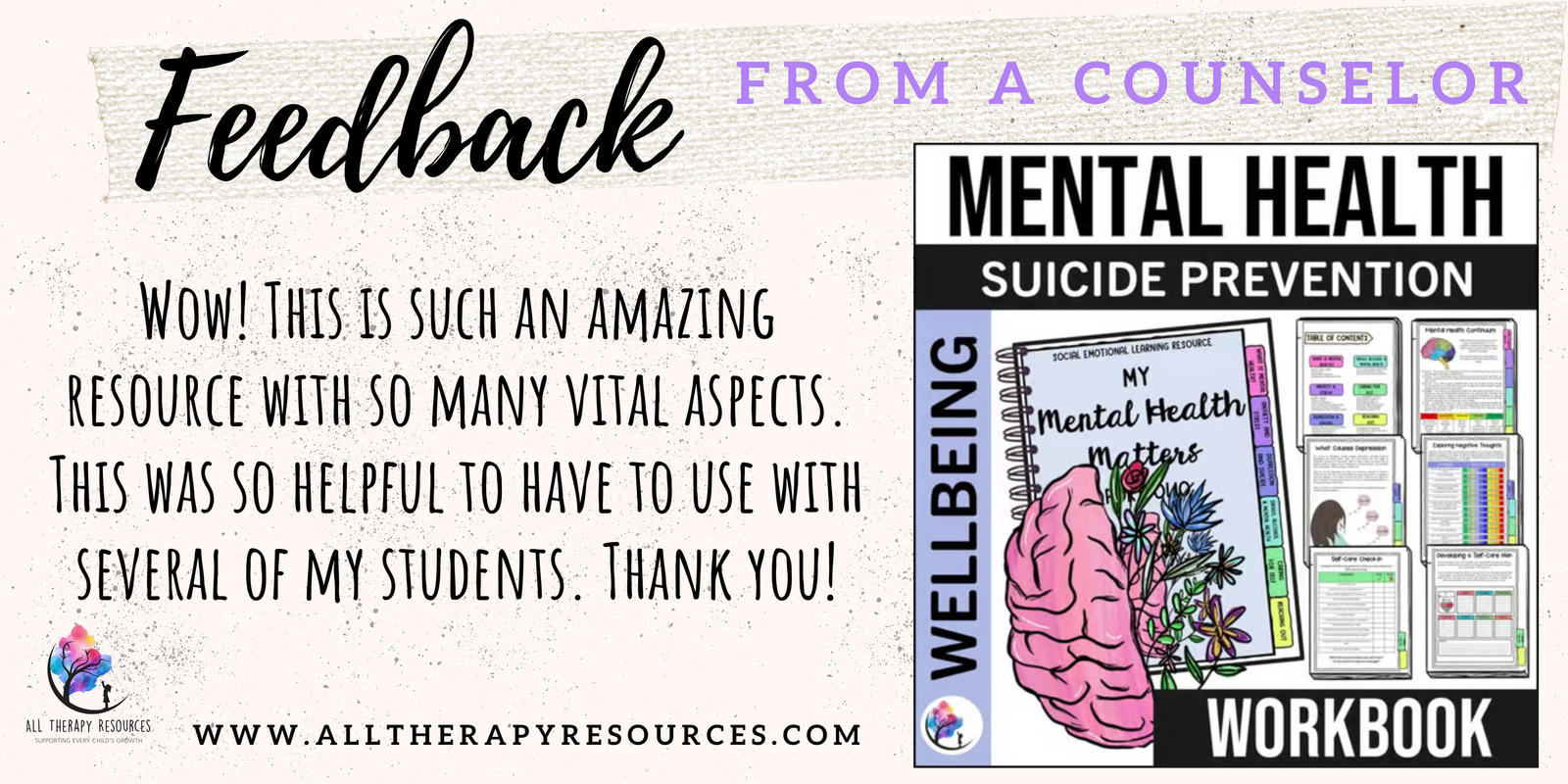
The Mental Health Matters Portfolio includes education around depression, self-harm, suicide warning signs, myths, supporting somebody at risk and raising the alarm. For school counselors, these discussions should always sit within your school’s safeguarding procedures and current professional guidance.
A worksheet is never a substitute for risk assessment, crisis response or professional intervention. If a student indicates that they may be at risk of harming themselves, the activity stops being a lesson. The priority becomes safety. That distinction matters enormously.
Reaching Out Is a Skill, Not a Personality Trait
Some teenagers seem naturally comfortable asking for help. Others would rather do almost anything else. We can sometimes interpret that reluctance as stubbornness, but reaching out requires several things to happen at once.
A student has to recognize that something is wrong, believe their problem is worthy of support, identify somebody they trust and find the words to tell them.
That is actually quite a lot. So we can practice it. What could you say? Who could you approach? What could you do if the first person was unavailable? Could you ask somebody to check in with you tomorrow? When we teach those steps, reaching out stops being a vague instruction and becomes a practical skill.
Self-Care Is Not the Same as Treating Mental Illness
I think this distinction is incredibly important. Sleep, exercise, connection, mindfulness and other self-care practices can support wellbeing. However, we should never imply that a teenager experiencing significant mental health difficulties simply needs to sleep more, exercise or spend less time on their phone.
That can feel incredibly invalidating. Self-care can sit alongside professional support. Sometimes caring for yourself means going for a walk. Sometimes it means telling somebody, “I am not coping and I need help.” Both can be acts of self-care.
Drugs, Alcohol and Teen Mental Health
Another conversation worth having with older students is the relationship between substances and mental health. Teenagers may encounter messages suggesting alcohol or drugs can help someone relax, forget their problems or feel better temporarily. Mental health education gives us an opportunity to explore that idea more carefully. Our portfolio includes a dedicated section on Drugs, Alcohol & Mental Health, including the impact of substances on mental health, alcohol and the brain, and a habits questionnaire.
The aim should not be shame. Instead, we want students to understand that using substances to cope with emotional distress can create additional difficulties and that healthier support is available.
Our Mental Health Matters Portfolio
These ideas are at the heart of our Mental Health Matters Portfolio. I wanted to create something that could help school counselors and educators move beyond a single mental health worksheet and instead explore wellbeing from several different directions. The portfolio contains six sections: What Is Mental Health?, Anxiety & Stress, Depression & Suicide, Drugs, Alcohol & Mental Health, Caring for Self, and Reaching Out.
Students explore mental health states and risk factors before moving into anxiety, stress and how these experiences can affect the body. The resource then explores depression, self-harm and suicide awareness alongside thought patterns and thought tracking.
Students also look at the relationship between substances and mental health before moving into practical self-care and reaching out. The self-care section includes the seven pillars of self-care, reflection activities, social media use, exercise, sleep hygiene, a self-care check-in, self-care bingo, personal ideas and an individualized plan.
Finally, the Reaching Out section helps students think about relationships, asking for support, requesting check-ins, identifying where to go for help and creating an action plan. I think that final section is particularly important.
Mental health awareness should not leave a teenager thinking, “Okay, now I know what depression looks like.” It should also help answer: “What do I do if I’m worried about myself or somebody else?”
How School Counselors Can Use the Mental Health Matters Portfolio
The portfolio does not need to be completed from beginning to end with every student. You might use the mental health continuum as part of a general wellbeing lesson.
The anxiety and stress activities could support individual or small group counseling. Thought-tracking pages might help a student begin noticing patterns. The self-care section could become a short series of high school wellbeing lessons.
The reaching-out activities may be particularly valuable when discussing help-seeking and protective supports. Use professional judgment. Choose the sections that match the purpose of the session and the needs of the students in front of you. And when the topic becomes more sensitive, slow down. A meaningful mental health conversation is never measured by how many pages you managed to complete.
High School Mental Health Activities Should Leave Students With Hope and Direction
There is something I always want students to understand when we talk about mental health. Struggling does not mean failing. Needing support does not mean weakness. And not knowing what to say does not mean you have to stay silent.
Good high school mental health activities should give teenagers more than information. They should give students language. They should build self-awareness. They should help students recognize support. And they should leave young people knowing that if something becomes too difficult to manage alone, there is a next step.
Looking for More High School Mental Health Activities?
If you regularly search for high school mental health activities, teen wellbeing resources, school counseling activities, anxiety and stress activities, depression awareness resources, self-care activities or SEL resources for high school students, you might also love the All Therapy Resources Membership.
I created the membership for school counselors, therapists and educators who want thoughtful, engaging resources without spending hours creating everything themselves. Inside, you will find a growing library of counseling games, therapeutic activities, high school counseling resources, mental health and wellbeing materials, SEL activities, workbooks, small group resources and practical tools for supporting children and teenagers.
My goal has always been for our resources to help open the conversation, not replace the professional having it.
A worksheet can help a teenager identify what they are feeling.
An activity can give them language.
A plan can help them identify their next step.
But sometimes the most important part happens when the student looks up from the page and realizes there is a safe adult sitting across from them who is genuinely ready to listen.
If that sounds like the way you work too, I would love to welcome you into the All Therapy Resources Membership.
Because mental health education is not simply about teaching teenagers the signs that something might be wrong.
It is also about helping them understand what they can do next.