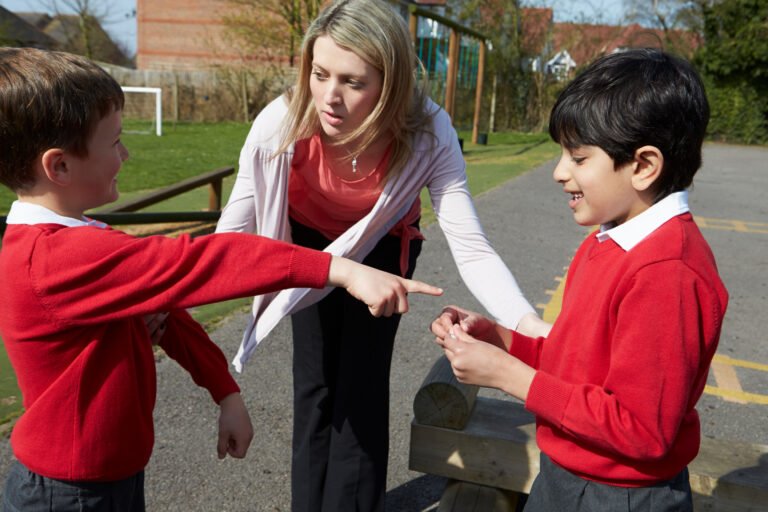
A student who melts down when a board game goes wrong is showing you exactly which skill needs practice. That is the quiet power of emotional regulation games for kids: they create small, safe moments of frustration, excitement and disappointment that children can practice managing while an adult is right there to coach. Instead of talking about calm in the abstract, students get to rehearse it.
This guide shares 10 emotional regulation games you can use in individual counseling, small groups and classrooms, organized by the skill each one builds: noticing feelings, using calming strategies, handling frustration and transferring the skill to real life. Each game includes what it looks like and what you might say, followed by tips for adapting games for different learners. If you are looking for non-game ideas, our guide to emotional regulation activities for kids pairs well with this one.
Why Games Work for Teaching Emotional Regulation
Most children cannot learn a calming strategy in the middle of a meltdown. Games let us teach and practice regulation skills when children are calm enough to learn, while still bringing up real feelings in small doses.
A well-chosen game does several things at once:
- It creates manageable challenge. Waiting, losing a round or drawing a tricky card brings up real frustration at a level most children can handle with support.
- It lowers the pressure to talk. Many children share more easily when their hands are busy and the focus is on the game.
- It allows repetition. Regulation is a skill, and games make the tenth round of practice feel as fun as the first.
- It gives the adult a coaching window. You can notice and name what is happening in the moment (“I can see your hands getting tight. Want to try a slow breath before your turn?”).
Games are not a replacement for co-regulation or individualized support. They work best as part of a wider plan where adults model calm and help children connect practice to everyday moments.
Before You Play: Setting Up Games So They Stay Regulating
The same game can be calming or overwhelming depending on how it is set up, especially for children who have experienced trauma or who dysregulate quickly.
- Play when students are mostly calm. Games are for practice, not crisis response.
- Preview the rules and the feelings. Before you start, say something like, “Sometimes in this game we lose a turn. That might feel annoying. Let’s plan what we can do if that happens.”
- Offer a pass option. No child should be required to share a personal story to keep playing. A “pass” or “tell me about a character instead” card keeps participation safe.
- Keep rounds short. Ten to fifteen minutes of focused play with a debrief usually teaches more than a long game.
- End on calm. Finish with a slow breath, a stretch or a quick check-in so students leave the session regulated.
Try this in your next session: Start every game with a 10-second “body check.” Ask students to rate their energy from 1 (sleepy) to 5 (super wiggly) using their fingers. Repeat the check halfway through and at the end. Over time, children start noticing their own shifts.
Games for Naming and Noticing Feelings
Regulation starts with awareness. Children need words for their feelings and a sense of how those feelings show up in their bodies before they can choose what to do with them. These games suit elementary students.
1. Feelings Bingo With a “Tell Me When” Twist
Bingo is familiar and low-pressure. To turn it into regulation practice, add one step: when a feeling word is called, students can share a time they felt that way, a time a character felt that way, or where they might notice that feeling in their body.
What you might say: “Frustrated was just called. If you want to share, where do you feel frustrated in your body? Some people feel it in their hands or their jaw.”
2. Body Clue Charades
Write feelings on cards (calm, worried, excited, embarrassed, frustrated, proud). Students take turns acting out the feeling using only body language and facial expressions while others guess. After each guess, ask, “What clues did you notice?” This builds the skill of reading body signals in ourselves and others, which supports both regulation and empathy.
3. The Feelings Volume Dial
Draw a simple dial or number line from 1 to 5. Read a short scenario (“Your friend borrows your pencil without asking”), and students hold up fingers to show how big the feeling would be for them. Students quickly see that the same situation creates different sized feelings for different people, which opens a conversation about matching our reaction to the size of the problem. For more on that skill, see our post on size of the problem activities.
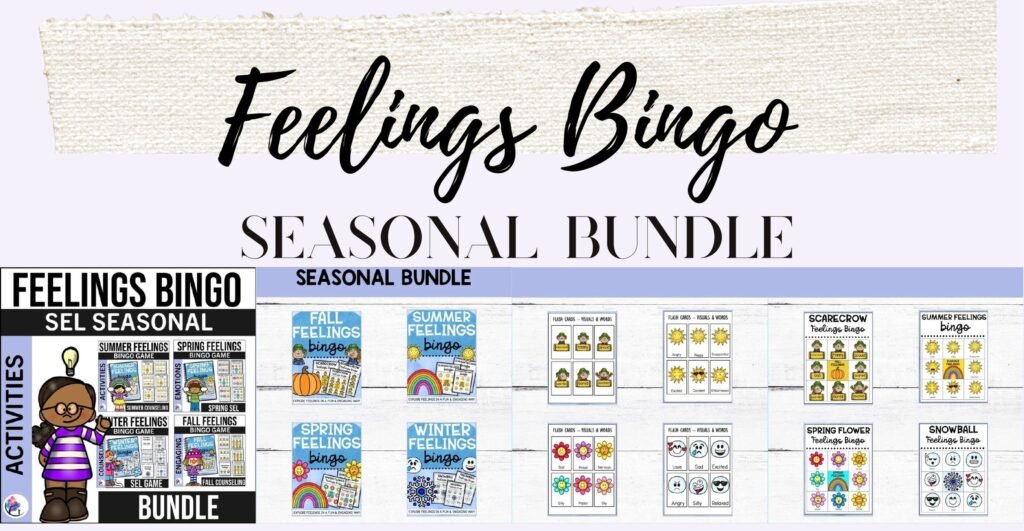
Resource spotlight: From our counseling room to yours, the Seasonal Feelings Bingo Bundle gives you spring, summer, fall and winter feelings bingo games, so feelings vocabulary practice stays fresh all year. It suits elementary students in small groups, lunch bunches or whole-class SEL lessons. Try adding the “Tell Me When” twist above, or ask students to show the called feeling on their face before they mark their board. One reviewer described the Spring Feelings Bingo game in this bundle as a great “grab and go” activity for sessions on busy days when you haven’t had time to plan.
Games for Practicing Calming Strategies
Once children can name a feeling, they need a toolbox of things to do about it. These games give students repeated, playful practice so strategies feel familiar when they are needed most.
4. Roll and Regulate
Assign a calming strategy to each number on a die: 1 = five slow breaths, 2 = squeeze and release your fists, 3 = name five things you can see, 4 = push against the wall for ten seconds, 5 = stretch up tall, 6 = choose your favorite. Students roll and practice the strategy together. After a few rounds, ask, “Which one made your body feel the calmest? Which one would you use in class?”
5. The Calm Tower
Use a stacking block tower and add colored dots to some blocks. When a student pulls a dotted block, they answer a prompt linked to that color: a calming strategy to demonstrate, a feeling to name, or a question such as “What helps you when you feel worried?” The wobbling tower also gives you a real-time chance to coach steady breathing and careful hands.
Try this in your classroom: After any calming game, ask each student to choose one strategy as their “go-to” for the week. Write it on a sticky note for their desk or folder. Later, you can quietly point to the note rather than starting a conversation in the heat of the moment.
Games for Frustration, Anger and Losing Well
Some of the most important practice happens when a game does not go a child’s way. Rather than avoiding competitive games, we can use them deliberately, with planning and support, to rehearse handling disappointment.
6. Board Games With Check-In Squares
Any simple board game becomes a regulation tool when some squares trigger a reflection question. Landing on a check-in square might mean answering “What is something that makes you lose your cool?” or “What does your body do when you start to feel angry?” Because questions arrive by chance, students feel less singled out.
7. The “Oops Round”
Before playing a quick competitive game, tell students that one round will be an “Oops Round” where something unexpected happens: the winner has to start over, or everyone swaps cards. Name it as practice: “This round is going to feel unfair on purpose. Our job is to notice our feelings and use a strategy.” Afterward, debrief what students noticed and what helped.
8. Calm Coach Role-Play
One student plays a game character who is getting frustrated, and another plays the “calm coach” who suggests a strategy. Then swap. Children are often more compassionate when coaching someone else, and saying strategies out loud helps them remember the words later.
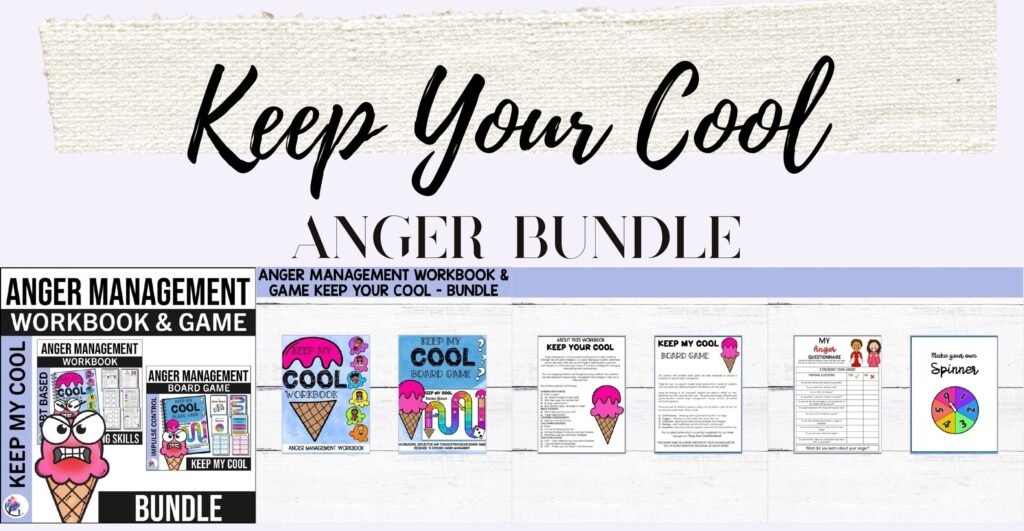
Resource spotlight: The Keep Your Cool Anger Management Workbook and Board Game Bundle pairs a reflective anger management workbook with the matching ice cream themed Keep My Cool board game. The game includes 115 reflective question cards across five color-coded themes (self-discovery, triggers, cool down, feelings and regulation), so you can play the whole game with a small group or pull one theme, such as triggers, for an individual session. Work through a workbook section first, then use the game to review it through play. One reviewer shared, “This game perfectly went with the Keep Your Cool Workbook,” and described how everything discussed in the workbook was matched to the board game and helped reinforce the key learning.
Digital and Whole-Class Emotional Regulation Games
Interactive games on a screen suit whole-class SEL lessons, telehealth sessions and older students who might find printable games too young.
9. Team Quiz Games With a Discussion Rule
Interactive PowerPoint games let teams choose questions about feelings, triggers and coping strategies. The key regulation move is a simple rule: before a team answers, every member has to share their idea, and the team decides together. This builds turn-taking, patience and flexible thinking alongside the content.
10. Four Corners: What Would Help?
Label the four corners of the room with different strategy types: move my body, calm my breathing, talk to someone, change my thoughts. Read a scenario and students walk to the corner that would help them most. Invite one or two students from each corner to explain their choice. The movement itself is regulating for many students.
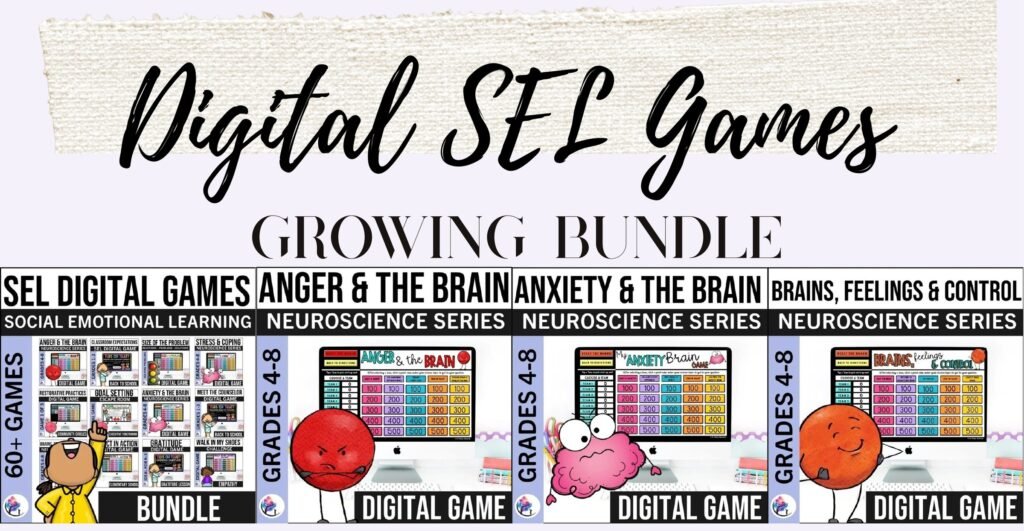
Resource spotlight: For upper elementary and middle school groups, the Digital SEL Games Bundle brings together interactive PowerPoint games covering anxiety and coping skills, anger and emotional regulation, impulse control, executive functioning, social skills and more, in a growing bundle you can project for a whole class or use one-on-one. Try running a game in teams with the discussion rule above, then end with a quick strategy check-in.
Making the Skill Stick Beyond the Game
The goal is for students to use the skill when it matters: on the playground, during a hard test or at home. A short debrief builds that bridge. After each game, choose one or two questions:
- “When did you notice a feeling during the game? What did you do?”
- “Which strategy would you use if this happened in class?”
- “What is one time this week you might need this skill?”
- “What could an adult do to help you remember?”
If you are running a small group, you can build a simple sequence where each session uses a different game to target one part of regulation. Here is an example six-session plan:
| Session | Focus | Game | Suggested ATR resource |
|---|---|---|---|
| 1 | Naming feelings | Feelings Bingo with “Tell Me When” | Seasonal Feelings Bingo Bundle |
| 2 | Noticing body clues | Body Clue Charades | Digital SEL Games Bundle |
| 3 | Sizing feelings | The Feelings Volume Dial | Emotional Regulation resources |
| 4 | Calming strategies | Roll and Regulate | Coping Skills Toolbox resources |
| 5 | Frustration and anger | Board game with check-in squares | Keep Your Cool Bundle |
| 6 | Transfer to real life | Calm Coach Role-Play and personal plan | Keep Your Cool Bundle |
For more structure, our guide to small group counseling curriculum ideas walks through planning a full group. A short note home sharing the chosen strategy helps children hear the same language in more than one place.
Adapting Emotional Regulation Games for Different Learners
Small adaptations help more students take part successfully.
- Younger children: use picture cards, fewer feelings and short rounds.
- Students who struggle with waiting: give a job during other turns, such as being the card holder or score keeper, so waiting has a purpose. Our impulse control games for children offer more ideas here.
- Students who are anxious about performing: allow pointing, writing or whispering answers to you instead of speaking to the group.
- Students with sensory needs: keep noise levels predictable, offer fidgets or a movement option and avoid sudden loud buzzers.
- Students with trauma histories: avoid prompts that ask for detailed personal stories, keep the pass option visible and stay close to offer co-regulation if a round brings up big feelings.
If a student becomes dysregulated during a game, pause the game. Connection and calm come first; the teaching can wait.
Frequently Asked Questions
What are emotional regulation games for kids?
They are structured, playful activities chosen or adapted so each round helps children practice recognizing feelings, noticing body signals or using calming strategies with adult support.
Can I use competitive games with students who struggle with losing?
Yes, with planning. Preview the possibility of losing, agree on a strategy beforehand, keep rounds short and debrief afterward. Competitive games give students valuable practice with disappointment when the challenge is kept at a manageable level.
How often should I use regulation games in counseling?
Short, regular practice tends to be more useful than occasional long sessions. A 10 to 15 minute game plus a debrief fits well within most sessions.
Are emotional regulation games enough on their own?
Games are a helpful teaching tool, but they work best alongside co-regulation from trusted adults, explicit teaching of strategies and support plans for students who need more. If a child’s emotional or behavioral needs are significant or ongoing, consult with your school team or a qualified mental health professional.
Looking for practical, ready-to-use resources to support your emotional regulation lessons? The All Therapy Resources Membership provides access to a growing collection of thoughtfully developed SEL activities, interactive games, and therapeutic tools designed to save preparation time while supporting meaningful, skill-focused learning.