
Best friends on Monday, not speaking by Wednesday, and a screenshot doing the rounds by Friday. If you work with middle school girls, you know how quickly friendship drama can take over a whole week, and how much of it happens out of sight. These girl drama activities give school counselors practical, low-prep ways to help girls name what is going on, tell everyday conflict from something more serious, and practice calmer, kinder ways through it.
This post focuses on the social dynamics behind girl drama in grades 4-8: queen bees and group power, cliques, and the habits that stir drama up. If you are looking for a broader overview of gossip, exclusion and the research behind it, start with our guide to relational aggression activities for students.
Why Girl Drama Peaks in Middle School
Middle school is a time of big social change. Friendship groups reshuffle, belonging feels urgent, and phones mean conflicts can follow students home. Much of what adults call “girl drama” is a form of relational or social aggression: behavior that harms someone’s friendships or social standing, such as leaving someone out, spreading rumors or giving the silent treatment. The Children’s Hospital of Philadelphia’s Violence Prevention Initiative notes that tweens and teens may come to accept these behaviors as a normal part of friendship, and that relational aggression is not only a girls’ issue: all children can use and experience it.
That is one reason we use the term “girl drama” carefully. It is the language girls themselves often use, which makes it a useful way in. But the goal of every activity is to move from “it’s just drama” to clear, shared words for specific behaviors, and to practical choices girls can make.
Queen Bees and Social Power
In many friendship groups, one or two girls hold a lot of influence over who is in, who is out and who sits where. Girls rarely describe this directly, but they feel it. Naming the quiet ways social power gets used helps girls see that they have more choice than they think.
Activity: Power Moves and Kind Moves
Give small groups a set of cards describing behaviors, such as “decides who can join the lunch table,” “tells everyone what to wear on Friday,” “invites a new student to sit with the group” or “checks in when someone is left out.” Groups sort them into “power moves” and “kind moves,” then talk about how each one affects the group. Finish by asking, “What could a girl who isn’t the queen bee do to make the group feel safer?”
Try this in your next group: Picture a group where one girl says, “If you sit with her, you can’t sit with us.” Ask your group, “What are the choices for everyone else at the table?” Help them script a calm response, such as “I’m going to sit with both of you. I don’t want to pick sides.”
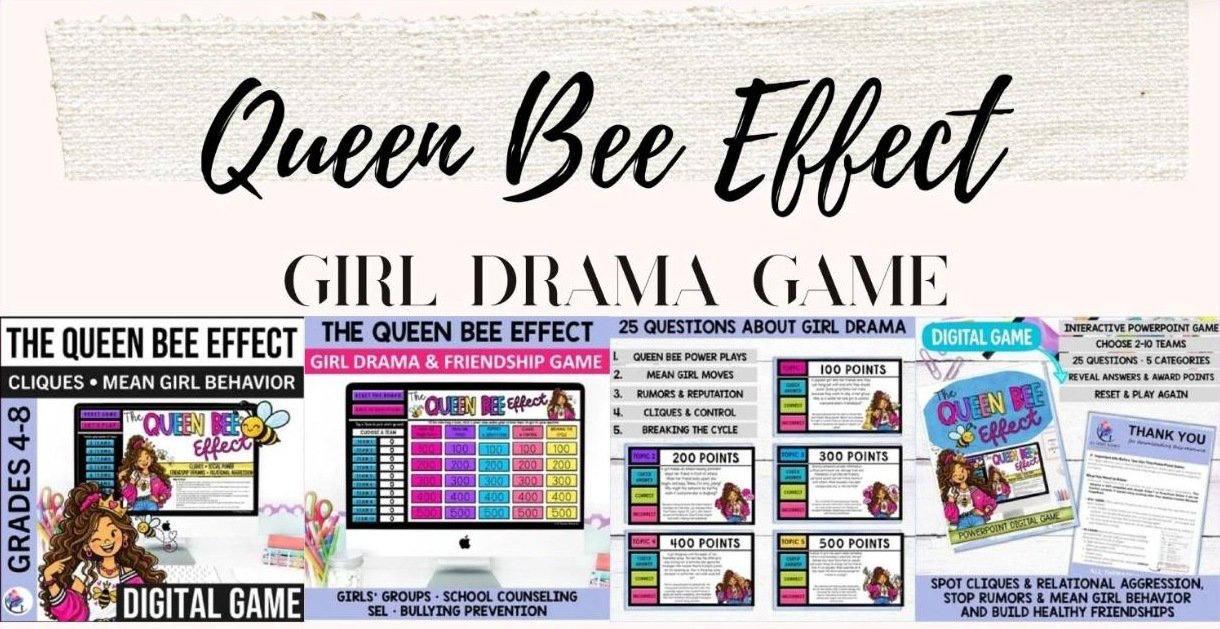
Our Queen Bee Effect Digital Game gives girls in grades 4-8 a fun, safe way to talk about cliques, social power and rumors. Teams choose question tiles across five topics (Rumors and Reputation, Mean Girl Moves, Queen Bee Power Plays, Cliques and Control, and Breaking the Cycle), talk them through and check the answer, with a built-in scoreboard keeping track. We like it early in a girls’ group, because it gives everyone shared language for what they have been seeing.
Cliques: When Belonging Turns Into Control
Wanting a close group of friends is healthy. Problems start when the group’s rules become rigid: who you can talk to, what you can post, who gets invited. Girls often stay in a controlling group because being on the outside feels worse.
Activity: Open Circle, Closed Circle
Draw two circles on the board. In one, list what an open friendship group looks like (friends can have other friends, new people are welcome, disagreements are talked through). In the other, list what a closed group looks like (rules about who you can talk to, threats to kick people out, secrets used as leverage). Ask, “Which circle feels safer to be in? How could a group move from closed to open?”
Activity: Frenemy or Friend?
Read short scenarios, such as a backhanded compliment, a friend who only includes you when no one else is around, or a friend who keeps a secret you asked them to keep. Girls decide whether each behavior shows a healthy friendship, a frenemy pattern or something in between, and suggest a boundary they could set.
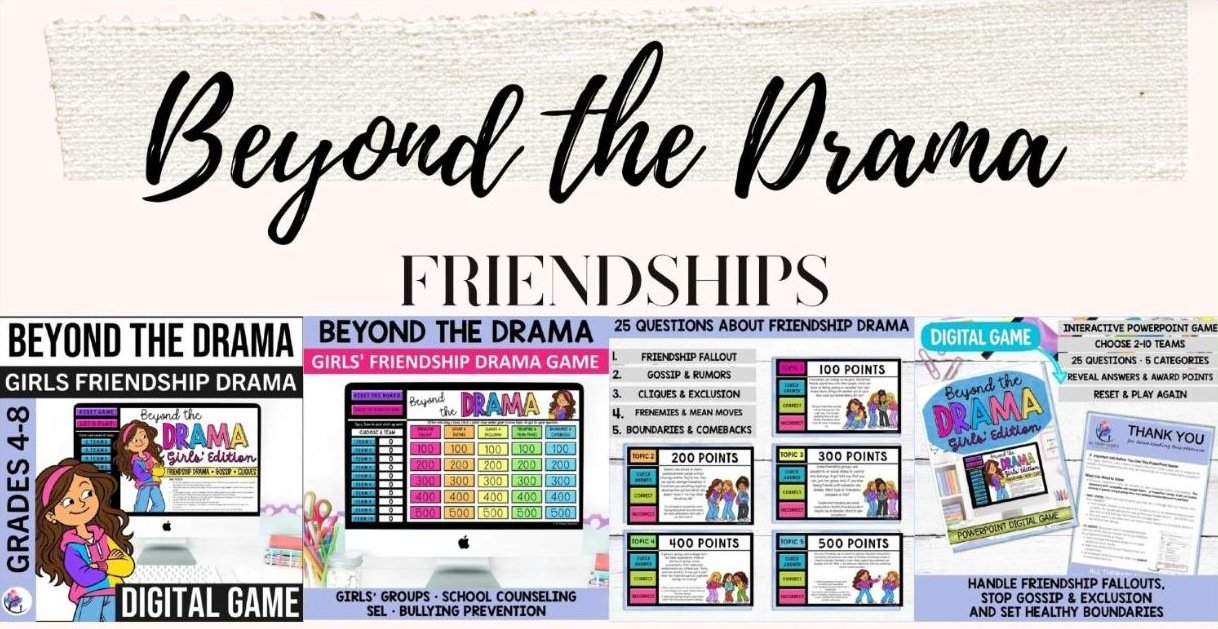
Our Beyond the Drama Friendship Game works through the situations girls in grades 4-8 know well: falling out with a best friend, screenshots being shared, being left out of the group, backhanded compliments and setting a boundary without making things worse. Every answer comes with a teaching point, which keeps the discussion on track. It is a good fit for girls’ groups, lunch bunch and SEL lessons.
Stirring the Pot: How Small Choices Fuel Drama
Most friendship blow-ups don’t start big. They grow through small choices: forwarding a message, adding “did you hear…?”, taking sides, or venting to the whole group instead of talking to the person directly. Helping girls notice these moments gives them a chance to calm things down instead.
Activity: Add Fuel or Cool It Down?
Read a short friendship conflict aloud, pausing at key moments. At each pause, girls decide whether the character’s next choice would add fuel or cool things down, and suggest a “cool it down” alternative. For example, instead of screenshotting a mean message to the group, a girl might talk to a trusted adult or speak to the friend privately.
Try this in your next group: Give each girl a “pause card.” Practice three calm phrases she can use when she feels pulled into drama: “I don’t want to be in the middle of this.” “Have you talked to her about it?” “I’m going to stay out of the group chat for now.”
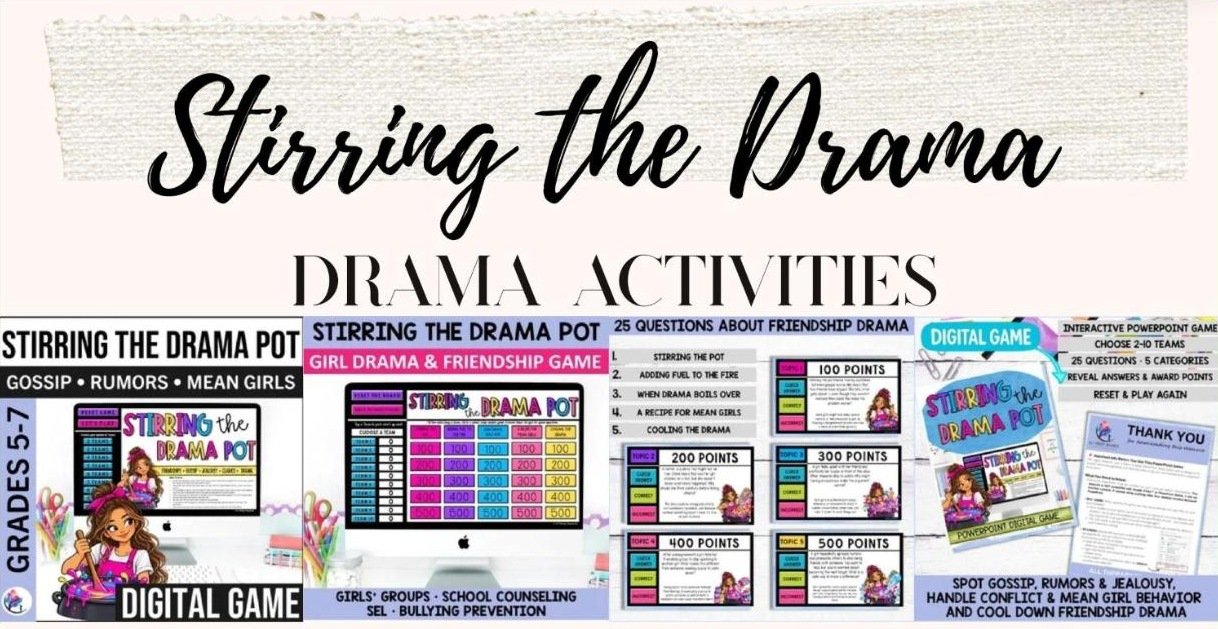
Our Stirring the Drama Pot Digital Game helps girls in grades 5-7 see how gossip, rumors, cliques and jealousy can either stir up drama or calm it down. With 25 questions, 2 to 10 teams and a built-in scoreboard, it is ready to play with a small group or a whole class.
Drama or Bullying? Teaching Girls the Difference
Girls often treat every friendship problem the same way: either it is the end of the world or it is “no big deal.” Helping them gauge how serious a situation is teaches them when they can work it out themselves and when they need an adult. Not every conflict is bullying; bullying involves repeated, intentional harm and an imbalance of power, and should always be handled through your school’s bullying procedures.
| Level | What it might look like | What girls can do |
|---|---|---|
| Little bumps | A disagreement about plans, a careless comment | Talk it through, use an I-statement, let it go |
| Friendship friction | Feeling left out once, a misunderstanding in a group chat | Speak to the friend privately, ask what happened |
| Drama | Gossip, taking sides, the silent treatment | Step out of the middle, talk to a trusted adult if it keeps going |
| Bullying | Repeated exclusion, rumors or threats aimed at one person, with a power imbalance | Tell a trusted adult; this needs adult help |
For more on handling everyday conflict, see our conflict resolution activities for students.
Our Friendship Temperature Check Game uses a thermometer idea to help students tell normal friendship drama from bullying. Each category turns up the heat, from little bumps and hurt feelings to gossip, exclusion, manipulation and bullying, and every answer has a teaching point. We find it a helpful way to close a girls’ group, because it leaves students with a clear plan for when to handle things themselves and when to get help.
Running a Girls’ Friendship Group
A short, structured group can give girls a safe place to practice these skills. A few tips that help:
- Keep it to scenarios. Girls open up more when they are talking about characters, not about each other. Set the agreement early: we talk about situations, not people.
- Mix the group thoughtfully. Avoid placing girls who are in active conflict together, and consider a mix of confident and quieter students.
- End every session with one skill. A phrase, a boundary or a “cool it down” choice they can try that week.
- Check in with teachers. Ask what they are noticing in class and at lunch, and share the language you are using so they can reinforce it.
For more friendship ideas, see our friendship skills activities.
If you would like a ready-made plan, our Relational Aggression Bundle brings together four of our digital counseling games for grades 4-8: Beyond the Drama, Queen Bee Effect, Stirring the Drama Pot and The Green-Eyed Monster. Each game takes a different angle, so you can run a four-week girls’ group, one game a week, without repeating yourself.
Frequently Asked Questions
What age does girl drama usually start?
Friendship conflicts happen at every age, but many counselors notice drama becoming more frequent and more complex in upper elementary and middle school, as friendship groups shift and social status starts to matter more.
Is girl drama the same as bullying?
Not always. Everyday friendship conflict is a normal part of growing up. When behavior is repeated, intentional and involves a power imbalance, it becomes bullying and should be handled through your school’s bullying procedures.
Should I run girl drama activities only with girls?
Girls’ groups can feel safer for talking about friendship dynamics, but relational aggression affects students of all genders. Many of these activities work well with mixed groups or whole classes, with the focus on behaviors and choices rather than gender.
How do I handle girls who are in conflict with each other?
Meet with each student individually first. If both are willing and it is safe, a calm, structured conversation can help repair the friendship. Avoid forcing a reconciliation, and use your school’s bullying procedures where there is a power imbalance.
Looking for practical, ready-to-use resources to support your friendship and girls’ group sessions? The All Therapy Resources Membership provides access to a growing collection of thoughtfully developed counseling activities, interactive games, and therapeutic tools designed to save preparation time while supporting meaningful, skill-focused learning.