
A student may produce a target sound correctly in a quiet therapy room, then struggle to use it when answering a question in class. Another may understand social language lessons but freeze when joining a lunch conversation. These moments are where speech therapy carryover matters most: the point where a skill practiced in sessions starts to show up in the classroom, the cafeteria and at home.
For busy school teams, clinicians, educators and caregivers, the challenge is rarely identifying that communication needs affect participation. It is creating focused practice that fits real schedules, respects individual needs, and carries beyond a single session. Below, we share practical ways to plan for carryover from the very first goal.
What effective speech therapy looks like in practice
Speech-language support can address a wide range of needs, including speech sound production, language comprehension and expression, fluency, voice, social communication, and communication strategies for students with complex learning or developmental profiles. The specific approach should always be guided by assessment, the student’s goals, developmental level, cultural and linguistic background, and the expertise of the speech-language pathologist. (If you are still wondering whether a referral is needed, our guide Does my child need speech therapy? walks through common signs.)
Effective intervention is not defined by how many worksheets are completed or how quietly a child sits at a table. It is defined by whether practice moves toward meaningful participation. For one student, that may mean being understood when ordering lunch. For another, it may mean explaining a problem to a teacher, contributing to a group project, or using a communication system to make choices and build relationships.
This functional focus matters because communication is rarely isolated. Difficulty finding words can affect classroom participation. Challenges understanding figurative language can complicate peer relationships. Speech sound differences may lead a student to avoid reading aloud, even when their academic knowledge is strong. A thoughtful plan recognizes these connections without assuming that every social, behavioral or academic concern is caused by a communication need.
Start with one clear, observable goal
When caseloads are full, broad goals can make planning harder rather than easier. A goal such as “improve communication skills” does not give much direction for choosing activities or tracking progress. More useful goals describe a skill, a context and a level of support.
For example, a student might practice using context clues to explain an unfamiliar word during a short classroom passage. Another might use a visual planning strategy to tell a personal narrative with a beginning, middle and end. A teen working on self-advocacy might rehearse asking for clarification when instructions are unclear.
The goal should be challenging enough to build a new skill while still allowing the student to experience success. If a task creates repeated frustration, reduce the language load, provide a model, or narrow the response expectation. If the task is consistently easy, add a realistic demand such as a new communication partner, less visual support, or a more natural setting.
This is also where collaboration protects ethical, student-centered practice. Teachers, caregivers, counselors and related service providers can share when communication breakdowns occur, what supports already help, and which situations feel most important to the student.
Plan for the skill and the situation
A student may accurately identify emotions on picture cards yet have difficulty recognizing a peer’s frustration during a group activity. Likewise, a child may use correct grammar in structured sentences but leave out key details when describing what happened at recess.
Speech and language activities are most useful when they include both the target skill and a chance to apply it in a realistic situation. That does not mean every session must happen in a busy classroom or cafeteria. Structured practice has a place, particularly when a skill is new. The next step is intentionally bridging that skill to everyday communication.
A simple carryover ladder can make that bridge visible for the whole team:
| Step | Where practice happens | What support looks like | Example (speech sound goal) |
|---|---|---|---|
| 1 | Therapy room, structured | Model, visual cue, immediate feedback | Target sound in single words with picture cards |
| 2 | Therapy room, less structured | Fewer cues, student self-checks | Target sound in sentences and short retells |
| 3 | Small group or classroom visit | A quiet reminder before the task | Reading a sentence aloud during a group activity |
| 4 | Everyday routines | Self-monitoring, an agreed signal from staff | Answering questions in class or ordering lunch |
| 5 | Home and community | Brief, routine-based practice | Telling a family member about the school day |
Want ready-made practice for steps 2 and 3? Our articulation and speech sound resources include word, sentence and game-based practice for many target sounds.
Build sessions around meaningful repetition
Many communication skills need repetition. The question is whether repetition feels purposeful to the student. A well-designed activity can offer many chances to practice while still allowing for choice, humor, movement, creativity or real conversation.
For younger students, a play-based activity may create repeated chances to use action words, describe objects, follow directions or practice target sounds. A visual scene, simple game or story retell can provide enough structure without turning every response into a correction. (Our article on play-based speech therapy shares more ideas.)
For older students, practical scenarios often feel more relevant. They might practice interpreting text messages with missing context, preparing for a classroom presentation, resolving a misunderstanding with a peer, or organizing what to say when asking an adult for help. Adolescents are more likely to engage when they understand why a communication strategy could make a real situation easier.
A predictable session structure can reduce cognitive load for both the practitioner and the student. Briefly review the target, model the skill, practice it in a supported activity, and close with a reflection such as, “Where could this help you this week?” The reflection is not filler. It helps students connect therapy language to their own lives.
Try this in your next session: In the last three minutes, ask the student to choose one real moment from their week where they will use their target (for example, “When I tell Mr. Lopez my lunch choice”). Write it on a sticky note together, then start the next session by asking how it went.
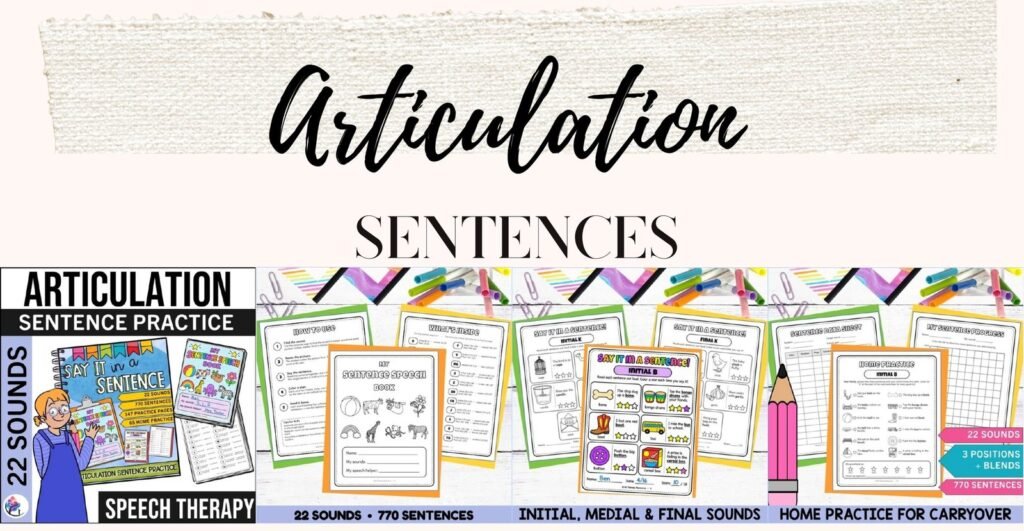
From our therapy room to yours: When a student can produce a sound accurately in words, sentence-level practice is often the next hurdle. Our Articulation Sentences Speech Therapy Carryover Practice Worksheets & Homework gives you ready-to-use sentences for target sounds, so you can move a student from words to connected speech without writing every sentence yourself. Use a page in session as the structured step, then send the matching page home as a short practice task that fits into a busy family evening.
Use visual supports without making them permanent
Visuals can make abstract language more concrete and give students a reliable way to organize their thinking. Graphic organizers, conversation maps, cue cards, sentence frames and visual scales can support vocabulary, narrative language, social communication, self-advocacy and comprehension.
The key is to use supports intentionally. A visual may be necessary for one student to participate independently, while another may need it only during early learning. Practitioners can gradually fade prompts by reducing the number of cues, changing the visual format, or encouraging the student to choose a strategy independently.
For example, a student learning to organize a story might begin with a detailed visual sequence. Later, they may use only three prompts: who, what happened, and what happened next. Eventually, they may tell the story without the card while drawing on the same internal structure.
This gradual shift helps avoid a common problem: students who can complete an activity only when the exact materials and prompts are present. The goal is not to remove support too soon. It is to help the student use support flexibly and independently when possible.
Coordinate speech therapy with the wider team
Communication support is strongest when adults use a few shared strategies rather than many disconnected ones. A classroom teacher does not need to become a speech-language pathologist to reinforce a student’s goal. Often, a small adjustment makes a meaningful difference.
A teacher may give a few extra seconds of wait time before calling on a student, preview key vocabulary before a lesson, or offer a simple visual for multi-step directions. A counselor may use a feelings scale or sentence starter that matches language supports the student already knows. Caregivers may practice a strategy during a naturally occurring routine, such as recounting a favorite part of the day or planning what to say before a phone call.
Shared supports should be manageable. If a strategy requires lengthy explanation, specialized materials, or more time than staff realistically have, it is less likely to be used consistently. A one-page cue sheet, brief modeling, or a ready-to-use discussion prompt is often more sustainable than an elaborate plan.
Try this with your team: Picture a student working on the /s/ sound who is ready for classroom carryover. The SLP gives the teacher one agreed cue, such as tapping the edge of the desk, and one phrase to use after a correct production (“I heard that clear /s/”). Nothing else changes in the lesson, and the student knows exactly what the cue means.
Keep roles clear
Collaboration does not mean every professional addresses every need in the same way. Speech-language pathologists guide communication assessment and intervention within their scope. Counselors, psychologists, educators, occupational therapy practitioners and behavior support staff contribute their own expertise while reinforcing agreed strategies in their settings.
For instance, a counselor may help a student notice the anxiety that comes up before speaking in a group, while the speech-language pathologist supports the language, speech or fluency strategies needed for that situation. Both perspectives are valuable, and the plan should stay clear about goals, roles, and how team members communicate.
Measure progress beyond correct responses
Data matters, but it should tell a useful story. Accuracy during structured practice is one meaningful measure. It is not the only one. Consider whether the student needs fewer prompts, uses the skill with a new partner, communicates more effectively in a less structured setting, or shows greater willingness to participate.
Brief notes can capture this progress without creating an overwhelming documentation burden. Record the context, the level of cueing, the student’s response, and anything that seemed to affect performance. A student who performs differently after a difficult morning, during a noisy group, or when talking about a preferred topic is giving the team clinically relevant information.
It also helps to notice what is not changing. If a student has had adequate, well-supported practice but continues to struggle, the team may need to revisit the target, the communication demands of the environment, or the supports being offered. Progress is not always linear, and a lack of immediate change is not a reason to increase pressure on the student.
From our therapy room to yours: If your articulation data lives on sticky notes and scattered session logs, our Articulation Data Tracker & Screener keeps screening, session data and progress in one editable Excel workbook, with automatic percentages, charts and a printable progress report for IEP meetings. Add a column for setting (therapy room, classroom, home) and you can see at a glance whether accuracy is carrying over or staying in the therapy room.

Create carryover that fits real life
Home practice and classroom carryover work best when they are brief, specific and connected to routines. Asking families to run a long practice session may be unrealistic, particularly when schedules are already full. A better approach might be one simple prompt: ask the child to describe one event using three details, practice a target word during a daily routine, or use a clarification phrase when they do not understand.
For adolescents, carryover may involve choosing one upcoming situation to prepare for. They can decide what support would help, practice a possible response, and reflect afterward on what worked. This respects their growing autonomy and makes communication strategies feel relevant rather than imposed.
Try this with families: Instead of a page of homework, send home one “routine card”: “At dinner, ask your child to tell you one thing they did today. Listen for [target]. If you hear it, say so. If not, just enjoy the story.” Short, positive and easy to repeat.
The most useful speech and language work often happens in small, repeatable moments: a student asking for help, sharing an idea, repairing a misunderstanding, or feeling understood by someone important. When intervention is focused, collaborative and grounded in real participation, those moments become more attainable.
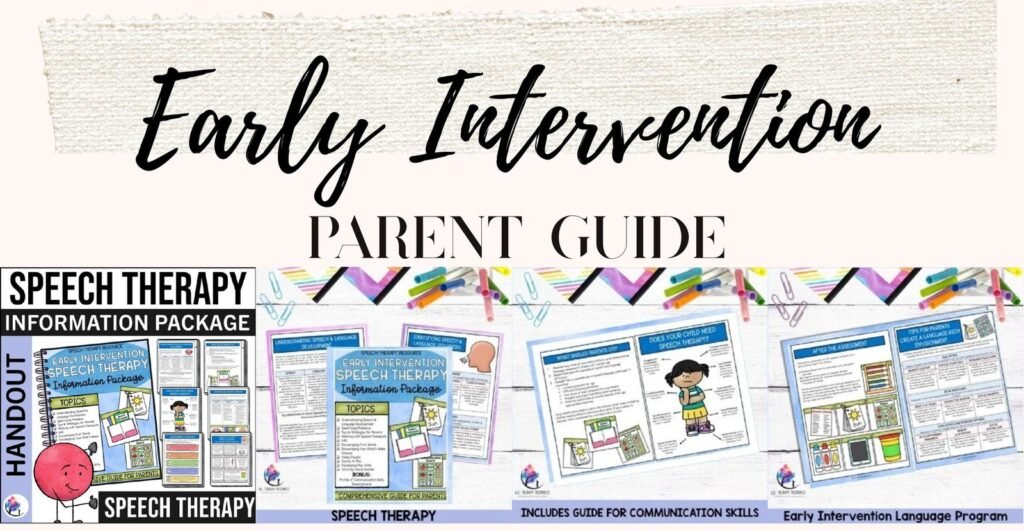
From our therapy room to yours: For families of younger children, our Early Intervention Speech Therapy Parent Guide shares practical ways to build language and communication into everyday routines. It is one of our most-reviewed resources; one reviewer described it as “Great resources to send to families, lots of ideas for EI at home and easy to follow!” Another noted it is “Helpful for developing home programs”.
Frequently asked questions
What is carryover in speech therapy?
Carryover (often called generalization) is when a student uses a skill learned in therapy in everyday situations, with different people and in different places, without needing the same level of prompting they had in sessions.
How can teachers support speech therapy carryover in the classroom?
Ask the speech-language pathologist for one agreed cue and one short phrase to use, give a little extra wait time, and preview key vocabulary. Small, consistent supports are more effective than adding a separate program.
How much home practice should families do?
Brief, routine-based practice is usually more realistic than long sessions. A few minutes linked to something the family already does, such as dinner or the drive to school, is a good starting point. The speech-language pathologist can recommend what fits each child’s goals.
Looking for practical, ready-to-use resources to support your speech therapy carryover? The All Therapy Resources Membership provides access to a growing collection of thoughtfully developed speech and language activities, interactive games, and therapeutic tools designed to save preparation time while supporting meaningful, skill-focused learning.