This post contains affiliate links. As an Amazon Associate, ATR earns from qualifying purchases, at no extra cost to you.
When a child experiences the death of someone they love, the adults around them often worry about saying the wrong thing. A carefully chosen picture book can help. Stories give children words for feelings that are hard to name, show that grief is a normal response to loss, and open a door to conversation at the child’s own pace.
This list brings together picture books about grief and loss that school counselors, therapists and teachers return to again and again. For each one you’ll find who it suits and a simple way to use it in a session or classroom.
How to Choose a Grief Book for a Child
Before you read any book with a grieving child, read it yourself first. Ask a few questions:
- Does it match the loss? A book about a grandparent may not fit a child whose parent died suddenly. Some books name the person who died; others leave it open.
- Does it use clear language? Young children can be confused by phrases like “passed away” or “went to sleep”. Clear, gentle words are usually kinder.
- Does it fit the family’s values? Families hold different beliefs about death. The books on this list do not focus on any religious view, which makes them easier to use in schools. Always follow the family’s lead.
- Is it developmentally appropriate? Short, concrete stories suit younger children. Older students often connect with metaphor and longer text.
Try this in your next session: Before you start, let the child know they can stop the story at any time. Giving them that control helps the book feel safe rather than overwhelming.
Picture Books About Grief and Loss for Kids
The Invisible String by Patrice Karst (2000)
Two children learn that an invisible string of love connects them to the people they care about, even when those people are far away or no longer here. It works well for death, separation, deployment or a move.
Try it: After reading, invite the child to draw their own string and name the people at the other end. The drawing gives you a gentle way into who they are missing.
The Memory Box: A Book About Grief by Joanna Rowland (2017)
A child worries about forgetting someone who has died and creates a box to hold memories. The text is spare and does not name who died, so it fits many kinds of loss.
Try it: Pair it with a simple memory box activity using a shoebox or small gift box. Children can add drawings, notes or photos over several sessions.
Lifetimes: The Beautiful Way to Explain Death to Children by Bryan Mellonie and Robert Ingpen (1983)
A calm, concrete explanation that every living thing has a beginning, a lifetime and an ending. It suits children who need clear facts rather than euphemisms.
Try it: Use it when a child is confused by phrases like “went to sleep” or “we lost Grandpa”. Follow up by checking what they now understand in their own words.
The Goodbye Book by Todd Parr (2015)
Bold, simple pictures and short sentences name the big feelings that come with saying goodbye. It is one of the most accessible choices for preschool and kindergarten.
Try it: Pause on each page and ask, “Have you ever felt like that?” Young children often answer with a nod or a point, which is enough.
Ida, Always by Caron Levis, illustrated by Charles Santoso (2016)
Two polar bears in a city zoo face Ida’s illness and death together. It is especially helpful when a loved one is seriously ill and the loss is expected.
Try it: Use it to talk about the time before a death as well as after it, and to name the mixed feelings that can come with anticipatory grief.
The Rabbit Listened by Cori Doerrfeld (2018)
When Taylor’s block tower falls, many animals offer advice, but only the rabbit simply stays close and listens. It speaks to any kind of loss and models how to support a grieving friend.
Try it: Ask children which animal they would want nearby on a hard day. It is also a lovely read for staff about the power of listening.
Badger’s Parting Gifts by Susan Varley (1984)
After Badger dies, his friends remember the skills and kindnesses he shared with each of them. The focus on memories and legacy can bring comfort.
Try it: Invite children to name one “gift” the person who died gave them, such as a skill, a saying or a favorite memory.
The Heart and the Bottle by Oliver Jeffers (2010)
A curious girl puts her heart in a bottle after a loss and slowly learns to let it out again. It suits older elementary students who may be shutting their feelings away.
Try it: Use the bottle as a metaphor: “What might be in your bottle right now?” Students can draw or write their answer instead of saying it aloud.
Tear Soup: A Recipe for Healing After Loss by Pat Schwiebert and Chuck DeKlyen (1999)
Grandy makes a pot of “tear soup” after a loss, showing that grief is personal and takes its own time. Its longer text makes it a good fit for upper elementary students, families and staff.
Try it: Share it at a family meeting or parent session as a gentle way to explain that every family member may grieve differently.
The Fall of Freddie the Leaf by Leo Buscaglia (1982)
Freddie the leaf moves through the seasons and learns about change and the natural end of life. It pairs naturally with a seasons or nature theme.
Try it: Collect leaves (or use paper ones) and talk about how things change through the year. It links well with a seasons of healing activity.
Ideas for Using Grief Books in Counseling and the Classroom
- Read, pause, wonder. Rather than asking lots of questions, wonder aloud: “I wonder how the rabbit knew to just listen.” This invites sharing without pressure.
- Offer a creative response. Drawing, writing a letter or adding to a memory box gives children a way to respond when words are hard.
- Keep it predictable. Grieving children often find comfort in routine. Reading the same book across several sessions is fine, and often helpful.
- Involve families. Let caregivers know which book you are using so they can continue the conversation at home.
- Watch for signs a child needs more support. Most grief is a normal process, but if a child’s distress is intense or persistent, talk with your team and the family about a referral to a grief specialist or mental health professional.
Picture a second grader whose grandmother died last month. After reading The Memory Box, the counselor might say, “Some people keep special memories in a box. If you made one for your grandma, what might go inside?” The child doesn’t have to answer straight away. The question is an invitation, not a task.
ATR Resources to Pair With Grief Books
Books open the conversation. Structured activities help children keep exploring their feelings and build coping skills over time. From our counseling room to yours, here are a few resources that pair well with the books above.
Grief and Loss Counseling Activities Curriculum Bundle gives you ready-to-run small group sessions for grief, so you can use a picture book as the warm-up and move into structured activities that build understanding and coping skills week by week.
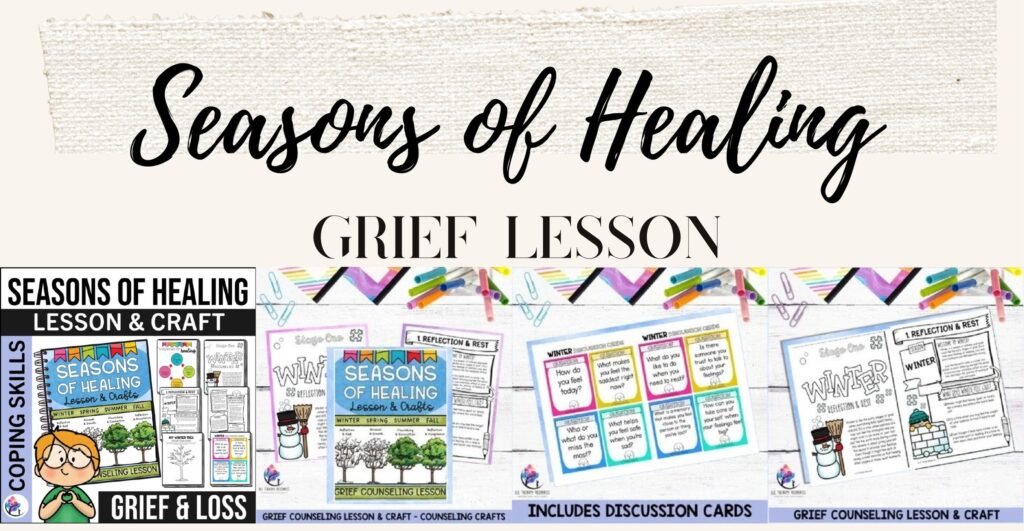
Grief Counseling Lesson and Craft: Seasons of Healing uses the changing seasons as a gentle metaphor for grief, which makes it a natural follow-up to The Fall of Freddie the Leaf or Lifetimes. One reviewer shared that the seasonal metaphor “helped my students connect with their emotions in a gentle, age-appropriate way.”
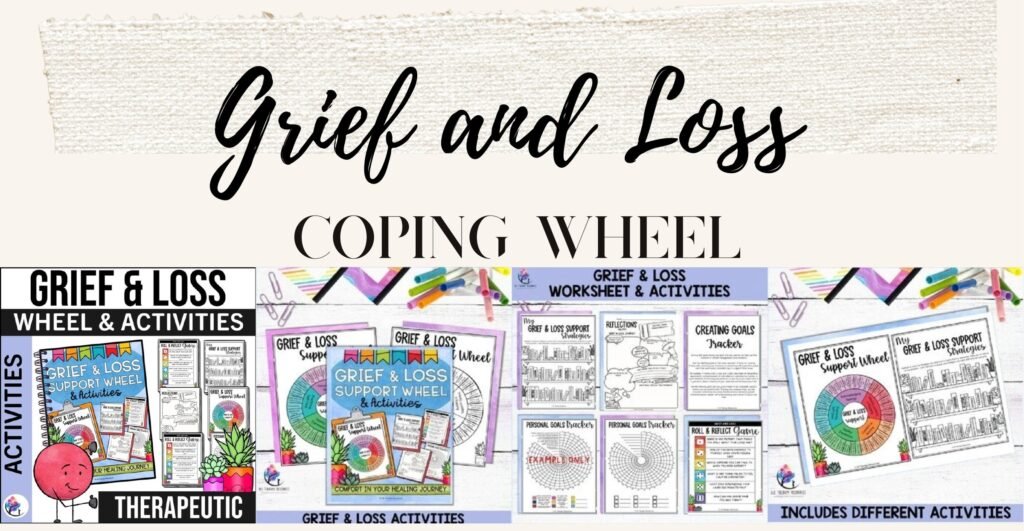
Grief and Loss Activities: Coping With Death Wheel helps students explore emotional expression and coping strategies after a loss. A counselor who used it with students processing loss wrote that her students “found the activities supportive without being overwhelming.”

Frequently Asked Questions
What age should children be to read books about death?
Children of any age can benefit from a well-chosen book. Preschoolers do best with short, concrete stories such as The Goodbye Book, while upper elementary students often connect with metaphor-rich books like The Heart and the Bottle or Tear Soup.
Should I read a grief book with a whole class or one-on-one?
Both can work. After a death that affects the whole school community, a class read can normalize feelings. For a child’s personal loss, one-on-one or small group reading usually feels safer. Check in with the family first.
What if a child gets upset during the story?
That is okay and often a sign the book has helped them connect with their feelings. Pause, stay calm, and let them know their feelings make sense. Offer a break or a calming activity, and you can return to the book another day.
Are these books suitable for families of different beliefs?
The books on this list focus on feelings, memories and the natural cycle of life rather than on any religious view. Always read a book first and follow the family’s lead about how they talk about death.
Looking for practical, ready-to-use resources to support your grief and loss support? The All Therapy Resources Membership provides access to a growing collection of thoughtfully developed counseling activities, interactive games, and therapeutic tools designed to save preparation time while supporting meaningful, skill-focused learning.