A child may be fully engaged in a preferred task, then suddenly refuse, argue, shut down or become tearful when it is time to move on. These moments are rarely about simple noncompliance. Transitions ask children to stop, shift attention, tolerate uncertainty, organize materials, regulate their bodies and begin again. Good transition activities for kids make those demands more visible, predictable and manageable.
For professionals and caregivers, the goal is not to eliminate every difficult transition. It is to provide enough structure and support that children can practice moving between tasks, settings, people and expectations with growing confidence. What works will depend on a child’s developmental level, communication profile, sensory needs, anxiety level, and the reason the transition is difficult in the first place.
Why transitions can feel so hard
A transition is more than walking from one room to another. It can include arriving at school, putting away a preferred activity, joining a group, moving from recess to class, ending a counseling session, switching between subjects, or getting ready for bed. For many children and adolescents, these moments create a gap between what is known and what comes next.
Executive functioning demands are often part of the picture. A student may know the schedule but struggle to start the next step, remember materials, estimate time, or recover after an interruption. Other children are managing sensory changes such as hallway noise, a crowded cafeteria, different lighting, or a new adult leading the activity. For a child with anxiety or a trauma history, an abrupt demand or unexpected change may also feel unsafe.
This is why transition support works best when it is proactive. A reminder offered after a child is already distressed can help, but it is not the same as teaching a predictable routine before the difficult moment arrives.
12 transition activities for daily practice
The activities below are simple enough to use in classrooms, therapy sessions, small groups and home routines. They work best when adults introduce them during calm moments, model the expectation, and use consistent language over time. Visual supports, one of the threads running through this list, are among the practices identified as evidence-based for autistic children and youth in the National Clearinghouse on Autism Evidence and Practice review (Steinbrenner et al., 2020), and many teachers find them helpful for other students too.
1. Use a first-then bridge
A first-then statement connects the current expectation to a clear next step: “First, put the markers in the bin. Then, choose your seat for group.” For older students, this can be framed more collaboratively: “First, finish the last two problems. Then, take your planned two-minute reset.”
Keep the language concrete and avoid presenting a preferred activity as a reward that can be taken away unpredictably. The purpose is to reduce ambiguity and show the child that the transition has an endpoint. A visual first-then card can be particularly useful for children who benefit from visual language or have limited working-memory capacity.
2. Make a transition countdown routine
Think of a countdown as a runway: it gives a child time to slow down and prepare to land, rather than being asked to stop mid-flight. Depending on the setting, adults might offer a five-minute, two-minute and one-minute reminder, paired with the same visual or auditory cue each time. A visual timer, a simple countdown strip, or a clock face with a movable marker can make time easier to understand.
The key is follow-through. If the timer ends but the adult keeps adding more time after a child protests, the timer becomes less trustworthy. Flexibility is still appropriate when a child is truly overwhelmed or the task needs adjusting, but the adult can name the change clearly: “I can see you need one more minute to finish this part. I am resetting the timer once.”
3. Try a movement mission
Brief, purposeful movement can help children shift their attention and settle their bodies before a less preferred task. Ask a student to deliver a folder, carry a stack of books, do some wall push-ups, walk a set route, or complete five animal walks before sitting for a lesson.
Movement missions should not feel like punishment or a way to remove a child from instruction. They work best as a neutral part of the routine, especially after active settings such as recess, physical education or a busy hallway. Occupational therapy-informed strategies may help when sensory or motor needs are central, but they should be individualized within the child’s support plan.
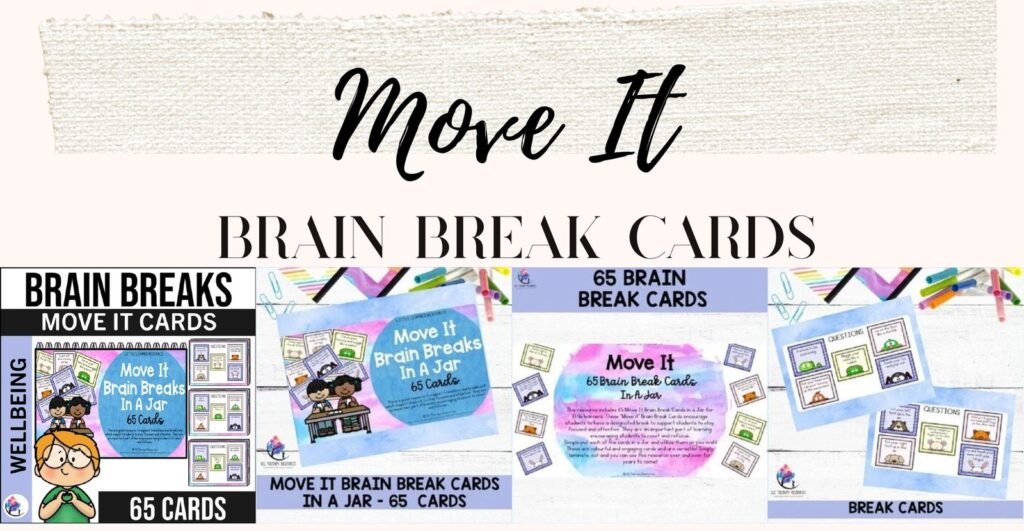
From our classroom to yours: Our Brain Breaks Movement Cards in a Jar give you 65 movement prompts to pull out between activities, so a movement mission takes seconds to set up. Keep the jar by the door and let one student draw a card as the class lines up after recess. One reviewer shared: “I have seen an increase in the students engagement, attention to task and work productivity when I use this resource.”
4. Use transition choice cards
Choice restores a small but meaningful sense of control. Before the transition, offer two acceptable options: “Would you like to walk to the table or hop to the table?” “Do you want to start with the blue worksheet or the green worksheet?” “Would you rather take three breaths or get a drink of water before we begin?”
The choices need to be real and limited. Asking an overwhelmed child an open-ended question can add pressure, while offering an option that is not actually available can damage trust. For adolescents, choices may center on order, location, materials, or how they begin a task.
5. Create a closing ritual
Ending a preferred activity is easier when there is a reliable way to close it. In counseling or therapy, a child might place materials in a “save for next time” folder, choose one word about the session, or complete a short preview card for the next meeting. In the classroom, students might use a two-minute clean-up song, check off the finished task on a schedule, or say a shared phrase before moving to the next block.
A closing ritual communicates that the activity is ending, not disappearing. This can be especially supportive for children who worry that they will not get back to a favorite game, project or conversation.
6. Practice the transition when it is not urgent
Children often need rehearsal, not just reminders. Walk through the steps of an arrival routine, class change or session ending during a low-pressure time. Use role-play to practice what to do when the bell rings, when a substitute changes the schedule, or when a preferred activity must pause.
For younger children, use play-based practice with figures, drawings or simple scripts. With older students, problem-solve likely barriers: “What usually makes getting to fourth period difficult?” Then identify one realistic support, such as a visual route, a locker checklist, or a quick check-in with a trusted adult.
7. Add a transition object or job
Some children benefit from carrying a familiar, appropriate object between settings, such as a schedule card, clipboard, pencil pouch or classroom helper badge. The item becomes a cue for the routine and gives them something concrete to focus on during an otherwise unstructured moment.
A job can serve the same purpose. Passing out materials, checking the agenda, turning off the lights or being the line leader offers a defined role. Use this carefully, though. A transition job should support participation, not become something a child must earn through compliance.
8. Use regulate-and-ready check-ins
Before expecting a child to begin the next task, build in a quick check-in: “Is your body ready, almost ready, or not ready yet?” A child can point to a visual scale, choose a color, or use a number from one to five. The adult can then offer a matched support, such as water, a sensory tool, a breathing prompt or a short movement break.
This works better than asking, “Are you ready?” when the expected answer is obvious. It helps children notice their internal state and learn that readiness can be supported rather than demanded.
Try this in your classroom: Post three simple visuals by the door: a green circle (ready), a yellow circle (almost ready) and a red circle (not ready yet). As students arrive from lunch, each one taps a circle. “Almost ready” means a drink of water first; “not ready yet” means two minutes at the calm spot with a timer. No questions, no audience.
9. Make the next step visible
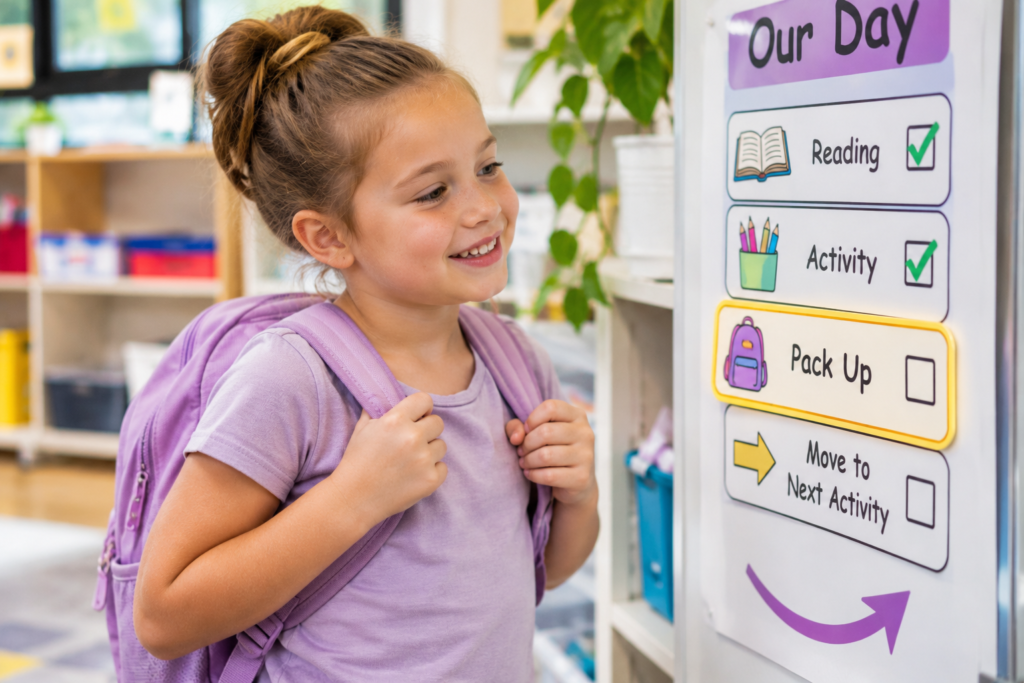
Spoken directions disappear quickly, especially in noisy or fast-paced settings. A short visual checklist can show exactly what happens next: pack folder, push in chair, walk to reading group, sit at assigned spot. For teens, a digital or paper planner may work better than picture cues. Our guide to using visual schedules with children covers how to set one up.
Avoid overloading the visual with every possible detail. The best tool is often the smallest one that helps the student act independently. If a schedule has become background wallpaper, simplify it or revise it with the student.
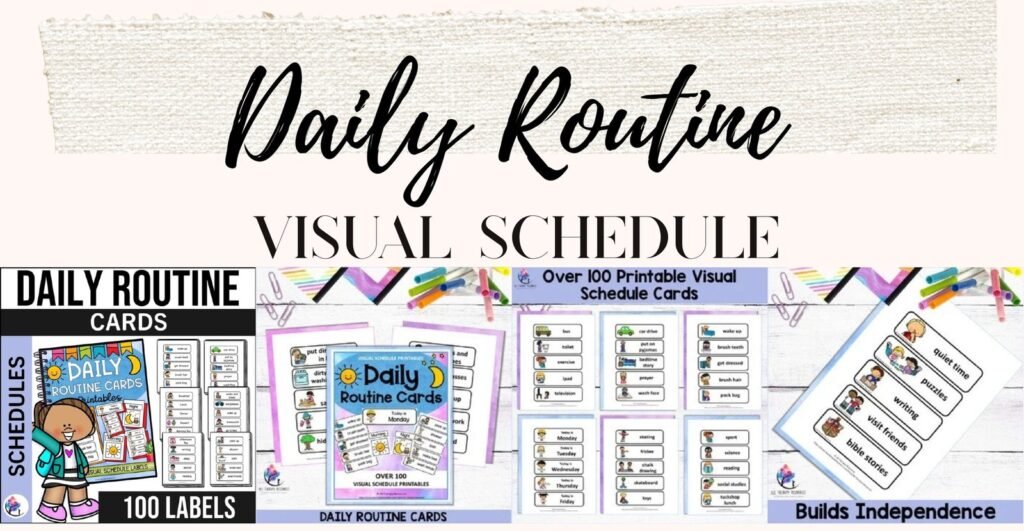
From our counseling room to yours: Our Daily Routine Visual Schedule Cards give you ready-made picture cards for morning and bedtime routines, plus a template for adding your own. They work in a classroom pocket chart or on a family’s fridge, which makes it easier to use the same visuals at school and at home. One reviewer simply said they “Used to help with executive functioning at home. Very helpful”.
10. Pair transition language with calm co-regulation
No activity replaces a regulated adult. A steady voice, brief directions and a nonjudgmental presence can lower the intensity of a hard moment. Instead of repeating demands or debating, try: “This change is hard. I will help you start with the first step.”
Co-regulation does not mean dropping the expectation. It means adjusting the level of support so the child can reach it. Some children need space and fewer words; others need a visual cue, a trusted adult nearby, or a predictable script.
11. Plan for unexpected changes
Even well-designed routines are disrupted by assemblies, staff absences, weather, appointments and schedule changes. A change card or a simple phrase such as “different, not dangerous” can help children tell the difference between an unexpected event and an unsafe one.
When possible, preview the change early, explain what will stay the same, and identify where the child can get help. For example: “Art is canceled today. You will still have your usual lunch, and after lunch you will go to the library with Ms. Lee.” Specific information is usually more calming than broad reassurance.
From our counseling room to yours: For students in grades 3 to 6 who get stuck when plans change, our Flexible Thinking Card Game offers 96 discussion cards across 8 categories to practice handling change in a low-pressure way. Play a few rounds in a small group before a known disruption, such as testing week or a field trip. A reviewer noted that “The questions are practical and give students opportunities to talk about handling changes and trying different approaches.”
12. Review what helped after the transition
A short reflection turns a successful transition into a skill the child can recognize. Ask, “What helped you get started?” or “Which part was hardest?” A child may name the timer, walking with a peer, carrying a schedule, or having one quiet minute before joining the group.
Document patterns when transition difficulty is persistent. Notes about time of day, setting, sensory demands, peer dynamics, task difficulty and adult responses can guide more individualized support. This is also valuable for teams who need consistent strategies across settings.
Choosing transition activities that fit the child
The best transition activities are not necessarily the most elaborate. A visual schedule may be enough for one student, while another needs rehearsal, sensory support and a predictable adult check-in. Consider whether the challenge is mainly about uncertainty, ending a preferred task, organization, sensory input, anxiety, social demands or skill gaps. The answer shapes the support.
| If the hard part is… | Start with | Suggested ATR resource |
|---|---|---|
| Not knowing what comes next | First-then bridge, visible next step (1, 9) | Daily Routine Visual Schedule Cards |
| Stopping a preferred activity | Countdown, closing ritual (2, 5) | Classroom management resources |
| A busy or unsettled body | Movement mission, ready check-in (3, 8) | Brain Breaks Movement Cards in a Jar |
| Unexpected changes | Change card, preview what stays the same (11) | Flexible Thinking Card Game |
It also helps to protect dignity. Older students may reject tools that feel too young or that single them out, even when they need transition support. Invite their input, use discreet formats, and frame strategies as planning tools rather than behavior management.
A well-supported transition tells a child, “You know what is happening, you have a way to begin, and help is available if you need it.” That message can make the next step feel possible, one routine at a time.
Helpful extras
A couple of simple tools many classrooms and therapy rooms use for countdown routines:
- Time Timer 8-inch visual timer: shows time as a shrinking colored disk, so children can see how much time is left
- Sand timer set (30 seconds to 10 minutes): handy for quick, quiet countdowns at a table or calm spot
As an Amazon Associate, we earn from qualifying purchases.
Frequently asked questions
How much warning should children get before a transition?
Many children do well with a short series of reminders, such as five, two and one minute, paired with the same visual or sound each time. Younger children and those who find transitions very hard may need a visual timer they can watch. Consistent follow-through matters more than the exact timing.
What helps a child who melts down at every transition?
Start by noticing patterns: which transitions, what time of day, and what happens just before. Then add one or two proactive supports, such as a first-then card and a predictable countdown, and practice the routine when the child is calm. If difficulties are persistent or intense, involve the wider team, including the child’s family and relevant specialists.
Do transition activities work for teens?
Yes, with age-appropriate formats. Teens often prefer planners, phone reminders, private check-ins and choices about order or location over picture cards. Involving them in designing the routine makes it more likely they will use it.
Looking for practical, ready-to-use resources to support your classroom transitions? The All Therapy Resources Membership provides access to a growing collection of thoughtfully developed behavior support and SEL activities, interactive games, and therapeutic tools designed to save preparation time while supporting meaningful, skill-focused learning.