The first few weeks of school set the tone for the whole year, in the counseling office as much as in the classroom. For many students, the school counselor is still a bit of a mystery. Who is the counselor? Will I get in trouble if I go there? Will they tell my parents? How do I even ask to see them?
A well-planned meet the school counselor lesson plan answers those questions before a student needs the answers. If you are still building the case for why these introductions matter, our article on why meeting the school counselor matters more than most students realize covers the reasoning. This guide is the practical part: what to cover, how to structure the lesson, how to adapt it for each grade level, how to explain confidentiality in words students understand, and how to teach students the exact steps for asking to see you.
What to Cover in a Meet the School Counselor Lesson Plan
An effective introduction goes beyond your name and where your office is. Across every grade level, students benefit from learning:
- Who you are and when you are available.
- What a school counselor helps with: feelings, friendships, worries, changes at home, school stress, and planning for the future. The American School Counselor Association’s role statement describes school counselors supporting students’ academic, career and social/emotional development, including short-term counseling and referrals for longer-term support.
- What a counselor is not: many students assume a visit to the counselor means they are in trouble. ASCA’s position on the school counselor and discipline is clear that school counselors are not disciplinarians, which is a helpful message to share directly.
- What confidentiality means, including its limits, in age-appropriate language.
- How to request to see you, step by step, and what happens after they ask.
- That asking for help is a skill, not a sign that something is wrong with them.
It also helps to name the myths out loud. Students often believe things like “Only kids in trouble see the counselor,” “The counselor is like another principal,” or “If I tell the counselor something, everyone will find out.” Inviting students to sort statements like these into “myth” or “fact” turns misconceptions into discussion rather than leaving them unspoken.
A Simple Meet the School Counselor Lesson Plan Structure
Most classroom introductions fit into a 30 to 45 minute guidance slot. The outline below gives you a predictable flow you can adjust for age and attention span.
| Lesson part | Minutes | What it looks like |
|---|---|---|
| Welcome and introduction | 5 | Your name, a photo of your office, one or two things about you, and where to find you. |
| What does a counselor do? | 5–10 | Brainstorm, then share the kinds of things you help with. Name that the counselor is not there to give consequences. |
| Myth or fact | 10 | Students sort common beliefs about counseling, or play a short team game. |
| Confidentiality | 5 | A short, age-appropriate explanation of privacy and its limits, with a chance to ask questions. |
| How to see the counselor | 5–10 | Show the request slip, form or box, then have every student practice filling one in. |
| Closing check | 5 | Exit ticket: “One thing the counselor helps with is…” and “If I want to see the counselor, I can…” |
Want more ready-made options? Browse our Meet Your Counselor back-to-school collection for presentations, games and templates you can slot into this structure.
Adapting the Lesson by Grade Level
The core content stays the same, but the language, length and activities need to fit where students are developmentally.
Grades K–2: Keep It Concrete and Visual
Young children learn best through pictures, movement and repetition. Keep the lesson to about 20 to 30 minutes, use a photo tour of your office, and focus on three ideas: who you are, that you help with feelings and problems, and how to find you. A short “Who can help?” picture sort works well: a lost lunchbox, feeling sad, a friend who won’t share, feeling scared at home.
Picture a kindergarten student who has been told “go see the counselor” and assumes it means trouble. A simple script helps: “I’m your school counselor. My job is to help kids with big feelings and tricky problems. Coming to see me never means you are in trouble.”
Grades 3–5: Add Scenarios and Practice
Upper elementary students can handle more detail and enjoy friendly competition. Use scenario cards (“Your best friend is sitting with someone else at lunch and you feel left out. Could the counselor help?”), a myth-or-fact game, and a first look at confidentiality. This is a good age to have every student practice completing a request slip, so the process feels familiar long before they need it.
Grades 6–8: Address Privacy and Peer Concerns
Middle schoolers often care deeply about what peers think and may worry that being seen at the counselor’s office will lead to questions. Talk openly about that worry, explain the different ways to request a visit (including private options), and spend more time on confidentiality. Include academic and future-planning support alongside friendships and feelings, so students see the counselor as someone for everyone, not only for students who are struggling.
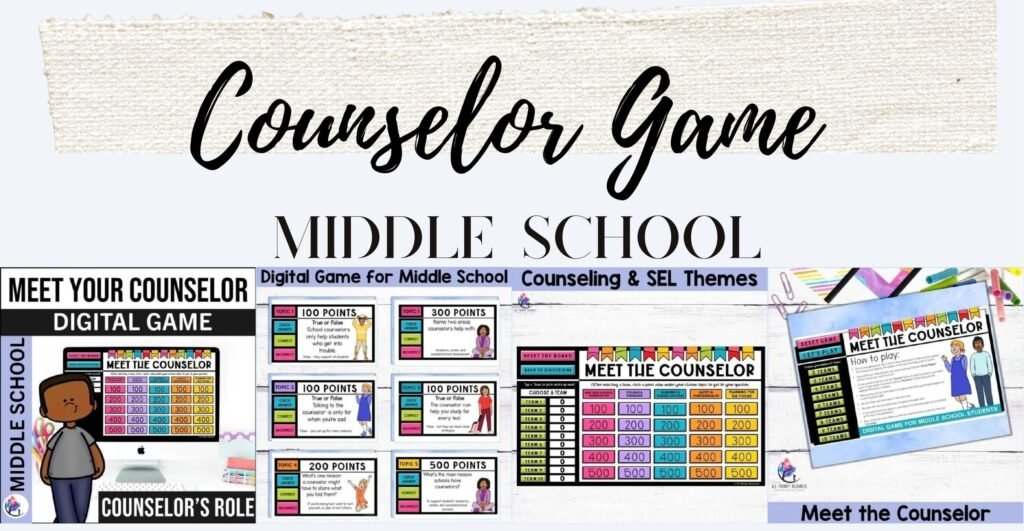
Try this in your next lesson: for grades 6–8, our Getting to Know Your School Counselor Game (Middle School) is an interactive PowerPoint game that teams play in class while learning what you do, how to reach you, and how confidentiality works. Questions build in difficulty, so it works as the “myth or fact” segment of your lesson or as a review in advisory. One middle school counselor wrote, “I especially loved how it covered confidentiality and future planning.”
Grades 9–12: Respect Independence
High school students tend to respond best when the lesson treats them as capable decision-makers. Keep it brief, practical and specific: how to book an appointment, what you can help with (from stress and relationships to course planning and life after graduation), how confidentiality works, and what happens if they need more support than school can offer. Older students also appreciate hearing that you provide short-term counseling and can help them and their families connect with longer-term support when needed.
For a high school audience, a quick anonymous poll (“Which of these would you feel comfortable talking to a counselor about?”) can open honest discussion without putting anyone on the spot.
Explaining Confidentiality in Age-Appropriate Language
Confidentiality is often the part of the lesson students remember most, and the part that most affects whether they come back. ASCA’s position on the school counselor and confidentiality asks school counselors to explain the meaning and limits of confidentiality to students in developmentally appropriate terms, and notes that confidentiality may need to be broken to prevent serious and foreseeable harm, or when law or school policy requires it.
The aim is honesty without fear. Students should understand that most of what they share stays private, and that if you ever need to share something to keep them safe, you will tell them first whenever you can. Some starting language:
- Grades K–2: “What you tell me stays between us, unless I’m worried someone is getting hurt. Then I need to get help from other grown-ups to keep you safe.”
- Grades 3–5: “Most of what we talk about is private. If you tell me someone is hurting you, you want to hurt yourself, or you want to hurt someone else, I have to tell an adult who can help. If that happens, I’ll do my best to talk with you about it first.”
- Grades 6–12: “What you share with me is confidential, with a few exceptions: if you or someone else is in danger, or if the law requires me to share something. If that ever comes up, I will tell you, and we’ll talk about what happens next together.”
Keep your wording consistent with your district’s policy and your state’s reporting requirements, and use the same phrases each time you introduce yourself so students hear one clear, predictable message.
Try this in your next lesson: after explaining confidentiality, read three short scenarios aloud (“A student tells the counselor they are nervous about a test,” “A student says someone at home is hurting them,” “A student is upset about a fight with a friend”) and ask, “Would this stay private, or would the counselor need to get help?” Talking through the answers together makes the limits clear without making the topic feel frightening.
Teaching Students How to Request to See the Counselor
Students cannot use a system they don’t understand. Many of the barriers young people describe, such as embarrassment and wanting to handle things on their own, are made worse when the process for asking feels unclear or public. Make the steps visible and practice them during the lesson.
- Show every option. A request slip and box outside your office, asking a teacher, stopping by at a set time, or a digital form for older students.
- Practice it. Have every student fill in a sample request during the lesson. When everyone does it, no one stands out.
- Explain what happens next. Tell students how soon you usually respond and how you will call them in (for example, a discreet pass rather than an announcement).
- Name the urgent route. Be clear that if something is an emergency or they don’t feel safe, they should tell any trusted adult right away rather than waiting for a reply to a slip.
- Display the steps. Post the process outside your office and in classrooms so students and teachers can find it later in the year.
A simple closing script ties it together: “If you ever want to talk, you can fill in a slip, ask your teacher, or come and find me. You don’t need a big reason. Small worries are welcome too.”
Extend the Lesson to Families and Staff
Families also benefit from understanding your role. Some parents assume counselors only work with students who have significant behavioral challenges, while others don’t realize they can reach out with questions. A short introduction at Open House or Meet the Teacher Night, along with a Meet the Counselor flyer, can explain:
- Your role within the school
- How students can access counseling services
- The types of support you provide, and how confidentiality works
- Ways families can contact you and collaborate with the counseling program
Sharing the same message with teachers helps too. When staff know how students request a visit, they can point students toward you with confidence. Our guide to parent communication tips for counselors has more ideas for building these partnerships.
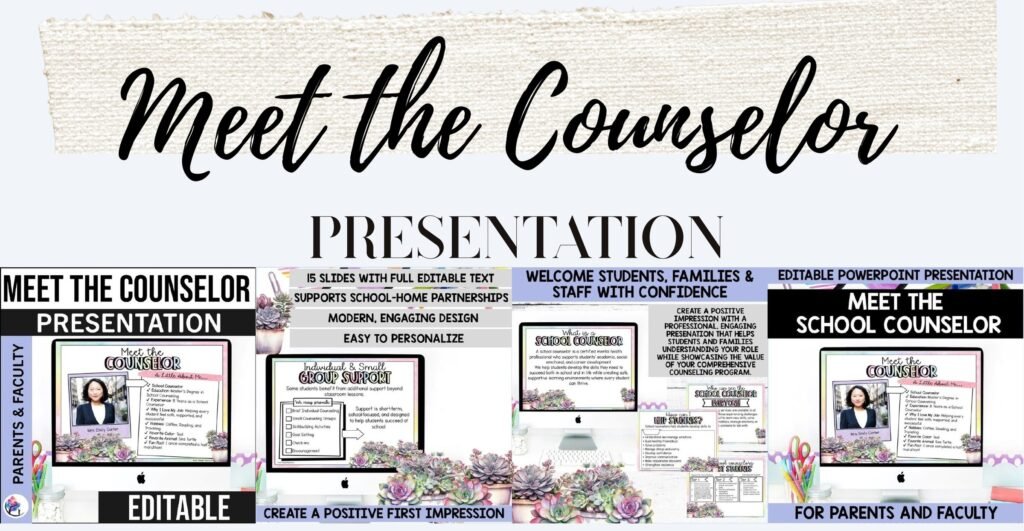
From our counseling room to yours: our editable Meet the School Counselor Presentation (Pastel) is designed for Open House, Meet the Teacher Night and staff meetings. It uses parent-friendly language to explain what school counselors do, how students receive support, confidentiality and referrals, and you can personalize every slide for your school. One counselor who used it with parents and faculty at the start of the year said “it answered so many common questions about what school counselors do, how students can access support, and when families can reach out.”
Let Your Office Reinforce the Lesson
Once students know where to find you, the space itself continues the conversation. A calm, predictable, welcoming office supports the trauma-informed message of your lesson: this is a safe place, and you belong here. Visual supports such as feelings posters, coping strategy reminders and positive affirmations give students language they can use the moment they walk in.
Many counselors also introduce their Calm Corner during the meet the counselor lesson, so students understand it’s okay to pause, breathe and use a coping strategy before talking. Presenting regulation as a skill everyone practices, rather than something reserved for a crisis, helps normalize it. Our guide to calm corners in schools walks through how to set one up.
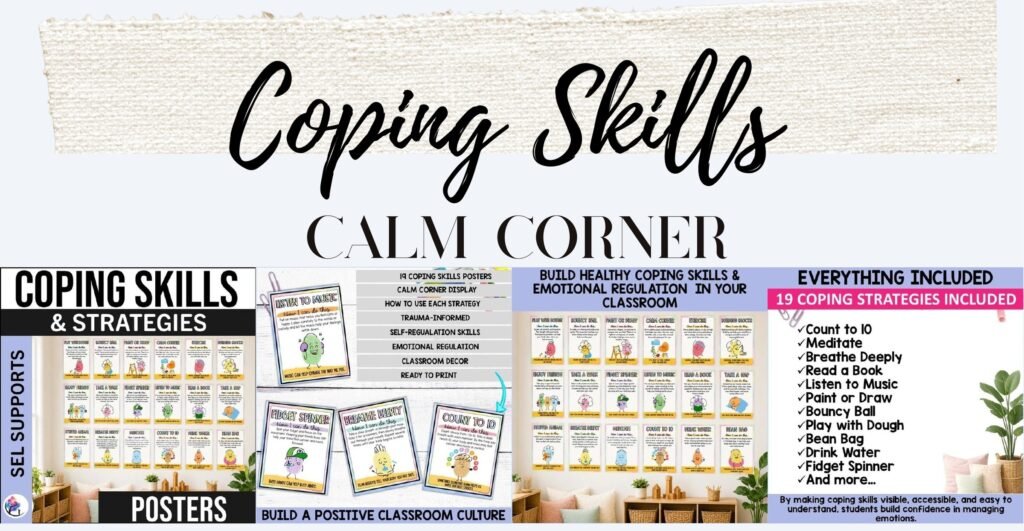
Try this in your next session: our Coping Skills Strategies Posters (Pastel) include 19 child-friendly posters, each explaining one coping strategy and how to use it, with gentle, trauma-informed messages. During your lesson, point to two or three posters and invite students to try one together, such as deep breathing, so they recognize the strategies when they visit. One counselor shared, “My students regularly refer to them when talking about emotions or choosing healthy coping strategies…”
Why This Groundwork Matters
The CDC describes school connectedness as students’ belief that adults and peers at school care about them and their learning, and identifies it as a protective factor linked to better health and education outcomes. A meet the school counselor lesson is one small, practical way to help every student know there is a caring adult in the building.
It also speaks directly to the reasons young people hold back. A systematic review of help-seeking in young people found that stigma and embarrassment, difficulty recognizing symptoms, and a preference for self-reliance were among the most commonly reported barriers, while positive past experiences and encouragement from others helped. A clear, friendly introduction cannot remove every barrier, but it can make the first step feel smaller.
Frequently Asked Questions
What should be included in a meet the school counselor lesson plan?
Include who you are and where to find you, what a school counselor helps with, the fact that counselors are not disciplinarians, an age-appropriate explanation of confidentiality and its limits, how to request to see you, and a short activity or exit ticket to check understanding.
How long should a meet the counselor lesson be?
Around 20 to 30 minutes suits younger students, while upper elementary, middle and high school classes can usually manage a 30 to 45 minute lesson with discussion and a game or practice activity.
How do you explain confidentiality to elementary students?
Use short, concrete language: what they share stays private unless you are worried someone is getting hurt, and then you will get help from other grown-ups to keep them safe. ASCA asks counselors to explain confidentiality and its limits in developmentally appropriate terms.
When should school counselors teach this lesson?
Ideally in the first few weeks of school, with a quick refresher later in the year and an individual introduction for new students who arrive mid-year.
Looking for practical, ready-to-use resources to support your back-to-school counseling lessons? The All Therapy Resources Membership provides access to a growing collection of thoughtfully developed counseling activities, interactive games, and therapeutic tools designed to save preparation time while supporting meaningful, skill-focused learning.