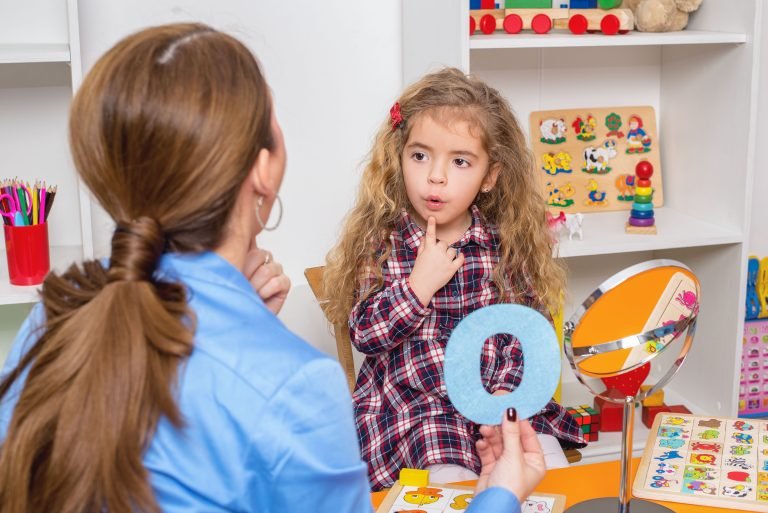
A child can produce a target sound accurately ten times in a row and still struggle to use it during conversation. That gap is where well-planned articulation activities for speech therapy matter most. The goal is not simply to make practice entertaining. It is to create enough meaningful, supported opportunities for children to notice, produce, and carry over accurate speech in ways that fit their age, attention, language skills, and daily environments.
For busy speech-language professionals, special educators, and caregivers, the most useful activities are flexible. They can be adjusted for a five-minute warm-up, a small group, a classroom support block, or a home practice routine without losing the structure children need.
Start With the Right Practice Level
An engaging activity cannot replace an appropriate target. It is also worth confirming the type of speech sound difficulty: children with phonological (pattern-based) disorders may need different approaches, such as contrast or minimal-pair therapy, and target selection belongs to the SLP. Before choosing materials, identify the child’s current level of success: sound isolation, syllables, words, phrases, sentences, structured conversation, or spontaneous speech. This kind of step-by-step hierarchy is common in clinical practice and in intervention research. Practice becomes frustrating when the language demand is too high, even if the activity itself is motivating.
Consider the difference between a student working on /r/ at the word level and an older student who produces /r/ accurately in sentences but drops it during fast-paced discussion. The first student may benefit from repeated practice with clear visual cues and a small number of words. The second may need self-monitoring, brief conversational challenges, and feedback that helps them notice speech patterns outside drill practice.
Aim for many accurate productions, but keep feedback purposeful. A systematic review found that higher practice doses were generally associated with better outcomes for children with speech sound disorders, although the evidence is still developing. A simple cue such as “Try that again with your strong /s/ sound” is often more helpful than repeatedly telling a child they were incorrect. When appropriate, model the target, allow a pause for a reset, and reinforce effort as well as accuracy. As accuracy improves, gradually reduce how often and how specifically you give feedback, so the child relies more on their own monitoring.
A practice ladder you can print. Move up only when the child is ready, using the SLP’s own accuracy criteria.
| Level | Practice target | Activity idea | Ready to move on when… |
|---|---|---|---|
| 1 | Sound in isolation or syllables | Mirror work with a clear model | The child can produce the sound with a model |
| 2 | Words | Sound hunt with picture cards | Words are accurate with few cues |
| 3 | Phrases | Board game with a carrier phrase (“I found a ___”) | Phrases are accurate without a model |
| 4 | Sentences | Story scenes or barrier games | Sentences stay accurate as the language gets harder |
| 5 | Conversation | “Catch it and keep it” self-monitoring | The child notices and corrects their own errors |
Articulation Activities for Speech Therapy Sessions
Use a sound hunt with a clear speech goal
A sound hunt gives children a reason to attend to target words while remaining active. Place picture cards, small objects, or classroom materials around the room. Each time the child finds an item, they name it using the target sound or say it in a planned phrase, such as “I found a ___.”
This works especially well for early learners and students who benefit from movement. Keep the task manageable by selecting items that match the child’s practice level. If target words are still difficult, use pictures rather than asking the child to generate words independently. For children ready for phrases or sentences, add a descriptive challenge: “Tell me where you found it” or “Use the word in a silly sentence.”
Build a speech practice board game
A simple path game can provide the repetition needed for articulation practice without turning the session into a worksheet. A child rolls, moves a marker, and produces several target words before taking a turn. Add spaces such as “say it slowly,” “say it in a sentence,” or “teach the clinician how to make the sound.”
The game should support practice, not compete with it. If turns take too long or the rules are complicated, production opportunities decrease. Short game cycles, a visible word bank, and predictable routines usually work better than elaborate setups. In small groups, peers can serve as supportive listeners by identifying whether they heard the target sound, provided they have been taught how to respond respectfully and the SLP keeps any correction private when needed.
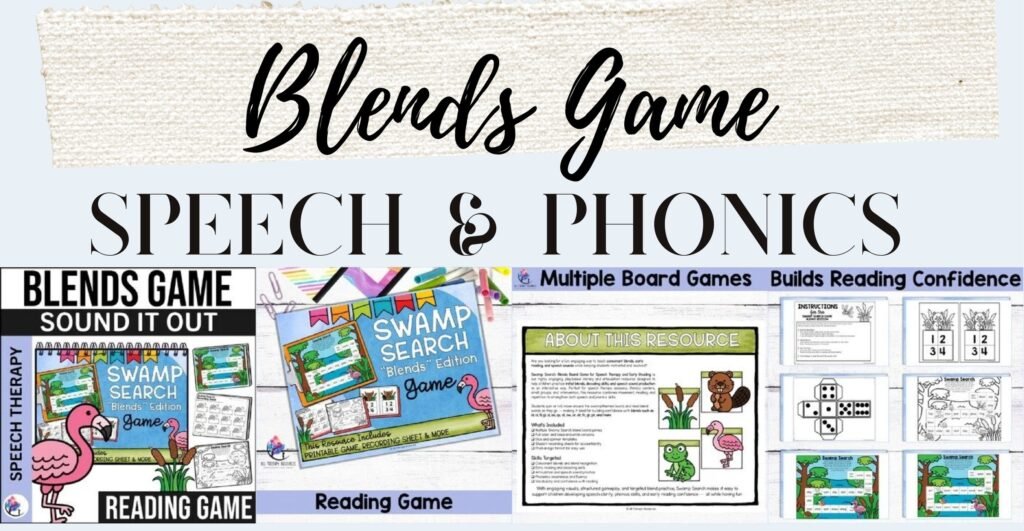
Try this in your next session: for students working on blends, our Blends Game builds the repetition into a simple game format, so production opportunities stay high. One reviewer shared, “My students loved practicing blends with this game! It was engaging, easy to implement, and supported phonics, speech, and reading skills in a fun and motivating way.”
Try barrier games for older students
Barrier activities are especially useful when students are moving beyond single-word practice. Two people have similar pictures, maps, or scenes separated by a folder or visual barrier. One student gives directions while the other recreates the scene. Target words can be built into the materials or chosen naturally from the task.
For example, a student practicing /s/ blends might direct a partner to “Put the star next to the slide” or “Draw a small spider under the swing.” The activity encourages repeated productions while also strengthening clarity, listening, turn-taking, and repair strategies. It can be adapted for teletherapy by using separate copies of a visual scene.
Create a speech detective routine
Speech detectives listen for a target sound in stories, classroom language, or short recorded samples. After identifying the sound, students practice producing their own examples. This activity supports auditory awareness, which research suggests may be helpful for children who do not yet consistently recognize the difference between their production and the adult model.
Keep the tone curious rather than corrective. Students can use a checklist, magnifying-glass visual, or simple tally to mark target sounds they hear. Then shift from listening to speaking: “You found five /k/ words. Which two can you say?” For students working on carryover, the detective role can extend to noticing their own successful productions during conversation.
From our therapy room to yours: a themed digraph game is a natural fit for the detective routine, because students listen for and then say the target sound. Our Digraphs Game: PH Words combines articulation practice with word reading. One reviewer noted, “The interactive format kept even reluctant learners engaged, and I noticed students becoming much more confident with identifying and reading PH words during follow-up activities.”

Use story scenes to move from words to connected speech
Picture scenes offer a natural bridge between drill and conversation. Begin by identifying target words in the scene. Next, ask the child to describe an action, answer a question, or tell a short story using those words. The visual support reduces the pressure of generating ideas while still increasing linguistic complexity.
A scene-based activity also makes it easier to differentiate in groups. One student may label pictures, another may produce short phrases, and a third may create a narrative. All can work on the same target within a shared activity. This structure is practical in school settings, where groups may include students with different speech and language needs.
Turn self-monitoring into a concrete task
Children who are ready for conversational carryover often need a way to notice accuracy in real time. Try a brief “catch it and keep it” challenge. The student chooses one speech target for a two-minute conversation, uses a visual reminder, and gives themselves a check mark each time they notice an accurate production.
Self-monitoring should not become relentless self-criticism. Keep the time period short, acknowledge progress, and focus on one manageable goal. Some students respond well to rating their effort and awareness rather than counting every production. A question such as “When did your speech feel easiest to remember?” can produce more useful reflection than a score alone.
Make Home and Classroom Carryover Realistic
Home practice works best when it is brief, specific, and easy to understand. Rather than sending a long list of words with a general request to practice, provide a small set of targets and a clear routine. A caregiver might practice five words while packing a backpack, during a car ride, or before a preferred activity. Short, regular practice is often easier for families to sustain than long sessions.
For classroom support, collaborate with teachers around naturally occurring opportunities. A student might use a target phrase when asking for supplies, presenting a response, or participating in a predictable classroom job. The purpose is not to ask teachers to monitor speech all day. It is to identify one or two moments where accurate practice can happen without calling unwanted attention to the student.
Students should also have a voice in selecting carryover goals. An adolescent may care more about being understood while ordering lunch, participating in a team activity, or recording a presentation than producing a list of isolated words. Connecting practice to a personally meaningful situation can increase engagement while respecting the student’s autonomy. Our article on why some students don’t generalize speech skills explores this step in more depth.
Track What the Activity Is Telling You
Data collection does not need to interrupt the interaction. A quick tally of accurate productions, level of cueing, and practice context can reveal whether an activity is appropriately challenging. It is also useful to note patterns: Does accuracy fall when the child speaks faster? Does it improve with a visual cue? Is the sound stable in structured sentences but inconsistent in conversation?
Those details help guide the next session. If a student is successful only with immediate models, more independent practice may be premature. If accuracy is strong during games but not during classroom speech, the next step may be a carryover routine rather than additional word-level drills. Progress is rarely a straight line, and activity choices should change as the child’s needs change.
Ready-to-use visual supports, practice cards, data sheets, and game formats can reduce preparation time while preserving clinical intention. Resources are most effective when they give professionals a flexible structure, not a script that ignores individual goals.
The strongest articulation practice often looks simple: a clear target, enough successful repetitions, feedback the child can use, and a reason to try the sound again beyond the therapy table. When children experience speech practice as achievable and connected to their real lives, they are more likely to feel capable, understood, and ready to keep practicing.
Frequently Asked Questions
What are articulation activities in speech therapy?
They are structured practice tasks that help a child produce a target speech sound accurately, starting at the level where they can succeed (such as syllables or words) and building toward conversation.
How often should children practice articulation at home?
Short, regular practice is usually easier to sustain than long sessions. Ask the SLP for a small set of targets and a simple routine, such as five words during a car ride.
What is the difference between an articulation and a phonological disorder?
An articulation difficulty is usually about producing a specific sound, while a phonological disorder involves patterns of errors across sounds. The two can need different approaches, so the SLP decides which fits.
How do I help articulation skills carry over into conversation?
Add self-monitoring, choose one or two real situations that matter to the student, and agree on discreet supports with teachers and caregivers.
References
- Kaipa and Peterson (2016): treatment intensity for speech sound disorders (ASHA Evidence Maps)
- Preston and Leece (2017): intensive treatment for residual speech sound errors
- American Journal of Speech-Language Pathology (2003): sound identification training in phonological intervention
- Sugden et al. (2016): parent involvement in speech sound interventions
Looking for practical, ready-to-use resources to support your articulation and speech sound goals? The All Therapy Resources Membership provides access to a growing collection of thoughtfully developed counseling activities, interactive games, and therapeutic tools designed to save preparation time while supporting meaningful, skill-focused learning.