A student has just finished sharing a thoughtful answer, but the room has moved on before they can finish the first sentence. The goal is not to make that student speak faster, quieter, or more perfectly. Effective fluency therapy activities for stuttering create room for communication, choice, and skill practice while protecting the student’s dignity.
For many children and adolescents who stutter, therapy addresses more than moments of disfluency. A 2023 systematic review found that school-age children who stutter often experience higher anxiety and negative reactions from others, so many clinicians work on these alongside speech itself. They may also be managing anticipation, frustration, listener reactions, classroom participation, or the pressure to hide their speech. Activities should be individualized by a speech-language pathologist and shaped by the student’s goals, developmental level, culture, and lived experience. In school settings, close collaboration among the SLP, classroom staff, counselors, and caregivers can make those supports more consistent.
Start With a Communication-Supportive Frame
Before introducing a strategy, establish a shared message: stuttering is not a failure, and a child does not need to earn the right to be heard by speaking fluently. Some students want to explore fluency-shaping or stuttering-modification strategies. Others may be more focused on self-advocacy, confidence, reducing avoidance, or helping adults become better listeners. Those are all valid therapy targets.
Use language that is neutral and student-centered. Unless the child’s therapy plan calls for feedback on fluency (as in some well-researched approaches for young children, such as the Lidcombe Program), notice effort, participation, and choice: “You shared your idea even though that felt hard,” or “You used the strategy you chose and kept your message going.” This distinction matters. Praise tied only to fluency can unintentionally suggest that stuttering is something to fix before a student can participate.
A simple opening routine can help. Invite the student to rate how communication felt that day on a 1-to-5 scale, then ask what made it easier or harder. Over time, this creates useful clinical information while helping the student recognize patterns without judgment.
Fluency Therapy Activities for Stuttering in Sessions
Build a personal communication map
A communication map is a visual activity that helps a student identify where, when, and with whom talking feels easier or more difficult. Draw settings such as home, the classroom, lunch, sports, video calls, or a store. The student can use colors, symbols, or rating scales to show comfort, confidence, speaking demands, and helpful supports.
For younger children, this may look like sorting picture cards into “easy talking,” “sometimes tricky talking,” and “hard talking.” Adolescents may prefer a written reflection or a private rating chart. The point is not to predict disfluency perfectly. It is to identify practical supports, such as extra wait time, a chance to answer later, a familiar speaking partner, or permission to use an alternate participation format.
Practice strategy choice through low-pressure speaking games
Many students benefit from structured practice of strategies taught by their SLP, such as pausing, easy onset, light contact, continuous phonation, pull-outs, cancellations, or voluntary stuttering. A game can provide repetition without making the student feel like they are completing a drill.
Use a simple board game, picture-scene description, or turn-taking card activity. Before each turn, ask the student to choose whether they want to practice a specific strategy, use no strategy, or focus only on sharing their message. After the turn, invite brief reflection: “What did you notice?” “Did that feel useful?” “Would you use that in a real conversation?”
Choice is essential. Not every strategy fits every student or every speaking situation, and practice should never become a demand to conceal stuttering. The SLP can guide accurate use while the student remains an active decision-maker.
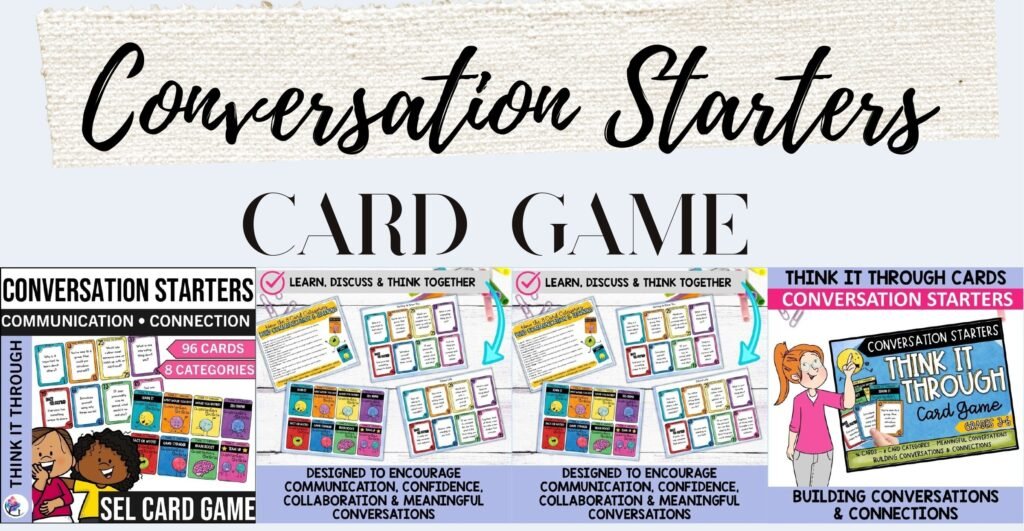
Try this in your next session: Our Think It Through: Conversation Starters Card Game gives students ready-made, low-pressure topics, so the focus can stay on sharing an idea and trying a chosen strategy rather than thinking up what to say. It was not designed specifically for stuttering, which is part of its value: it feels like an ordinary conversation game. One school counselor who used the cards with a lunch bunch shared, “Even my quieter students started joining in and the conversations went in directions I never would have thought to prompt myself.” For a student who stutters, a relaxed small-group setting like this can be a natural next step after one-on-one practice, with the SLP guiding which strategies to try.
Create a “talking tools” menu
A talking tools menu makes supports visible and easier to generalize. On a one-page sheet, include strategies the student finds helpful, such as using a planned pause, looking at a supportive listener, asking for time, saying “I’m not finished,” or choosing to share an answer in writing when appropriate.
For older students, include advocacy phrases they can adapt: “Sometimes I need a little extra time to finish my thought,” or “Please let me finish instead of filling in words for me.” Practice using the phrases in short role-plays, beginning with a trusted adult and moving toward realistic school scenarios.
A menu should not become a checklist a student must follow. It is a reminder that they have options. Reviewing it periodically also helps professionals see which tools are genuinely useful and which ones are not.
Use voluntary stuttering thoughtfully
When voluntary stuttering is clinically appropriate and introduced by an SLP, it can help some students approach feared words or speaking situations with greater agency. It may also reduce the sense that stuttering must be hidden at all costs. In a 2016 survey of adults who stutter, many reported that voluntary stuttering reduced their fear and avoidance, although others noticed no change.
Begin in a safe, private setting and let the student set the pace. They might practice an easy, intentional repetition while reading a short phrase, then discuss what it was like to be in control of the moment. This activity is not suitable for every child, especially if it feels shaming, forced, or emotionally overwhelming. The student’s consent, readiness, and response should guide the work.
Tell stories with multiple ways to participate
Narrative activities are useful because they resemble real classroom communication. Offer a set of picture cards and ask the student to arrange and tell a story. Then vary the task: describe one card, retell the story to a puppet, record an audio message, or explain the plot to a peer.
The variation helps the student notice how audience, time pressure, and familiarity affect communication. It also gives the clinician opportunities to support goals related to speech strategies, communication confidence, and coping with moments of stuttering. For a middle or high school student, replace picture cards with a short opinion prompt, a current interest, or a problem-solving scenario.
Include Feelings, Identity, and Listener Education
Stuttering can carry emotional weight, particularly when a child has been interrupted, rushed, teased, or misunderstood. Therapy should make room for those experiences without assuming every student feels the same way.
A useful activity is a feelings-and-thoughts sort. Provide cards with statements such as “I worry people will laugh,” “I get frustrated when someone finishes my sentence,” “Sometimes I do not mind stuttering,” and “I want people to listen to my ideas.” The student can sort them into true, sometimes true, or not true. Follow with open-ended questions rather than correction or reassurance. “What helps in that moment?” is often more useful than “You should not feel that way.”
When appropriate, involve key adults in listener education. Teachers and caregivers can practice giving unhurried attention, maintaining natural eye contact, responding to content rather than speech, and avoiding advice such as “slow down” or “take a deep breath” unless it is part of the student’s own therapy plan. The Stuttering Foundation’s notes for teachers offer the same guidance, including listening to the content of the message rather than how it is said. Classroom support should be discreet and collaborative, not a public announcement about a student’s speech.
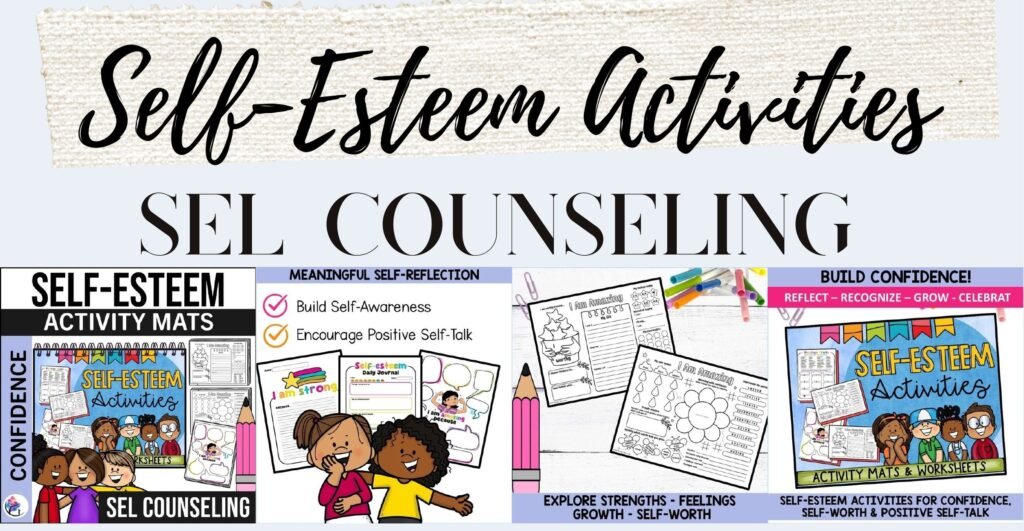
From our counseling room to yours: when stuttering has started to shape how a student sees themselves, our Self-Esteem Activities offer structured ways to explore strengths and positive self-talk alongside speech goals. A counselor can use them while the SLP leads speech-specific work. One reviewer noted, “I especially liked that students could work through the activities while we talked, which made some of the conversations feel much more natural.”
Help Skills Travel Beyond the Therapy Room
Practice in real situations may help skills carry over beyond the therapy room, especially when it connects to something that matters to the student. Work with the student to select one small, realistic communication goal for the week. A younger student may raise a hand once during a familiar routine. An adolescent may ask a teacher a question after class, order independently at a restaurant, or contribute one idea in a group project.
Keep the reflection brief and specific. What did the student try? What support helped? What would they change next time? A goal is not unsuccessful simply because the student stuttered. If they communicated a message, used an advocacy phrase, stayed in the interaction, or learned something about their needs, that is meaningful progress.
A four-week carryover ladder. Use this as a starting point and let the student set the pace. Moving to the next step is optional, and staying on a step is not a failure.
| Week | Speaking situation | Support in place | Reflection question |
|---|---|---|---|
| 1 | One-on-one with a familiar adult | Extra wait time, no interruptions | What made talking easier today? |
| 2 | Small group in the therapy room | Student’s talking tools menu | Which tool did you choose, and did it help? |
| 3 | A planned classroom moment, such as answering a question agreed in advance | Teacher protects wait time | How did that compare with week 1? |
| 4 | A real situation the student chooses | An advocacy phrase ready to use | What would you like to try next? |
For school teams, a simple shared plan can reduce mixed messages. The SLP may lead speech-specific intervention, while counselors can support coping and self-advocacy, teachers can protect wait time and participation access, and caregivers can reinforce calm, attentive listening at home. All Therapy Resources® recognizes that practical, coordinated tools help professionals spend less time creating materials and more time responding to the child in front of them.
The most helpful activity is often the one that gives a student a little more freedom to communicate as themselves. When practice is respectful, flexible, and connected to real life, children and adolescents can build skills without being asked to shrink their voice.
Frequently Asked Questions
What are fluency therapy activities for stuttering?
They are structured, often playful tasks a speech-language pathologist uses to help a student practice chosen speech strategies, reduce avoidance, build communication confidence and carry skills into real situations. The right mix depends on the student’s goals and is set by the SLP.
Should teachers tell a child who stutters to slow down or take a breath?
Generally, no. The Stuttering Foundation advises teachers not to say “slow down” or “just relax,” and to listen to what the child says rather than how they say it. The exception is a strategy that is part of the student’s own therapy plan.
Do children grow out of stuttering?
Many do. The National Institute on Deafness and Other Communication Disorders estimates that 5 to 10 percent of children stutter at some point and that most of them recover. Recovery cannot be predicted for an individual child, so concerns are worth discussing with an SLP.
How can school counselors support students who stutter?
Counselors can focus on coping, confidence, self-advocacy and any teasing or bullying, while the SLP leads speech-specific intervention. Agreeing on shared language across the team helps the student hear one consistent message.
References
- Stuttering Foundation: Notes to the Teacher
- NIDCD: Stuttering fact sheet
- Psychosocial features of stuttering for school-age children: a systematic review (2023)
- Randomised controlled trial of the Lidcombe Program of early stuttering intervention (BMJ, 2005)
- Byrd et al. (2021), Seminars in Speech and Language
Looking for practical, ready-to-use resources to support your speech and fluency sessions? The All Therapy Resources Membership provides access to a growing collection of thoughtfully developed counseling activities, interactive games, and therapeutic tools designed to save preparation time while supporting meaningful, skill-focused learning.