Ask a group of teenagers what they want to do after school and you will usually get very different answers. Some have known what they want to do for years. Some have three completely different career ideas. Others will shrug and say, “I have no idea.”
That last answer doesn’t worry us nearly as much as adults sometimes think it should.
Teenagers don’t necessarily need to know exactly what career they want. What they do need is a process for beginning to work it out. They need opportunities to explore their interests, recognize their strengths, understand what matters to them, identify skills they already have, and connect those pieces to possible pathways.
Then, as students get closer to employment, career education needs to make another important shift. Knowing that a particular career sounds interesting is very different from knowing how to apply for a job, prepare for an interview, communicate professionally, and present your skills to an employer.
That is why we like to think about career readiness for teens as a progression from self-awareness to real-world action.
It can help to think of it like a compass and a first step. Career exploration gives students a rough sense of direction (“What might fit me?”), while career readiness is about taking the first real steps (“How do I actually move toward it?”). Both matter, and they work best in that order.
Career Exploration Shouldn’t Start With “What Job Do You Want?”
One of the biggest mistakes we can make in career counseling is beginning with the end point.
What career do you want?
For a teenager who doesn’t know, that’s an enormous question. They may know very little about the range of careers available, have limited work experience, or be basing their ideas primarily on occupations they have personally encountered.
A much easier starting point is the student themselves.
What kinds of activities hold your attention? Do you enjoy helping people, solving problems, creating things, organizing, building, exploring, or working with technology? What subjects do you naturally enjoy learning about? What kinds of tasks make you lose track of time?
Now we have somewhere to begin.
Career exploration becomes less about choosing one job from thousands of possibilities and more about recognizing patterns.
Interests Give Us Clues, Not Answers
This distinction is important when using any career interest inventory for students.
An interest inventory shouldn’t tell a teenager, “This is what you should become.” We don’t want a worksheet making a life decision for a student.
Instead, the results give us clues. Even the U.S. Department of Labor’s O*NET Interest Profiler presents its results as a starting point for exploring the world of work, not a verdict.
The useful conversation isn’t necessarily, “Your result says you should become X.”
It is, “Does this sound like you?”
What surprised you? Which results make sense? Which don’t? What careers in these areas have you never considered before? What would you like to learn more about?
That turns a career interest survey into a starting point for exploration rather than a prescription for the future.
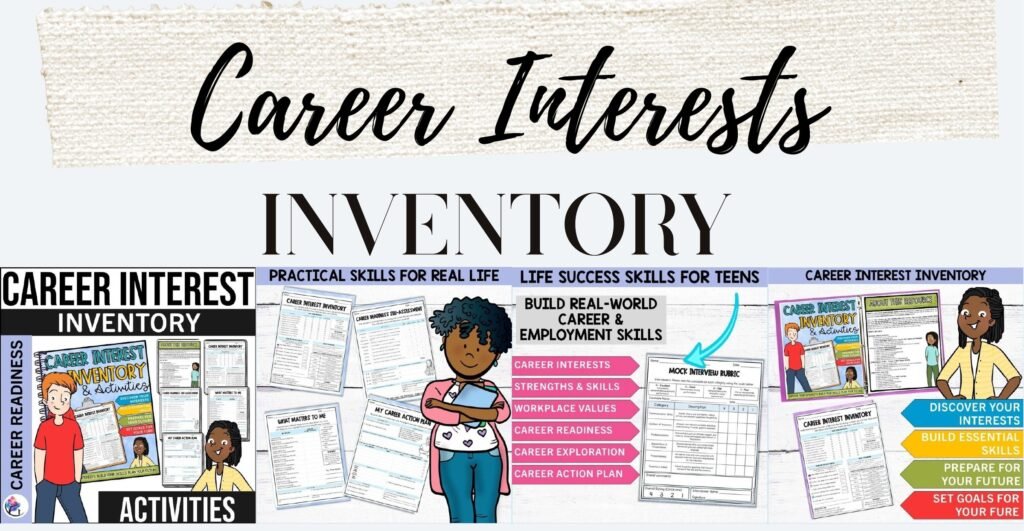
Try this with your students: our Career Interest Inventory Survey & Activities asks students to rate different activities, spot patterns across interest areas such as People Helpers, Thinkers, Creators, Organizers, Doers, Explorers and Technologists, and then look at careers connected with their strongest areas. It continues into a self-assessment, a values activity and a simple action plan. One reviewer wrote that “The activities encourage genuine reflection rather than simply asking students what they want to be when they grow up.”
Interests Are Only One Piece of Career Fit
A student can be interested in something without necessarily wanting it to become their career.
That is why career exploration becomes much more meaningful when we start layering other information onto interests.
What skills does the student already have? What skills would they like to develop? What matters to them in their future life? Do they value independence, creativity, financial security, helping others, working outdoors, problem-solving, technology, leadership, or work-life balance?
A good career exploration process moves beyond the initial inventory. Students can complete a self-assessment, explore their personal and workplace values, and create a simple action plan.
This is where career exploration starts becoming much more individualized.
Two students may both be interested in the same career field for completely different reasons. Likewise, two students with similar interests may eventually choose very different careers because their values, strengths, preferred environments, and future priorities are different.
Help Students Recognize Skills They Already Have
Many teenagers underestimate their existing skills, often because they think of “skills” as something you only gain through a paid job.
Ask a student who has never had a job what skills they have and you may get, “None.”
But ask different questions and the picture changes.
Have you worked on a group assignment? Have you organized an event? Do you play a team sport? Have you helped care for younger siblings? Have you learned new technology independently? Have you volunteered? Have you had to solve a problem when something didn’t go according to plan?
Suddenly we can begin identifying communication, teamwork, organization, adaptability, problem-solving, time management, responsibility, leadership, and initiative.
This matters because students eventually need to translate everyday experiences into language they can use when applying for jobs.
Transferable-skills activities work best when students identify specific examples of how they have already shown skills such as communication, teamwork, time management, problem-solving, organization and adaptability. Frameworks such as the NACE career readiness competencies are a helpful reminder of what employers tend to look for.
That shift from “I don’t have experience” to “Actually, I do have evidence of useful skills” can make career preparation feel much more achievable.
Career Education Should Eventually Become Practical
Exploring careers is valuable, but eventually students need opportunities to practice the less glamorous parts of entering the workforce too.
How do you read a job advertisement? How do you complete an employment application? What belongs on a resume? How do you prepare for an interview? What should you research beforehand? What do you say when somebody asks, “Tell me about yourself?”
These are practical skills, and many teenagers will be expected to use them before they have had much opportunity to practice them.
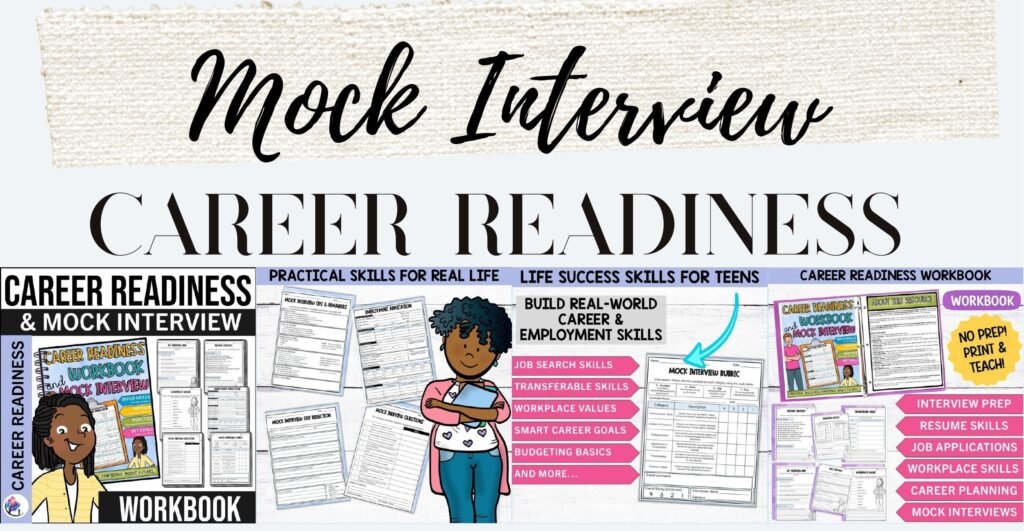
Good career-readiness practice covers interview preparation, resumes, transferable skills, workplace values, job searching, SMART goals, reading job descriptions, budgeting, workplace scenarios and completing an employment application. If students are preparing for a first part-time job, also point them and their families to the youth employment rules on hours and job types in your state.
Rather than career readiness being something abstract that will matter one day, students begin rehearsing the actual tasks they may encounter when looking for their first job.
From our counseling room to yours: our Mock Interview Activity & Career Readiness Workbook brings these practical pieces together, from a resume checklist and job-description analysis to interview preparation, a feedback rubric and a self-reflection. One reviewer shared, “The activities give students an opportunity to actually practice their responses rather than just read about interview skills.”
Mock Interviews Are Valuable Because the First Attempt Doesn’t Have to Count
There are some skills that are very difficult to learn from a worksheet alone.
Interviewing is one of them.
A student can read ten tips about eye contact, preparation, body language, answering questions, and professionalism and still feel completely different when another person looks at them and says:
“Tell me about yourself.”
That’s why we value mock interview activities for high school students so much.
A mock interview gives students something genuinely useful: a low-risk first attempt.
They can stumble over an answer. They can realize they didn’t give enough detail. They can discover that they say “um” when nervous. They can forget the example they planned to use.
And none of it costs them a job opportunity.
They get to notice, reflect, adjust, and try again.
Preparing the Answer Is Only Half of Interview Preparation
One of the things we want students to understand is that a good interview doesn’t begin when they sit down in front of the interviewer.
Preparation begins earlier.
Students can research the organization and role, think about why the position interests them, identify strengths relevant to the job, prepare examples from their experiences, and think of questions they might ask the interviewer.
A simple preparation sheet can walk students through that process: identify the position, research the organization, consider what interests them about the job, name strengths that make them a good fit, reflect on a challenge they have experienced, and prepare questions to ask at the end.
That teaches an important career-readiness lesson: confidence doesn’t have to mean walking into a situation without nerves. Sometimes confidence comes from knowing you prepared well.
Don’t Teach Students to Memorize Perfect Interview Answers
We don’t want mock interview preparation to turn into students memorizing polished answers that don’t sound remotely like them.
Instead, we want them to understand what the interviewer is actually trying to learn.
When someone asks, “Tell me about yourself,” what information would be useful? When they ask about a strength, can the student provide an example? When they ask about a challenge, can the student explain what they learned rather than simply describing what went wrong?
Practice questions should cover strengths, weaknesses, previous experience, teamwork, problem-solving, handling stress or pressure, customer situations, why someone should be hired, future goals and questions for the employer.
The purpose isn’t to create a perfect performance. It is to help students become more comfortable thinking, communicating, and providing evidence about themselves.
Feedback Should Tell Students What to Do Next
Mock interviews become particularly useful when students receive structured feedback.
A vague “You did great!” might feel encouraging, but it doesn’t necessarily help a student improve.
A simple rubric can look at communication skills, the content of answers, professionalism, presentation, preparedness and the questions the student asks. Judge presentation on neatness and suitability for the setting, never on the cost of clothing.
That gives students something specific to work with.
Maybe their communication was strong but their answers needed examples. Perhaps they were well prepared but hadn’t thought of questions to ask. Maybe they knew exactly what they wanted to say but rushed because they were nervous.
Now feedback becomes actionable.
Reflection Turns Practice Into Learning
We also don’t want the interview to end when the role-play ends.
Reflection is where students can begin making sense of the experience.
A short self-reflection can ask students what they were proud of, what they would do differently next time, which questions felt easiest or hardest, what they learned about themselves, and how they will prepare for their next interview.
This is an important distinction in career education.
We aren’t only preparing students to complete one successful mock interview. We’re helping them develop the ability to evaluate their own performance and improve over time.
That is a skill they can use far beyond their first job.
Use Career Exploration and Career Readiness as a Sequence
Career exploration and career readiness work best as a sequence because they address different stages of the same process. This progression also fits the ASCA Student Standards, which include helping students plan a successful transition from school to postsecondary education and the world of work.
We would begin with an interest inventory when students are still asking, “What could I do?” It helps them explore interests, identify patterns, think about strengths and values, and begin connecting those things to possible career pathways.
Then we can move into practical career-readiness work when the question becomes, “How do I actually prepare for work?”
Now students are identifying transferable skills, exploring workplace values, analyzing job descriptions, preparing resumes and applications, practicing interview questions, thinking about workplace scenarios, setting SMART goals, and creating concrete next steps.
Career exploration creates direction.
Career readiness turns that direction into action.
A simple sequence you can plan around:
| Stage | Student question | What students do | What they leave with |
|---|---|---|---|
| 1 | What interests me? | Interest inventory and discussion of results | Two or three interest areas to explore |
| 2 | What matters to me? | Values and strengths activities | A short list of priorities and strengths |
| 3 | What skills do I already have? | Transferable-skills examples from school, sport, home and volunteering | Evidence they can use in applications |
| 4 | How do I apply? | Resume checklist, job descriptions, employment application | A draft resume and a practice application |
| 5 | How do I interview? | Mock interview, rubric feedback and self-reflection | One clear goal for their next interview |
“I Don’t Know” Is a Perfectly Good Place to Start
One of the most helpful things we can communicate to teenagers is that they don’t need their entire future figured out.
For teenagers, career development is largely about exploration: trying things out, learning about options and making tentative choices that can change. Career theorist Donald Super described the mid-teens to mid-twenties as an “exploration” stage for exactly this reason.
Students can investigate something and decide it isn’t for them. They can discover a career they’ve never heard of. They can change their mind. They can develop new interests. They can learn that something they love as a hobby isn’t something they want to do professionally.
The goal of a career interest inventory isn’t to lock a student into a pathway. It’s to give them better questions to ask.
And the goal of career readiness isn’t to make teenagers behave like experienced professionals before they’ve ever had a job. It’s to give them opportunities to practice the skills that experience will eventually strengthen.
When we approach career education this way, we move students away from the enormous pressure of “Choose what you’re going to do with your life.”
Instead, we can ask:
What interests you? What matters to you? What skills do you already have? What would you like to explore? And what is one realistic step you could take next?
That’s a much more manageable place to begin.
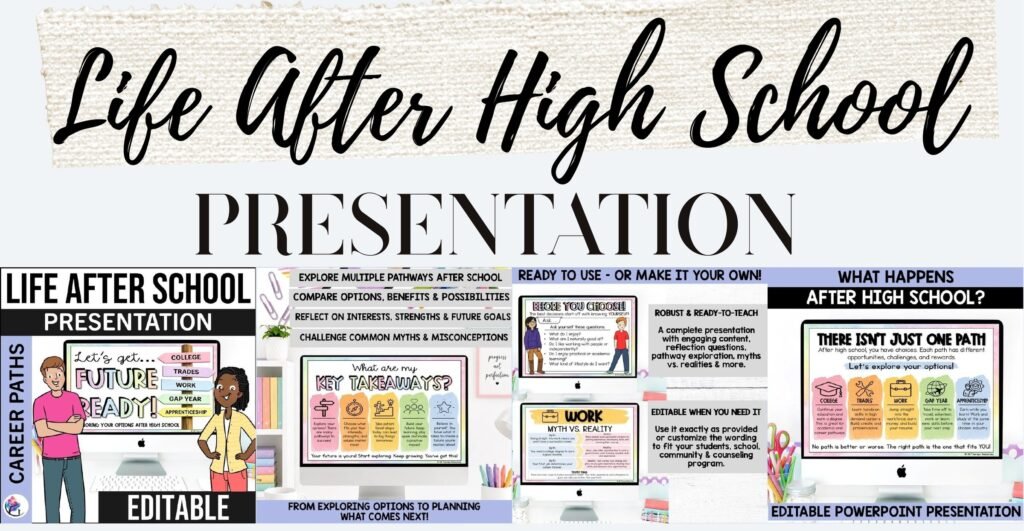
For older students: when the conversation turns to what happens after graduation, our Life After High School Presentation helps students compare options such as college, vocational training, apprenticeships and work. One reviewer wrote, “I loved that it explored different pathways rather than making college feel like the only option.” For more ideas, see our article on helping students get future ready.
Frequently Asked Questions
What is career readiness for high school students?
Career readiness is the set of practical skills students need to move toward work, such as identifying transferable skills, writing a resume, completing an application, interviewing and communicating professionally.
What should a career interest inventory be used for?
Use it as a starting point for exploration. The results suggest areas worth exploring and questions to ask; they should never decide a student’s future for them.
How do you run a mock interview with high school students?
Help students prepare first, ask a small set of realistic questions, give specific feedback with a simple rubric, and finish with a self-reflection so they can set one goal for next time.
How does career planning connect to IEP transition planning?
For students with IEPs, federal law requires measurable postsecondary goals based on age-appropriate transition assessments, which interest inventories and career activities can inform.
Looking for practical, ready-to-use resources to support your career exploration and career readiness lessons? The All Therapy Resources Membership provides access to a growing collection of thoughtfully developed counseling activities, interactive games, and therapeutic tools designed to save preparation time while supporting meaningful, skill-focused learning.