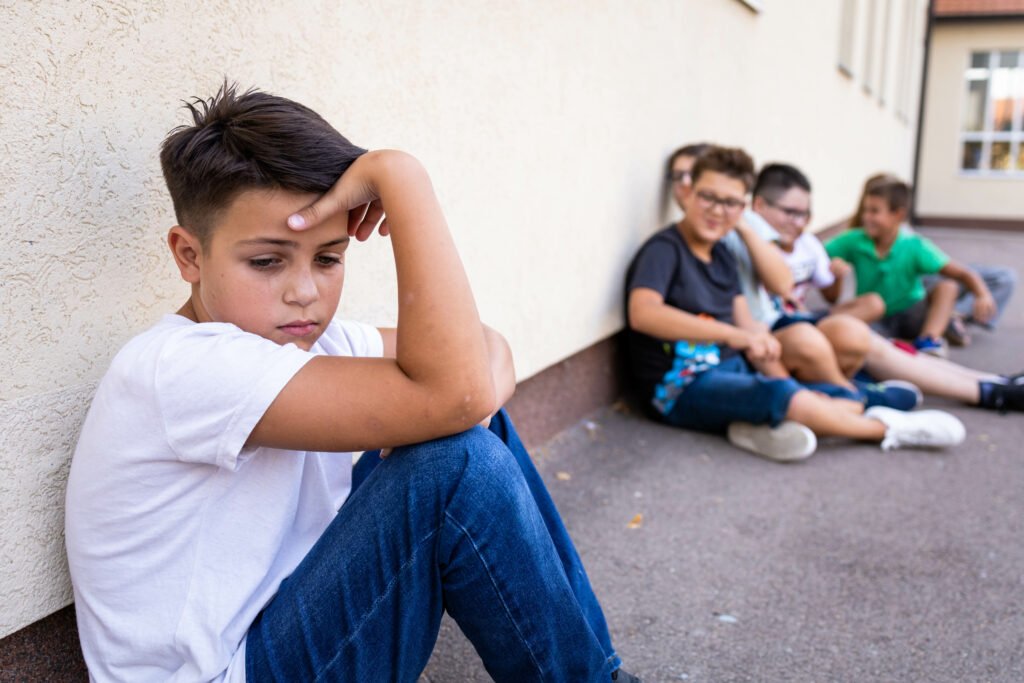
Bullying is one of those topics students have often heard about many times before. They may have participated in bullying prevention weeks, watched videos, completed worksheets, listened to assemblies, and been reminded repeatedly to be kind and tell an adult.
Those messages matter, but when we actually talk with students about bullying, the situations they describe are rarely that simple. There can be friendship groups, social status, fear of becoming the next target, online conversations, pressure to join in, bystanders who aren’t sure what to do, and behaviors that sit somewhere between conflict, teasing, unkindness, and bullying.
That’s why we wanted our bullying lessons to go further than simply telling students not to bully. We wanted students to understand what bullying actually is, how power and group dynamics can maintain it, and most importantly, the choices available to them when they find themselves involved in a difficult situation.
If you are looking specifically for middle school ideas, our bullying prevention activities for middle school are a good companion to this article.
Start by Helping Students Understand What Bullying Actually Is
One of the most important conversations we can have with students is about the difference between bullying and other difficult peer interactions.
Not every argument is bullying. Not every unkind comment is bullying. Friends can have conflict, students can make poor choices, and someone can say something hurtful without there necessarily being an ongoing bullying dynamic.
At the same time, we don’t want students dismissing serious behavior as “just drama” or “just joking.” Understanding concepts such as patterns of behavior, power imbalance, and impact gives students a more useful framework for recognizing what may be happening.
StopBullying.gov describes bullying as unwanted, aggressive behavior that involves a real or perceived power imbalance and is repeated, or has the potential to be repeated. That definition gives students a useful test when they are unsure what they are seeing.
A useful lesson explores these differences directly, including physical, verbal, social and cyberbullying. Giving students language for these experiences can help them communicate more clearly when something happens.
| What is happening | What it often looks like | A helpful question to ask |
|---|---|---|
| Conflict | A disagreement between people with similar power, where both want to resolve it | Do both people have a say in how this ends? |
| Teasing | Playful comments that everyone involved finds funny | Is everyone still laughing, including the person it is about? |
| One-time mean behavior | A hurtful comment or action that is not part of a pattern | Has this happened before, or is it likely to happen again? |
| Bullying | Repeated, unwanted behavior with a real or perceived power imbalance | Is someone using power to hurt or control another person? |
Talk About Power, Not Just Behavior
Bullying isn’t only about what someone does. Power matters.
StopBullying.gov names physical strength, access to embarrassing information and popularity as common sources of power. That power might come from physical size or strength, but it can also come from popularity, social influence, access to information, group membership, age, or having other students willing to support the behavior.
This becomes particularly important when we talk about social bullying and cyberbullying. A student doesn’t need to be physically stronger than another student to have significant power within a peer group.
Helping students recognize power dynamics moves the conversation beyond “Who started it?” and allows us to explore why some situations are much harder for a student to manage independently.
It also helps explain why telling a student to simply ignore bullying or stand up for themselves may not always be enough.
Why Does Bullying Keep Happening?
This is a question worth exploring with students rather than answering for them.
What might someone gain from bullying another person? What happens when other students laugh? What happens when a rumor receives attention? What happens when someone posts something cruel and other students share it?
Students can begin to see that bullying doesn’t always happen in isolation. The reactions of the surrounding group can sometimes reinforce the behavior, even when those students didn’t initiate it themselves.
This is where a bullying lesson can become a broader lesson in social awareness.
Students begin thinking not only about the person bullying and the person being targeted, but about everyone else in the environment and the influence they may have.
Bystanders Have Choices Too
We often tell students to be an “upstander,” but that can sound much easier in a lesson than it feels in a real social situation.
A student may know that something is wrong and still worry about what will happen if they intervene. They might be afraid they’ll become the next target, lose friendships, attract unwanted attention, or make the situation worse.
Those concerns deserve to be acknowledged.
Rather than presenting students with one correct way to respond, we can help them explore different safe ways to take action. Depending on the situation, that might involve interrupting or redirecting, checking on the person afterwards, refusing to participate, not sharing harmful online content, getting help from an adult, or reporting what happened. StopBullying.gov also notes that young people who are defended by their peers tend to be less anxious and depressed, so even small acts of support matter.
A Bystander Line activity, alongside realistic bullying and cyberbullying scenarios, gives students a chance to think about what they might realistically do and what factors could make intervening easier or harder.
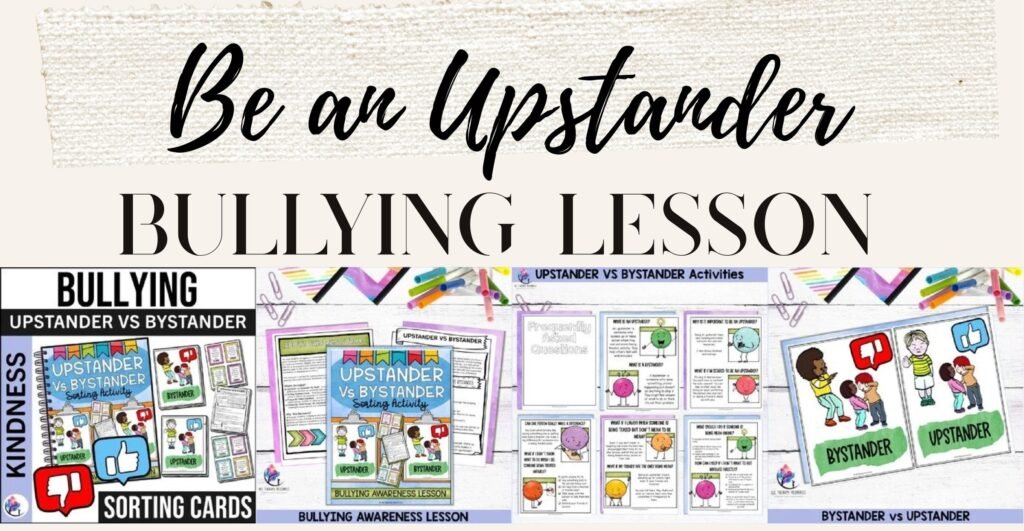
Try this in your next lesson: for younger students, our Upstander vs Bystander Activities make these choices concrete with a tip sheet and sorting cards. One reviewer shared, “The tip sheet is clear and relatable, and the sorting cards spark great conversations during counseling and classroom lessons.”
Peer Pressure Can Influence the Students Who Aren’t Doing the Bullying
When we think about peer pressure, we often associate it with being pressured to do something obviously risky. But peer pressure can be much quieter than that.
A student might laugh at something they don’t actually find funny because everyone else is laughing. They might stay silent because their friendship group has decided they don’t like someone. They might forward a screenshot because everyone else already has it.
They may never think of themselves as someone who bullies others.
That’s exactly why these conversations matter.
Helping students recognize social pressure and group dynamics gives them an opportunity to think about the small decisions that can either reinforce harmful behavior or help interrupt it.
Use Realistic Scenarios Instead of Only Talking About Rules
Students often know the rules around bullying. The harder part is applying those rules when friendships, emotions, loyalty, embarrassment, or social pressure become involved.
Realistic scenarios give us a safer way to explore those situations.
Instead of asking a student whether they have ever participated in excluding someone, we can introduce a scenario involving a friendship group that has deliberately left someone out of a group chat.
What is happening here? Is there a power imbalance? How might the targeted student feel? What choices do the other students have? What could someone do without placing themselves at unnecessary risk?
Students can explore the situation without having to disclose their own experiences.
That is why realistic scenarios are such a useful part of any bullying lesson. They become a starting point for discussion, problem-solving, perspective-taking and practical decision-making.
Make Bullying Prevention Interactive
A bullying lesson should not feel like another presentation students simply sit through.
Activities such as Stand Up If…, Move to a Corner, Bystander Line, Bullying Myth vs. Reality, realistic scenarios, reflection questions and a final One Step Forward activity give students ways to respond, hear different perspectives and reconsider assumptions. Offer a private-response option for anything that involves moving or standing, so students who have been bullied are never put on the spot.
These interactive components allow students to physically or verbally respond to ideas, hear different perspectives, and reconsider assumptions.
They also give the facilitator useful opportunities to stop and explore what students are thinking. Sometimes the most valuable part of an activity is discovering that the class is divided on an answer and asking, “Okay, why did you choose that?”
That’s where the discussion becomes meaningful.
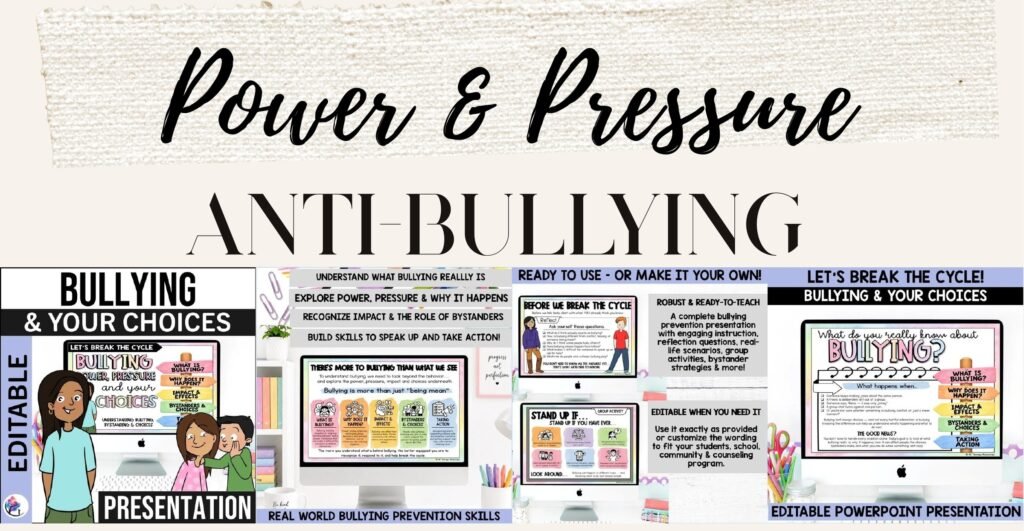
From our counseling room to yours: our editable Bullying, Power, Pressure & Your Choices Presentation brings these pieces together in one interactive lesson for older students, with scenarios, bystander strategies and reflection built in. One reviewer wrote, “I loved that it went beyond simply telling students not to bully and actually got them thinking about peer pressure, power and the choices they make.”
Cyberbullying Needs to Be Part of the Conversation
For older students in particular, bullying doesn’t necessarily stop when they leave school.
Group chats, social media, messaging, screenshots, images, comments, and online exclusion can extend peer problems well beyond the school day. Online behavior can also spread quickly and involve an audience far larger than the students who were initially involved.
That’s why cyberbullying belongs alongside physical, verbal and social bullying in any lesson. As StopBullying.gov points out, online content can be persistent, public and hard for adults to notice. According to the CDC, about 1 in 5 high school students report being bullied on school property in the past year, and more than 1 in 6 report being bullied electronically.
Students can explore how their choices online contribute to what happens next. Forwarding something, liking it, commenting, adding another person to a conversation, or choosing not to participate can all influence the situation.
We want students thinking beyond “I didn’t post it first” and considering the role everyone plays once harmful content begins circulating.
Don’t Put All the Responsibility on the Student Being Targeted
Bullying prevention can sometimes unintentionally place a lot of responsibility on the student experiencing the bullying.
Ignore it. Walk away. Be confident. Tell them to stop. Don’t react.
Some of those strategies may be useful in particular circumstances, but they aren’t always enough. When there is a significant power imbalance or an established pattern of bullying, the student being targeted should not be expected to solve the entire situation alone.
Lessons should explore documenting, reporting, seeking help, identifying trusted adults and supporting someone who is being targeted. StopBullying.gov is clear on this point: adults should not assume kids can work it out without adult help.
We want students to understand that asking for help isn’t failing to handle a problem independently. Sometimes seeking support is exactly the appropriate response.
Consider the Beliefs Bullying Can Leave Behind
The impact of bullying isn’t limited to what happens in the moment.
Repeated negative experiences can begin influencing how a student thinks about themselves, other people, and their place within the school community. A student may begin believing that nobody likes them, that asking for help won’t make a difference, or that something about them caused the bullying.
Those beliefs deserve attention too.
That is why it helps to give students opportunities to explore and challenge some of the negative beliefs that can develop when a student has been targeted. The CDC notes that bullying increases the risk of depression, anxiety, sleep difficulties and lower academic achievement.
Bullying prevention isn’t only about stopping behavior. It is also about helping create school environments where students feel safe, supported, connected, and able to seek help.
Move Beyond “Be Kind”
Of course we want students to be kind. But bullying prevention requires more than a kindness slogan. School programs can make a difference: a Campbell systematic review found that school anti-bullying programs reduced bullying perpetration by about 18 to 19 percent and victimization by about 15 to 16 percent, effects the authors describe as modest.
Students need to understand power. They need to recognize patterns. They need to understand the difference between bullying and conflict. They need to recognize social pressure and group dynamics. They need practical ways to respond as bystanders, and they need to know when a situation requires adult support.
Most importantly, students need opportunities to think about their own choices.
They may not control what every other student does, but they can think about what they participate in, what they reinforce, what they share, how they respond when someone is targeted, and when they choose to seek help.
That’s the conversation a good bullying lesson can create.
Frequently Asked Questions
What is the difference between bullying and conflict?
Conflict is a disagreement between people with similar power. Bullying is unwanted, aggressive behavior that involves a real or perceived power imbalance and is repeated or likely to be repeated.
How can students safely help as bystanders?
They can refuse to join in, avoid sharing harmful content, change the subject, check on the person afterwards, act as a group or tell a trusted adult. Students should never be expected to put themselves at risk.
Why is power important in bullying prevention lessons?
Power explains why some situations are hard for a student to handle alone. It can come from size, popularity, access to information or group support, and recognizing it helps students know when adult help is needed.
Do school anti-bullying programs work?
Research suggests they help. A Campbell systematic review found modest reductions in both bullying perpetration and victimization, and programs work best when they are part of a whole-school approach.
References
- StopBullying.gov: What is bullying
- StopBullying.gov: Bystanders to bullying
- StopBullying.gov: What is cyberbullying
- CDC: Fast facts on preventing bullying
- Gaffney, Ttofi and Farrington (2021): Campbell systematic review of school bullying prevention programs
Looking for practical, ready-to-use resources to support your bullying prevention lessons? The All Therapy Resources Membership provides access to a growing collection of thoughtfully developed counseling activities, interactive games, and therapeutic tools designed to save preparation time while supporting meaningful, skill-focused learning.