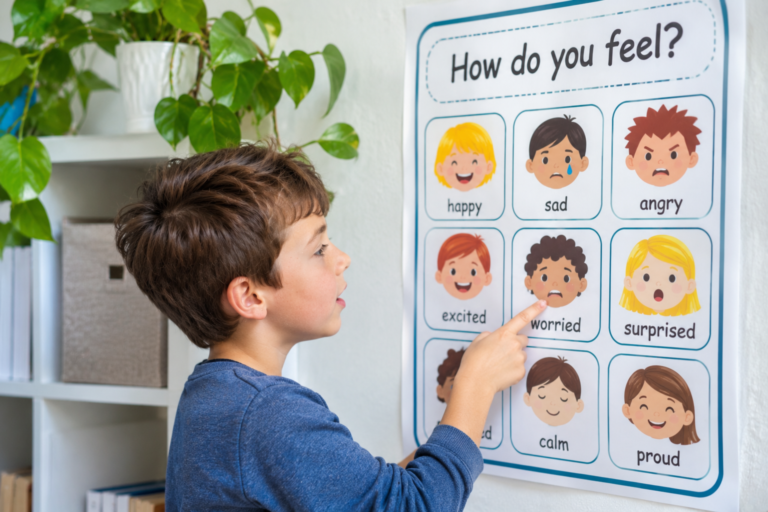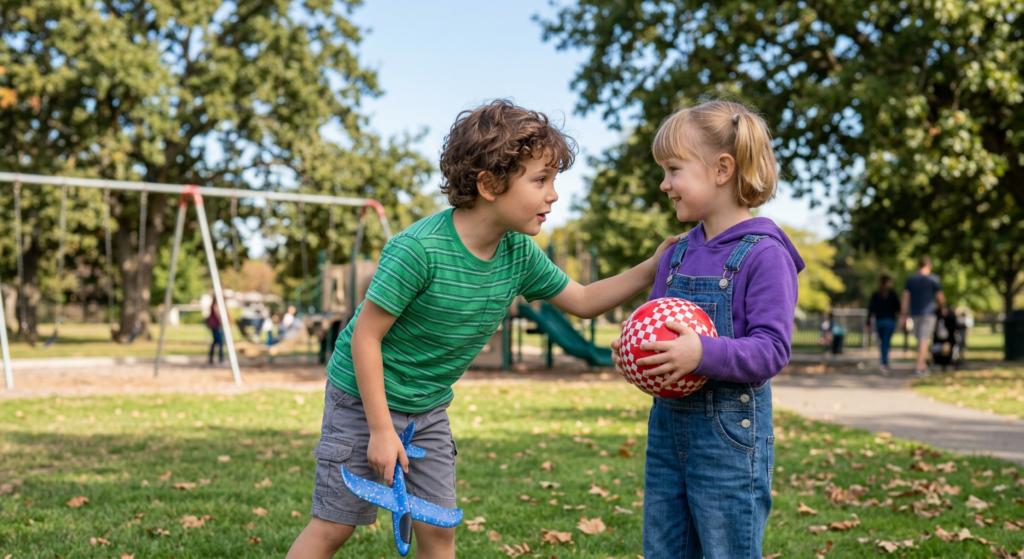
Teaching personal boundaries to kids gives them words for something they often already feel: “I’m not comfortable with that.” Everyone has different comfort levels. Some students love a hug, while others would rather have a high-five. Many children can tell when something doesn’t feel right, but they don’t yet have the language to explain their own boundaries or to notice and respect someone else’s.
In this article we share practical ways to teach boundaries in grades 3 to 6, covering personal space, digital boundaries, consent, saying no and respecting others. Each section includes simple language and an example you can use in a lesson, small group or individual session.
Why boundaries matter for children
Boundaries help children feel safe, build respectful friendships and speak up when something feels wrong. Learning to respect other people’s boundaries matters just as much: it is the foundation for kindness, consent and healthy relationships as children grow.
Keep the tone warm and matter-of-fact. Boundaries are a normal part of everyday life, like asking before borrowing a pencil or knocking before opening a door. Starting with these everyday examples makes it easier to talk about bigger ones.
1. Personal boundaries: space, privacy and comfort
Personal space is a great starting point because students can see and feel it. Help them notice how close is comfortable for them, and that this can be different for different people and situations.
A simple script: “Your body belongs to you. You get to decide what feels okay. Other people get to decide for their bodies too.”
Try this in your classroom: Have pairs stand across the room and slowly walk toward each other. The first student says “stop” when it feels close enough. Swap roles and compare. Talk about why the answers were different and why both are okay.
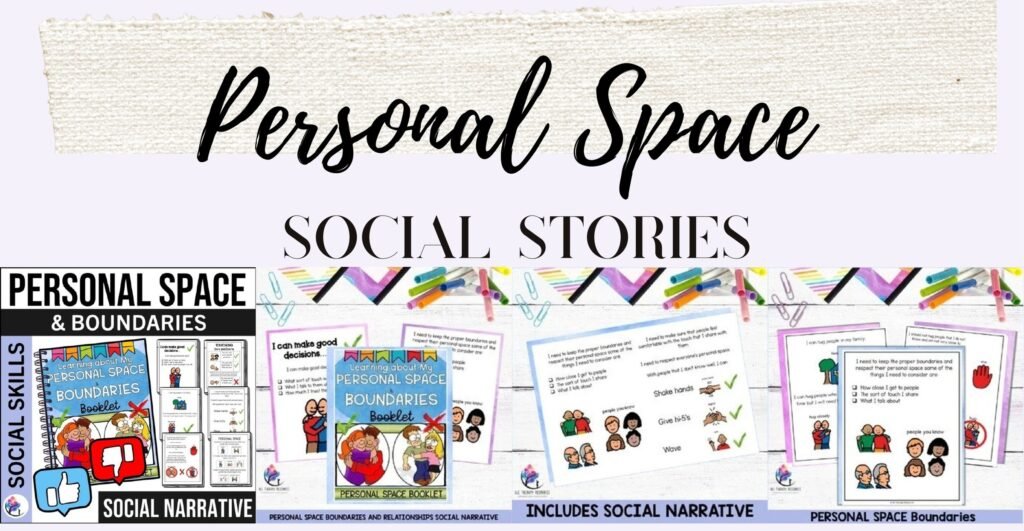
For students who benefit from visuals and a clear story, our Personal Space and Boundaries Social Narrative explains personal space and safe relationships in simple, concrete language. It works as a read-aloud, a small group activity or an independent task, and suits special education settings well. One reviewer on our shop wrote: “Personal space was a big struggle and this was ready to print and go!”
2. Digital boundaries: what stays private online
Students in upper elementary are often in group chats and online games earlier than adults expect. Teach them that boundaries apply online too: what to keep private, what to do if someone asks for personal information or photos, and that it is okay to leave a chat that feels uncomfortable.
Picture a student whose friend keeps posting photos of them without asking. Ask the group: “Is that okay? What could they say? Who could they tell if it keeps happening?”
3. Consent: asking first and accepting a no
For children, consent can be taught in very everyday terms: ask before you hug, borrow or touch, and accept the answer. Practicing with low-stakes examples (borrowing markers, joining a game) builds the habit before it is needed for bigger situations.
Model the words students can use: “Can I give you a hug?” “Is it okay if I sit here?” And the response to a no: “Okay, thanks for telling me.”
4. Saying no clearly and kindly
Many children find it hard to say no, especially to friends or adults. Give them short, clear phrases and let them practice out loud: “No thanks.” “Please stop.” “I don’t like that.” Remind them that they can tell a trusted adult if someone doesn’t listen.
Try this in your next session: Write three everyday situations on cards, such as a friend wanting to copy your work or someone tickling you when you have asked them to stop. Students take turns choosing a card and practicing a clear, polite no.
5. Respecting other people’s boundaries
Respecting others is the other half of the skill. Help students notice body language and words that show someone is uncomfortable, and practice what to do next: stop, give space and check in.
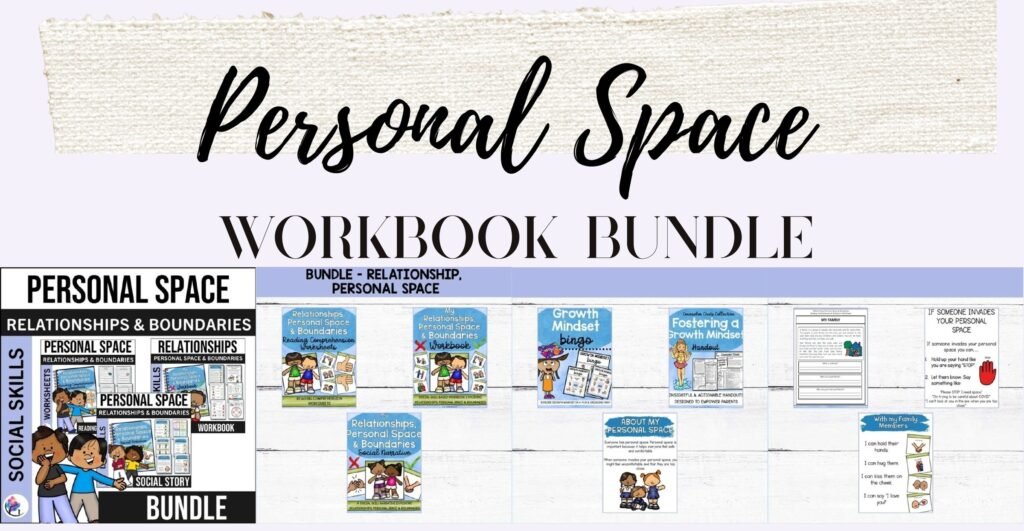
For older students or a deeper unit, our Personal Space, Boundaries and Relationships Workbook and Social Narrative Bundle combines a social narrative with workbook activities on personal space and different kinds of relationships, so you can build on the lesson over several sessions.
If a student shares something worrying: stay calm, listen and thank them for telling you. Don’t promise to keep it a secret, and don’t ask leading questions. Follow your school or district protocol and your mandated reporting responsibilities straight away.
USA: 988 Suicide & Crisis Lifeline (call or text 988, chat at 988lifeline.org), Childhelp National Child Abuse Hotline 1-800-422-4453, emergency 911.
Australia: Lifeline 13 11 14 (text 0477 13 11 14), Kids Helpline 1800 55 1800, your state or territory child protection service (contacts are listed by the Australian Institute of Family Studies), emergency 000.
Practicing boundaries with a counseling game
A team game lets students talk about boundaries without anyone being put on the spot. Students discuss each scenario with their team, answer out loud and hear a clear, age-appropriate teaching point after every question.
| Skill area | What students practice | Practice it with |
|---|---|---|
| Personal boundaries | Personal space, privacy and comfort levels | Boundaries Social Narrative |
| Digital boundaries | Keeping information private online | Boundaries: My Call game |
| Consent | Asking first and accepting a no | Boundaries: My Call game |
| Saying no | Clear, polite ways to say no | Boundaries: My Call game |
| Respecting others | Noticing and respecting comfort levels | Boundaries and Relationships Workbook Bundle |
From our counseling room to yours: Boundaries: My Call Personal Boundaries Game is an interactive PowerPoint game for grades 3 to 6 with 25 questions across five categories: personal boundaries, digital boundaries, consent, saying no and respecting others. Students play in teams on a game board, and every answer comes with a clear teaching point, so each question becomes a mini lesson in personal safety and respectful relationships. It needs the desktop version of Microsoft PowerPoint.

Frequently asked questions
What age should children learn about boundaries?
Boundaries can be taught from the early years using simple language. The examples in this article are written for grades 3 to 6, when students are ready to talk about friendships, privacy and online life in more detail.
How do I teach consent to kids in an age-appropriate way?
Use everyday examples such as hugs, borrowing things and joining games. Focus on asking first, listening to the answer and accepting a no.
What if a student discloses something during a boundaries lesson?
Stay calm, listen, don’t promise secrecy and follow your school or district protocol and mandated reporting responsibilities. It can help to remind the class at the start of the lesson which trusted adults they can talk to.
Looking for practical, ready-to-use resources to support your boundaries and personal safety lessons? The All Therapy Resources Membership provides access to a growing collection of thoughtfully developed counseling activities, interactive games, and therapeutic tools designed to save preparation time while supporting meaningful, skill-focused learning.