Divorce counseling activities for kids give children a safe way to talk about something that can feel confusing and private. When families change, children often carry mixed feelings, worries about moving between houses and quiet questions about whether they somehow caused it. Many find these thoughts hard to put into words, especially when they are asked about them directly.
In this article we share gentle, practical ways to support students in grades 3 to 6 through divorce and separation: naming feelings, adjusting to two homes, noticing what stays the same, understanding it is not their fault, and coping day to day.
How family changes can show up at school
Children respond to family changes in many different ways. Some seem fine at school, some become quiet or tearful, and others show it through frustration, trouble concentrating or worries about the week ahead. None of these responses is wrong. Our role is to offer a calm, predictable place to talk and practical tools to cope.
Go at the child’s pace. Not every student wants to talk straight away, and that is okay. Indirect activities such as drawing, stories and games often make it easier to open up.
1. Naming feelings about family changes
Mixed feelings are common: a child can feel sad, relieved, angry and worried all in the same week. Normalizing this helps children feel less alone.
A simple script: “Lots of kids have more than one feeling when their family changes. Some feelings might even seem to go together that don’t usually go together. All of them are okay.”
Try this in your next session: Give the student a heart outline and a set of colored pencils. Ask them to choose a color for each feeling they have about the changes in their family and fill in the heart to show how much of each feeling is there.
2. Two homes: moving between houses
Living in two homes can mean different rules, packing bags, missing things and missing people. Helping children plan for transitions makes them more predictable.
Picture a student who keeps forgetting their homework at the other house. Together you might make a simple checklist for their bag, or agree with families on a spare set of supplies at each home.
3. What stays the same
When a lot is changing, it helps to focus on what is steady: the people who love them, school, friends, favorite activities and comfort items. Making a list together can be very reassuring.
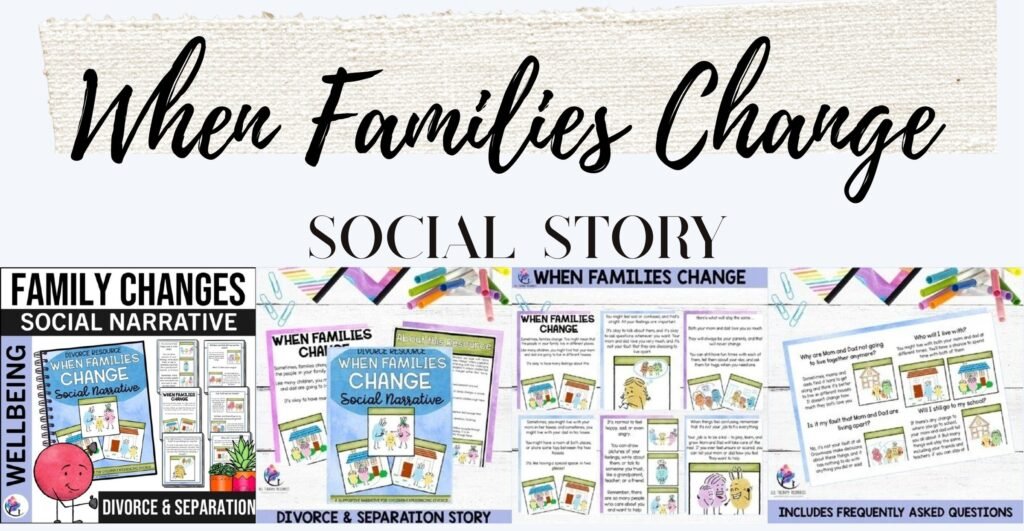
For a gentle, story-based way to explain separation, our When Families Change Divorce and Separation Story explains family changes in child-friendly language and helps children understand and cope with their feelings. One reviewer on our shop shared: “This resource helped provide language needed to help a student with the separation of his parents.”
4. It’s not my fault
Many children quietly wonder if they caused the separation. Say it clearly and more than once: separation is an adult decision, and it is never a child’s fault. It isn’t their job to fix it either.
You might say: “Grown-ups decided to live in different homes because of grown-up reasons. Nothing you did or said made this happen.”
5. Coping with family changes
Help each child build a small toolkit: calming strategies they like, trusted adults at home and school, and ways to ask for help when feelings get big. Encourage them to name one person they can go to on a hard day.
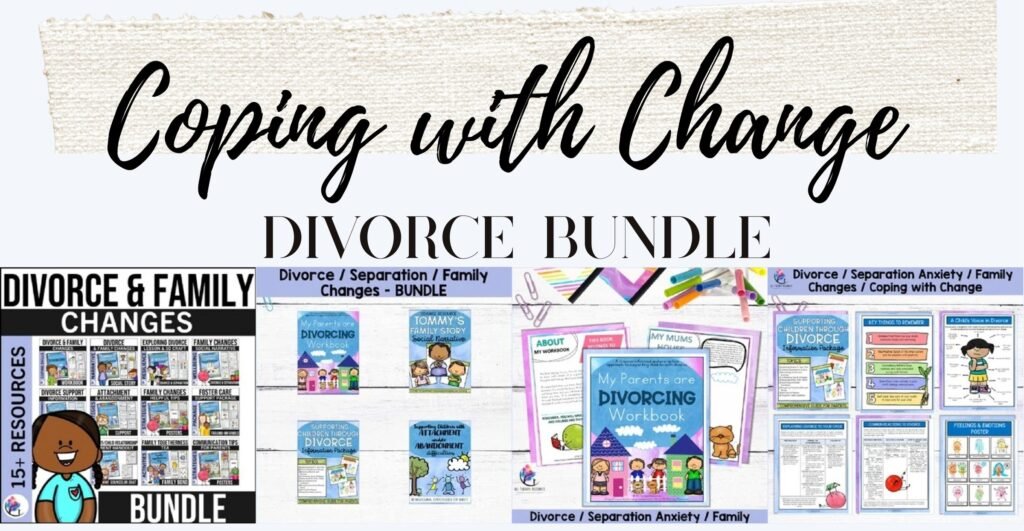
For a fuller set of supports, our Coping with Change Bundle brings together a social narrative, a workbook and a tip sheet for parents, so you can support the child in sessions and share practical ideas with families at the same time.
Talking about family changes through a game
A team game can make this topic feel less heavy. Students talk through scenarios about other children, which gives them distance from their own story while they practice the same ideas.
| Topic | What students explore | Practice it with |
|---|---|---|
| Feelings about family changes | Mixed feelings, worries and naming big emotions | Two Homes, One Me game |
| Two homes | Moving between houses and new rules | Two Homes, One Me game |
| What stays the same | Routines, comfort items and the people who stay | When Families Change story |
| It’s not my fault | Separation is an adult decision | Two Homes, One Me game |
| Coping | Trusted adults, calming strategies and asking for help | Coping with Change Bundle |
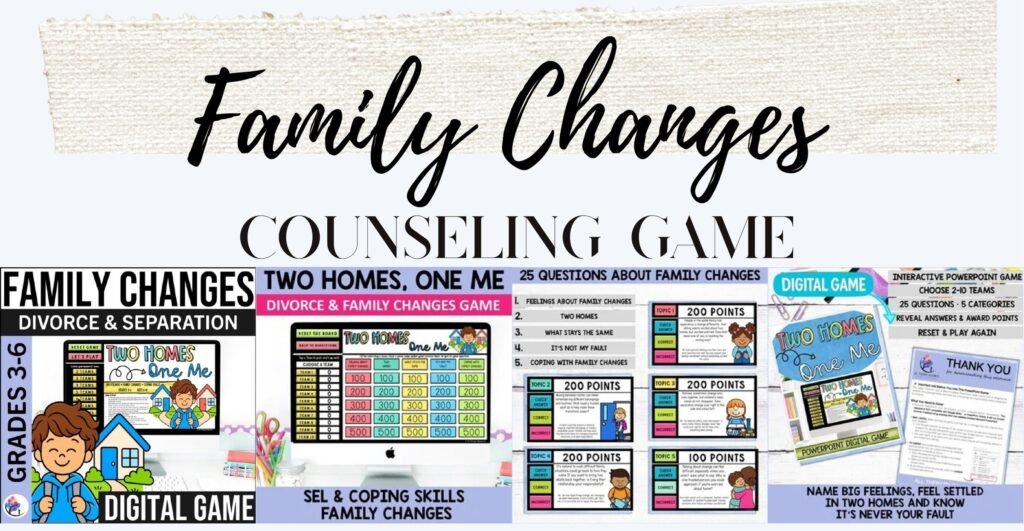
From our counseling room to yours: Two Homes, One Me Divorce Counseling Game is an interactive PowerPoint game for grades 3 to 6 with 25 questions across five categories: feelings about family changes, two homes, what stays the same, it’s not my fault, and coping with family changes. Every answer comes with a gentle, clear teaching point. It suits small groups for children of separated families, individual sessions and telehealth over screen share. It needs the desktop version of Microsoft PowerPoint.
Frequently asked questions
Should I run a group or work individually?
Both can work. Groups help children see they are not the only ones going through family changes, while individual sessions give more privacy and suit children who are finding things especially hard.
How do I involve parents?
Keep both parents informed where appropriate and follow any court orders or school policies about communication. Share practical, neutral tips, and avoid taking sides.
When should I refer for more support?
If a child shows ongoing distress, big changes in behavior or mood, or you have any safety concerns, follow your school or district referral and safeguarding procedures.
Looking for practical, ready-to-use resources to support your students through family changes? The All Therapy Resources Membership provides access to a growing collection of thoughtfully developed counseling activities, interactive games, and therapeutic tools designed to save preparation time while supporting meaningful, skill-focused learning.