
Anger management activities for middle school work best when students can talk about anger before it takes over. By grades 5 to 8, most students can tell you that yelling or slamming a door “isn’t okay.” What many of them can’t do yet is notice anger early, name what set it off, and choose a different response in the moment. That is a skill, and like any skill it needs practice in a setting that feels safe.
In this article we walk through five areas we find most useful for middle school anger management: triggers, warning signs, calm down strategies, assertive communication and repairing relationships. Each section includes a short example you can use in your next small group, individual session or SEL lesson.
Why middle schoolers need a different approach to anger
Middle school brings bigger friendship dramas, more independence and more moments where students feel judged by peers. Being told to “calm down” rarely helps, and being singled out in front of classmates can make a student shut down or push back harder. Students this age tend to respond better when the conversation feels low pressure, involves their peers and gives them a chance to think out loud.
That is why discussion-based activities and games are so useful here. A student who would never volunteer a personal story will often happily debate whether a character in a scenario is being assertive or aggressive. The skill still gets practiced, without anyone being put on the spot.
1. Anger triggers: what sets anger off
Anger usually has a reason behind it: feeling disrespected, embarrassed, left out, treated unfairly or simply exhausted. Helping students name their own triggers turns anger from something that “just happens” into something they can see coming.
Picture a student who explodes every time a teammate makes a mistake in PE. When you explore it together, the trigger isn’t the mistake itself. It’s the worry that losing will lead to teasing. Naming that underlying feeling opens up far more options than “don’t get angry.”
Try this in your next session: Give each student three sticky notes and ask them to write one trigger at school, one at home and one with friends. Collect them anonymously, read a few aloud and ask, “What might this person be feeling underneath the anger?”
2. Warning signs: the body clues that anger is building
Many students only notice anger once it has already boiled over. Teaching them to recognize early body clues (a hot face, clenched fists, a racing heart, a tight jaw, talking faster) gives them a window to act before things escalate.
A simple script you might use: “When you start to feel angry, what’s the very first thing your body does? Let’s call that your early warning light. What could you do when that light comes on?”
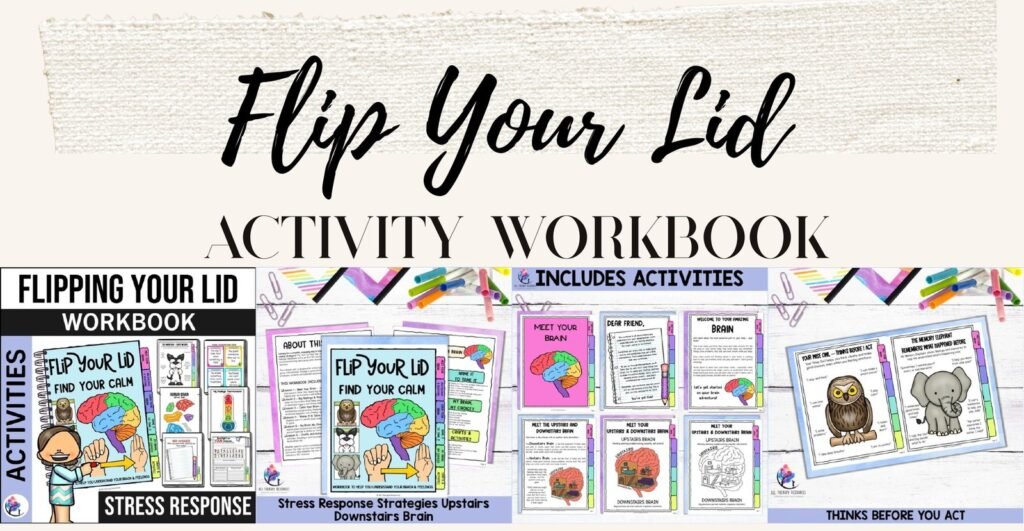
If your students like learning how the brain works, the upstairs and downstairs brain is a helpful, student-friendly way to explain why thinking clearly is so hard once anger is high. Our Flip Your Lid Activities Workbook walks students through what happens when they “flip their lid” and what helps them settle again. It pairs well with a warning signs lesson, so students can connect the body clues they notice with what is happening in the brain.
3. Calm down strategies that students will actually use
Middle schoolers are quick to reject strategies that feel babyish or would draw attention in class. Offer a menu and let students choose what fits them: slow breathing, a quick walk or drink of water, squeezing hands together, counting backward, stepping away from the conversation, or writing the feeling down.
Practice matters more than the list itself. A strategy a student has only heard about once is unlikely to come to mind in a heated moment. Rehearse the strategies when students are calm, and agree on a discreet signal they can use in class to ask for a short break.
Try this in your classroom: Ask students to rank five calm down strategies from “I’d actually use this” to “no way.” Their reasons are a great discussion starter, and you’ll learn which tools to build on with each student.
4. Assertive vs aggressive: speaking up respectfully
Anger often carries a real message: something feels unfair or a boundary has been crossed. The goal isn’t to make students silent. It’s to help them say what they need without hurting anyone. Comparing passive, aggressive and assertive responses side by side helps students hear the difference.
Picture a student whose classmate keeps taking their pencil. An aggressive response might be, “Give it back or else.” A passive response is saying nothing and stewing. An assertive response sounds like, “I need my pencil back, please ask me next time.” Have students practice the assertive version out loud, because saying it is much harder than recognizing it.
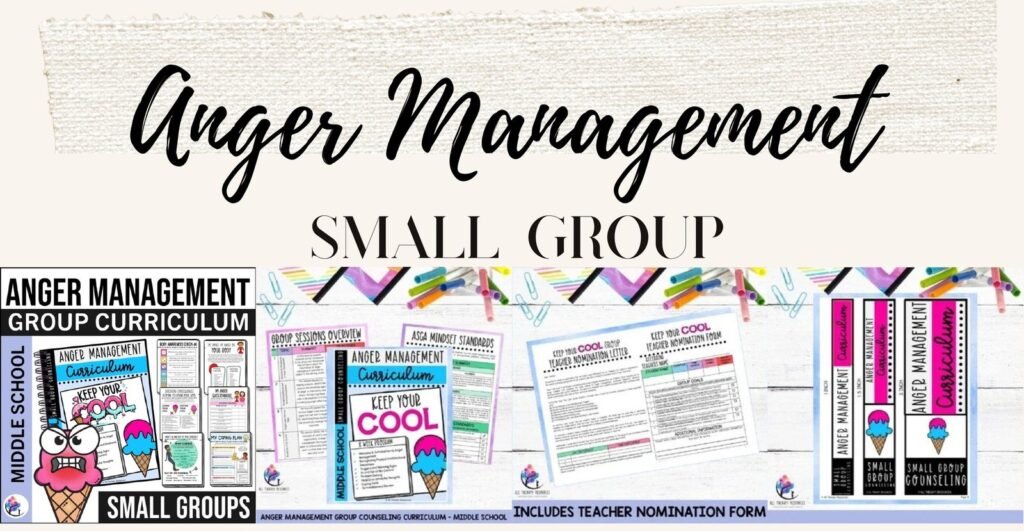
For a structured way to build these skills over several weeks, our Anger Management Small Group Counseling Curriculum for Middle School gives you ready-to-run sessions with worksheets and activities. It suits counselors running Tier 2 groups who want a clear sequence rather than one-off lessons. One reviewer on our shop shared: “Used for multiple anger management groups. Students were engaged and interested in the content.”
5. Repairing relationships after anger
Even with great skills, students will sometimes lose their cool. What happens next matters. Teaching students how to make a real apology and repair a relationship helps them recover, keeps friendships intact and reduces the shame that can fuel the next outburst.
A real apology names what happened, takes responsibility and offers to make it right: “I’m sorry I yelled at you during the game. That wasn’t fair to you. Next time I’ll take a break before I say something.” Compare this with “Sorry, okay?” and ask students which one they would rather receive.
Bringing it together with an anger management game
Games give students a low-pressure way to practice all five areas at once. Teams talk through scenarios together, answer out loud and hear a teaching point after each answer, so every question becomes a mini lesson.
| Skill area | What students practice | Practice it with |
|---|---|---|
| Anger triggers | Naming what sets anger off and the feeling underneath | Keep Your Cool game |
| Warning signs | Noticing body clues early | Flip Your Lid Activities Workbook |
| Calm down strategies | Choosing and rehearsing tools that fit them | Keep Your Cool game |
| Assertive vs aggressive | Saying what they need respectfully | Middle School Anger Management Curriculum |
| Repairing relationships | Making a real apology and making things right | Keep Your Cool game |
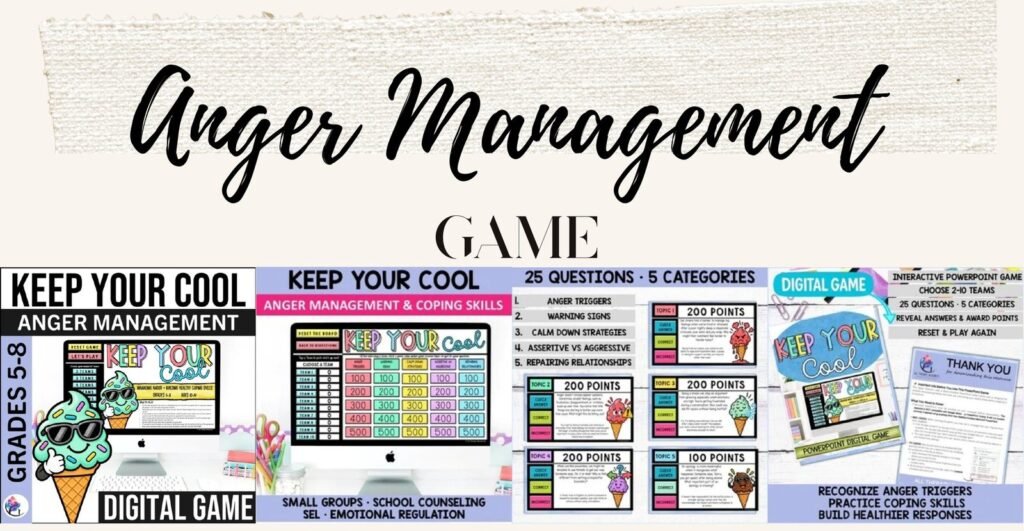
From our counseling room to yours: our Keep Your Cool Anger Management Game was made for exactly this. It is an interactive PowerPoint game for grades 5 to 8 with 25 questions across the five areas in this article: anger triggers, warning signs, calm down strategies, assertive vs aggressive, and repairing relationships. Students play in teams, the scoreboard keeps track of points, and every answer comes with a clear teaching point. It works well as an opener for an anger management group, in individual sessions, as a whole-class SEL lesson or over screen share in telehealth sessions. It needs the desktop version of Microsoft PowerPoint.
Frequently asked questions
What age is this approach best for?
The ideas here are written for grades 5 to 8. Many of the activities can be adapted for older students, and for younger students you may want simpler language and more visual supports.
Should anger management be taught in small groups or whole class?
Both have a place. Whole-class SEL lessons give every student a shared language for anger and calming down. Small groups are a good fit for students who need more practice, and individual sessions suit students whose anger is linked to more complex needs.
How do I keep students engaged when they say anger “isn’t a problem” for them?
Start with scenarios about other people rather than the students themselves. Games, sorting activities and debates let students practice the skills without having to admit to a problem first. Many students open up once the conversation feels safe.
When should I refer a student for more support?
If a student’s anger is frequent, intense, leads to harm to themselves or others, or seems connected to trauma, grief or other mental health concerns, follow your school or district’s referral process and involve families and specialist support as appropriate.
Looking for practical, ready-to-use resources to support your anger management lessons? The All Therapy Resources Membership provides access to a growing collection of thoughtfully developed counseling activities, interactive games, and therapeutic tools designed to save preparation time while supporting meaningful, skill-focused learning.