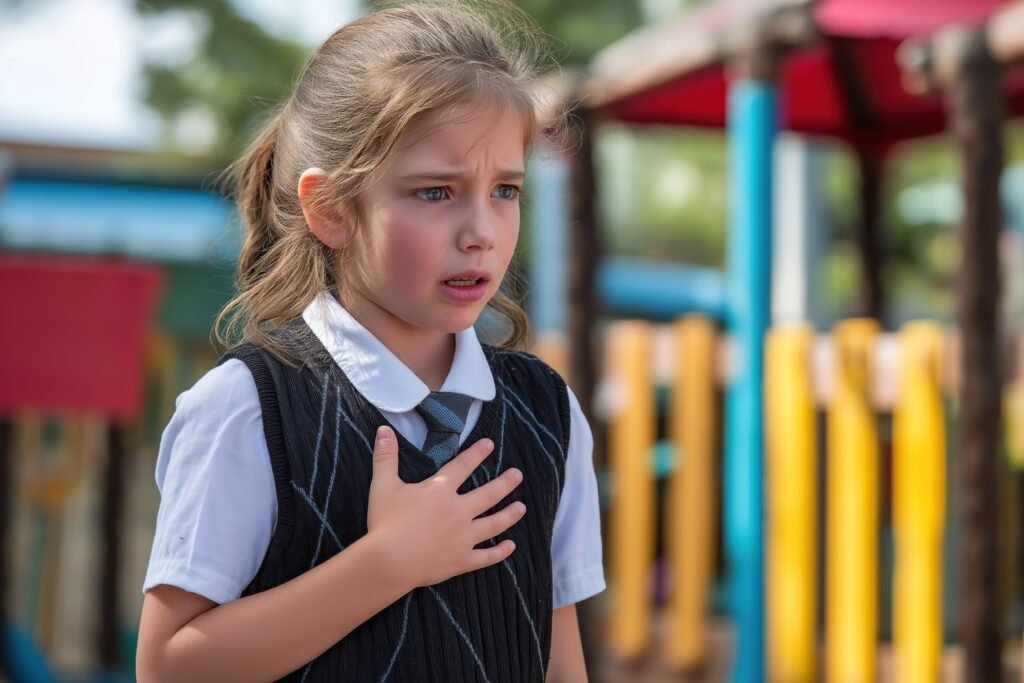
Schools are not intentionally unsafe places. Most educators work hard to create supportive, predictable, caring environments. Yet some everyday school practices can act as trauma triggers in school, activating survival responses in students whose nervous systems have been shaped by past adversity.
School counselors, teachers, and school psychologists often find themselves asking: “Why did this student escalate so quickly?” “Why did that small moment cause such a big reaction?” “Why does this student shut down during routine tasks?”
The answer is rarely simple defiance or choice. More often, it is a nervous system reacting to a perceived threat. This guide explores eight common trauma triggers schools can accidentally create, why they can activate survival responses, and how adults can respond differently without lowering expectations or compromising learning.
Trauma Triggers Are About Perception, Not Intent
A trauma trigger is not defined by how harmless an event appears to adults. It is defined by how the student’s nervous system perceives it.
Polyvagal theory, developed by Stephen Porges, uses the term neuroception for the way the nervous system picks up cues of safety or danger, often below conscious awareness. The theory is widely used in trauma-informed practice, although parts of it are still debated by researchers (Porges, 2025). For many students who have lived through adversity, this threat detection can be quicker to sound the alarm.
Think of a smoke alarm set to its most sensitive level. It does its job well, but it also goes off for burnt toast. The alarm is not broken; it was calibrated in a home where fires were real. In school, this can mean:
- Neutral events can feel threatening
- Routine procedures can activate survival responses
- Authority figures can trigger fear without saying a word
Trauma-informed practice does not ask educators to avoid structure. It asks them to understand how structure is experienced. SAMHSA’s trauma-informed framework names this directly: alongside realizing, recognizing, and responding to trauma, a trauma-informed approach actively seeks to resist retraumatization.
1. Public Correction and Being Singled Out
One of the most common school-based trauma triggers is public attention during moments of struggle. Examples include:
- Calling out behavior in front of peers
- Public clip charts or behavior tracking
- Correcting mistakes aloud
- Asking a dysregulated student to explain themselves publicly
Public correction can bring up shame, threat, and fear of rejection. For students with trauma histories, being exposed in front of others may echo earlier experiences of humiliation, punishment, or powerlessness.
Picture a student who freezes when asked to read aloud and then laughs off the request. A quiet approach often works better than a public one: crouch beside the desk and say, “You can pass this time. Let’s practice that paragraph together later.” The expectation stays, but the audience goes.
2. Sudden Transitions and Lack of Warning
The nervous system relies heavily on predictability to feel safe, and sudden change can be destabilizing for students with trauma histories. Common examples include:
- Abrupt schedule changes
- Unexpected drills or alarms
- Sudden changes in seating or grouping
- Last-minute task demands
Research on anxiety links uncertainty about possible threat with increased anticipatory anxiety (Grupe & Nitschke, 2013). For some students, an unexpected change can tip them toward hyperarousal (fight or flight) or hypoarousal (shutting down).
Advance warning, visual schedules, and transition cues are not “extras.” They are regulation supports. Our article on why routines and visuals matter for behavior explores this in more depth.
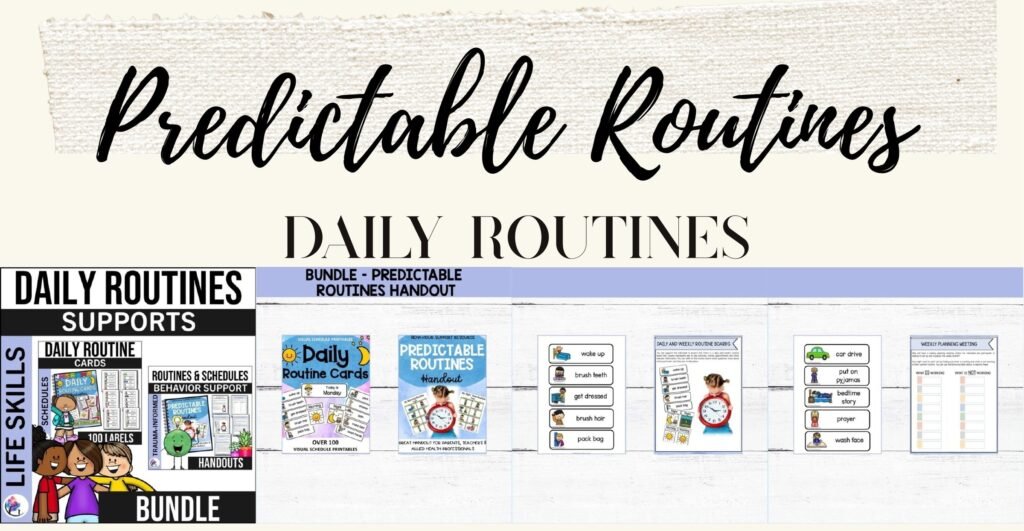
Try this in your classroom: before a change, give a short private preview: “After lunch we have a fire drill. It will be loud for about five minutes, then we come straight back here.” To make routines visible, the Predictable Routines Handout & Daily Routine Cards Bundle pairs a handout explaining why routines build safety and consistency with visual daily routine cards. It suits elementary classrooms, counseling sessions, and SPED settings: walk through the day’s cards together each morning and flag any change in advance, so the student knows what is coming.
3. Loud Noises and Sensory Overload
Many classrooms are noisy, busy places. That may be manageable for some students, but it can be overwhelming for others. Common sensory triggers include:
- Bells and alarms
- Raised adult voices
- Crowded hallways
- Bright lighting
- Visually cluttered spaces
For students whose bodies stay on high alert, loud or sudden input can register as danger. When a student is flooded, it becomes much harder to think, focus, and learn.
Picture a student who covers their ears and bolts during a pep rally. Rather than treating this as running away, a planned option can help: an agreed signal, a seat near the exit, or a role such as handing out programs at the door. Small sensory adjustments, like the ones in our guide to sensory diet activities for school, can lower the load across the day.
4. Power Struggles and Loss of Control
Trauma often involves experiences of powerlessness. When students feel trapped, forced, or controlled, survival responses may activate quickly. School-based triggers can include:
- Forced compliance without explanation
- Being physically blocked from leaving a space
- “Because I said so” responses
- Removal of choice during emotional moments
Offering appropriate autonomy and choice can restore a sense of agency and reduce threat. “Empowerment, voice, and choice” is one of SAMHSA’s six key principles of a trauma-informed approach.
Two acceptable options often defuse a standoff: “Do you want to start with the first two questions or the last two?” or “You can take a minute at your desk or by the window, then we’ll get going.” The task still happens; the student has a say in how.
5. Silence, Ignoring, or Withdrawing Connection
While yelling and punishment are obvious stressors, emotional withdrawal can be equally triggering for some students. Examples include:
- Ignoring a student after misbehavior
- Removing warmth or connection as a consequence
- Silent disapproval
- Withholding relationship until behavior improves
For students who have experienced disrupted or unpredictable relationships, a cold shoulder from a trusted adult can feel like a threat rather than a consequence. Connection is not something students should have to earn. It is often what they need most when they are struggling, a theme we explore in why relationship-based practice changes behavior.
A short repair message keeps the relationship intact while the limit stays in place: “That wasn’t okay, and we’ll sort it out. I’m still glad you’re in my class.”
6. Discipline Without Regulation
One of the most counterproductive patterns schools can fall into is delivering consequences while a student is still dysregulated.
Stress has a measurable effect on thinking. Research shows that even mild, uncontrollable acute stress can rapidly impair the prefrontal cortex abilities we rely on for planning, reasoning, and self-control (Arnsten, 2009). When students are in fight, flight, or freeze:
- Reasoning and problem-solving are harder to access
- Reflection is unlikely to stick
- Lectures can feel like more threat
Discipline delivered during dysregulation often escalates behavior and deepens shame. Trauma-informed practice emphasizes regulation before reflection: calm the body first, then talk about what happened and what needs to be repaired. Our article on why the students who get in trouble the most often need the most safety takes this further.
7. Being Told to “Calm Down” or “Use Your Tools”
These phrases are well-intended, but they can feel invalidating when a student’s nervous system is overwhelmed. Why?
- Regulation cannot be commanded
- Skills are harder to reach during threat states
- The message may feel dismissive or blaming
Access to coping skills depends on nervous system state, which is why co-regulation usually comes before self-regulation. Instead of “Calm down,” try lowering your voice, slowing your pace, and naming what you see: “This is a lot right now. I’m right here. Let’s breathe together, then we’ll figure it out.” Co-regulation does not always have to look quiet, either; see matching energy to build trust.
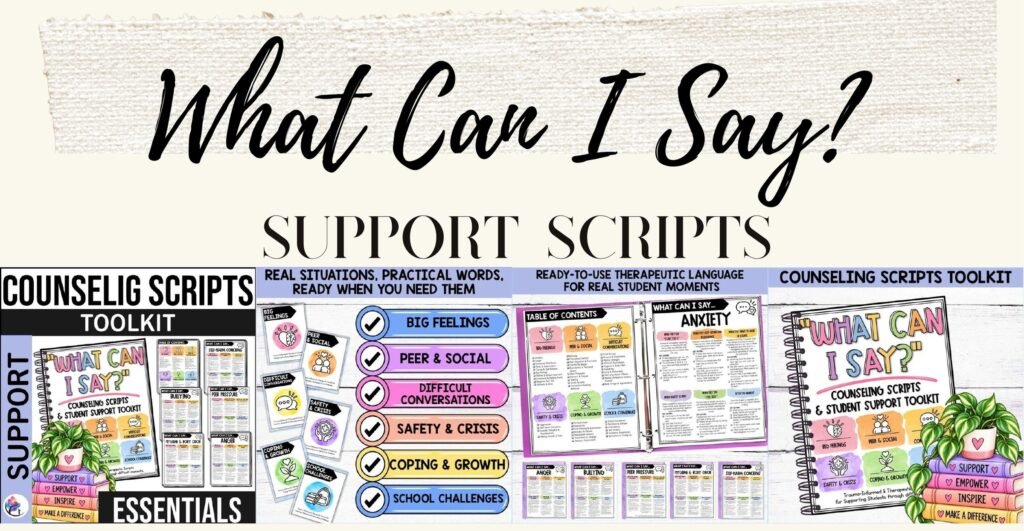
From our counseling room to yours: knowing what to say in a heated moment is one of the hardest parts of this work. The “What Can I Say?” Counseling Scripts Toolkit offers trauma-informed language and conversation prompts for escalating behavior, difficult conversations, and everyday student support. It is written for school counselors, psychologists, social workers, teachers, and support staff. Choose two or three scripts that fit your setting, practice them aloud, and keep them on a card by your desk so the words are there when your own stress rises.
8. Inconsistent Adult Responses
Inconsistency is a strong stressor for students who have experienced trauma. When adult responses vary widely from day to day or from adult to adult:
- Safety becomes unpredictable
- Hypervigilance increases
- Trust erodes over time
Consistency does not mean rigidity. It means reliability: students know what to expect, even when things go wrong. Shared language across a grade-level team, such as the same calm-down signal and the same repair conversation, can make a noticeable difference.
Quick Reference: Common Triggers and Calmer Alternatives
| Instead of… | Try… | Why it helps |
|---|---|---|
| Correcting behavior in front of the class | A private word, a note, or a nonverbal cue | Removes the audience and reduces shame |
| Announcing changes on the spot | Previewing changes early with a visual schedule | Reduces uncertainty |
| “Because I said so” | Two acceptable choices and a brief reason | Restores a sense of agency |
| Ignoring the student after an incident | A short repair message that keeps the limit | Keeps the relationship safe |
| Consequences in the heat of the moment | Regulate first, then reflect and repair | Reflection works better once the body is calm |
| “Calm down” | A calm voice, slower pace, and “I’m right here” | Co-regulation comes before self-regulation |
Want more ready-to-use support? Browse our trauma-informed support resources and behavior support and planning tools.
Why These Triggers Matter for Learning and Behavior
When a student’s stress response is activated:
- Attention narrows toward threat
- The body prepares for fight, flight, or freeze
- Working memory, focus, and impulse control become harder to access
- New learning becomes much harder
What looks like defiance, avoidance, or apathy is often a survival response. When schools reduce accidental triggers, many students are better able to settle and engage, not because they are “trying harder,” but because their nervous systems feel safer.
What Trauma-Informed Schools Do Differently
Trauma-informed schools do not eliminate all triggers; that is impossible. Instead, they:
- Reduce unnecessary threat cues
- Increase predictability and transparency
- Respond with regulation, not reactivity
- Prioritize connection during difficulty
- Help staff interpret behavior through a nervous system lens
That last point is a whole-school task. One trauma-informed teacher helps; a staff team using the same language and responses helps more. For a wider look at what this requires beyond good intentions, see what trauma-informed classrooms require.
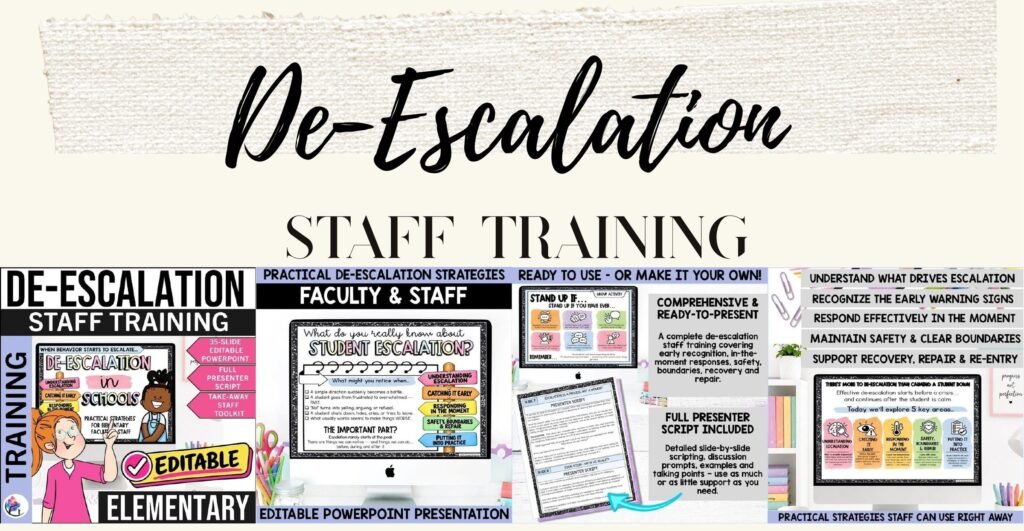
Try this at your next staff meeting: the De-Escalation Staff Training Presentation (Elementary) is a ready-to-run professional development workshop with a 35-slide editable presentation, presenter scripts, a staff toolkit, scripting tools, and case studies. It covers recognizing escalation early, responding without adding pressure, maintaining safety and boundaries, and supporting recovery and repair. School counselors can run it with teachers, administrators, and support staff, then agree on two or three shared phrases the whole team will use. Middle and high school versions are available in our staff training collection.
Final Thoughts: Awareness Is the First Step
Schools do not cause a student’s trauma, but everyday practices can unintentionally reactivate it. When educators understand how routine moments land in the nervous system, they can reduce harm, support regulation, and make learning more accessible.
Trauma-informed practice is not about perfection. It is about awareness, reflection, and intentional response. The most useful question becomes: “What might this moment feel like in this student’s body?”
Frequently Asked Questions
What are common trauma triggers in school?
Common examples include public correction, sudden transitions or alarms, loud and crowded spaces, power struggles, adults withdrawing warmth, consequences delivered during dysregulation, and inconsistent responses. What triggers one student may not affect another, so observation and relationship matter.
Do trauma triggers only affect students with known trauma histories?
No. Many students carry experiences adults are not aware of, and any student can become dysregulated under enough stress. Reducing unnecessary threat cues tends to help the whole class, not only students with a known history.
Does trauma-informed practice mean fewer consequences?
No. Expectations and accountability stay in place. The difference is timing and delivery: help the student regulate first, then reflect, repair, and follow through on agreed consequences.
Is trauma-informed education evidence-based?
It is best described as evidence-informed. Its principles draw on research into stress, development, and relationships, but rigorous studies of whole-school trauma-informed approaches are still limited. A Campbell systematic review found no studies that met its inclusion criteria and called for careful evaluation, so schools should monitor how the strategies work for their own students.
References
- Arnsten, A. F. T. (2009). Stress signalling pathways that impair prefrontal cortex structure and function. Nature Reviews Neuroscience, 10(6).
- Grupe, D. W., & Nitschke, J. B. (2013). Uncertainty and anticipation in anxiety: An integrated neurobiological and psychological perspective. Nature Reviews Neuroscience, 14.
- Maynard, B. R., et al. (2019). Effects of trauma-informed approaches in schools: A systematic review. Campbell Systematic Reviews.
- Porges, S. W. (2025). Polyvagal theory: Current status, clinical applications, and future directions. Clinical Neuropsychiatry.
- SAMHSA’s concept of trauma and guidance for a trauma-informed approach (youth.gov summary).
Looking for practical, ready-to-use resources to support your trauma-informed work with students? The All Therapy Resources Membership provides access to a growing collection of thoughtfully developed counseling activities, interactive games, and therapeutic tools designed to save preparation time while supporting meaningful, skill-focused learning.