Life skills activities for teens help students practice the everyday parts of adult life before they need them. Before long, teens will be managing money, running a home, looking after their own health and handling tricky conversations on their own. Many have never been walked through these moments, and a lecture about budgets rarely sticks.
In this article we share practical ways to teach independent living skills in grades 7 to 12, covering money and budgeting, running a household, health and self-care, communication and problem solving. Each section includes an example you can use in an advisory lesson, small group or individual session.
Why teens need hands-on life skills practice
Teens learn life skills best by thinking through real situations, not by memorizing lists. A low-pressure discussion about “what would you do if…” gives students a chance to make mistakes, hear other ideas and build confidence while the stakes are low.
1. Money and budgeting
Start with the basics: income, expenses, needs and wants. Real numbers make it concrete, so use a simple monthly budget and let students decide where the money goes.
Try this in your classroom: Give small groups a pretend monthly income and a list of expenses: rent, groceries, phone, transport and fun. Ask them to build a budget that works, then add a surprise expense and talk about how they would adjust.
2. Running a household
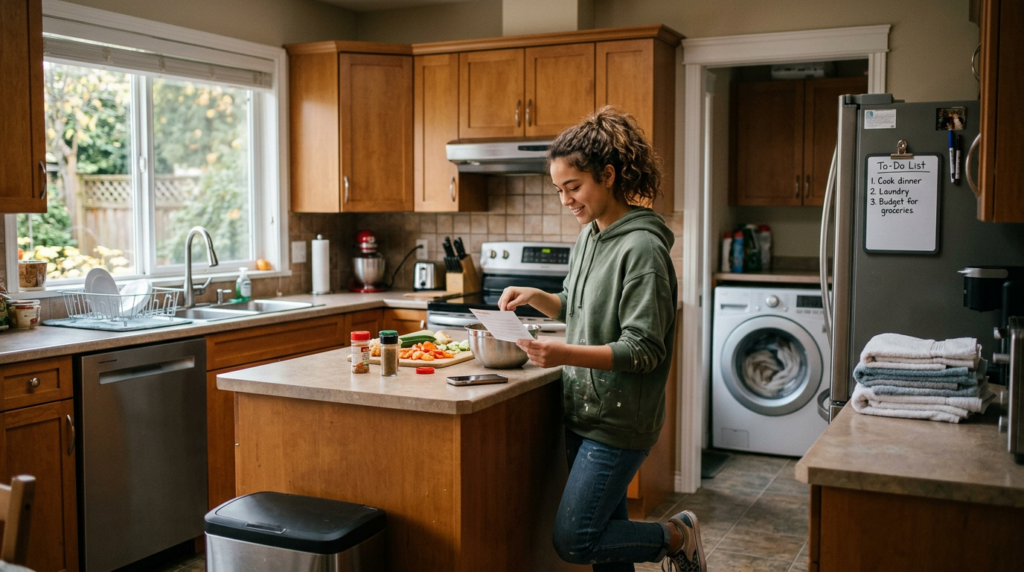
Cooking a simple meal, doing laundry, keeping a space clean and shopping for groceries are skills many teens haven’t been taught step by step. Breaking each task into steps makes it feel achievable.
A simple question to start: “If you moved out tomorrow, what is one household job you would feel confident doing, and one you would need help with?”
3. Health and self-care
Independent living includes looking after yourself: regular sleep, meals, movement and routines that support well-being. Encourage students to notice what helps them feel their best and how to keep that going when life gets busy.
4. Communication and tricky conversations
Teens will soon be talking with landlords, employers, doctors and roommates. Practicing “I” statements and calm, clear requests helps them handle these conversations with confidence.
Picture a student whose roommate keeps leaving dishes in the sink. Compare “You’re so messy” with “I feel frustrated when the dishes pile up. Can we make a plan for washing them?” and talk about which is more likely to help.
5. Problem solving when life doesn’t go to plan
Things will go wrong: a missed bus, a lost bank card, a bill that is higher than expected. Teach a simple process: stay calm, break the problem down, list options and choose a next step.
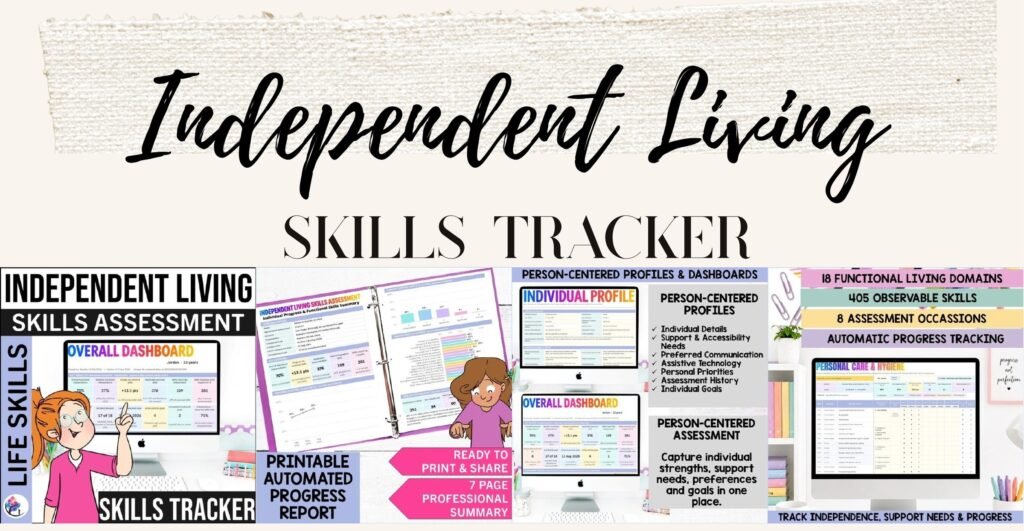
For students working toward transition goals, our Independent Living Skills Assessment and Progress Tracker brings assessment and progress tracking together in one Microsoft Excel workbook. It suits transition teams, special education teachers and occupational therapists who want a clear picture of where support is needed and how skills grow over time.
Practicing life skills with a game
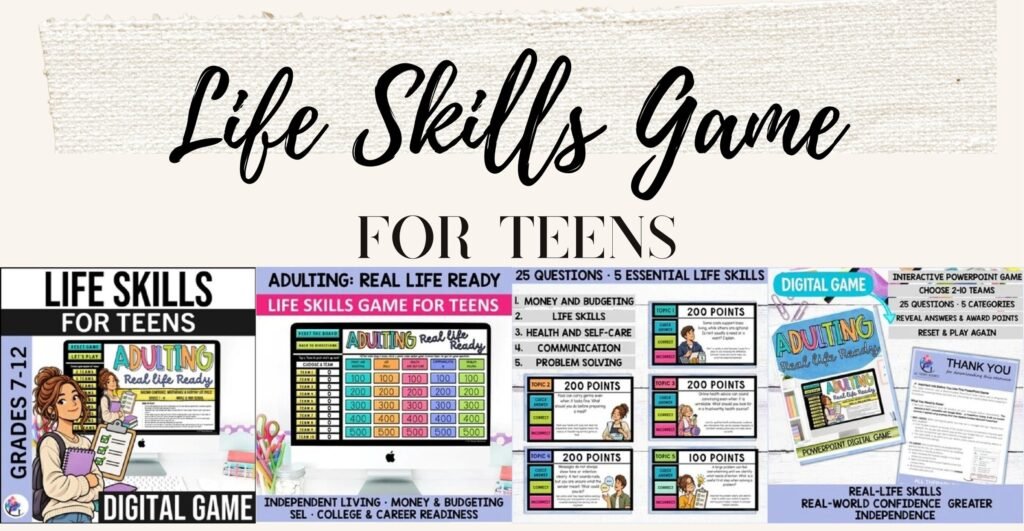
A team game keeps the conversation relaxed. Students talk through practical, real-world questions together and hear a clear teaching point after each answer.
| Skill area | What students practice | Practice it with |
|---|---|---|
| Money and budgeting | Income, expenses and smart money choices | Adulting: Real Life Ready game |
| Running a household | Cooking, laundry and keeping a home | Adulting: Real Life Ready game |
| Health and self-care | Sleep, meals, movement and routines | Adulting: Real Life Ready game |
| Communication | “I” statements and tricky conversations | Adulting: Real Life Ready game |
| Tracking progress | Assessing skills and setting transition goals | Independent Living Skills Tracker |
From our counseling room to yours: Adulting: Real Life Ready Life Skills Game is an interactive PowerPoint game for grades 7 to 12 with 25 questions across five categories: money and budgeting, life skills, health and self-care, communication, and problem solving. Every answer comes with a clear teaching point, so each question becomes a mini lesson in being ready for adult life. It works well in advisory, life skills and transition classes, small groups and individual sessions. It needs the desktop version of Microsoft PowerPoint.
Frequently asked questions
What life skills should high school students learn?
Core areas include managing money, running a household, health and self-care, communication and problem solving. Many schools also include job skills, transportation and knowing where to find help in the community.
How can I adapt life skills lessons for students with disabilities?
Break each skill into small steps, use visuals and real objects where possible, and link practice to the student’s IEP and transition goals. Tracking progress over time shows what support is still needed.
Who teaches life skills in schools?
It is often shared between special education teachers, school counselors, occupational therapists, transition teams and advisory teachers. Consistent language across settings helps skills stick.
Looking for practical, ready-to-use resources to support your life skills lessons? The All Therapy Resources Membership provides access to a growing collection of thoughtfully developed SEL and life skills activities, interactive games, and therapeutic tools designed to save preparation time while supporting meaningful, skill-focused learning.