Picture a student who hides her work as you walk past, says “I’m bad at this” before trying, and hangs back during group work. Low self-esteem and shaky confidence often show up quietly, yet they affect how students learn, connect, and cope. This guide shares evidence-informed strategies and practical self-esteem activities for students that school counselors, therapists, and educators can use in classrooms, small groups, and individual sessions.
Self-Esteem and Self-Confidence: What Is the Difference?
Self-esteem is how we value ourselves overall. Self-confidence is our belief in our ability to handle a particular task or situation. A student can feel confident on the soccer field and still doubt their worth, or feel good about themselves while doubting their math skills.
It helps to be accurate about what self-esteem can do. A major review by Baumeister and colleagues (2003) found only a modest link between self-esteem and school performance, and concluded that high self-esteem is partly the result of doing well rather than its cause. So the most useful approach builds real skills, relationships, and experiences of success. Healthy self-esteem tends to grow out of those, not out of compliments alone.
Evidence-Informed Strategies for Building Self-Esteem and Confidence
Praise Effort, Strategies, and Progress
In studies with fifth graders, Mueller and Dweck (1998) found that children praised for intelligence showed less persistence and enjoyment after a setback, and performed worse, than children praised for effort. This work helped shape the idea of growth mindset. A later meta-analysis by Sisk and colleagues (2018) found that growth mindset interventions had small effects on achievement overall, so mindset work is best seen as one helpful ingredient, not a fix on its own. In practice, swap “You’re so smart” for “You tried a new strategy when the first one didn’t work.”
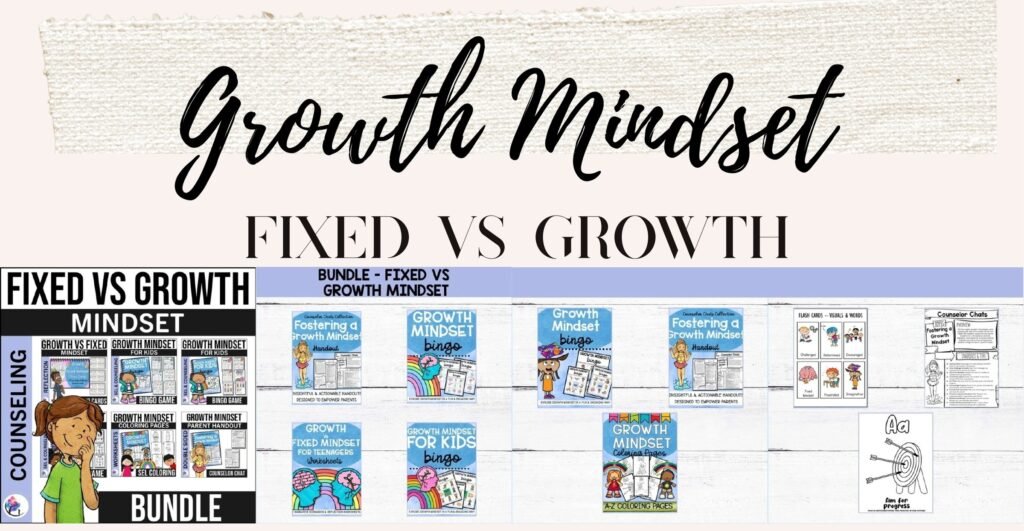
Try this in your next session: our Fixed vs Growth Mindset Counseling SEL Resources Bundle includes student-friendly explanations, bingo, role-play and discussion cards, and handouts comparing the two mindsets, for individual, small group, or whole-class lessons. After a round of bingo, ask each student to rewrite one “I can’t” as “I can’t yet, and my next step is…” Our guide to growth mindset in schools has more ideas.
Set Small, Achievable Goals
Bandura’s self-efficacy theory (1977) names personal mastery experiences, along with seeing others succeed, encouragement, and physical and emotional states, as sources of our belief in our own ability. Small, realistic goals create more chances for mastery. Picture a student who wants to “get better at reading.” Together you might shape that into “read for 10 minutes three nights this week and track it,” then review what went well at the next check-in.
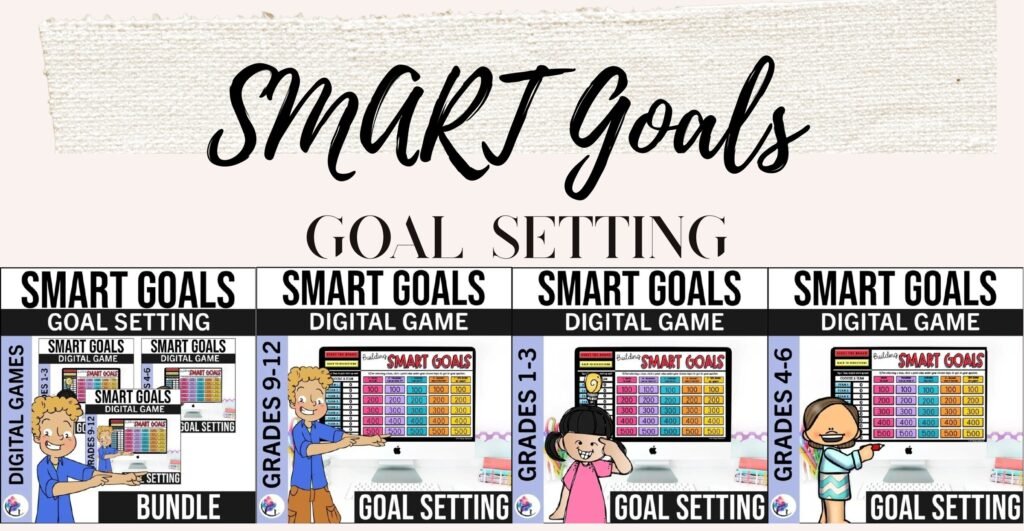
Try this in your classroom: our SMART Goals Digital Game Bundle includes three interactive PowerPoint games for Grades 1–3, 4–8, and 9–12, so you can teach goal setting at the right level for each group. Play as a class, then have each student write one SMART goal and one small step for this week. See also how to teach SMART goals to students.
Teach Social and Emotional Skills
A meta-analysis of 213 school-based social and emotional learning (SEL) programs by Durlak and colleagues (2011) found gains in students’ social and emotional skills, attitudes, behavior, and academic performance, including an 11-percentile-point gain in achievement. Skills such as naming feelings, managing stress, and solving problems give students a steadier base when things go wrong.
Build Peer Connection and Opportunities to Shine
Research with middle school students has linked peer relationships to classroom achievement, partly through prosocial behavior (Wentzel & Caldwell, 1997). Buddy systems, lunch groups, and small group counseling give students a place where they are known. Classroom jobs, helping a younger student, or sharing a talent give them a chance to contribute. In a group, try a strengths round: each student names one thing the person on their left did well this week.
Self-Esteem Activities for Students
Journaling and Positive Self-Talk
Prompts such as “Something I’m proud of this week is…” help students notice their own growth. Keep journals private unless a student chooses to share. For self-talk, ask, “What would you say to a friend in this situation?” and then, “Can you say that to yourself?” Role-play lets students rehearse daunting moments, such as joining a game or asking for help.
Creative Expression
Art and craft activities give students a way to express feelings that are hard to put into words, and many find it easier to talk while their hands are busy. Our Birdhouse of Comfort Lesson and Craft Activity invites students to build a paper birdhouse and fill it with the people, places, and thoughts that help them feel safe (also available in Spanish).
Mindfulness Exercises
A few slow breaths or noticing five things you can see can help students manage stress in the moment. In a study of students in grades 4 to 7, Schonert-Reichl and Lawlor (2010) found a classroom mindfulness program was linked to increases in optimism and teacher-rated social competence, with self-concept benefits for the younger students. See our post on mindfulness in school curriculums.
Strengths Reflection
Many students can list what they are bad at more easily than what they are good at. Ask them to name a strength, then find evidence for it: “When did you show kindness this week? What happened?”
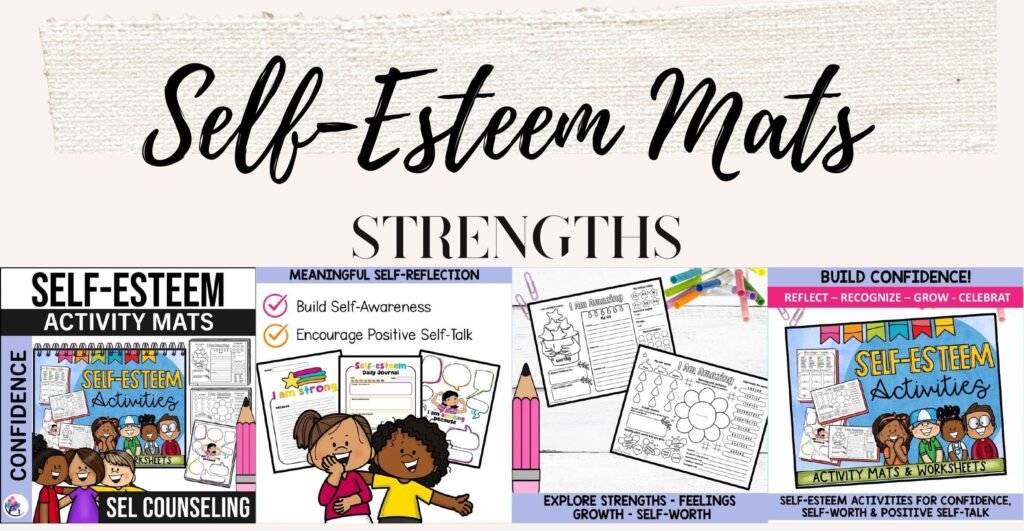
Try this in your next session: our Self-Esteem Activity Mats and Worksheets help students recognize their strengths, reflect on achievements, and practice kinder self-talk, in individual counseling, small groups, or classroom wellbeing lessons. Let students complete a mat while you talk, then choose one strength to notice themselves using before the next session. One counselor shared that students “could work through the activities while we talked, which made some of the conversations feel much more natural.”
Putting It All Together
Building self-esteem is less about telling students they are great and more about helping them experience growth, connection, and success. For older students, our article on social media and the comparison trap explores online pressures, and Boosting Kids’ Confidence offers more strategies for younger children.
Frequently Asked Questions
Does praising students build self-esteem?
It depends on the praise. Specific feedback about effort, strategies, and progress tends to support persistence, while general praise about being “smart” can make setbacks feel more threatening. Praise works best alongside real chances to succeed.
How often should I use self-esteem activities?
Short, regular practice tends to help more than a one-off lesson. A weekly strengths round, journal prompt, or goal check-in keeps the skills active.
When should I be concerned about a student’s low self-esteem?
If a student’s negative view of themselves is persistent or intense, affects sleep, friendships, attendance, or schoolwork, or if they seem withdrawn or hopeless, follow your school’s referral procedures and involve families and appropriate mental health professionals.
References
- Bandura, A. (1977). Self-efficacy: Toward a unifying theory of behavioral change. Psychological Review, 84(2), 191–215.
- Baumeister, R. F., Campbell, J. D., Krueger, J. I., & Vohs, K. D. (2003). Does high self-esteem cause better performance, interpersonal success, happiness, or healthier lifestyles? Psychological Science in the Public Interest, 4(1), 1–44.
- Durlak, J. A., Weissberg, R. P., Dymnicki, A. B., Taylor, R. D., & Schellinger, K. B. (2011). The impact of enhancing students’ social and emotional learning: A meta-analysis of school-based universal interventions. Child Development, 82(1), 405–432.
- Mueller, C. M., & Dweck, C. S. (1998). Praise for intelligence can undermine children’s motivation and performance. Journal of Personality and Social Psychology, 75(1), 33–52.
- Schonert-Reichl, K. A., & Lawlor, M. S. (2010). The effects of a mindfulness-based education program on pre- and early adolescents’ well-being and social and emotional competence. Mindfulness, 1(3), 137–151.
- Sisk, V. F., Burgoyne, A. P., Sun, J., Butler, J. L., & Macnamara, B. N. (2018). To what extent and under which circumstances are growth mind-sets important to academic achievement? Two meta-analyses. Psychological Science, 29(4), 549–571.
- Wentzel, K. R., & Caldwell, K. (1997). Friendships, peer acceptance, and group membership: Relations to academic achievement in middle school. Child Development, 68(6), 1198–1209.
Looking for practical, ready-to-use resources to support your self-esteem and confidence-building work? The All Therapy Resources Membership provides access to a growing collection of thoughtfully developed counseling activities, interactive games, and therapeutic tools designed to save preparation time while supporting meaningful, skill-focused learning.