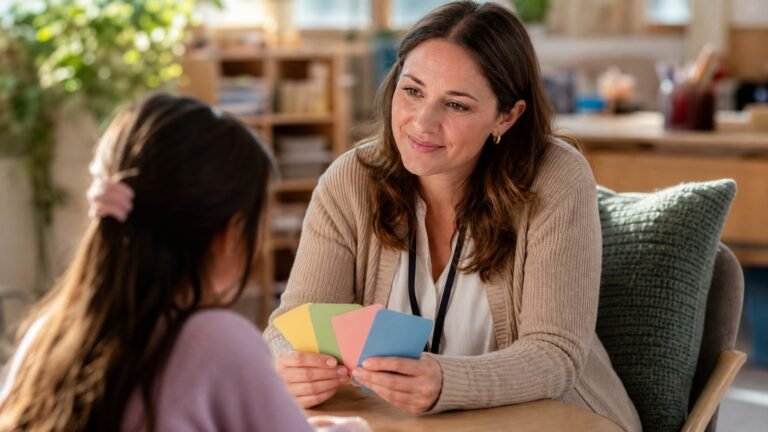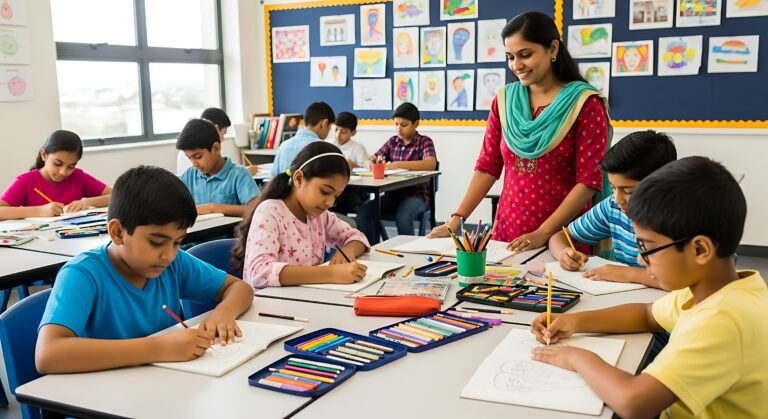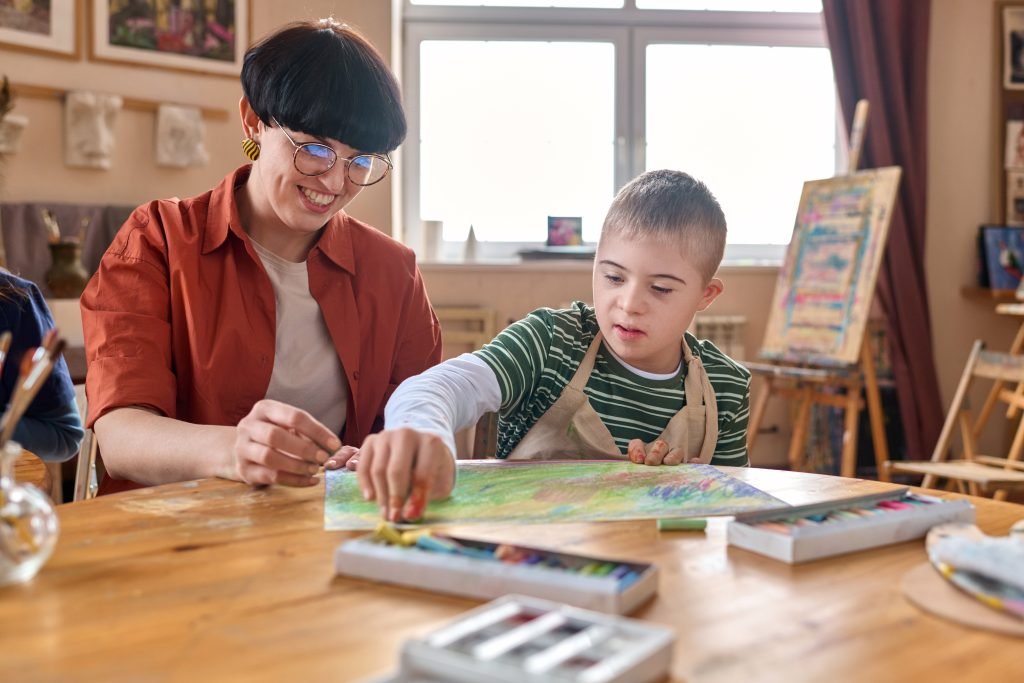
School counseling does not have to feel clinical, rigid or intimidating for students. Some of the most meaningful social-emotional learning happens when children feel safe enough to create, play, reflect and connect. The school counseling lesson ideas below use hands-on, creative activities to help students build coping skills, self-esteem, self-care habits, friendships and emotional awareness, whether you are working one-on-one, with a small group or with a whole class.
For many students, talking directly about feelings can feel uncomfortable or overwhelming. When the same skills are introduced through art, movement, games and collaborative projects, children are often more willing to take part, open up and practice. Each idea below includes what it can look like in a session and a short script you can adapt.
Why creative lessons work in school counseling
Creative lessons are not a break from the “real” work. They give students something concrete to do with their hands while they think about something abstract, such as calming down or noticing how a friend feels. The finished product (a toolbox, a bouquet, a mask) also becomes a visual reminder students can return to long after the session ends. If you would like more background on why crafts fit so well in counseling, our article on enhancing counseling lessons with creative activities explores the benefits in more depth.
Research on social-emotional learning supports teaching these skills explicitly. A large meta-analysis of 213 school-based SEL programs involving more than 270,000 students found improved social-emotional skills and positive social behavior, fewer conduct problems and lower emotional distress, along with gains in academic achievement. That research looked at structured SEL programs rather than individual crafts, so treat the activities below as practical, evidence-informed ways to teach and practice these skills within a wider plan, not as stand-alone interventions.
A trauma-informed approach keeps these lessons emotionally safe: explain what the activity involves before you start, offer choices, never require personal disclosure, and let students watch first if they need to. If a student is hesitant to join in, our guide to creative resistance in counseling has ideas for building engagement gently.
6 creative school counseling lesson ideas
Quick reference: use this table to match a lesson idea to the skill your students need most right now, with a ready-made ATR resource for each if you would rather not prepare it from scratch.
| # | Lesson idea | Core skill | Works well for | Suggested ATR resource |
|---|---|---|---|---|
| 1 | Coping Skills Toolbox | Choosing and practicing calming strategies | Individual, small group or class | Coping Skills Toolbox Lesson & Craft |
| 2 | Personal Treasures | Recognizing strengths and self-worth | Individual or small group | Discovering Personal Treasures Lesson & Craft |
| 3 | Tea Time for Self-Care | Understanding self-care and personal needs | Small group or class | Tea Time for Self-Care Lesson & Craft |
| 4 | Friendship Flower Bouquet | Recognizing friendship qualities and strengths in others | Small group or class | Friendship Lesson & 3D Flower Craft |
| 5 | Emotion and Facial Expression Cut and Paste | Recognizing and naming emotions | Individual or small group | Emotions & Facial Expressions Cut & Paste Activity |
| 6 | Feelings Behind the Mask | Noticing hidden feelings beneath the surface | Individual or small group | Feelings Behind the Mask Lesson |
1. Coping Skills Toolbox
Coping skills can feel abstract until students have a practical way to see, choose and use them. A coping skills toolbox helps students identify, organize and practice strategies they can turn to when they feel stressed, frustrated, worried or overwhelmed. It also carries an important message: big feelings can be managed safely, and students have more tools than they might think.
The toolbox can be a real container, a decorated envelope, a folder, a printable template or a digital slide. Students then fill it with strategies that feel realistic for them, for example:
- deep breathing or grounding exercises
- movement breaks
- drawing, coloring or journaling
- calming sensory items or music
- positive self-talk
- the names of safe people they can talk to
One step makes a big difference: test the tools. A strategy that works at home may not be possible in the middle of a math lesson, so ask students to sort their tools into “anywhere,” “at home” and “with an adult’s help.” Practice each new tool while students feel calm, so it is easier to reach for when emotions run high.
Picture a student who insists that “nothing helps” when they get angry. Instead of debating that, you might say: “When your body feels tight and your thoughts are racing, which tool could you try first? Let’s practice it together now, so it feels familiar next time.” The toolbox then opens natural conversations about triggers, body signals of stress and asking for help.
Try this in your next session: our Coping Skills Toolbox Bundle includes 20 coping skills lessons, each built around an animal character (such as a whale for deep breathing, an elephant for grounding and a sloth for mindfulness), with a tip sheet, a story, a craft and reflective questions. It suits younger students in individual sessions, small groups or classroom SEL lessons. Introduce one tool per session and add each finished craft to the student’s toolbox, so by the end of the unit they have a personal set of strategies they have already practiced.

2. Personal Treasures: Building Self-Esteem Through Strengths
Many students find it far easier to list their mistakes than their strengths. Over time, that pattern can affect confidence, participation and the way children see themselves at school.
In a Personal Treasures lesson, students create a treasure box, jar, folder or keepsake container and fill it with written reminders of what they value about themselves. These might include personal strengths, kind things they have done, proud moments, compliments from others, times they coped with something hard, and goals they have worked toward.
For some students, naming positive qualities feels uncomfortable at first. That is useful information in itself and a chance for gentle support rather than quick reassurance. Picture a student who writes “nothing” on their first slip. You might respond: “It can be hard to think of good things about ourselves. Let’s start smaller. What is something you did this week that took effort?” or “What would your best friend or a favorite teacher say you are good at?”
Encourage treasures about effort, character and kindness, not only achievements, so that students who have had fewer “wins” lately are not left out. Keep the box going over several sessions by adding one new treasure at the end of each meeting. Over time, it becomes a visual reminder that students are more than their mistakes or their hardest days.
From our counseling room to yours: once students have started naming their strengths, our Self-Esteem Smoothie Lesson and Craft helps them use those strengths when confidence takes a hit. It includes a smoothie-themed craft, 24 everyday scenarios, a checklist of “Self-Esteem Ingredients” such as positive thoughts and affirmations, 12 blank strategy cards and a bonus roll-the-die game. It works for individual sessions, small groups, whole-class lessons or a lunch bunch. Try reading one scenario aloud and asking each student to “blend” three ingredients they would choose in that moment.

3. Tea Time for Self-Care
Students often see self-care as something “extra” rather than a necessary part of looking after their well-being. A Tea Time for Self-Care lesson invites them to slow down, reflect on what they need, and explore the habits, routines and people that help them feel calm and supported.
Set up a relaxed space with calming music, mindful coloring, journaling prompts and, if your school’s food and allergy policies allow it, a warm drink or a glass of water. Then explore questions such as: What does self-care mean to you? What helps you rest? What are your early signs of stress? Who can you ask for support?
A simple prompt can make the idea concrete: “If your week were a cup of tea, what would you add to make it feel a little calmer?” Younger students might add “a cuddle with my dog” or “playing outside,” while older students may name sleep, time away from screens or talking with a friend. With teenagers, the conversation can extend to overwhelm, burnout and building a realistic coping plan.
The key message is that self-care is not selfish. It is a healthy part of caring for our well-being, relationships and learning. Keep it realistic, too: self-care supports students, but it does not replace help from a trusted adult when stress or low mood persists.
4. Friendship Flower Bouquet
Building friendships is about more than telling students to “be kind.” Children often need structured chances to recognize strengths in others, practice positive communication and experience what healthy peer connection looks and feels like.
In a Friendship Flower Bouquet lesson, each student creates a flower that names a quality of a good friend (such as loyal, honest or a good listener) or carries an encouraging message for a classmate. The flowers are then combined into a group bouquet that represents connection and belonging. Along the way, students practice empathy, recognizing strengths in others, giving and receiving positive feedback, and inclusion.
Coach students toward specific, genuine compliments. “You let me join your game at recess” means more than “You are nice.” If students write messages to classmates, assign names or screen the flowers first so every child receives one and no one is left out. Some students rarely hear affirming words from peers, while others find it hard to name positive qualities in anyone, including themselves. Both are useful starting points for reflection and modeling.
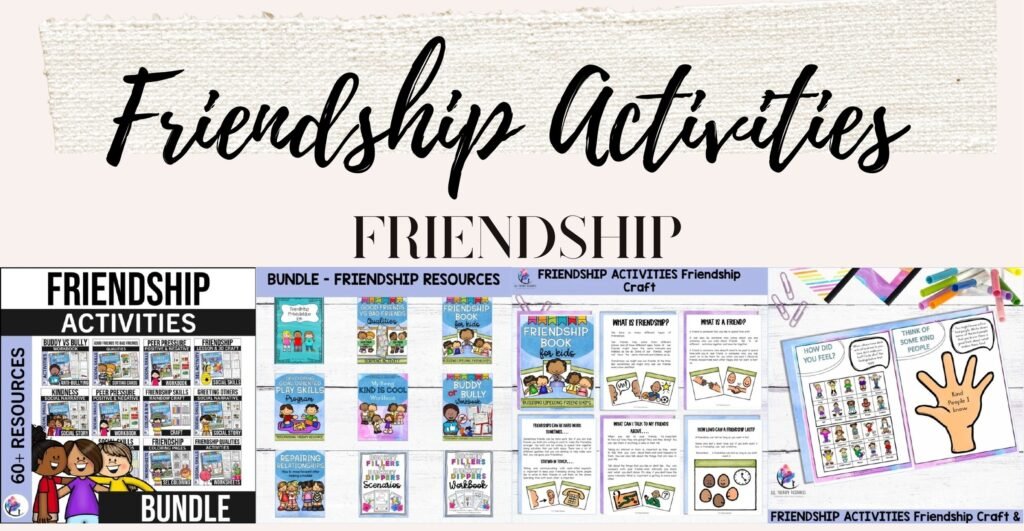
Try this in your classroom: our Friendship Activities Bundle brings together a Repairing Friendship Kit, friendship social stories, a Play Skills Book, a Good Friend vs Bad Friend sorting lesson, friendship crafts and visuals, and restorative practice tools for small group or whole-class use. After the bouquet, run the sorting lesson so students can compare healthy and unhealthy friendship traits. The bouquet celebrates what good friends do, and the sorting activity helps students recognize when a friendship is not working for them.
5. Emotion and Facial Expression Cut and Paste
Emotional awareness starts with recognizing emotions in ourselves and in the people around us. For many students, especially younger children, feelings can be confusing or hard to explain with words alone.
In a cut-and-paste emotions activity, students cut, match, sort and build faces that show different feelings. As they work, they build emotional vocabulary, notice facial cues and body language, and begin to connect emotions with behavior and relationships. Because the focus is on the paper faces, the activity can feel safer for students who are uncomfortable discussing their own feelings directly. It also works well across counseling, SEL, speech therapy and classroom settings.
Use questions that build observation skills: “What do you notice about the eyebrows and mouth? What else might tell us how this person feels?” Then move from the page to the body: “Where might you feel worried in your body?” and finally to action: “What could you do or say if a friend looked like this?”
Keep the teaching flexible. Facial expressions differ between people, and some students (including some autistic students) may show or read emotions differently. Teach faces as one clue alongside words, tone, body language and context, rather than a single “correct” way to look. Close with the message that all feelings are okay, and what matters is how we express them and respond to them.
6. Feelings Behind the Mask
Many students become skilled at hiding what they feel. Behind humor, silence, anger, perfectionism or “I’m fine,” there may be stress, sadness, worry, loneliness or exhaustion that others do not see. Students who seem to be coping well can be struggling too, as we explore in the myth of the “well-behaved” child.
In this activity, students decorate the outside of a mask with the feelings or behaviors they show the world, and use the inside to explore feelings they may keep hidden. A helpful starting point is a fictional character rather than the students themselves: “Sometimes people show one feeling on the outside, like anger, while feeling something different inside, like worry or embarrassment. What might be under this character’s mask?”
Make emotional safety explicit. Students can keep the inside of their mask private, fold it closed, use colors or symbols instead of words, or choose not to share at all. The goal is insight, not disclosure. If a student does share something that suggests they may be unsafe, stay calm, listen, avoid promising secrecy, and follow your school or district protocol and mandated reporting requirements.
Handled gently, this lesson helps students build emotional vocabulary and self-awareness, and shows them they do not have to carry difficult feelings alone or pretend to be okay all the time.
Making creative counseling lessons work in your setting
For early elementary students, focus on one skill per lesson, model each step, and keep the craft simple so the conversation does not get lost in the cutting and gluing. Upper elementary students can handle more complex scenarios and group discussion. Middle and high school students usually prefer more choice and less “crafty” formats, such as a digital toolbox, a journal-style treasure list or symbolic art.
To help skills travel beyond the counseling room, end each lesson with one small, observable practice goal, such as “try one tool from your toolbox before asking for a break.” Revisit the finished product in later sessions, and share key language with teachers and families so students hear the same message in different places. For more ideas, see our coping skills activities for students and emotional regulation activities for kids.
Above all, creative lessons help students feel seen. Emotional well-being is rarely built in one big moment. It grows through consistent opportunities for connection, reflection and belonging that remind students they do not have to navigate difficult feelings alone.
Frequently Asked Questions
What are good school counseling lesson ideas for elementary students?
Hands-on lessons with a concrete product work well: a coping skills toolbox, a strengths treasure box, a friendship bouquet or emotion faces. Keep to one skill per lesson, model it first, and include a short practice so students leave knowing what to try next.
Why use creative activities in school counseling?
Creative activities can lower the pressure of talking directly about feelings, give students a focus for their hands and attention, and leave them with a visual reminder of the skill. They work best alongside explicit teaching and practice, which is the approach supported by research on school-based SEL programs.
Can these lessons be used with middle and high school students?
Yes, with adjustments. Offer more choice, use realistic scenarios, and swap younger-looking crafts for journaling, digital versions or symbolic art. Teens often respond well to the Feelings Behind the Mask and self-care lessons in particular.
How long should a creative counseling lesson take?
Most of these ideas fit a 30 to 45 minute session: about 5 minutes to introduce the skill, 20 to 30 minutes for the activity, and 5 to 10 minutes to reflect and set a practice goal. Longer projects, such as a treasure box, can be built across several sessions.
Looking for practical, ready-to-use resources to support your creative counseling lessons? The All Therapy Resources Membership provides access to a growing collection of thoughtfully developed counseling activities, interactive games, and therapeutic tools designed to save preparation time while supporting meaningful, skill-focused learning.