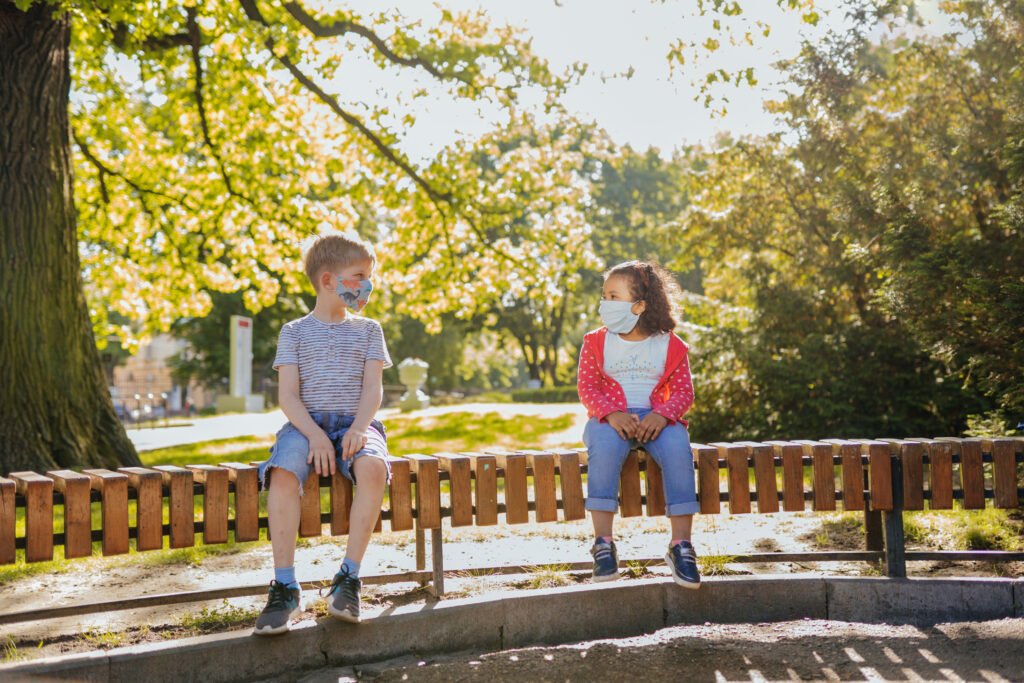
Some students stand nose to nose when they talk, lean on a classmate during carpet time, or hug everyone in the line. Others freeze or lash out when someone comes too close. Personal space activities for kids give both groups the same thing: a clear, concrete way to understand how close is comfortable, how to read other people’s signals, and what to say when they need more room.
This guide explains what personal space is, why some children find it hard, and how to teach it in classroom lessons, small groups and individual sessions, with sample scripts, a quick planning table and practice ideas you can use this week.
What Is Personal Space?
Personal space is the invisible area around our bodies that feels like ours. When someone comes into it without an invitation, most of us feel uncomfortable, even if we can’t say why. The anthropologist Edward T. Hall described these distances in his work on proxemics (The Hidden Dimension, 1966), noting that we keep different distances for close family, friends, acquaintances and strangers, and that the “right” distance varies across cultures.
For children, we can keep it much simpler. Many teachers and counselors use the idea of a personal space bubble: everyone has one, it moves with you, and it can be bigger or smaller depending on who you are with and how you feel. That last part matters. Personal space is not one fixed rule, so lessons work best when they teach students to notice and ask, not just to measure an arm’s length.
Why Some Children Find Personal Space Hard
Personal space is a social skill built from several smaller skills: body awareness, reading facial expressions and body language, impulse control, and understanding that other people may feel differently than we do. A child can struggle with any one of these.
- Body awareness: some students genuinely don’t notice how close they are, especially when they are excited or moving quickly.
- Sensory needs: a child who seeks deep pressure may lean on others, while a child who is sensitive to touch may feel crowded much sooner than peers.
- Social cues: a step back, a frown or a turned shoulder can be easy to miss, particularly for some autistic students and students with language delays.
- Different home and cultural norms: what feels close in one family may be normal in another.
Seeing the reason behind the behavior helps us respond with teaching rather than correction. “You’re in my space” tells a child what went wrong; “Let’s check your bubble” gives them something to do.
Try this in your classroom: Before any lesson, notice when the personal space problems happen. Is it lining up, carpet time, group work or the bus line? Picture a student who is fine at their desk but leans on classmates every time the class sits on the rug. That student may need a carpet spot marker and a movement break more than another lesson on rules.
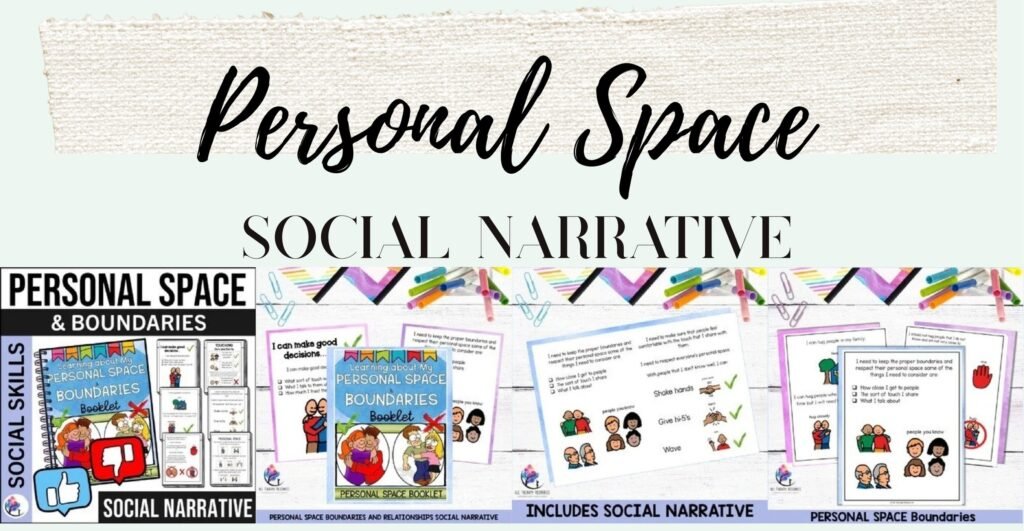
For students who need a predictable, visual way to learn the concept, the Personal Space, Boundaries & Relationships Social Narrative walks through personal space, different types of touch, safe conversation topics and the different levels of trust we have with different people, with visual supports on every page. It works as a read-aloud for a whole class or a one-to-one story for a student with an IEP goal around personal space. One teacher who used it with K to 3 students called it a “Wonderful resource that I use with K-3 to teach them about personal space,” and another reviewer used it in a high school resource room English class and said it “worked great.”
How to Teach Personal Space: A Simple Sequence
Personal space lessons tend to stick when they move from concrete to practiced to real life. A simple sequence many counselors and teachers use looks like this.
1. Make the bubble visible
Use a hula hoop, a pool noodle circle or masking tape on the floor so students can see and feel the space. Have each student stand in their hoop and stretch their arms out slowly. Then ask, “How does it feel when someone steps into your hoop without asking?”
2. Teach that bubbles change size
Bubbles are smaller with family and close friends and bigger with classmates we don’t know well, adults at school and strangers. A circles-of-relationships visual (family in the middle, then friends, then helpers, then strangers) makes this easy to see.
3. Teach the signals
Show photos or act out what it looks like when someone wants more space: stepping back, leaning away, crossing arms, looking uncomfortable, saying “Can you move back?” Students practice spotting the clue and responding.
4. Practice the words
Give students short, kind scripts for both sides of the conversation:
- Asking for space: “Can you give me a little more room, please?”
- Checking in: “Is this too close?” or “Can I sit here?”
- Asking before touch: “Can I give you a high five or a hug?”
- Responding kindly: “Oh, sorry. I’ll move back.”
5. Practice in real routines
Run short role plays in the places where problems happen: the line, the rug, a group table. Praise specific choices: “You noticed Maya leaned away and you stepped back. That was a kind way to read her signal.”
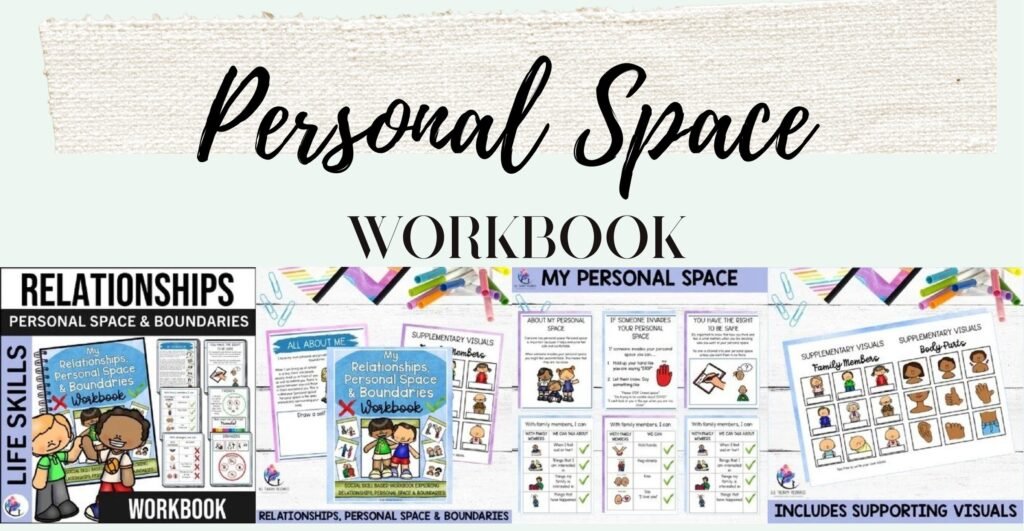
To give students guided practice after the lesson, the Personal Space, Relationships & Boundaries Activities Workbook covers different types of relationships, rules around body contact (when a hug, a handshake or a wave fits) and key words like boundaries, consent and respect, using highly visual pages and concrete examples. It suits elementary students and students in special education who need repeated practice. One teacher described it as a “perfect workbook to explore boundaries, relationships and social circles with my students,” adding that it was “Highly visual so my students were very engaged.”
Personal Space Activities by Setting
Use this table to match activities to where you are teaching.
| Setting | Activity idea | What students practice | Suggested ATR resource |
|---|---|---|---|
| Whole class | Hula hoop bubbles and a “too close, just right” walk | Seeing and feeling personal space | Personal Space Social Narrative |
| Small group | Question cards and role plays about friends, helpers and strangers | Reading signals and using kind words | Personal Space Question Cards |
| Individual session | Relationship circles and a personal “my bubble” page | Understanding that bubbles change with different people | Personal Space Activities Workbook |
| Daily routines | Carpet spot markers, line spots and a quick “check your bubble” cue | Using the skill when it matters | Personal Space Visuals |
Small Group and Individual Activities
Small groups are a good fit for students who need more practice than a class lesson allows. A four-session plan might look like this: session one introduces the bubble, session two explores relationship circles, session three practices signals and scripts through role play, and session four applies the skill to the student’s own school day with a simple goal (“I will ask before I hug”).
In individual sessions, keep the focus on the student’s real situations. Picture a student who keeps hugging classmates who don’t want to be hugged. Rather than banning hugs, you might teach a menu of greetings (wave, high five, fist bump, hug with permission) and practice asking first until it feels natural.
Try this in your next session: Lay out three greeting cards (wave, high five, hug) and take turns being the “greeter” and the “friend.” The greeter asks, “Wave, high five or hug?” and the friend chooses. Swap roles so the student practices both asking and saying no kindly.
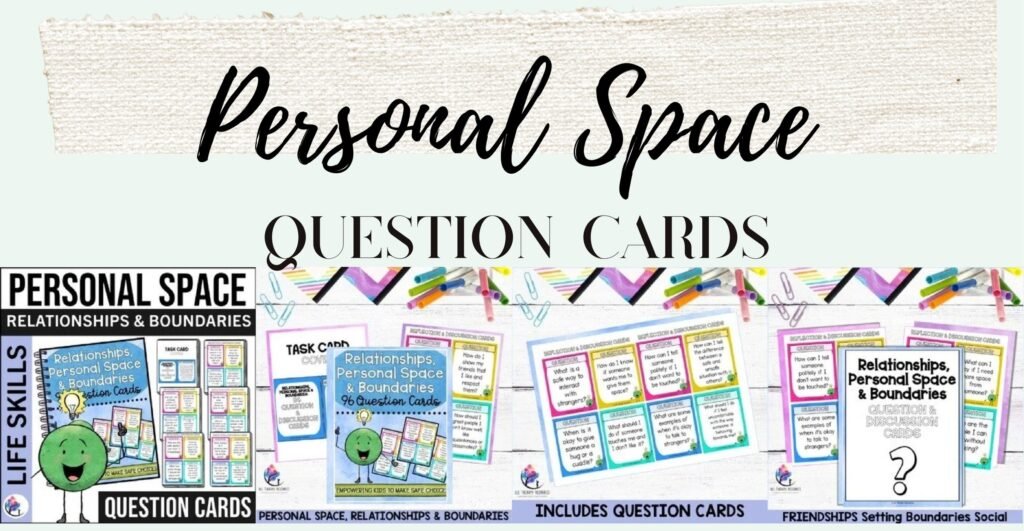
For discussion-based practice in a small group, the Personal Space and Boundaries Question Cards include 96 reflective questions about family, friends, acquaintances, professional helpers and strangers, along with safe and unsafe touch and appropriate conversation topics. They work well for elementary small groups and lunch bunches as a warm-up or end-of-session review. One teacher said they “Took some of the awkwardness out of some of the conversations that I needed to have with my class,” and that the cards made it “engaging for them.”
Supporting Autistic Students and Students in Special Education
Many autistic students and students with developmental differences benefit from personal space lessons that are visual, predictable and repeated. Social narratives are one of the evidence-based practices identified for autistic children and youth in the National Clearinghouse on Autism Evidence and Practice review (Steinbrenner et al., 2020), and they work best when paired with practice, visual supports and feedback in real settings.
- Read the same story several times across a week, then practice the skill straight after reading.
- Use the same short cue word across staff, such as “bubble.”
- Respect sensory needs. A student who seeks pressure may need a weighted lap pad or heavy work, not only a rule about leaning.
- Teach the student’s own boundaries too. Some students find touch uncomfortable and need words to say so.
For more on building social skills step by step, see Core Social-Emotional Skills for Kids: 5 Skills Every Child Needs to Thrive and 12 Best Friendship Skills Activities for Kids.
Personal Space, Body Boundaries and Safety
Personal space lessons naturally lead into conversations about body boundaries: who can touch us, what kinds of touch are okay, and what to do if someone makes us feel uncomfortable. Keep this part calm and simple, and make sure every child hears the same message: your body belongs to you, you can say no, and you can always tell a safe adult.
If a student shares something worrying: Lessons about touch and boundaries can lead a child to share something that suggests they are not safe. Stay calm, listen, and thank them for telling you. Don’t promise to keep it a secret, and don’t ask leading questions. Follow your school or district child protection protocol and your mandated reporting duties straight away.
USA: Childhelp National Child Abuse Hotline 1-800-422-4453. 988 Suicide & Crisis Lifeline: call or text 988, or chat at 988lifeline.org. In an emergency, call 911.
Australia: Kids Helpline 1800 55 1800. Lifeline 13 11 14 (text 0477 13 11 14). Contact your state or territory child protection service (see the AIFS contacts page). In an emergency, call 000.
Involving Families
Personal space skills grow faster when home and school use the same language. Send home the cue word you use, a short description of the bubble idea and two or three scripts. Invite families to share their own norms too. Some families greet with hugs and kisses, and a respectful lesson acknowledges that while still teaching students to ask first at school.
Frequently Asked Questions
What age should children learn about personal space?
Children can start learning simple personal space ideas in preschool and kindergarten with visual and movement-based activities. Older elementary and middle school students can explore how space changes with different relationships and settings.
How do I explain personal space to a child?
Keep it concrete: “Everyone has an invisible bubble around them. When we get too close to someone’s bubble, they might feel uncomfortable. We can check by looking at their face and body, or by asking.” Then practice with a hula hoop or a tape circle on the floor.
Is personal space the same in every culture?
No. Comfortable distances and greetings vary across cultures and families. Teach students to notice and ask rather than follow one fixed distance, and keep the school expectation clear and respectful.
What if a child keeps invading personal space after lessons?
Look at when and where it happens, and consider sensory needs, impulse control and attention. Add visual supports, practice in the actual routine, and work with the student’s team or an occupational therapist if sensory seeking seems to be driving the behavior.
Looking for practical, ready-to-use resources to support your personal space and social skills lessons? The All Therapy Resources Membership provides access to a growing collection of thoughtfully developed counseling activities, interactive games, and therapeutic tools designed to save preparation time while supporting meaningful, skill-focused learning.