How often have we heard a student say, “I’m fine,” while their body, behavior, or classroom choices tell a different story? Or seen a student praised for being “calm” simply because they went quiet, compliant, or withdrawn?
In schools, emotional regulation is often misunderstood and unintentionally confused with emotional suppression. For school counselors, teachers, and school psychologists, understanding emotional regulation vs emotional suppression matters. When students learn to hide their feelings rather than manage them, we may see short-term compliance, while the stress underneath goes unaddressed.
This guide explains the difference, what it looks like in real school settings, and how educators can help students build healthy, sustainable regulation skills, with sample language you can use tomorrow.
Emotional Regulation vs Emotional Suppression: What Is the Difference?
In everyday school language, the two are often treated as interchangeable. They are not the same.
Healthy emotional regulation includes the ability to:
- Recognize and name emotions
- Understand emotional triggers
- Tolerate uncomfortable feelings
- Express emotions safely
- Use coping strategies to manage intensity over time
Emotional suppression, on the other hand, involves:
- Pushing emotions down
- Avoiding emotional expression
- Hiding feelings to meet expectations
- Shutting down emotionally to avoid consequences or attention
It is worth knowing that researchers do count “expressive suppression” (holding back the outward signs of a feeling) as one type of emotion regulation strategy. Everyone uses it sometimes, for example, staying composed during a fire drill. The concern is when hiding feelings becomes a student’s main or only strategy. In a well-known series of studies with adults, Gross and John (2003) found that people who habitually used suppression reported more negative emotion, poorer interpersonal functioning, and lower well-being than those who more often used reappraisal (rethinking a situation to change how it feels).
From a trauma-informed perspective, suppression is often a survival strategy. Many students have learned that showing emotions leads to punishment, embarrassment, or rejection. In those cases, “being calm” may mean being disconnected.
| In the moment | Suppression can look like | Regulation can look like |
|---|---|---|
| Feeling frustrated with a task | Goes silent, stops working, says “It’s fine” | “This is hard. Can I take a short break?” |
| Feeling hurt by a peer | Smiles and carries on, then shuts down later | Names the feeling and asks an adult for help |
| Asked “Are you okay?” | Automatic “Yes” to avoid attention | “Not really, but I don’t want to talk yet.” |
| After a hard moment | Avoids the topic or the adult involved | Recovers, reconnects, and can reflect later |
Want more ways to help students explore what sits under the surface? Try My Feelings Iceberg, the Therapeutic Wheels, or the Choose the Coping Skill Elementary Digital Game.
Why Emotional Suppression Is Often Mistaken for Regulation in Schools
In busy classrooms, regulated students are often perceived as quiet, compliant, and productive. This can lead to a risky misconception: that a lack of visible emotion equals emotional health. (We explore this further in The Myth of the “Well-Behaved Child”.)
Many school counselors will recognize students who appear “regulated” on the outside but are overwhelmed inside. These are often the students who:
- Never cause disruptions
- Rarely ask for help
- Internalize stress and anxiety
- Have emotional outbursts later, in less structured settings or at home
Picture a fourth grader who sits perfectly still after being left out at recess, finishes every worksheet, and tells the teacher she is “good.” By pickup time she is in tears in the car. Nothing at school looked wrong, and that is exactly why her distress was missed.
When emotional suppression is reinforced, students may learn:
- My feelings are too much
- Strong emotions are unsafe
- I should hide how I feel to belong
- Adults value my behavior more than my experience
This is not emotional regulation. It is emotional survival.
What Healthy Emotional Regulation Looks Like in Students
Healthy emotional regulation does not mean students are calm all the time. It means they can move through emotions without being overwhelmed by them.
Regulated students may:
- Express frustration appropriately
- Ask for support when emotions rise
- Use coping strategies before escalating
- Recover after emotional moments
- Reflect on feelings after the fact
Importantly, regulation allows space for all emotions, including anger, sadness, fear, and disappointment, without judgment. In practice, it sounds like:
- “I’m really frustrated and need a break.”
- “I feel overwhelmed and don’t know what to do yet.”
- “I need help calming down.”
These moments are signs of emotional growth, not failure. When a student says one of these sentences, the most helpful response is often a short acknowledgment: “Thank you for telling me. Let’s figure out what will help.”
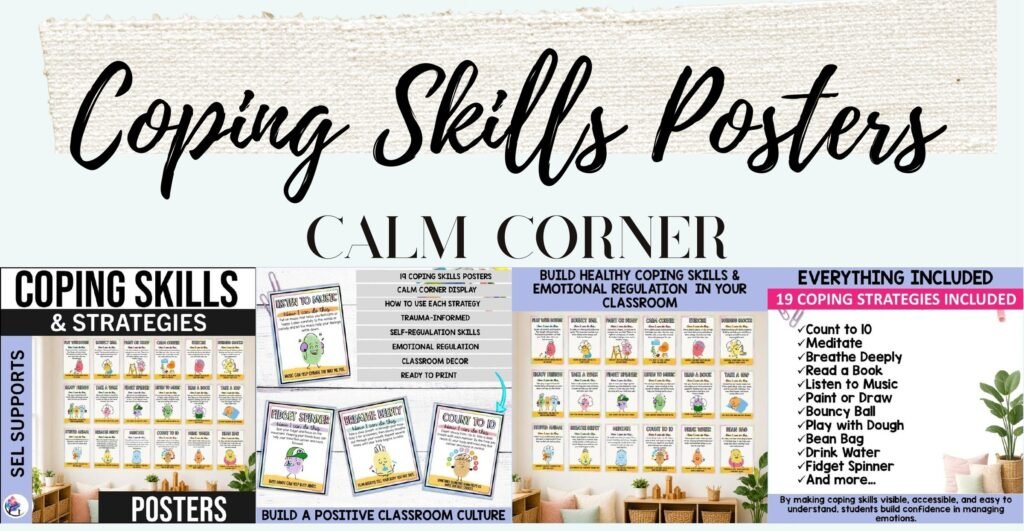
Try this in your classroom: students are more likely to reach for a coping strategy if they can see their options before emotions peak. Our Coping Skills Strategies Posters (Pastel) show 19 child-friendly strategies, such as breathing deeply, counting to 10, drinking water, or drawing, each with a short explanation of how to use it. Display them in a calm corner or counseling office, then in a lesson invite students to choose two posters they would try “when my feelings get big.” One educator shared: “My students regularly refer to them when talking about emotions or choosing healthy coping strategies, which has helped build independence and emotional awareness.”
The Long-Term Impact of Relying on Suppression
When students consistently hide their emotions, the effects often surface later. In school settings, this can show up as:
- Sudden emotional outbursts
- Increased anxiety or perfectionism
- Withdrawal or disengagement
- Physical complaints, such as headaches or stomachaches
- Difficulty identifying feelings at all
These signs have many possible causes, so they are prompts for curiosity rather than proof of suppression. The research picture is consistent, though: a large meta-analysis of 212 studies with children and adolescents found that emotional suppression, avoidance, and denial were associated with higher levels of both internalizing and externalizing symptoms (Compas et al., 2017). Much of that research is correlational, so it shows a link rather than proving that suppression causes the difficulties.
As educators and school-based mental health professionals, our role is not to eliminate emotional expression. It is to guide it safely, and that often starts with giving students words for what they feel.
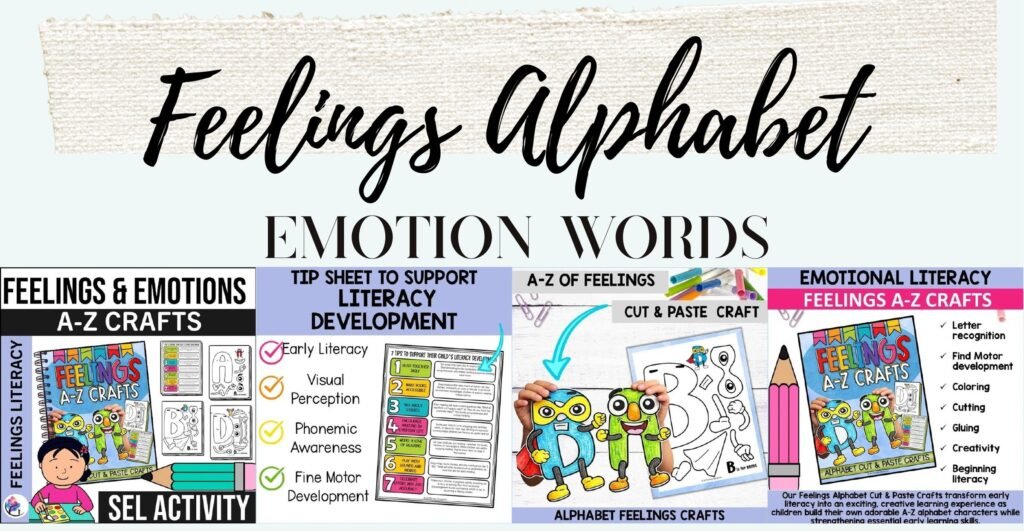
Try this in your next session: for younger students who struggle to name feelings, the Feelings Alphabet A–Z Crafts combine feelings-themed alphabet characters with simple cut-and-paste crafts, so young learners can talk about emotions while their hands are busy. Choose one letter per session, make the character together, name the feeling it shows, and ask, “When might someone feel this way?” before inviting students to share their own example if they wish. One reviewer used it with a K–2 autism class, and another noted that it gave students “a fun, hands-on way to talk about different feelings without it feeling too structured or clinical.”
A Trauma-Informed Lens: Why Some Students Suppress Emotions
It is essential to remember that emotional suppression is often learned. Students may suppress emotions because:
- They have been punished for expressing feelings
- Emotional expression felt unsafe in past environments
- They were expected to “be strong” or “not cry”
- They learned that emotions create conflict or rejection
Trauma-informed practice encourages us to shift from asking “What’s wrong with this student?” to “What happened to this student?” SAMHSA’s guidance for a trauma-informed approach places safety first, noting that people need to feel physically and psychologically safe. A student who has learned that feelings are dangerous will not stop hiding them because an adult says it is okay; they need repeated experiences of adults responding calmly.
When we understand suppression as an adaptation, we can respond with empathy, patience, and skill-building rather than correction. Gentle body-based strategies can help here too (see our trauma-informed grounding activities for children).
Practical Strategies to Teach Emotional Regulation Without Suppression
Teaching emotional regulation requires intentional language, modeling, and opportunities to practice. Helpful approaches include:
- Explicitly teaching the difference between a feeling and a behavior
- Normalizing all emotions while setting boundaries on actions
- Modeling emotional language as adults
- Allowing space for emotions before problem-solving
- Teaching coping skills as tools, not demands
Helpful classroom and counseling practices:
- Emotion check-ins that allow choice (including “I’d rather not say”)
- Calm-down spaces that are never used as punishment (see how to create a regulation space students use)
- Reflection after emotional moments, once everyone is calm
- Visual supports for emotions and coping
- Body-based regulation strategies, such as breathing or movement
The feeling-versus-behavior distinction is the heart of this work. A simple script might sound like: “It’s okay to feel angry. It’s not okay to throw the chair. Let’s find a safe way to show that anger.” The feeling is accepted; the behavior gets a boundary. For more classroom ideas, see our emotional regulation activities for kids.
Regulation is a process, not a performance.
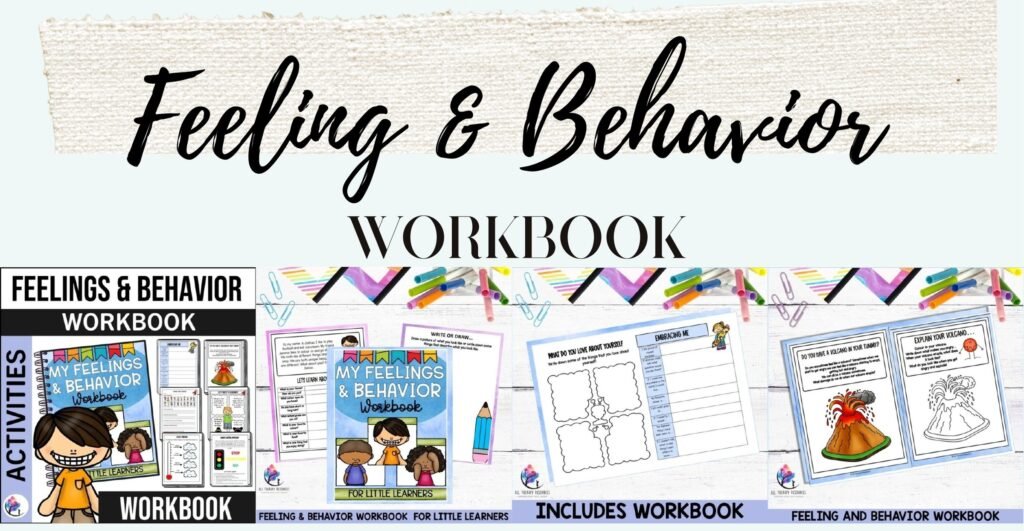
Try this in your next small group: the Feeling and Behavior Workbook guides children through naming emotions, noticing how feelings influence behavior, and practicing healthier ways to express them. Work through one page per session, then role-play the same situation twice: once showing the “hide it” response and once showing a “name it and ask for help” response. Students practice keeping the feeling while changing the action, which is exactly the skill that separates regulation from suppression.
What Regulation Can Sound Like Over Time
Students who rely on suppression often say things like:
- “I didn’t want to get in trouble, so I stayed quiet.”
- “I don’t know how I feel. I just feel bad.”
- “I try not to feel anything at school.”
With explicit teaching and safe relationships, a student’s language can gradually shift toward:
- “I was angry, but I took a break instead.”
- “I needed help calming down.”
- “I can feel upset and still make a good choice.”
Picture a sixth grader who once said, “I just don’t get upset,” telling you a few months later, “I was really annoyed in math, so I asked for a minute in the hallway.” That shift does not come from suppressing emotions. It comes from understanding them.
Supporting Staff: Adults Need Regulation Skills Too
One often-overlooked piece of this work is adult modeling. Students learn a great deal about emotions by watching how adults respond to stress, frustration, and mistakes. The OPRE practice brief on co-regulation (Rosanbalm & Murray) describes three kinds of adult support for self-regulation: a warm relationship, a structured environment, and skills instruction and coaching.
When educators:
- Name their emotions calmly (“I’m feeling a bit frustrated, so I’m going to take a breath before we continue.”)
- Take regulated pauses
- Repair after emotional moments
- Avoid shaming emotional expression
students learn that emotions are manageable, not dangerous. Co-regulation does not always mean staying quiet and still, either; we explore this in Co-Regulation Isn’t Always Calm. Emotional regulation is a community skill, not only a student expectation.
Final Thoughts: Regulation Is About Relationship, Not Silence
Emotional regulation is not about quiet classrooms or compliant students. It is about helping young people develop the skills to navigate their inner world with understanding, safety, and support.
When we stop rewarding emotional suppression and start teaching regulation, we create environments where students do not have to hide how they feel to succeed. That is meaningful, sustainable SEL work.
Frequently Asked Questions
Is emotional suppression ever helpful?
Briefly holding back a reaction can be useful in some moments, and in unsafe environments it may have been a way to cope. Research links habitual suppression, however, with poorer well-being in adults and with more emotional and behavioral difficulties in children and teens, so the goal is to give students more options, not to remove this one entirely.
How can I tell if a student is suppressing emotions?
Look for patterns such as an automatic “I’m fine,” difficulty naming feelings, perfectionism, avoidance of emotional topics, or outbursts later in the day. None of these alone confirms suppression, so stay curious, gather information, and consult your school counselor or psychologist if you are concerned.
What should I do when a student shows big emotions at school?
Focus on safety first, stay calm, and validate the feeling (“You’re really upset right now”). Offer a regulation option, such as a break or a breathing strategy, and save problem-solving and reflection for later, once the student is calm.
Can emotional regulation be taught in the classroom?
Yes. Through modeling, explicit instruction, consistent language, and regular practice, regulation skills can be taught school-wide. Because many students learned suppression to stay safe, regulation needs to feel safe before it can be effective.
References
- Gross, J. J., & John, O. P. (2003). Individual differences in two emotion regulation processes: Implications for affect, relationships, and well-being. Journal of Personality and Social Psychology, 85(2), 348–362.
- Compas, B. E., et al. (2017). Coping, emotion regulation, and psychopathology in childhood and adolescence: A meta-analysis and narrative review. Psychological Bulletin, 143(9), 939–991.
- SAMHSA (2014). SAMHSA’s concept of trauma and guidance for a trauma-informed approach.
- Rosanbalm, K. D., & Murray, D. W. (2017). Caregiver co-regulation across development: A practice brief. OPRE Brief #2017-80.
Looking for practical, ready-to-use resources to support your students’ emotional regulation? The All Therapy Resources Membership provides access to a growing collection of thoughtfully developed counseling and SEL activities, interactive games, and therapeutic tools designed to save preparation time while supporting meaningful, skill-focused learning.