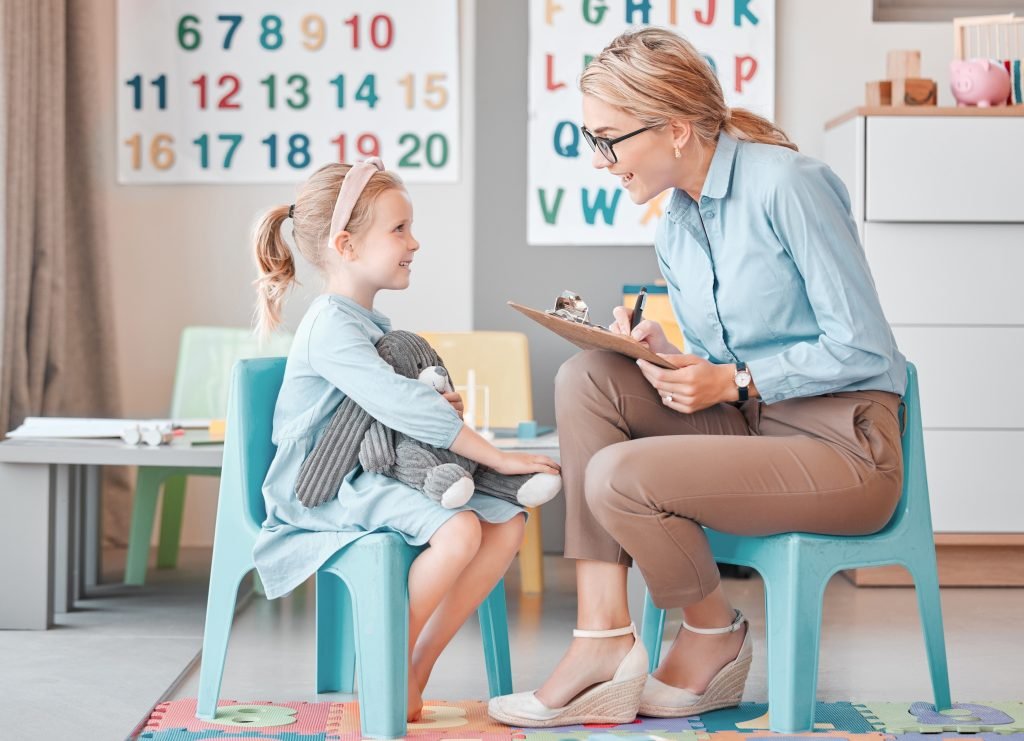
Ask a group of parents or teachers what a school counselor does and the answers often stop at class schedules or “talking to students who are upset.” A comprehensive school counseling program is much broader than that. It is a planned, schoolwide program that supports every student’s academic, career and social/emotional development, from classroom lessons on calming strategies to short-term counseling for a student whose anxiety is keeping them out of class.
Below, we look at how these programs are structured, how counselors support students with anger, anxiety and low mood, where the school’s role ends, and how families fit in.
What is a comprehensive school counseling program?
The American School Counselor Association (ASCA) describes school counseling programs as “comprehensive in scope, preventive in design and developmental in nature.” Programs based on the ASCA National Model have four components (define, manage, deliver and assess), use student data, and reach every student, not only those referred. ASCA recommends that school counselors spend 80% or more of their time in direct and indirect services to students (ASCA position statement).
Direct services are in-person work with students; indirect services happen on their behalf, with teachers, families and outside providers. ASCA’s role statement also recommends 250 students per school counselor. Here is what each service can look like.
| Service | Type | What it can look like |
|---|---|---|
| Instruction | Direct | A classroom lesson on naming feelings and choosing a calm-down strategy |
| Appraisal and advisement | Direct | Helping a ninth grader review grades and interests before choosing courses |
| Individual and small group counseling | Direct | A six-week small group for students learning to manage worry |
| Consultation | Indirect | Planning supports with a teacher for a student who shuts down during tests |
| Collaboration | Indirect | Working with administrators on a schoolwide approach to bullying |
| Referral | Indirect | Connecting a family with a community provider for ongoing therapy |
Want more support explaining your role? The free Role of the School Counselor handout gives families a clear overview, and our guide to planning a small group counseling curriculum walks through the small group side of your program.
How school counselors support students with anger
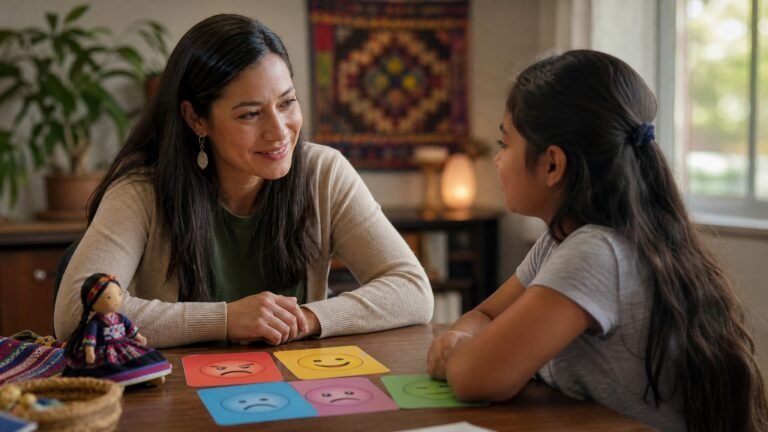
Anger is a normal emotion. The aim is not to remove it but to help students notice it earlier and choose a safer response. In a comprehensive program, this happens at several levels: classroom lessons on body signals, small groups for students working on self-control, and individual check-ins after a hard moment. A trauma-informed lens helps, because anger often sits on top of stress, hurt or unmet needs.
Picture a fourth grader who knocks over a chair after losing a game at recess. Once he is calm (never during the outburst), the counselor might say: “Let’s rewind it like a movie. What was happening right before your body got hot? Where did you feel it first?” Together they map the trigger, the body clue and one choice to try next time, then rehearse it in a quick role-play. For more ideas, see our guide to helping students calm their fuse.
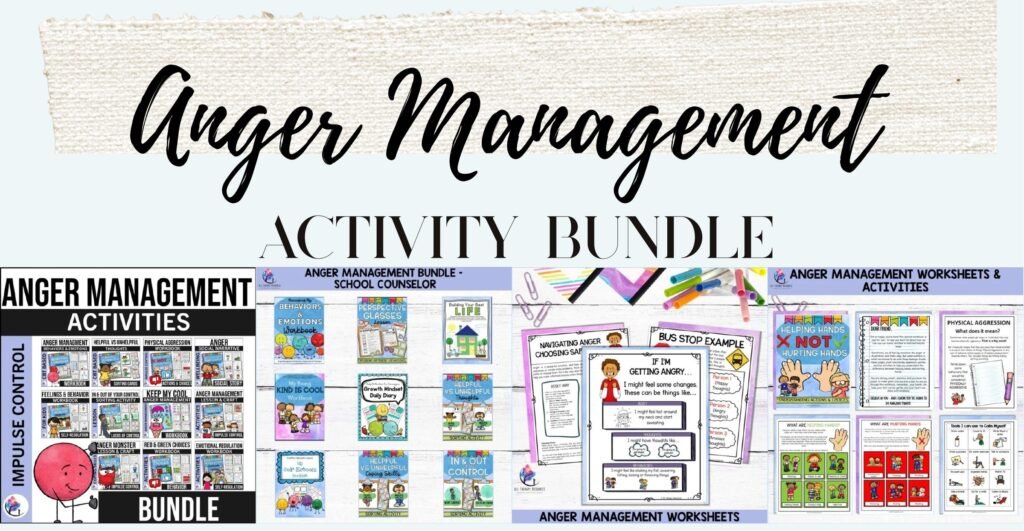
Try this in your next session: our Anger Management Worksheets & Activities Bundle brings together anger thermometers, the Let’s Pause board game, an anger management plan template, scenario cards for community circles, social stories and parent brochures. It suits children and teens in individual sessions, small groups or classrooms. Ask a student to rate a recent frustrating moment on the thermometer, then use the game to rehearse one pause strategy, so the same language follows them into every setting.
How school counselors support anxious students
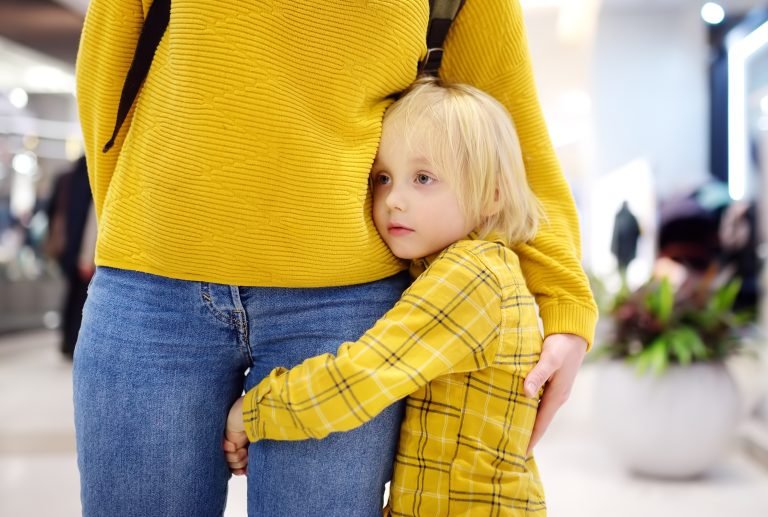
Anxiety can show up as stomachaches, nurse visits, avoidance, perfectionism or irritability. School counselors teach coping skills such as slow breathing, progressive muscle relaxation and grounding, and help students notice and question anxious thoughts. Many of these skills come from cognitive behavioral therapy (CBT). A 2020 Cochrane review found that CBT for anxiety disorders in children and adolescents led to higher remission rates than waitlist or no treatment, based on moderate-quality evidence.
In school, counselors usually use CBT-informed skills within short-term counseling and groups. A student whose anxiety persists or significantly affects daily life may need assessment and treatment from a licensed provider, which is where referral comes in. Our article on how school counselors help with student anxiety goes deeper.
Picture a seventh grader who asks to see the nurse every morning before math. The counselor might say: “It sounds like your body gets loud before math. What is the worried thought telling you?” If the answer is “I’ll get called on and look stupid,” they can look for evidence together, plan one small step, and agree on a quiet signal with the math teacher.
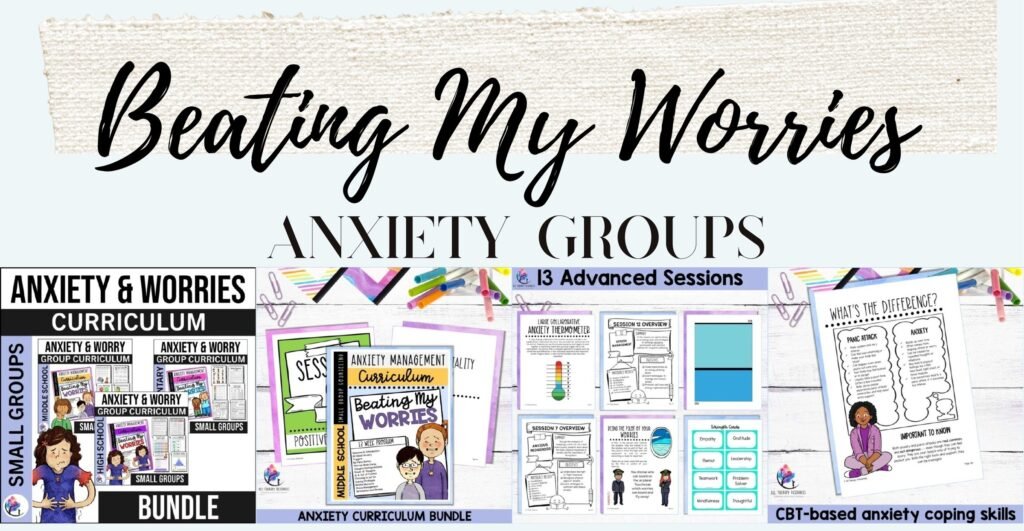
Try this in your next group: if you want a structured plan rather than one-off lessons, the Anxiety Counseling Activities Curriculum Bundle includes three 13-session Beating My Worries small group curriculums, one each for elementary, middle and high school. The middle school sessions include the cognitive triangle and thought reframing, and each curriculum comes with pre/post measures and data tools, so your anxiety group also feeds the “assess” part of your program.
Recognizing depression and responding to a crisis
In the CDC’s 2025 Youth Risk Behavior Survey, 33.3% of U.S. high school students reported persistent feelings of sadness or hopelessness. School counselors are often among the first adults to notice. ASCA’s position on the school counselor and student mental health asks counselors to recognize warning signs such as changes in attendance, mood changes and substance use, to provide short-term counseling and crisis intervention, and to refer students and families to school and community resources for ongoing treatment.
In practice, that means a private conversation when a teacher notices a student withdrawing, a call home, and a clear plan for who checks in and when. Any mention of suicide or self-harm is taken seriously and handled through the school’s protocol, never kept between the counselor and student.
If a student is in crisis or discloses harm: stay calm, listen and thank them for telling you. Do not promise to keep it secret. Follow your school or district protocol, involve your administrator and the student’s family as your protocol directs, and complete any mandated report. USA: 988 Suicide & Crisis Lifeline (call or text 988, or chat at 988lifeline.org); Childhelp National Child Abuse Hotline 1-800-422-4453; emergencies 911. Australia: Lifeline 13 11 14 (text 0477 13 11 14); Kids Helpline 1800 55 1800; your state or territory child protection service; emergencies 000.
Bullying, self-esteem and social skills
A comprehensive program also works upstream. Counselors help lead bullying prevention, support targeted students, help students who caused harm to repair it, and run groups that build friendship skills and confidence. Picture a lunch bunch where three quieter students practice one conversation starter each week, then try it in the cafeteria. You will find practical ideas in our posts on bullying prevention activities for middle school and boosting kids’ confidence.
Partnering with families
Families are essential partners. Counselors can share a few low-pressure suggestions at conferences, workshops or in a note home:
- Keep communication open: listen to concerns without rushing to fix or judge.
- Protect the basics: regular sleep, movement and meals support how children cope with stress.
- Model coping: children learn a great deal from watching how adults handle frustration and worry.
- Stay involved: attend school events and keep in touch with teachers and the counselor.
For more on building these relationships, see our parent communication tips for counselors.
Try this at your next family event: the Coffee With the Counselor Parent Handouts collection covers topics families often ask about, including managing anxiety, depression in teens, anger management in teens, bullying awareness and healthy sleep habits. Use one topic for a Coffee With the Counselor morning or send the matching handout home after a check-in. A Spanish version is also available for Spanish-speaking families.

Frequently Asked Questions
What does a school counselor do?
School counselors design and deliver a school counseling program that supports students’ academic, career and social/emotional development. That includes classroom lessons, small groups, short-term individual counseling, crisis response, and work with teachers, families and community providers.
Do school counselors provide therapy?
They provide short-term counseling, not long-term therapy. ASCA states that long-term therapeutic counseling is outside the school counselor’s role, so students who need ongoing treatment are referred to school-based or community mental health providers.
When should a parent contact the school counselor?
Reach out if you notice ongoing changes in mood, behavior, sleep, friendships or grades, or if your child seems unusually anxious, angry or withdrawn. If you are worried about your child’s immediate safety, call 988 or 911 (in Australia, Lifeline 13 11 14 or 000) rather than waiting for a school appointment.
Looking for practical, ready-to-use resources to support your comprehensive school counseling program? The All Therapy Resources Membership provides access to a growing collection of thoughtfully developed counseling activities, interactive games, and therapeutic tools designed to save preparation time while supporting meaningful, skill-focused learning.