Talking to teenagers about vaping, alcohol and other drugs can be challenging. We want students to understand the risks and have accurate information, but we also know that simply telling teenagers what they shouldn’t do isn’t necessarily going to change what happens when they’re faced with a real decision.
Teenagers are navigating curiosity, peer influence, stress, belonging, increasing independence, and a growing desire to make their own choices. Some students may have very little exposure to vaping, alcohol or other drugs, while others may already be surrounded by these issues through friends, family, social media, or their wider community.
That’s why effective alcohol and drug prevention education for teens needs to go beyond “Don’t do it.” Students need accurate information alongside opportunities to question, discuss, problem-solve, recognize influences, and consider what they could actually do when faced with a difficult situation.
The goal isn’t simply to tell teenagers what decision to make. It’s to give them the knowledge and practical skills they need to make informed and safer choices for themselves.
Start With What Students Actually Know
Students don’t enter a drug prevention lesson with the same knowledge or experiences. Some may have heard a lot about vaping and nicotine, while others may be working from misinformation they’ve picked up from friends, social media, or popular culture.
Starting with discussion allows us to explore what students already think they know. What do they believe is inside a vape? Why do they think teenagers start vaping? What have they heard about nicotine? What does addiction or dependence actually mean?
This gives us an opportunity to correct misconceptions without turning the lesson into a lecture. It also allows students to participate in the conversation rather than simply receiving information from an adult.
Why Vaping Needs More Than a “Just Say No” Message
Vaping can be particularly difficult to address because teenagers may have very different perceptions of the risks. Some students understand that vaping products can contain nicotine but know very little about cravings, tolerance, dependence, or the effects of nicotine exposure on the developing adolescent brain. The Surgeon General’s Advisory on e-cigarette use among youth notes that the brain keeps developing until about age 25 and that nicotine exposure during adolescence can affect learning, memory and attention.
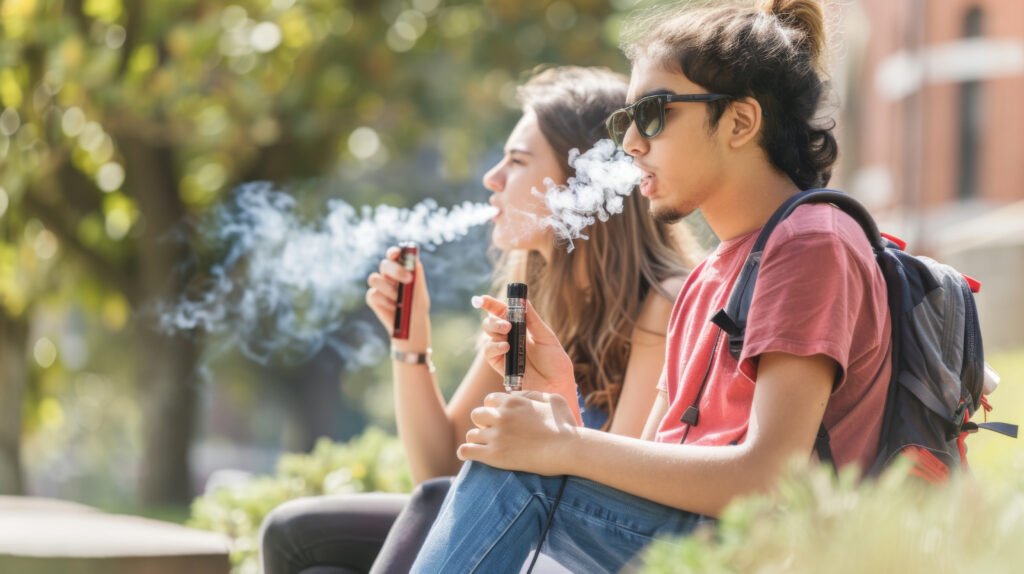
Clear, age-appropriate vaping and nicotine education gives students an opportunity to understand what vaping actually involves and why repeated nicotine use can become difficult to stop. But we also need to explore why a teenager might decide to vape in the first place.
Curiosity, friends, social acceptance, stress, perceived norms, and simply being offered something in the moment can all influence decisions. Analysis of National Youth Tobacco Survey data points to peer influence, curiosity and anxiety among the main reasons young people first try e-cigarettes. Exploring those influences makes the conversation much more realistic than simply giving students a list of reasons they shouldn’t vape.
Ask Why Someone Might Vape
One question we find particularly useful is, “Why might someone your age decide to try vaping even if they know there are risks?”
This creates some distance between the student and the behavior. Instead of asking students whether they personally vape, we’re asking them to think critically about why another teenager might make that decision.
The discussion can naturally move into peer pressure, curiosity, stress, fitting in, social media, perceived popularity, and decision-making. Students can explore these influences without feeling as though they are being asked to disclose their own behavior.
From there, we can move into an even more useful question: What could help someone stay in control of their own decision?
Make the Vaping Lesson Interactive
Prevention organizations, drawing on SAMHSA guidance, note that scare tactics have not been shown to prevent substance misuse, and NIDA’s prevention principles favor interactive programs that build drug resistance skills, self-efficacy and assertiveness. So rather than relying on fear or a “just say no” message, a strong vaping lesson helps teenagers understand the information while actively thinking about the choices and pressures around vaping.
Useful topics include what is actually in a vape, common vaping myths, why people vape, nicotine and the developing brain, cravings and dependence, social influences, personal triggers, refusal skills, changing habits and where to seek support.
Interactive activities such as Stand Up If…, Vaping Myth vs. Reality, Move to a Corner, Pressure Line, realistic teen scenarios and reflection questions keep students involved. Keep prompts impersonal so nobody feels pressured to reveal their own use.
These activities turn the lesson into a conversation. Students aren’t simply sitting through information about vaping; they’re being asked to respond to it, question it, apply it, and consider how it relates to situations teenagers may realistically encounter.
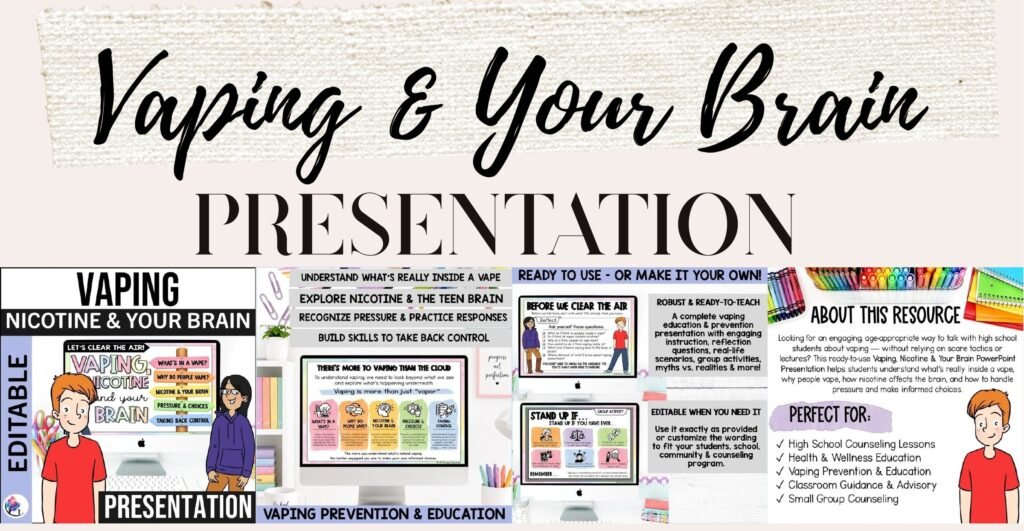
From our counseling room to yours: our editable Vaping, Nicotine & Your Brain Presentation was built around this approach for high school students, combining accurate information with scenarios, refusal strategies and a final One Step Forward reflection. One reviewer wrote, “The information was presented in a way that was clear, age-appropriate and engaging without feeling like a lecture.”
Practice the Difficult Moments Before They Happen
Scenario-based activities can be especially valuable when we’re teaching substance-use prevention. Telling a teenager to “resist peer pressure” sounds straightforward until we place that student in a realistic social situation.
Imagine someone is with friends and a vape is passed around. Everyone else seems relaxed about it, nobody appears particularly concerned, and the student doesn’t want to be the person who makes the situation awkward. Suddenly, saying no feels much more complicated.
A scenario like this allows students to explore different responses. They might give a simple no, use humor, change the subject, move away from the situation, find another friend, or decide that they don’t owe anyone a lengthy explanation.
We aren’t looking for one perfect response. We want students to have several possible strategies available so that the first time they think about what they could do isn’t when they’re already standing in that situation.
Refusal strategies to practice: rehearse several, so students can pick the one that fits them and the moment.
| Strategy | What it might sound like | Practice it with |
|---|---|---|
| A simple no | “No thanks, I’m good.” | Peer Pressure Scenario Cards for Teens |
| A reason, if they want one | “I’ve got practice tomorrow.” / “It makes me feel sick.” | Healthy Choices Wheel & Activities |
| Humor | “My lungs and I have an agreement.” | Peer Pressure & Friendship Activities for Teens |
| Change the subject | “No thanks. Did you see the game last night?” | Peer Pressure vs Support Sorting |
| Leave or find another friend | “I’m going to grab some food, coming?” | Vaping, Nicotine & Your Brain Presentation |
| No explanation needed | Students do not owe anyone a long explanation for their own decision. | Peer Pressure Parent Handout |
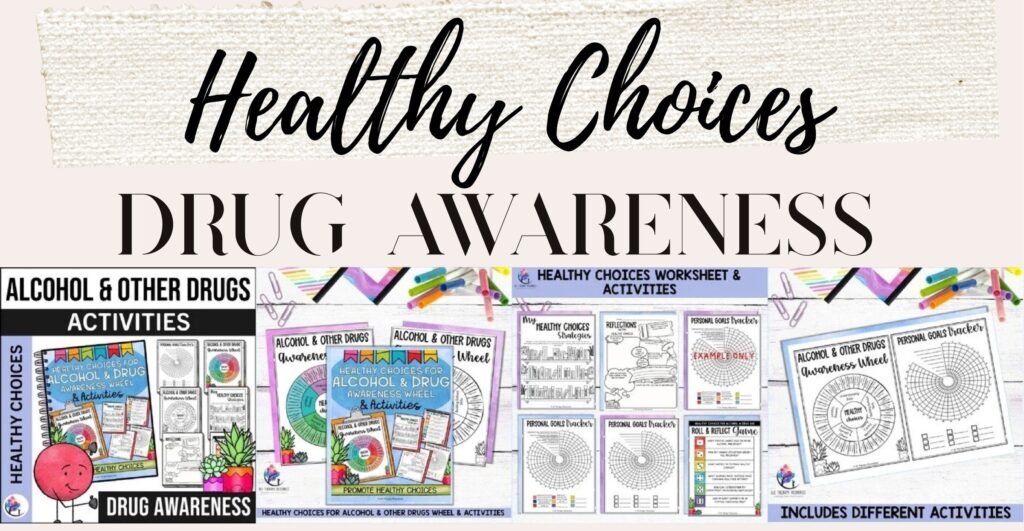
Try this with your students: our Healthy Choices for Alcohol & Other Drugs Wheel & Activities help students reflect on their choices, practice refusal skills and set personal goals, using an awareness wheel, reflection prompts and a goals tracker. One reviewer wrote, “I loved how this resource presents healthy choices in a clear, non-judgmental way.”
Peer Pressure Doesn’t Always Look Like Pressure
Peer influence can also be much more subtle than another teenager saying, “Come on, just try it.” Sometimes nobody says anything at all.
A student may feel pressure because everyone around them appears to be doing something. They may worry about being excluded, appearing inexperienced, disappointing a friend, or becoming the only person in the group who makes a different choice.
Activities such as Pressure Line and Move to a Corner help students explore these different influences. Rather than treating peer pressure as one obvious interaction, students begin recognizing the many social factors that can affect their choices.
That awareness gives us a practical starting point for discussing how students can respond when their own decision is different from the decision being made around them.
It also helps to correct the idea that “everyone” is doing it. According to the 2025 Monitoring the Future survey, most teens are not using substances: in the past month, 91 percent of 8th graders, 82 percent of 10th graders and 66 percent of 12th graders reported no marijuana, alcohol or nicotine use. For more on this, see our teen guide to resisting peer pressure.
Alcohol and Other Drugs Need a Broader Conversation
Vaping is only one part of substance-use education. As teenagers get older, they may also encounter decisions involving alcohol, cannabis, stimulants, depressants, and other substances.
Students may hear conflicting information about what is dangerous, what is legal, what supposedly “everyone” is doing, and what different substances actually do. A single awareness lesson often isn’t enough to explore these issues in meaningful depth.
A longer, structured unit can be a more comprehensive way to continue these conversations. Rather than trying to cover everything at once, students can work through different areas of alcohol and drug education while reflecting on what they are learning, as a complete sequence or as individual lessons that fit your health curriculum, counseling program or prevention initiative.
Go Beyond Naming Substances and Listing Consequences
We don’t want students to finish drug education simply knowing a list of substances and possible consequences. Information matters, but students also need opportunities to understand how that information connects with real-world decision-making.
A comprehensive unit might cover alcohol and its short- and long-term effects, legal considerations (check these against the laws where you live), reasons people drink, drink spiking (taught with a focus on safety, never blame), drugs and addiction, stimulants and depressants, smoking and vaping, cannabis and other substances, and the potential consequences of drug use.
Students are also encouraged to reflect on what they’re learning. This moves the resource beyond simply giving students facts and helps them think more deeply about choices, risk, consequences, peer influences, and their own understanding.
Knowing a fact is useful. Being able to apply that knowledge when making a decision is even more important.
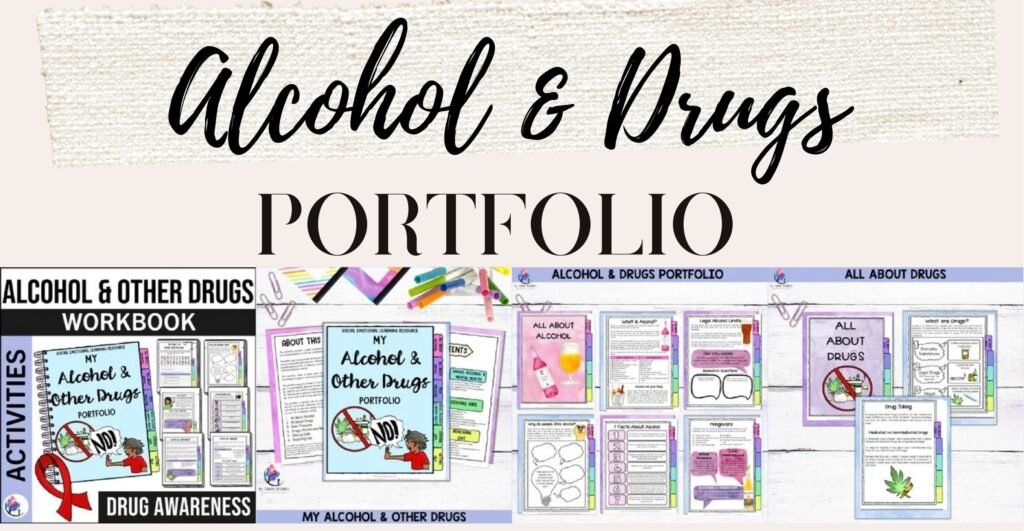
For a deeper unit: our Alcohol & Drugs Portfolio covers these topics with readings, activities and reflection pages that students can work through over several sessions. One reviewer described it as “jam packed! What an amazing, comprehensive resource.”
Remember That Some Students May Already Be Using
Not every student sitting through a vaping or drug prevention lesson is a student who has never experimented with a substance. The 2025 National Youth Tobacco Survey found that about 2 million U.S. middle and high school students currently use a tobacco product, and 5.2 percent currently use e-cigarettes.
Some teenagers may already be vaping. Others may have tried alcohol or another substance. Some may recognize cravings or routines developing around nicotine, while others may be worried about a friend or family member.
This is one reason we prefer not to frame substance-use education around shame. If the entire message is “Don’t ever do this,” a student who already has may decide that the lesson no longer applies to them.
Including conversations about cravings, dependence, triggers, changing habits, and seeking support gives those students somewhere to go next. Prevention is important, but so is making sure a teenager who is already struggling understands that support remains available.
Make sure students know how to reach support, including your school’s referral pathway and free, confidential options such as SAMHSA’s National Helpline (1-800-662-4357).
Give Students Space to Ask Questions
Substance-use lessons can generate questions that teenagers may not want to ask in front of their classmates. Depending on the setting, an anonymous question box can be a simple and useful addition to the lesson. Have a plan for any question that suggests a student may be at risk, in line with your school’s reporting procedures.
Students may have questions about something they’ve heard, seen, experienced, or wondered about without wanting everyone in the room to know that the question came from them.
We also don’t need students to disclose their personal experiences in order for learning to happen. They can explore peer pressure, dependence, alcohol, vaping, and decision-making through scenarios and discussion while still maintaining their privacy.
What Do We Want Students to Take Away?
If students finish an alcohol or drug prevention lesson with only the message “Adults don’t want me to do this,” we’ve probably missed an opportunity.
We want teenagers to understand the reasons behind the information we’re giving them. We want them to recognize the influences that can affect their decisions, understand how nicotine dependence can develop, consider how they might respond to social pressure, and know where reliable support is available.
Most importantly, we want them to recognize that they are active participants in their own decision-making. Giving teenagers knowledge and practical strategies respects the fact that ultimately they will encounter situations where adults aren’t standing beside them telling them what to do.
Building Skills Before They’re Needed
Some of the most valuable prevention work happens before the difficult moment arrives. Before the vape is offered, before the party, before a friend says that everyone else is doing it, and before curiosity develops into a repeated habit.
We can’t make every future decision for a teenager. What we can do is give them accurate information, opportunities to think critically, realistic situations to problem-solve, language they can use, strategies for handling pressure, and an understanding of where they can seek help.
That’s what good prevention resources should provide: practical tools for professionals to have meaningful, age-appropriate conversations with teenagers before those skills are needed in the real world. For more ideas across the school year, see our counselor’s guide to Red Ribbon Week.
Frequently Asked Questions
How do you talk to teens about vaping without lecturing?
Start with what students already know, ask why someone their age might vape, correct misconceptions through discussion, and practice realistic scenarios and refusal strategies rather than relying on warnings alone.
Do scare tactics work in drug prevention?
Prevention organizations drawing on SAMHSA guidance report that scare tactics have not been shown to prevent substance misuse. Interactive, skills-based approaches are recommended instead.
How common is vaping among teenagers?
In the 2025 Monitoring the Future survey, past-year nicotine vaping was reported by about 9 percent of 8th graders, 14 percent of 10th graders and 20 percent of 12th graders, which means most teens do not vape.
What should I do if a student tells me they are already vaping?
Respond without shame, talk about cravings, triggers and changing habits, and connect the student with your school’s support pathway and local cessation services. Follow your school’s procedures if there are safety concerns.
References
- NIDA: Lessons from prevention research
- Surgeon General’s Advisory on e-cigarette use among youth
- NIH: 2025 Monitoring the Future survey results
- FDA: 2025 National Youth Tobacco Survey findings
- Prevention Action Alliance: Scare tactics in prevention
Looking for practical, ready-to-use resources to support your substance use prevention lessons? The All Therapy Resources Membership provides access to a growing collection of thoughtfully developed counseling activities, interactive games, and therapeutic tools designed to save preparation time while supporting meaningful, skill-focused learning.