
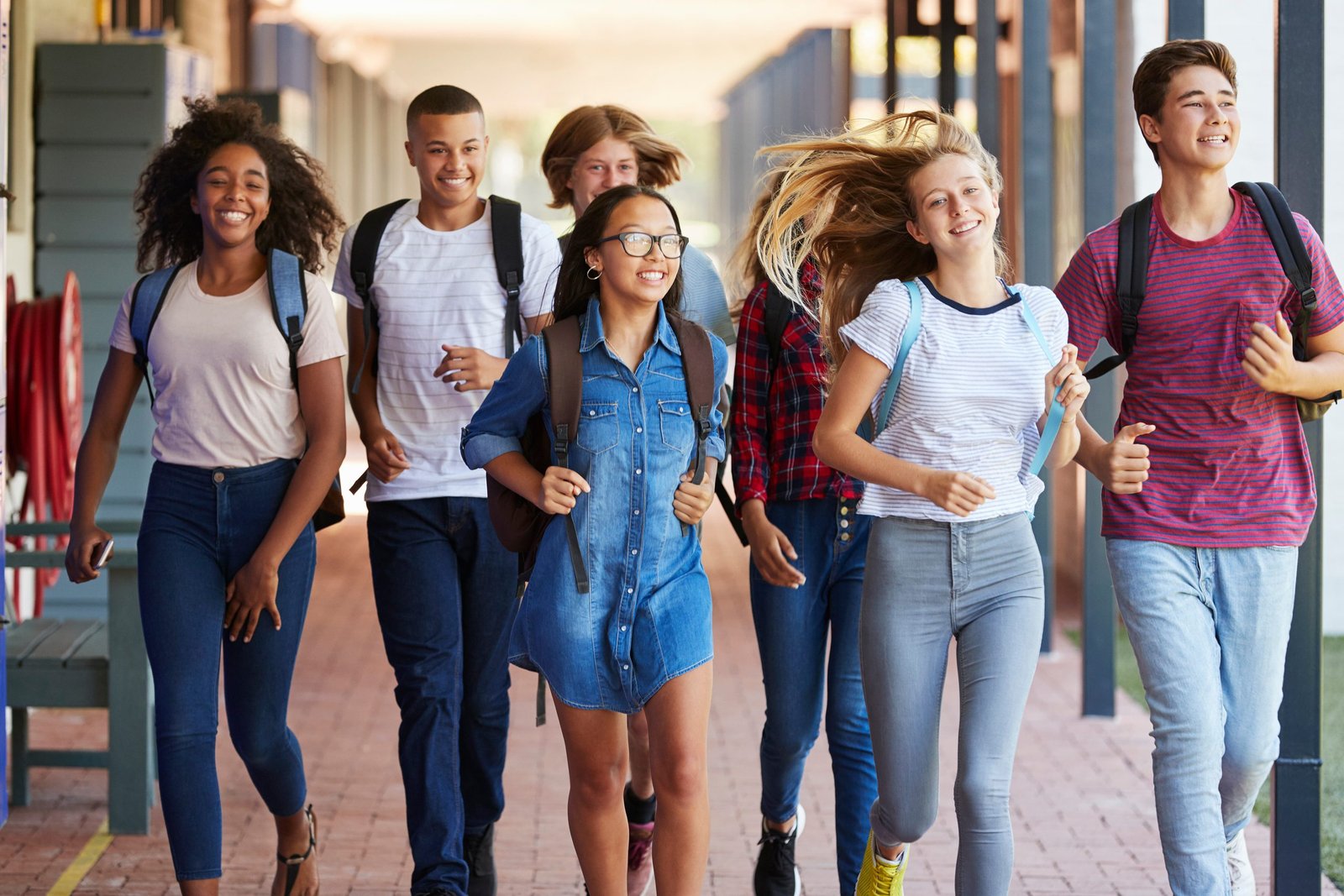
A meaningful end of year school counseling activity can give high school students something they do not always get enough time to do: stop, look back and recognize just how much has happened over the year. By those final few weeks, everyone is tired, schedules are changing and students are often already mentally halfway out the door.
As a school counselor, though, I think there is something really valuable about creating space for reflection before everyone rushes toward whatever comes next. The end of the school year is not only about finishing; it can also be about recognizing growth, relationships, challenges, lessons learned and the experiences students want to carry forward.
And perhaps most importantly, reflection does not have to mean another worksheet asking students to list their favorite memory from the year.
It can be much more meaningful than that.
Why an End of Year School Counseling Activity Matters
We spend so much time helping students prepare for what comes next that sometimes we forget to give them an opportunity to recognize how far they have already come.
For one student, the year might have included academic achievements, leadership opportunities or exciting plans for the future. Another student may look back and realize that their greatest achievement was making it through a difficult year, finding one friendship that felt safe or finally asking somebody for help.
Both are worth recognizing.
This is something I think is particularly important from a trauma-informed perspective. Reflection should never require students to disclose painful experiences or turn challenges into inspirational stories before they are ready.
Instead, a thoughtful end of year school counseling activity can give students choices about what they share. We can invite reflection without demanding vulnerability.
High School Students Have More to Say Than We Sometimes Expect
One of the things I love about working with teenagers is that they can surprise you with the depth of their observations. Ask the right question in the right environment, and suddenly you are hearing insights you would never get from asking, “So, how was your year?”
Students know what it actually felt like to be part of their grade or school community. They know what seemed incredibly important in September that barely matters now, what helped during difficult moments and what they wish someone had told them at the beginning.
There is real wisdom in that.
Sometimes adults spend a lot of time creating advice for incoming students when the people who just lived through the experience are sitting right in front of us.
What if we asked them?
A Powerful End of Year School Counseling Activity Starts With Student Voice
Student voice is one of the things that can make end-of-year reflection feel genuine rather than forced. Instead of telling students what they should have learned, we can ask them what they think mattered.
What surprised you this year? What turned out to be less frightening than you expected? What do you understand now that you did not understand at the beginning? What would you tell somebody who is about to start the same grade?
These questions invite very different answers. Some will be thoughtful. Some will be practical. And because we are working with teenagers, some will probably be absolutely hilarious. That is okay too.
Meaningful reflection does not have to be serious every second. Sometimes the laughter and shared memories are exactly what help students feel connected to the group.
7 Powerful Ways to Make End-of-Year Reflection Meaningful
If you are planning an end of year school counseling activity, I think there are a few things that can make the experience particularly valuable for high school students.
1. Focus on Growth, Not Just Achievements
Not every student’s year will be filled with awards, perfect grades or obvious accomplishments. If we focus only on traditional achievement, some students may struggle to see anything worth celebrating.
Instead, ask students how they have changed. Perhaps they became more confident speaking up. Maybe they learned how to walk away from an unhealthy friendship or became better at managing stress. Growth can be quiet.
Helping students recognize that can change the way they look back on their year.
2. Ask What They Wish They Had Known
This is one of my favorite reflection questions because it immediately puts students in the role of someone who now has experience to share.
Ask, “What do you know now that you wish somebody had told you at the beginning of the year?”
Their answers might be about schoolwork, friendships, teachers, stress, asking for help or something completely unexpected. More importantly, students begin to recognize that they have learned things beyond what appeared on their report card.
3. Talk About What Really Mattered
Teenagers can spend enormous amounts of emotional energy worrying about things that later seem much smaller. End-of-year reflection gives students an opportunity to think about what genuinely mattered. Which relationships mattered? What choices mattered? What moments are they still thinking about months later? This can create wonderful conversations about values, priorities and perspective without turning the activity into a formal lesson.
4. Make Room for Mixed Feelings
The end of the school year is not automatically happy for every student. Some are excited about summer or graduation. Others may be worried about losing routines, friendships or access to trusted adults at school. Graduating students can feel particularly conflicted. They may be excited about independence while simultaneously feeling frightened about leaving behind something familiar.
We do not need to talk students out of those mixed emotions. An end of year school counseling activity can acknowledge that it is possible to feel excited, sad, relieved, nervous and proud all at once.
5. Let Students Learn From Each Other
Reflection becomes particularly powerful when students are not only answering questions for an adult. Give them opportunities to talk with each other.
One student’s experience may help another student recognize something about their own year. They may discover that other people struggled with the same things or valued experiences they had never considered important. This is where collaboration can become part of social-emotional learning. Students practice listening, perspective-taking and communication while creating something together.
6. Look Forward as Well as Backward
Reflection should not leave students permanently looking in the rearview mirror. Once they have considered what they learned, ask what they want to carry forward.
What do they want to do differently next year? What do they want to remember when things become difficult? For seniors, the questions might be even broader.
What kind of person do they want to become beyond high school? What lessons from school do they hope they will still remember several years from now? These questions do not require students to have their futures perfectly planned.
They simply invite them to think about what comes next.
7. Create Something That Lasts
This is probably my favorite part. Instead of completing an activity that disappears into a backpack on the final day of school, let students create something meaningful together. It could be advice for younger students, a collection of lessons learned, letters to future students or something that becomes part of your counseling program for the following year. Suddenly, reflection has a purpose. Students are not simply looking backward. They are leaving something behind.
What If Students Could Leave Advice for the Next Class?
I love the idea of asking students to think about the people who will eventually sit where they are sitting now. What would they want those students to know?
Perhaps it is something practical: Do not leave everything until the night before. Perhaps it is more personal: You do not need everyone to like you. Someone else might write: Ask for help earlier. These little pieces of advice can tell us a lot about what students have learned. There is also something powerful about realizing that your experience might make somebody else’s journey a little easier. That is where reflection begins turning into legacy.
A Trauma-Informed Approach to End-of-Year Reflection
Reflection activities can sometimes accidentally place pressure on students to package difficult experiences neatly. We ask, “What challenge made you stronger?” when perhaps the student is still living through that challenge.
I prefer giving students more flexibility. They might reflect on something they learned, something they are proud of, someone who helped them, something they want to remember or something they hope will be different in the future.
Students can also choose how much they share with the group. That choice matters. A trauma-informed end of year school counseling activity should create opportunities for reflection without requiring students to turn private experiences into public ones.
We can still celebrate resilience. We simply allow students to define what resilience looked like for them.
Why Collaboration Makes End-of-Year Activities Different
There is another reason I like collaborative end-of-year projects with high school students. They remind students that the year was not something they experienced entirely alone. Everyone sitting around the table remembers different things. One student might mention a moment that everyone else had completely forgotten, while another may recognize how much a particular person contributed to the group.
That shared reflection can build connection. It can also help students recognize that they were part of something larger than their individual experience. For counseling groups, advisory classes and high school SEL activities, this can be a lovely way to bring a sense of closure to the year.
Our Class Legacy Project for High School Students
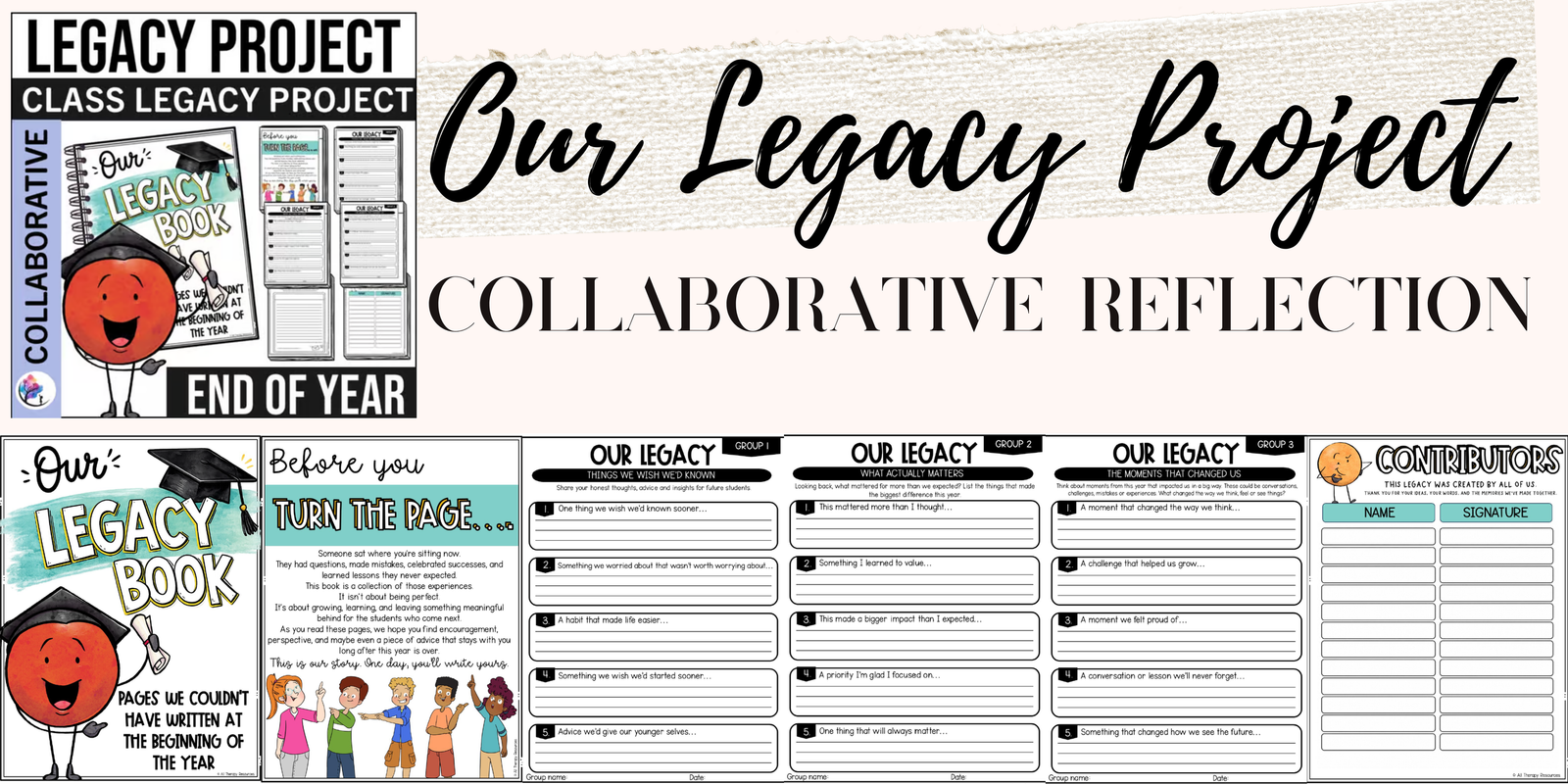
This thinking is exactly what inspired our Class Legacy Project. I wanted to create an end of year school counseling activity that went beyond favorite memories and gave teenagers an opportunity to think about what the year actually meant to them.
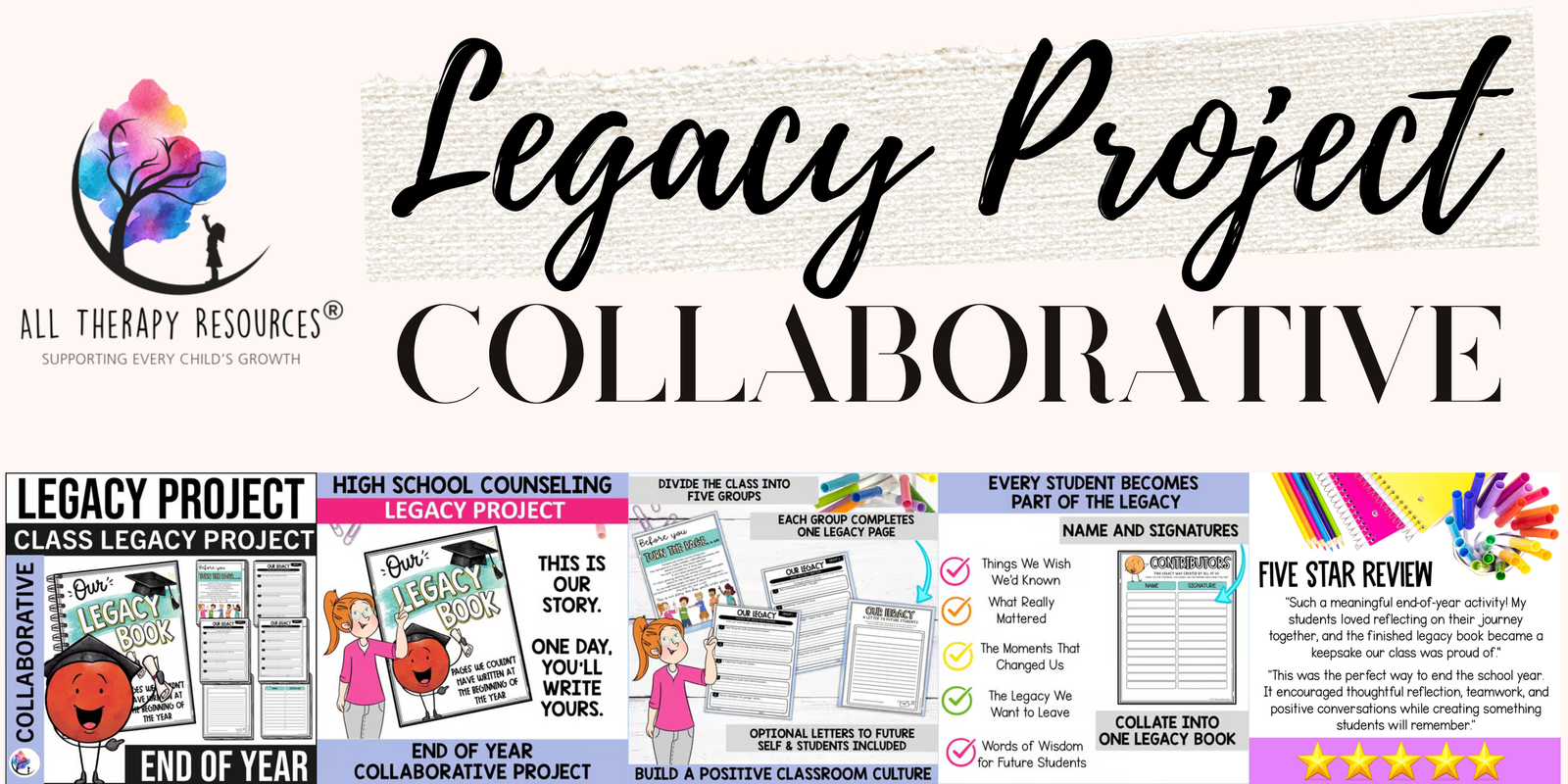
Rather than completing another traditional end-of-year worksheet, students work collaboratively to create a Class Legacy Book filled with reflection, advice, lessons learned and encouragement for the students who will follow them.
The project includes five collaborative reflection areas: Things We Wish We’d Known, What Really Mattered, The Moments That Changed Us, The Legacy We Want to Leave, and Words of Wisdom for Future Students. Students can also write a Letter to Their Future Self and a letter to future students.
There is also a contributors page where students can add their names and signatures, along with a teacher implementation guide to make the project easy to facilitate.
The project was designed for Grades 9–12 and can be used in high school counseling groups, SEL lessons, advisory classes or other settings where you want students to reflect and collaborate.
What Students Can Gain From a Class Legacy Project
For me, the value is not simply the finished book. It is the conversation that happens while students are creating it.
Students reflect on personal growth, resilience, challenges they have overcome, values that mattered, hopes for the future and what they want their class to be remembered for. They also have to listen to one another.
If five students are contributing to a page about “What Really Mattered,” they may have five completely different answers. That creates opportunities for perspective-taking and communication. It also gives students ownership of the final product because the book represents their experiences rather than an adult’s summary of what the year was supposed to mean.
Feedback on the project has reflected this too. Educators who have used it have described students enjoying the collaboration and reflection, having meaningful conversations about shared experiences and feeling proud of what they created together. That is exactly what I hoped the project would do.
The Best End of Year School Counseling Activity Does Not Need to Be Complicated
By the final weeks of school, counselors and teachers are tired too. You do not necessarily need another enormous lesson to prepare. Sometimes the most meaningful thing you can do is provide a good question, create a safe space and give students enough time to answer it.
Let them talk. Let them disagree. Let them laugh about the things that seemed like the end of the world six months ago. And let them recognize that somewhere along the way, they changed.
Helping Students Recognize the Legacy They Leave
When teenagers hear the word legacy, they sometimes imagine something enormous. But legacy does not have to mean changing the entire world. It can be the way you treated somebody when they were having a difficult day.
It can be the friendship you offered, the courage you showed, the mistake you learned from or the advice you leave for somebody who will walk into the same classroom next year. I think there is something lovely about helping teenagers understand that they already have an impact on the people around them.
They do not have to wait until adulthood to matter.
Looking for More End of Year School Counseling Activities?
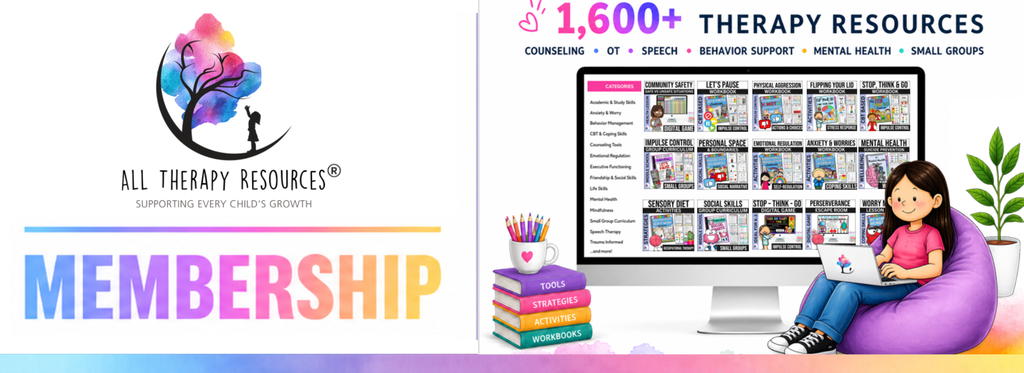
If you regularly search for school counseling activities, SEL activities, teen reflection activities, small group counseling resources or meaningful activities for teenagers, you might also love the All Therapy Resources Membership.
I created the membership for school counselors, therapists and educators who want thoughtful, engaging resources without spending hours creating everything themselves. Inside, you will find a growing library of counseling games, therapeutic activities, high school counseling resources, SEL activities, workbooks, small group counseling materials, conversation starters and practical tools for supporting children and teenagers.
My goal has always been to create resources that give you somewhere meaningful to begin. The resource does not replace the counselor. It gives you the question, activity or structure that can help open the conversation. If that sounds like the way you work too, I would love to welcome you into the All Therapy Resources Membership.
And as another school year comes to an end, perhaps one of the most valuable things we can give students is the chance to stop before rushing toward whatever comes next. To look back. To recognize how much has changed. And to realize that, whether they know it yet or not, they have already left something behind.