A student rips up a worksheet after being corrected. A child leaves the group area every time writing begins. A teenager responds to a limit with silence, sarcasm or a slammed door. These moments put immediate pressure on adults to stop the behavior. Effective behavior support, however, asks a different first question: What is this child communicating, avoiding, seeking or struggling to manage? And then a second: what replacement behavior could meet that same need in a safer, more workable way?
That question does not excuse unsafe or disruptive behavior. It creates a more useful path forward. When professionals look beyond the surface behavior, they can reduce escalation, protect relationships, and teach skills that make future success more likely.
Behavior support begins with understanding
Behavior is shaped by context. A child may be hungry, overwhelmed by noise, confused by a task, worried about making a mistake, seeking connection, or trying to regain a sense of control. The same action can serve different purposes for different children, and even for the same child on different days.
For example, calling out in class may reflect excitement and still-developing impulse control for one student. For another, it may be a reliable way to gain peer attention. A student who will not begin independent work may need academic support, a clearer first step, a break from a demanding sensory environment, or reassurance that mistakes are manageable.
This is why broad labels such as “defiant,” “attention-seeking” or “unmotivated” rarely give enough direction. They can also narrow an adult’s response before the full picture is understood. A more helpful description is observable and specific. Picture a student described this way: “During multi-step written tasks, the student puts their head down, says the work is pointless, and asks to go to the restroom.” Specific language supports clearer team communication and more thoughtful planning.
Understanding function does not require every professional to conduct a formal behavior assessment. It does require curiosity, documentation, and a willingness to look for patterns before deciding what a child needs. (Our functional behavior assessment guide explains the formal process when it is needed.)
Notice the pattern before choosing the strategy
A brief, consistent record can reveal more than memory alone. When behavior happens regularly, note what happened before it, what the child did, and what happened immediately afterward. This simple antecedent-behavior-consequence framework helps teams identify conditions that make a behavior more likely and responses that may unintentionally keep it going.
Consider a student who repeatedly asks to visit the nurse during math. If the requests come most often after a new worksheet is introduced and result in leaving the task, the team may explore whether the work is too difficult, unclear or emotionally loaded. A plan focused only on denying nurse visits could increase distress without addressing the barrier.
Patterns are rarely perfectly neat. Sleep changes, family stress, peer conflict, medication changes, illness, trauma reminders, hunger and developmental differences can all affect regulation. Use data as one source of information, alongside caregiver input, student voice, academic information and professional judgment.
It also helps to tell the difference between a skill gap and a performance gap. A child may know how to use a coping strategy during a calm counseling activity but be unable to access it when embarrassed in front of peers. In that case, the child may need practice in more realistic settings, earlier adult prompts and environmental adjustments rather than repeated verbal reminders.
Teach the replacement behavior clearly
Reducing a behavior without teaching an alternative leaves a child with fewer options at the exact moment they need one. In function-based behavior support, a replacement behavior is an acceptable alternative that serves the same function as the current behavior (PBISApps, University of Oregon). In practice, it also needs to be at least as easy and as reliable for the child as the behavior it replaces, or the old behavior will keep winning.
If a student throws materials to escape difficult work, “use calm hands” may be too vague to guide action. A more functional replacement could be showing a break card, asking for the first problem to be done together, choosing between two task formats, or using a practiced phrase such as, “This feels too hard. Can I have help getting started?”
Teaching works best when it is concrete and brief. Explain the skill, model it, let the child rehearse it, and reinforce use of the skill when the stakes are low. Visual supports, role-play, coping cards, scripts and structured check-ins can make an abstract expectation easier to remember. For younger children, a simple picture cue paired with adult coaching may be enough. Adolescents may respond better to collaborative language that protects autonomy: “What could help you take space without missing the whole class?”
A replacement behavior should fit the setting. A student cannot reasonably be expected to request a break if no one has explained where breaks happen, how long they last, and how the student returns to learning. The adults around the child need a shared response plan, not just a list of expectations for the child.
Try this in your next session: Role-play the replacement skill three times while the student is calm: once with you playing the teacher, once with the student playing the teacher, and once “for real” with a mildly hard task. Finish by agreeing where the break card will live on their desk.
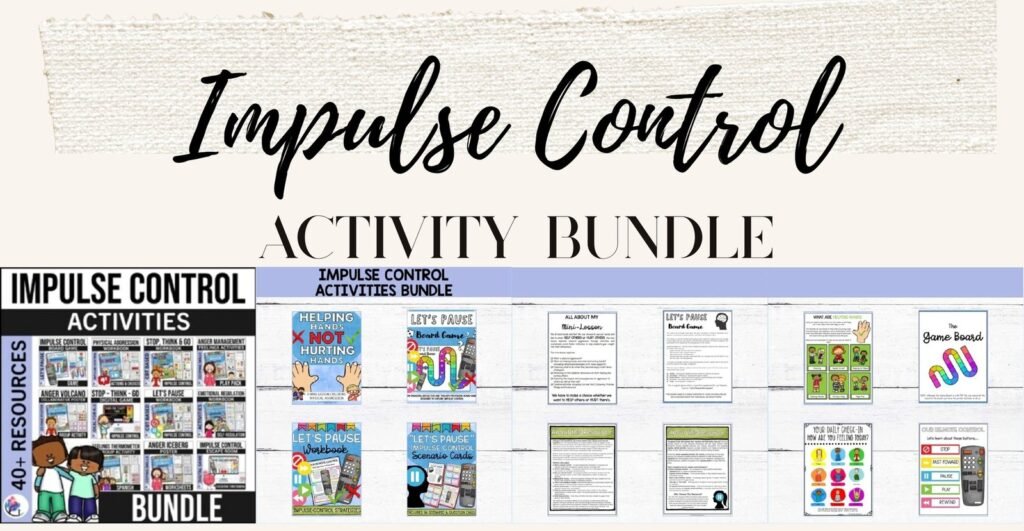
From our counseling room to yours: When the function involves acting before thinking, our Impulse Control Activities Bundle gives you worksheets and a social narrative to teach and rehearse self-control in everyday situations. Use the social narrative to introduce the replacement skill, then the worksheets to practice it in individual or small group sessions before trying it in class.
Make the environment more supportive
Behavior support is not only about what a child does differently. It is also about what adults can adjust before a problem occurs. Small changes to routines, demands, communication and sensory conditions can prevent repeated conflict.
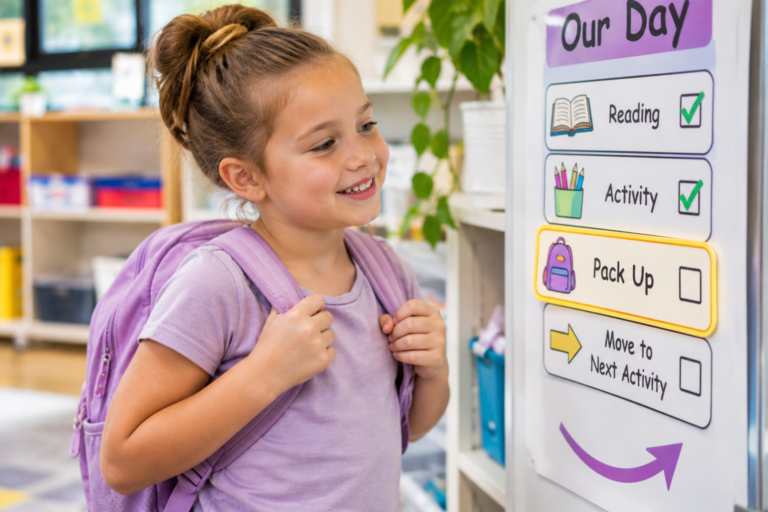
For a student who becomes overwhelmed by long verbal directions, give one step at a time and pair instructions with a visual checklist. For a child who struggles during transitions, provide a predictable preview, a time cue and a meaningful job at the next activity. For an adolescent who shuts down during direct questioning, try side-by-side conversation, written reflection or a rating scale before asking for details.
These adjustments are not “giving in.” They are access supports. Just as a graphic organizer can support written expression, a predictable regulation routine can support participation and learning.
Adults sometimes worry that accommodations will stop children from building resilience. The balance matters. Support should not remove every challenge, but it should make challenge manageable enough for learning to happen. A child who is overwhelmed is not practicing flexibility or problem-solving. They are often just trying to get through the moment.
Respond to escalation with safety and regulation
When a child is highly activated, long explanations, repeated questions and consequences delivered in the moment often add more pressure. The immediate priorities are safety, regulation, and reducing demands when appropriate.
Use fewer words and a calm, neutral tone. Offer limited, realistic choices: “You can sit in the calm area or take a short walk with me.” Avoid turning the moment into a debate. If others are present, reduce the audience when possible and protect the child’s dignity.
After the child is regulated, repair and reflection can happen. This is the time to review what occurred, identify early warning signs, and practice a different response. Keep the conversation focused on learning rather than shame. A useful question might be, “What did your body notice right before things got too big?” Another is, “What would make it easier to use your plan next time?”
Some behavior requires immediate safety planning and coordination with school, clinical or family supports. Aggression, elopement, self-harm concerns, threats or severe dysregulation should be addressed through your organization’s established procedures and within your professional scope. A trauma-informed approach remains essential, but it does not mean overlooking risk.
From our counseling room to yours: A calm area works best when it teaches, not just when it gives a child somewhere to sit. Our Calm Down Corner Posters and Visuals (Bright) give students clear visual steps for noticing feelings, choosing a strategy and returning to learning. Teach the posters during a calm class meeting so students know the routine before they need it. One reviewer noted that the resources “actively teach emotional regulation and give students practical tools they can refer to throughout the day.”

Build consistency across adults
Children receive mixed messages when one adult responds with a visual prompt, another delivers a lecture, and a third removes every demand without a plan for returning. Consistency does not mean every adult must sound identical. It means adults agree on the target skill, the prompts they will use, and what support follows.
A short team plan is often more effective than a long document no one can apply under pressure:
| Plan part | What to write | Example |
|---|---|---|
| Likely trigger | When the behavior is most likely | Independent writing tasks with more than three steps |
| Early signs | What adults see first | Head down, sighing, asking for the restroom |
| Replacement behavior | What the student does instead | Shows the break card or says, “Can I have help starting?” |
| Adult response | Agreed words and support | “Thanks for telling me. Let’s do the first line together.” |
| Return plan | How the student rejoins | Two-minute break, then back to the first step with a checklist |
Caregivers should be invited into this process whenever possible, especially when home and school patterns overlap.
Student input matters too. Children and adolescents are more likely to use a plan they see as realistic. They may tell you that a calm corner feels embarrassing, that a hand signal would be easier than asking aloud, or that a check-in after lunch would prevent a difficult afternoon. Those details can turn a well-intended plan into one that actually gets used.
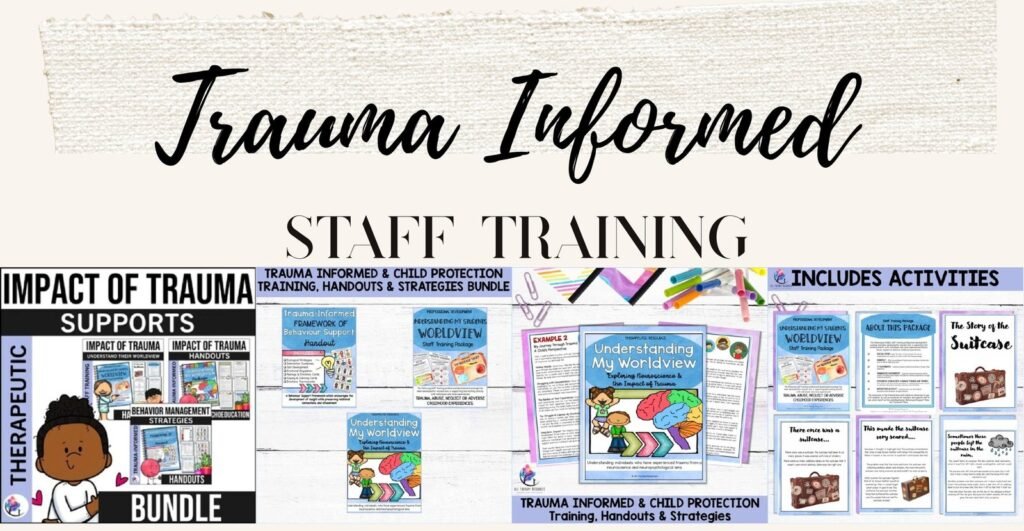
From our counseling room to yours: Consistency starts with a shared understanding among staff. Our Trauma Informed Bundle brings together staff training, a neuroscience-based handout and a set of behavior support strategies for students affected by trauma or adverse childhood experiences. Use it in a staff meeting or PD session so teachers, aides and specialists start from the same playbook before building individual plans.
Use reinforcement thoughtfully
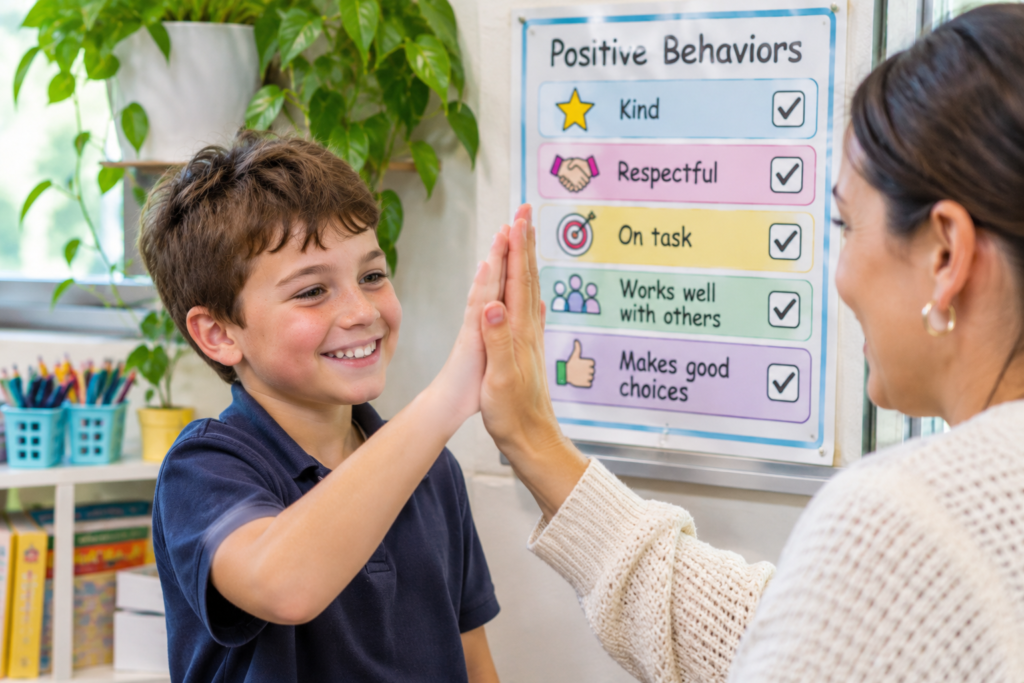
Reinforcement is sometimes misunderstood as bribery or as something that only belongs in highly structured programs. In practice, reinforcement simply means a response is more likely to happen again because something meaningful followed it. Specific acknowledgment can be powerful: “You noticed you were frustrated and asked for help before leaving your seat. That helped us solve the problem.” (For more ideas, see our positive behavior intervention activities.)
The most effective reinforcement is connected to the skill, timely and developmentally appropriate. Some children benefit from visual tracking systems or a choice after completing a difficult routine. Others prefer private feedback, increased independence, leadership opportunities or a short positive note home. What feels motivating varies widely, so involve the child when possible.
Avoid relying only on rewards for basic compliance. The larger goal is to help children experience the natural benefits of regulation, communication, connection and participation. External supports may be useful while a skill is new, then gradually reduced as the skill becomes familiar and reliable.
Keep the goal human
Behavior plans can become overly focused on adult convenience: quiet bodies, fast transitions, finished work and immediate compliance. Those outcomes may matter, but they should not be the only measure of success. A child may be making meaningful progress when they recover more quickly, ask for help once instead of shutting down, tolerate a small change in routine, or repair a relationship after conflict.
Thoughtful behavior support helps children feel understood while still holding clear boundaries. It gives adults practical ways to respond with consistency and care, especially on the hard days. The most useful question to carry into those moments is simple: What skill, support or condition would help this child do better next time?
Frequently asked questions
What is a replacement behavior?
A replacement behavior is an acceptable alternative that meets the same need, or serves the same function, as the behavior adults want to reduce. For example, a student who leaves the room to escape hard work might learn to show a break card or ask for help starting.
How do you choose a replacement behavior?
First identify what the behavior is doing for the child, using observation and, where needed, a functional behavior assessment. Then choose a skill that gets the same result, is easy for the child to use, and fits the setting. Teach it when the child is calm and respond quickly when they use it.
Is focusing on skills instead of consequences too soft?
No. Skill-focused support still includes clear expectations and boundaries. The difference is that adults also teach and support what the child should do instead, which gives the child a realistic way to succeed next time.
Looking for practical, ready-to-use resources to support your behavior support planning? The All Therapy Resources Membership provides access to a growing collection of thoughtfully developed behavior support and SEL activities, interactive games, and therapeutic tools designed to save preparation time while supporting meaningful, skill-focused learning.