This post contains affiliate links. As an Amazon Associate, ATR earns from qualifying purchases, at no extra cost to you.
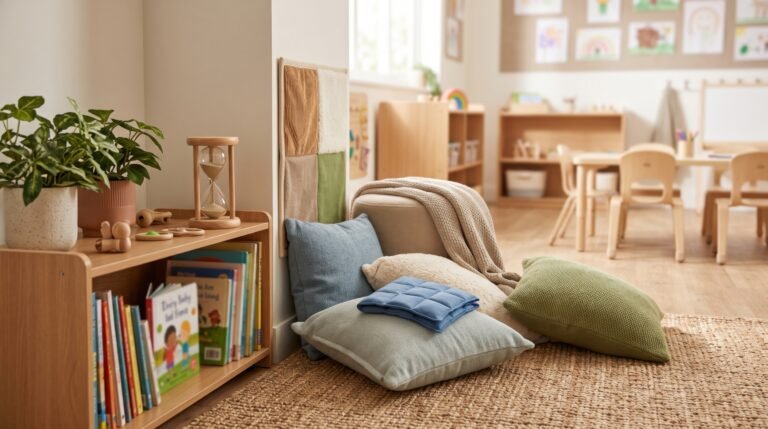
A calm down corner works best when it’s more than a quiet chair. The most helpful spaces give children tools to notice, name and manage their feelings, and books are one of the simplest tools you can add. A well-chosen feelings book offers language, reassurance and a few minutes of calm focus while a child’s body settles.
Here are books about feelings that suit a calm down corner, counseling office or early childhood classroom, with a quick idea for using each one.
What Makes a Good Calm Down Corner Book?
- Short and familiar. When a child is upset, long stories can feel like too much. Choose books they already know.
- Visual. Clear pictures help children who are not ready to read or talk.
- Validating. The best books show that all feelings are okay, while modeling safe ways to manage them.
- Action-focused. Books with breathing, movement or calming steps give children something to do.
Try this in your classroom: Introduce each calm corner book during a calm moment first. Children are far more likely to use a book when they’re upset if they already know and enjoy it.
Books About Feelings for the Calm Down Corner
The Color Monster: A Story About Emotions by Anna Llenas (2018)
The Color Monster’s feelings are all mixed up, and a friend helps him sort them by color. It is a calm-corner classic for naming feelings (the English edition was published in 2018).
Try it: Add colored jars or envelopes to your calm corner so children can “sort” their own feelings the way the monster does.
The Way I Feel by Janan Cain (2000)
Bright illustrations and short rhymes introduce feelings such as frustrated, proud, jealous and thankful. It builds feelings vocabulary beyond happy and sad.
Try it: Choose one page a day and ask children to show the feeling on their face, then talk about when they’ve felt it.
In My Heart: A Book of Feelings by Jo Witek, illustrated by Christine Roussey (2014)
A girl describes how different feelings show up in her heart and body. The die-cut heart and gentle text make it a favorite for preschool and early elementary.
Try it: Use it to connect feelings to body clues: “Where do you feel brave in your body?”
Today I Feel Silly: And Other Moods That Make My Day by Jamie Lee Curtis, illustrated by Laura Cornell (1998)
A girl moves through many moods, showing that feelings change and that’s okay. The humor makes it easy to share.
Try it: Create a simple mood wheel for the calm corner so children can show how they feel now and how they’d like to feel.
The Feelings Book by Todd Parr (2000)
Short, bold pages name many feelings in a warm, accepting way. It is ideal for the youngest learners and for children who are building language.
Try it: Keep it in the calm corner as an easy “point to it” book for children who aren’t ready to talk.
When Sophie Gets Angry – Really, Really Angry by Molly Bang (1999)
Sophie’s anger builds until she runs outside and slowly calms in nature. It shows that anger is a normal feeling and that there are healthy ways to calm down.
Try it: Ask, “What helped Sophie’s body calm down?” and add children’s ideas to a calm-down choices chart.
Breathe Like a Bear: 30 Mindful Moments for Kids to Feel Calm and Focused Anytime, Anywhere by Kira Willey (2017)
Simple breathing and movement exercises with playful illustrations. Each page is a quick activity you can try straight away.
Try it: Put a bookmark on three favorite pages so children can choose a breathing activity when they visit the calm corner.
Grumpy Monkey by Suzanne Lang, illustrated by Max Lang (2018)
Jim Panzee is grumpy for no clear reason, and everyone keeps telling him to cheer up. It’s a funny, validating story about letting feelings be.
Try it: Use it to talk about how it feels when someone tells us to “just cheer up”, and what helps instead.
Ravi’s Roar by Tom Percival (2019)
Ravi’s frustration turns him into a tiger, and he learns that it’s okay to feel angry but not okay to hurt others. Part of the Big Bright Feelings series.
Try it: Practice a “tiger breath” together and talk about safe ways to let big feelings out.
Visiting Feelings by Lauren Rubenstein (2013)
Feelings are treated as visitors to welcome, notice and get to know. The gentle, mindful approach suits children who are anxious about big feelings.
Try it: Invite children to describe a feeling as a visitor: what color is it, how big is it, what does it need?
Calm-Down Time by Elizabeth Verdick (2010)
A board book for toddlers and preschoolers that walks through simple steps for calming down. It’s a natural fit for early childhood calm spaces.
Try it: Read it when introducing the calm corner, then practice each step in the space itself.
Glad Monster, Sad Monster by Ed Emberley and Anne Miranda (1997)
Colorful monster masks introduce different feelings in a playful way. Children love trying on the masks.
Try it: Let children choose a monster mask that matches their feeling at check-in time.
How to Use Feelings Books in Your Calm Corner
- Rotate a small set. Three to five books at a time keeps the space uncluttered. Swap them every few weeks.
- Link books to visuals. Place a feelings chart or calming strategies poster near the books so children can move from naming a feeling to choosing a strategy.
- Teach the routine. Model how to visit the calm corner: notice the feeling, choose a tool, set a timer, return to the group.
- Check in afterward. A brief, warm check-in (“You chose The Color Monster. What color were you feeling?”) helps children reflect without feeling judged.
- Keep it a support, not a consequence. The calm corner should feel like a safe choice, never a punishment.
Picture a kindergarten student who has just had a disagreement at recess. She chooses Breathe Like a Bear, tries one breathing activity, and points to “frustrated” on the feelings chart. When the teacher checks in, the child already has words for what happened.
ATR Resources for Your Calm Down Corner
From our counseling room to yours, these resources pair beautifully with a basket of feelings books.
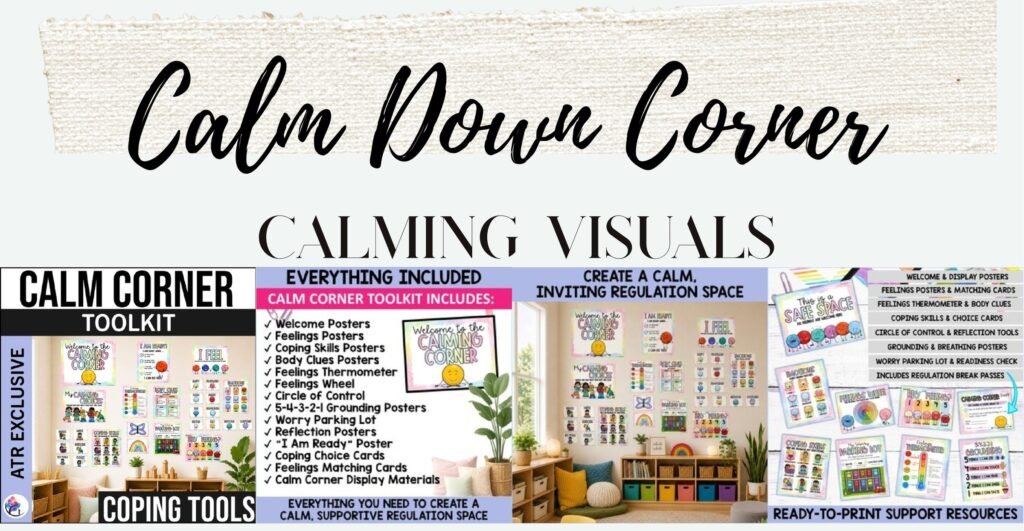
Calm Down Corner Posters and Visuals give students clear, calming strategy visuals they can use independently. One teacher wrote that the toolkit “made setting up a calm corner incredibly easy.”
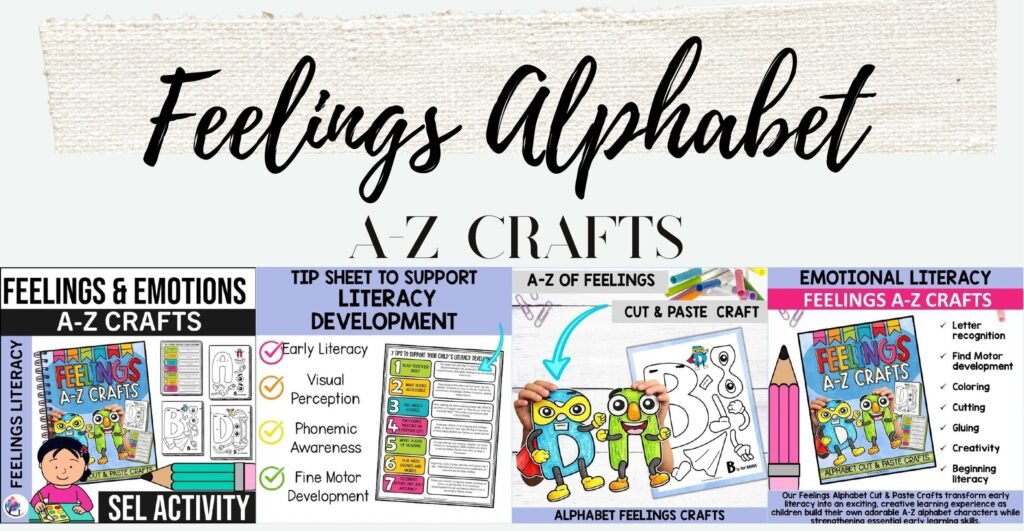
Feelings Alphabet A-Z Crafts build feelings vocabulary through hands-on crafts, a natural follow-up to books like The Way I Feel. A teacher who used it with her K-2 class said it “worked very well for my students.”
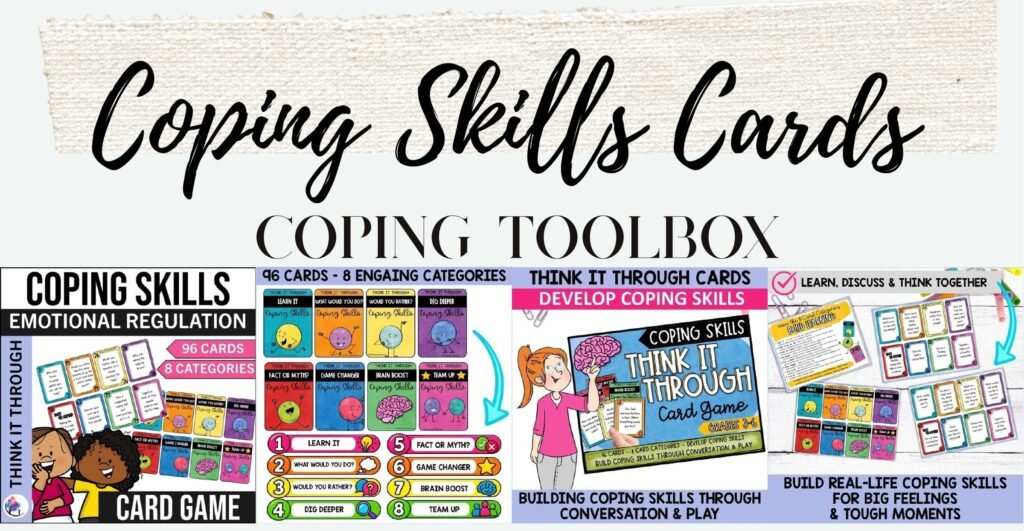
Emotional Regulation Coping Skills Cards let children explore a variety of coping strategies so they can discover what works for them, perfect to keep beside your calm corner books.
Frequently Asked Questions
What should I put in a calm down corner?
Keep it simple: a comfortable seat, a few familiar feelings books, a feelings chart, calming strategy visuals, a timer and one or two sensory tools. Fewer, well-taught tools work better than a crowded space.
How many books should be in a calm corner?
Three to five is plenty. Rotate them every few weeks to keep interest without overwhelming children.
What age are these feelings books for?
Most suit preschool through second grade. Visiting Feelings, Ravi’s Roar and Breathe Like a Bear also work well with older elementary students.
Should children read alone in the calm corner?
Yes, if they’re able. Looking at a familiar book can be calming on its own. For younger children, a quick check-in afterward helps them connect the book to their own feelings.
Looking for practical, ready-to-use resources to support your calm down corner and feelings lessons? The All Therapy Resources Membership provides access to a growing collection of thoughtfully developed SEL activities, interactive games, and therapeutic tools designed to save preparation time while supporting meaningful, skill-focused learning.