Academic skills are often listed on intervention plans as if they exist on their own: study habits, organization, time management and focus. School counselors, teachers and school psychologists know the picture is more complex. Many students want to do well in school but struggle with the underlying skills they need to do so consistently.
So the real question becomes: how do we go about teaching academic skills in a way that feels supportive, engaging and achievable, especially for students who already feel overwhelmed, discouraged or behind?
This article looks at what academic skills involve, why they are closely connected to social-emotional learning and wellbeing, and how trauma-informed, practical strategies can help upper elementary and middle school students build both competence and confidence.
What Are Academic Skills, Really?
Academic skills go well beyond reading, writing and math. They include the executive functioning and self-management abilities that allow students to access learning in the first place:
- Organization of materials and information
- Time management and planning
- Task initiation and follow-through
- Working memory and attention
- Emotional regulation during learning
- Perseverance and effort over time
- Goal setting and self-monitoring
When these skills are still developing, students may look unmotivated, careless or resistant. Often they are working against barriers adults cannot see. The table below can help you translate what you notice in class into a small, teachable next step.
| Academic skill | What it can look like | A small support to try | Suggested ATR resource |
|---|---|---|---|
| Organization | Lost homework, crumpled papers, a backpack that has become a black hole | A weekly five-minute binder or backpack reset with a picture checklist | Organization Skills Escape Room |
| Time management | Projects left until the night before, surprise at how long a task takes | Estimate, then time a task, and compare the two | Time Management Escape Room |
| Task initiation | Sitting with a blank page, sharpening pencils, asking to go to the restroom | Agree on the first step and say it out loud | Task Initiation Escape Room |
| Working memory | Starting well, then losing track of multi-step directions | Written steps on the desk; check off each one as it is done | Working Memory Escape Room |
| Ignoring distractions | Drifting toward noise, devices or peers during independent work | Plan where to sit and what to do with the phone before work starts | Ignoring Distractions Escape Room |
| Self-monitoring | Handing in work without checking it, surprise at a grade | A three-question “before I hand it in” check | Self-Monitoring Escape Room |
| Perseverance | Giving up after the first wrong answer, “I’m just bad at this” | Name one strategy to try before asking for help | Perseverance Escape Room |
Why Academic Skills Are a Wellbeing Issue
Academic difficulties often come with an emotional cost. Students who consistently struggle with organization, focus or follow-through may experience:
- Anxiety about schoolwork
- Low self-esteem and confidence
- Avoidance or shutdown
- Frustration and emotional outbursts
- Learned helplessness or disengagement
From a trauma-informed perspective, it helps to remember that stress affects the same skills we are asking students to use. Research summarized by the Arnsten lab at Yale describes how even mild, uncontrollable stress can quickly weaken prefrontal cortex functions such as working memory and deliberate problem-solving. The Center on the Developing Child at Harvard also notes that toxic stress can disrupt the development of executive function skills. A student who is worried, ashamed or on high alert may not be able to reach strategies they used easily yesterday.
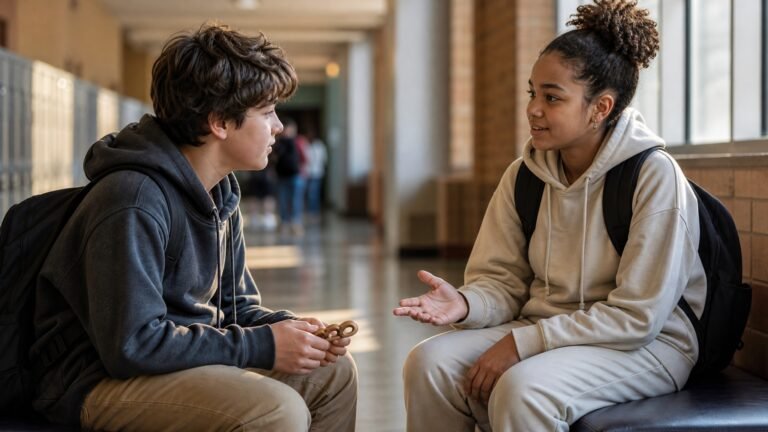
This is why teaching academic skills works best alongside emotional safety, encouragement and realistic expectations. Picture a student who freezes when a test is handed out. “Try harder” adds pressure. “Let’s take one slow breath together, then read only the first question” lowers the threat and gives a clear next step. Skills grow best where students feel supported rather than judged.
The Executive Functioning and Academic Skills Connection
Executive functioning skills help students plan, prioritize, shift their thinking and keep going when tasks feel hard. Harvard’s Center on the Developing Child describes three core areas: working memory, mental flexibility and self-control. In the classroom, these show up as:
- Working memory: holding instructions in mind while carrying them out
- Cognitive flexibility: adapting when a plan or approach is not working
- Inhibitory control: managing distractions and impulses
- Self-monitoring: noticing mistakes and progress along the way
In a large, nationally representative sample of students aged 5 to 17, Best, Miller and Naglieri (2011) found that executive function was related to both math and reading achievement across that age range. That is a correlation, not proof that one causes the other, but it supports what many school staff see every day: these skills matter for learning. Importantly, children are not born with these skills; they develop with practice, guidance and supportive adults. For a closer look at the elementary years, see our guide to fostering executive functioning in young minds.
Picture a seventh grader who says, “I don’t know where to start, so I just don’t.” A label such as “lazy” will not help. Breaking the assignment into three visible steps and agreeing on the first one often will. Explicit teaching, repeated in small and manageable doses, gives students something concrete to do instead of something to feel bad about.
Trauma-Informed Strategies to Build Academic Skills
Trauma-informed academic skill building focuses on reducing overwhelm and increasing student agency. It draws on principles such as safety, trustworthiness, collaboration, and voice and choice, outlined in SAMHSA’s guidance on a trauma-informed approach. In practice, that can mean:
- Teaching skills explicitly rather than assuming students already know them
- Breaking tasks into clear, achievable steps
- Using visuals and predictable routines
- Normalizing mistakes as part of learning
- Practicing skills through low-pressure activities
- Offering choices about how and where students work
- Encouraging reflection instead of perfection
Be careful not to over-rescue. Students build skills by using them with enough support to succeed, then gradually less. Our article on why struggle builds executive function explores that balance.
Try this in your next session: ask the student to choose one assignment that feels stuck. Together, write the first three steps on a sticky note, with the first step small enough to finish in two minutes. Then say, “Let’s do step one right now while I’m here.” Afterward, ask, “What helped you get started?” so the student names the strategy in their own words.
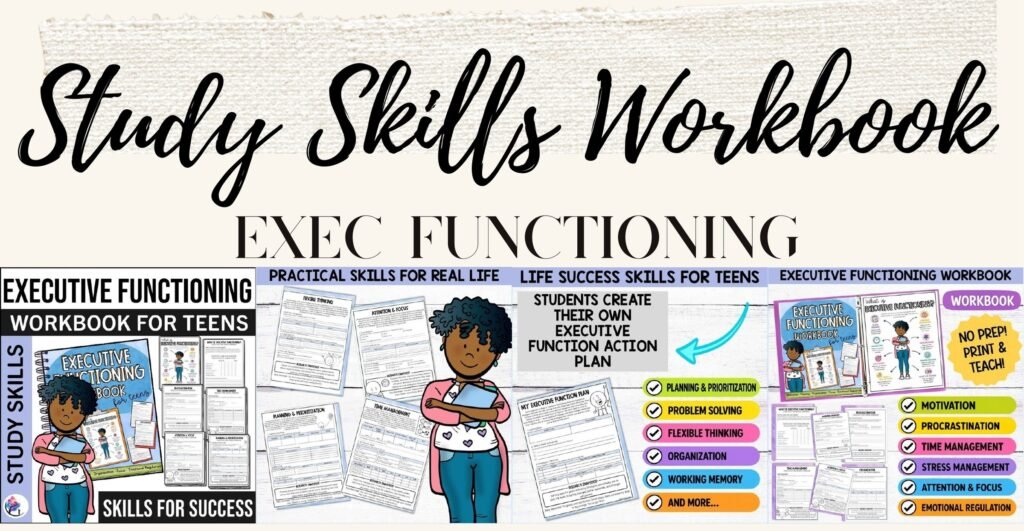
For older middle school and high school students: our Executive Functioning Skills Activities Worksheets: Organization & Study Skills workbook helps teens work through organization, planning, time management, procrastination and focus in individual sessions, small groups or learning support. Use one page per session as a starting point for conversation, then agree on one strategy to test that week. One reviewer wrote, “It goes beyond basic organization and actually gets students thinking about procrastination, motivation, planning, emotional regulation and the habits that affect their success.”
Using Interactive Games to Practice Academic Skills
Students need chances to practice academic skills in ways that feel engaging and safe, not only through worksheets or lectures. Interactive, scenario-based games can offer that low-stakes practice: students make choices, see what happens and try again without a grade attached. The game is the hook; the learning happens in the conversation afterward.
To help the skill transfer, close every game with a short debrief:
- “Which choice in the game was the hardest? Why?”
- “When does this happen to you in class?”
- “What is one thing you will try this week?”
Games like these fit whole-class lessons, small group counseling, Lunch Bunch, advisory and Tier 1 or Tier 2 support, and because they can be replayed, they lend themselves to re-teaching later in the year.
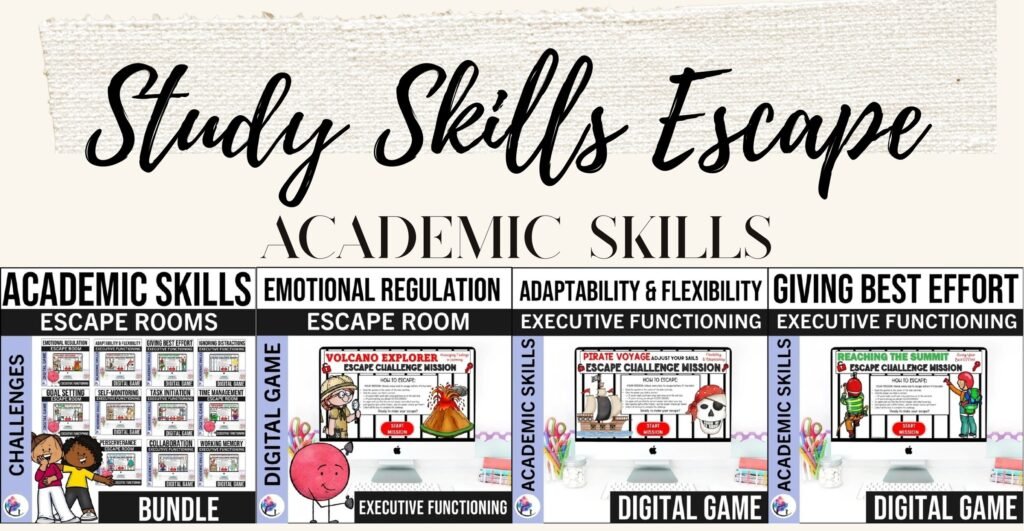
From our counseling room to yours: the Academic Skills and Middle School Study Skills Digital Escape Rooms Bundle includes 12 PowerPoint escape challenges for middle school and upper elementary students, each built around one skill, such as organization, working memory, time management, task initiation, emotional regulation during learning and perseverance. Run one mission per small group session, pause at the trickiest question for discussion, and finish with the debrief questions above so students connect the adventure back to their own schoolwork.
Building Academic Confidence Over Time
Academic skills do not develop overnight. Progress usually comes in small steps, and each experience of success, even in a game or group activity, helps students begin to believe they can manage their learning.
Goal setting and self-monitoring make that progress visible. Help students set one small, specific goal (for example, “I will write my homework in my planner before I leave class on three days this week”), track it, and look back at it together. Notice and name the strategy rather than the student’s intelligence: “You checked your planner before packing up. That’s what helped.” Our guide on how to teach SMART goals to students walks through this step by step.
Academic success is not only about achievement. It is also about self-belief, resilience and a growing sense of capability.
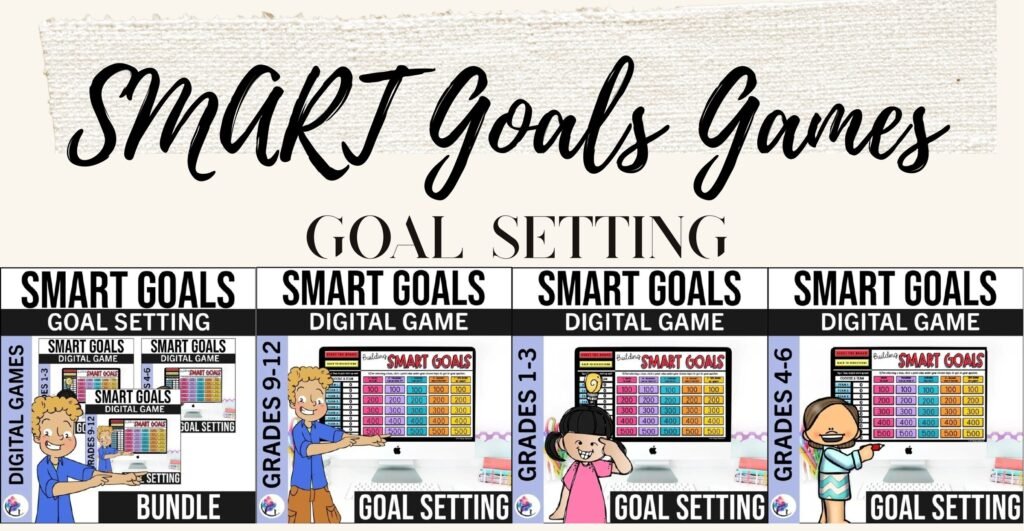
Try this in your next group: the SMART Goals Digital Game Bundle includes three interactive PowerPoint games for Grades 1–3, 4–8 and 9–12, so you can match goal-setting practice to each group. The Grades 4–8 game supports upper elementary and middle school students in setting academic, behavioral and personal goals through discussion prompts and team collaboration. Play it early in a study skills group, then return to each student’s goal in the following sessions to check progress.
Frequently Asked Questions
What are academic skills in a school counseling context?
Academic skills include the executive functioning, study habits, organization, time management and self-regulation that help students access and complete their learning.
Why are academic skills linked to SEL?
Students draw on emotional regulation, motivation and self-awareness to use study strategies effectively. Stress and anxiety can make these skills harder to reach in the moment, which is why emotional safety and skill teaching go together.
Who benefits most from academic skills interventions?
Any student can benefit, but upper elementary and middle school students who struggle with organization, focus, starting tasks or motivation often gain the most from explicit, repeated practice.
Are digital escape games appropriate for counseling groups?
Yes, when they are used with a purpose. They provide structure and engagement, and a short debrief afterward helps students connect the game to real schoolwork.
References
- Best, Miller & Naglieri (2011): Relations between executive function and academic achievement from ages 5 to 17 in a large, representative national sample
- Center on the Developing Child, Harvard University: Executive Function: Skills for Life and Learning
- Arnsten Lab, Yale School of Medicine: Uncontrollable stress and prefrontal cortex function
- SAMHSA (2014): Concept of trauma and guidance for a trauma-informed approach
Looking for practical, ready-to-use resources to support your academic and study skills lessons? The All Therapy Resources Membership provides access to a growing collection of thoughtfully developed counseling activities, interactive games, and therapeutic tools designed to save preparation time while supporting meaningful, skill-focused learning.