
Have you ever heard a student say…
“Boys don’t cry.”
“She can’t play that because she’s a girl.”
“People like that are weird.”
“That’s not normal.”
Sometimes bias and stereotypes show up loudly.
Other times they appear quietly in everyday conversations, friendship groups, classroom dynamics, jokes, assumptions, social exclusion, or the way students begin viewing themselves and others.
These moments matter more than many people realize.
Because the beliefs children and teens absorb about themselves, other people, fairness, identity, and belonging help shape the way they move through the world.
One thing I’ve learned is that conversations about bias, diversity, inclusion, fairness, empathy, and stereotypes cannot simply be “one-off lessons.”
Students need ongoing opportunities to:
- Think critically
- Build empathy
- Challenge assumptions
- Explore fairness
- Understand differences
- Practice respectful communication
- Develop inclusive thinking
And importantly — they need to do this in ways that feel safe, engaging, age-appropriate, and emotionally supportive.
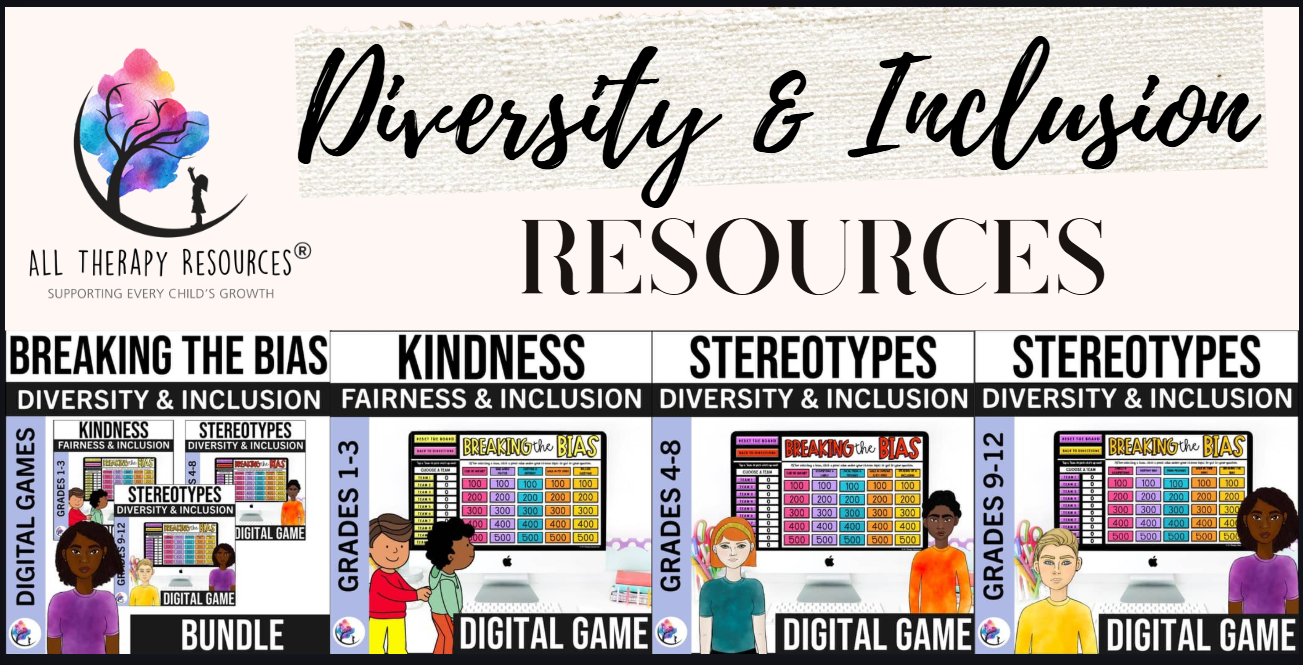
That’s exactly why we created our Breaking the Bias SEL digital games and lessons.
What Bias and Stereotypes Can Look Like in Schools
Bias is not always intentional cruelty.
Sometimes it is…
- Assumptions
- Learned beliefs
- Social conditioning
- Peer influence
- Fear of differences
- Lack of exposure
- Media messaging
- Group thinking
In school settings, stereotypes can impact…
- Friendships
- Group work
- Confidence
- Identity
- Participation
- Bullying
- Emotional safety
- Inclusion
I often remind students that stereotypes place people into “boxes” that do not allow us to see the full person.
And children begin noticing these messages very early.
Students absorb ideas about…
- Gender roles
- Appearance
- Race and culture
- Ability differences
- Family structures
- Interests and hobbies
- Popularity
- Success
- Social status
The challenge is helping students move from automatic assumptions toward curiosity, empathy, and understanding.
Why These Conversations Matter More Than Ever
We are raising students in a world filled with:
- Social media influence
- Comparison culture
- Online commentary
- Group pressure
- Viral opinions
- Quick judgments
- Echo chambers
Students are constantly exposed to messages about who is “accepted,” “normal,” “popular,” or “valuable.”
Without intentional SEL support, many children begin internalizing harmful beliefs — either about themselves or others.
And this is where inclusion work becomes so important.
Not performative inclusion.
Not surface-level kindness posters.
But genuine emotional learning that helps students:
- Understand perspectives
- Reflect on assumptions
- Practice fairness
- Recognize exclusion
- Build empathy
- Develop respectful communication
- Feel safe being themselves
Supporting Different Age Groups with Bias and Inclusion Lessons
One thing I’m very mindful of when creating SEL resources is developmental differences.
A conversation that works beautifully with a high school student may completely miss the mark with a younger learner.
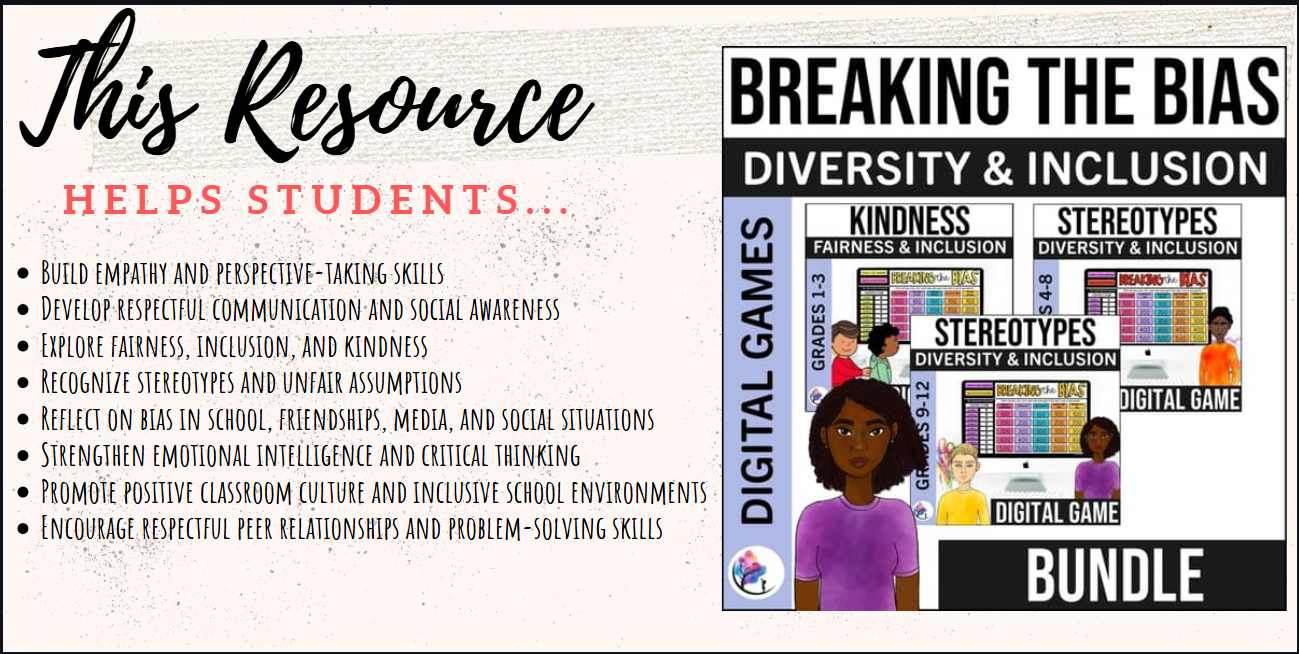
That’s why our Breaking the Bias resources are differentiated across age groups.
Grades 1–3: Building Foundations of Kindness and Fairness
With younger students, the focus is not heavy social theory.
It is about helping children begin understanding…
- Kindness
- Fairness
- Inclusion
- Respect
- Feelings
- Differences
- Friendship skills
At this age, students benefit from…
- Concrete examples
- Simple scenarios
- Role play
- Visual supports
- Interactive games
- Emotion-based discussions
Questions might include:
- How would that make someone feel?
- Is everyone being included?
- What makes a good friend?
- Is it fair to leave someone out?
- Can people enjoy different things?
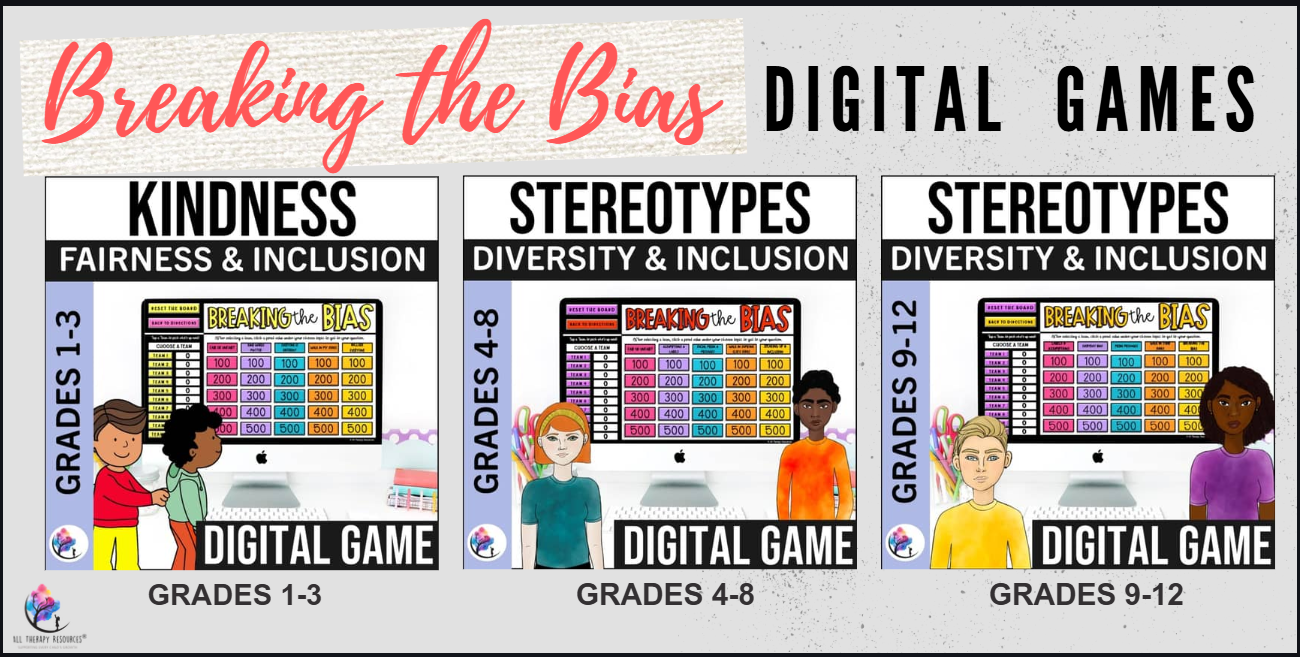
Our Digital Game called “Breaking the Bias” for Grades 1–3 was designed specifically to make these conversations safe, interactive, and age-appropriate while helping young students begin building empathy and inclusive thinking skills.
Middle School: Exploring Peer Pressure, Labels, and Social Groups
Middle school is often where stereotypes and bias become more socially complex.
Students become deeply aware of…
- Social groups
- Fitting in
- Popularity
- Peer approval
- Identity
- Social status
And honestly? This is where exclusion and labeling can become incredibly painful.
I often see middle school students struggling with…
- Fear of standing out
- Pressure to conform
- Group mentality
- Judgment from peers
- Social anxiety
- Bias toward differences
This is why middle school SEL work needs to include deeper conversations around:
- Assumptions
- Labels
- Social pressure
- Cultural awareness
- Perspective-taking
- Fairness
- Respectful disagreement
Our Breaking the Bias Digital Game for Middle School explores Bias, Diversity & Cultural Awareness. This resource helps students unpack these ideas through interactive discussion, scenarios, and critical thinking opportunities that feel engaging rather than preachy.
High School: Critical Thinking, Identity, and Real-World Awareness
By high school, students are capable of much deeper reflection and discussion.
Teenagers are already navigating…
- Identity development
- Social expectations
- Cultural awareness
- Media influence
- Relationships
- Social justice conversations
- Online discourse
But many teens are also terrified of…
- Being judged
- Saying the wrong thing
- Being excluded
- Challenging group norms
What I’ve found is that high school students respond best when adults create spaces for thoughtful discussion rather than lectures.
Students need opportunities to:
- Analyze stereotypes critically
- Reflect on bias
- Explore fairness
- Practice empathy
- Understand perspective-taking
- Discuss inclusion respectfully
- Examine media influence
The goal is not shame.
The goal is awareness, reflection, growth, and emotional intelligence.
Practical Strategies for Teaching Inclusion and Bias Awareness
Use Real-Life Scenarios
Students engage more deeply when lessons feel relevant to their world. This can be done by using examples involving…
- Friendship groups
- Sports
- Social media
- Classroom situations
- Group work
- Family differences
- Cultural traditions
- Everyday interactions
Concrete situations help students recognize subtle bias patterns they may otherwise miss.
Encourage Curiosity Instead of Judgment
One of the most powerful mindset shifts we can teach is:
“Different does not mean wrong.”
Encourage students to:
- Ask respectful questions
- Stay curious
- Listen to perspectives
- Reflect before reacting
- Notice assumptions
Curiosity opens the door to empathy.
Teach Perspective-Taking Explicitly
Perspective-taking is a skill many students need directly taught.
Try prompts like:
- How might that person feel?
- What assumptions are being made?
- What might we not know about someone?
- How could exclusion impact a person emotionally?
- What would fairness look like here?
These conversations help build emotional intelligence alongside social awareness.
Create Emotionally Safe Discussions
Bias and stereotypes can bring up strong emotions.
Students need environments where they can:
- Learn without humiliation
- Reflect safely
- Make mistakes
- Ask questions respectfully
- Grow emotionally
I think this is especially important because shame rarely creates meaningful change.
Connection does.
Get the Tea with Angie – Founder of All Therapy Resources
One thing I’ve noticed over the years is that many students desperately want to belong.
And sometimes the fear of being different causes students to hide parts of themselves… or judge others before they themselves feel judged.
I’ve worked with students who quietly carried enormous shame because they felt “different.”
Different family.
Different culture.
Different interests.
Different learning needs.
Different appearance.
Different personality.
And honestly, some of the most powerful classroom moments happen when students realize:
“Oh… everybody is carrying something.”
That’s why I care so deeply about inclusion work that goes beyond posters and buzzwords.
Students need real conversations.
Real reflection.
Real empathy-building opportunities.
Not fear-based learning.
Not guilt.
Not lectures.
But meaningful emotional learning that helps them become kinder, more thoughtful humans.
Why Interactive SEL Activities Work So Well
Students often open up far more during interactive activities than direct conversations.
Games reduce defensiveness.
Interactive SEL lessons create:
- Engagement
- Discussion
- Reflection
- Emotional safety
- Shared learning experiences
Our Breaking the Bias digital SEL resources.
These activities help students explore:
- Stereotypes
- Fairness
- Inclusion
- Cultural awareness
- Empathy
- Peer pressure
- Respectful thinking
- Perspective-taking
In ways that feel supportive, age-appropriate, and practical for real classrooms and counseling settings.
Remember
Bias and stereotypes are not solved through one conversation.
They are addressed through ongoing opportunities for empathy, reflection, inclusion, emotional safety, and respectful dialogue.
And the earlier we begin helping students recognize assumptions, challenge unfair thinking, and build perspective-taking skills, the more emotionally aware and compassionate they can become.
Because ultimately, inclusion is not just about “being nice.”
It is about helping students feel seen, safe, respected, and valued for who they are.
And those are lessons that extend far beyond the classroom.
Frequently Asked Questions
Why is it important to teach kids about stereotypes and bias?
Teaching students about stereotypes and bias helps develop empathy, fairness, emotional intelligence, respectful communication, and inclusive thinking skills that support healthier relationships and safer school environments.
How can SEL lessons support inclusion?
SEL lessons help students build self-awareness, perspective-taking, empathy, emotional regulation, and respectful communication skills that strengthen inclusion and reduce harmful social behaviors.
What age should students start learning about stereotypes?
Students can begin learning foundational concepts such as kindness, fairness, and inclusion in early elementary school using age-appropriate language, visuals, stories, and interactive activities.
How do you teach bias without shaming students?
The goal should be awareness and growth rather than shame. Emotionally safe discussions, curiosity-based learning, reflection activities, and perspective-taking exercises are often far more effective than fear-based approaches.
What are effective activities for teaching inclusion and diversity?
Interactive SEL games, role play, scenario discussions, reflection prompts, collaborative activities, and empathy-building exercises are highly effective ways to help students explore inclusion, fairness, and diversity concepts.
Explore the All Therapy Resources® Membership
If you’re looking for research-informed counseling resources that help children develop empathy, respect, inclusion, cultural awareness, and an appreciation of differences, the All Therapy Resources® Membership gives you access to an ever-growing library of ready-to-use counseling activities, games, worksheets, classroom lessons, small group resources, and evidence-informed interventions.
Whether you’re supporting one child, a small group, or an entire classroom, you’ll have practical resources ready when you need them — without having to create everything from scratch.
ATR Family: Already a member? You’ll find resources inside your membership to help continue these important conversations and support children in exploring different perspectives, challenging assumptions, celebrating diversity, and building more inclusive relationships and communities.
Not a member yet? Join the All Therapy Resources® Membership and get instant access to the growing resource library.