


Have you ever worked with a student who melts down over one wrong answer… avoids starting because they are scared to fail… or constantly says, “It’s not good enough” even when they are doing amazingly well?
Perfectionism in children and teens is something I’m seeing more and more in schools, counseling spaces, therapy rooms, and even at home. And honestly? It can hide behind some very “successful-looking” behaviors.
Sometimes perfectionism looks like…
- High grades
- Overachieving
- Being “the good kid”
- Spending hours rewriting work
- Refusing to participate unless they know they’ll succeed
- Melting down after mistakes
- Avoiding tasks altogether
But underneath all of that is often anxiety, fear, shame, rigid thinking, emotional overwhelm, and a nervous system that feels unsafe making mistakes.
Perfectionism is one of those areas we have to approach very carefully. Because many perfectionistic students are praised for the very behaviors that are quietly exhausting them.
And the truth is… helping students manage perfectionism is not about lowering standards.
It’s about helping them build flexibility, resilience, self-compassion, emotional regulation, and the ability to tolerate mistakes without their self-worth collapsing.
What Perfectionism Can Look Like in the Classroom
Perfectionism does not always present the way people expect.
Some students become highly driven and hyper-achieving.
Others completely shut down.
I’ve worked with students who…
- Cry when they lose games
- Rip up work with tiny mistakes
- Constantly ask for reassurance
- Avoid trying new things
- Refuse to hand work in
- Become overwhelmed during tests
- Freeze during open-ended tasks
- Compare themselves constantly to peers
- Struggle socially because they fear embarrassment
And one thing I often notice?
Many perfectionistic students struggle deeply with “all-or-nothing” thinking.
If they cannot do something perfectly…
their brain tells them:
- “There’s no point.”
- “I’m bad at this.”
- “Everyone will judge me.”
- “I failed.”
That’s why perfectionism support needs to go far beyond simply telling students:
“Everybody makes mistakes.”
They need opportunities to actually experience mistakes safely.

Why Perfectionism Is Increasing
We are raising students in a world of:
- Constant comparison
- Social media highlight reels
- Academic pressure
- Competitive environments
- Fear of judgment
- Pressure to “perform”
- Unrealistic expectations
Even younger children are becoming highly self-critical.
And gifted and talented students can be particularly vulnerable because they often become used to success early on. When learning finally becomes challenging, some students experience intense distress because struggle feels unfamiliar and threatening.
This is something we explore in our “Letting go of Perfect” Digital Game Series. It has been designed to support students unpack unrealistic expectations, fear of failure, coping skills, and healthy growth mindset thinking in a safe and engaging way.
The Hidden Cost of Perfectionism
Perfectionism is often mistaken for motivation.
But healthy motivation says:
“I want to do well.”
Perfectionism says:
“If I don’t do well, I’m not enough.”
That difference matters.
Because chronic perfectionism can contribute to…
- Anxiety
- Emotional burnout
- Avoidance
- Low self-esteem
- School refusal
- Procrastination
- Panic around assessments
- Social withdrawal
- Difficulty coping with setbacks
Sometimes the students who appear the “most capable” are actually carrying the heaviest emotional load.
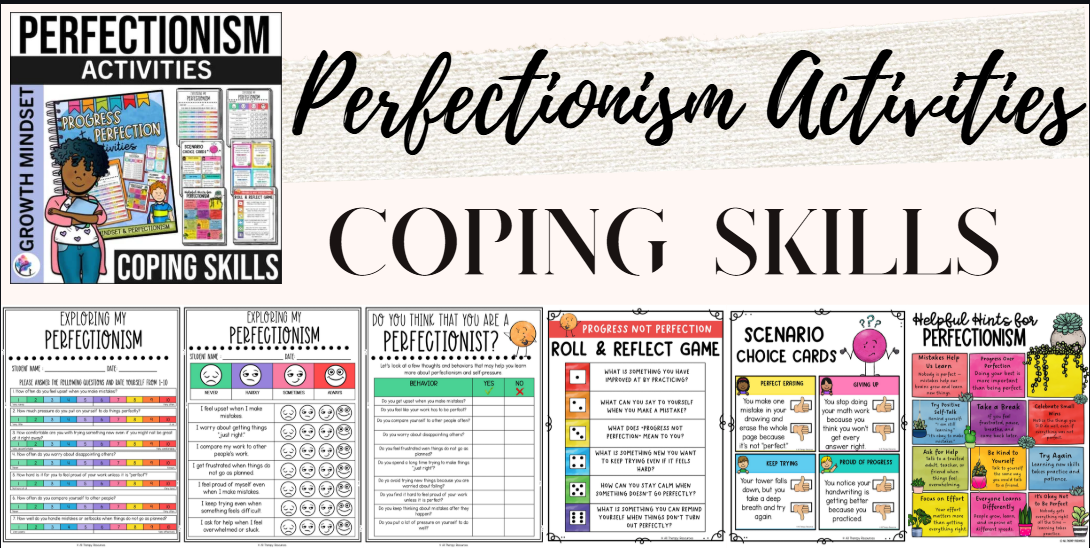
Practical Strategies to Help Students Manage Perfectionism
Here are some practical, trauma-informed strategies that can genuinely help students develop healthier coping skills around mistakes and self-expectations.
Normalize Mistakes in Everyday Conversations
Students notice how adults respond to mistakes.
One of the most powerful things we can do is model imperfection calmly.
Try saying…
- “Oops, I made a mistake there.”
- “That didn’t go to plan, but that’s okay.”
- “Mistakes help our brains grow.”
- “I’m still learning too.”
The calmer we are around mistakes, the safer mistakes begin to feel for students.
Praise Effort, Flexibility, and Persistence
Perfectionistic students often attach worth to outcomes.
Instead of focusing only on results, try praising…
- Problem-solving
- Persistence
- Trying again
- Asking for help
- Flexible thinking
- Emotional regulation
- Taking risks
For example:
- “I noticed you kept going even when it felt hard.”
- “You handled that mistake really thoughtfully.”
- “I’m proud of how flexible you were.”
This helps students build identity beyond achievement.
Teach Students to Catch “Perfectionist Thoughts”
Many students don’t realize how harsh their inner dialogue has become.
Helping students identify perfectionistic thinking patterns can be incredibly powerful.
Examples include:
- “I have to get everything right.”
- “If I fail, people won’t like me.”
- “I should already know this.”
- “If it’s not perfect, it’s terrible.”
Then we work on replacing them with more balanced thoughts:
- “I can learn through mistakes.”
- “Progress matters more than perfection.”
- “Hard things help my brain grow.”
- “I don’t have to be perfect to be worthy.”
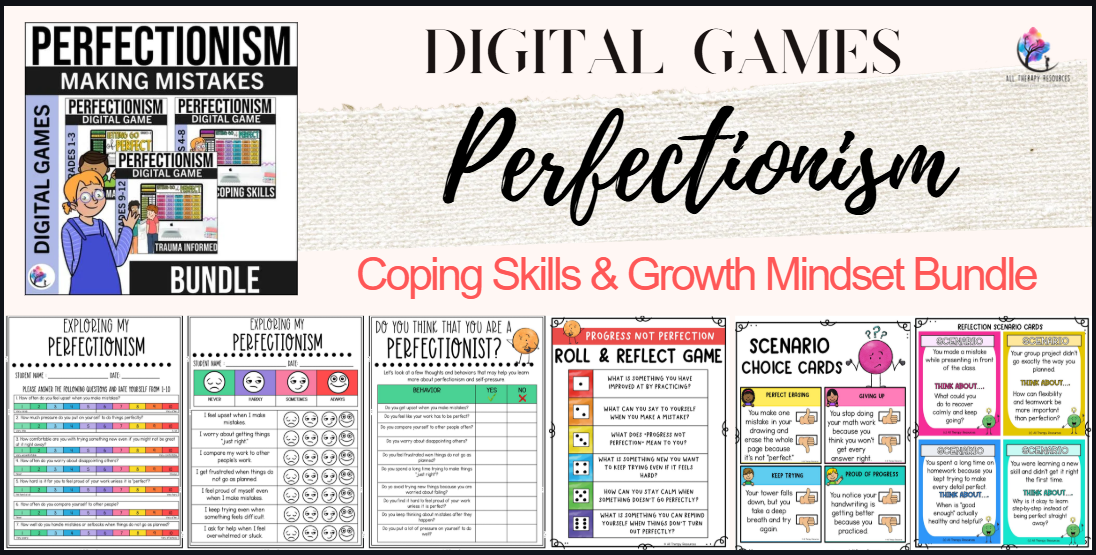
Use Interactive SEL Activities to Build Emotional Safety
One thing I’ve found over the years is that students often engage more openly through interactive and playful formats than direct lectures.
That’s why we created our “Letting Go of Perfect” Digital Game Series. Our digital SEL games include psychoeducation and support students:
- Explore perfectionism safely
- Practice coping strategies
- Discuss mistakes and self-talk
- Build emotional awareness
- Strengthen growth mindset thinking
- Increase resilience and flexibility
The games create conversation opportunities without students feeling “put on the spot,” which is especially important for anxious or perfectionistic learners.
We wanted educators, counselors, psychologists, and families to have flexible tools they could use across different age groups and student needs.
Get the Tea with Angie – Founder of All Therapy Resources
One thing I’ve learned working with perfectionistic students is this:
Many of them are absolutely exhausted.
Not because they are lazy.
Not because they lack resilience.
But because their nervous system rarely feels safe enough to simply be human.
I worked with students who would completely unravel over tiny mistakes. Sometimes adults around them would say things like:
“They just need to relax.”
“They care too much.”
“They’re too sensitive.”
But underneath that was often fear.
Fear of disappointing people.
Fear of failure.
Fear of not being enough.
And when we shifted the goal from “being perfect” to “learning safely,” everything started changing.
The students became more willing to try.
More willing to participate.
More willing to recover after setbacks.
That’s why I’m such a big believer in explicitly teaching coping skills, emotional flexibility, self-talk, and growth mindset strategies — not just assuming students will naturally develop them.
Supporting Students Without Reinforcing Perfectionism
One thing I encourage educators and caregivers to reflect on is this…
Are we unintentionally rewarding only flawless performance?
Sometimes students begin believing:
- Love equals achievement
- Success equals worth
- Mistakes equal failure
But emotional resilience grows when students feel:
- Safe making mistakes
- Accepted while learning
- Supported through challenges
- Valued beyond performance
And honestly… those are the environments where real confidence grows.
Remember
Perfectionism is not simply about wanting to do well.
Often, it’s about fear.
Fear of failure.
Fear of judgment.
Fear of disappointing others.
Fear of not being enough.
And that’s why supporting perfectionistic students requires compassion, emotional safety, and intentional skill-building.
When we help students build flexible thinking, coping skills, resilience, and self-compassion, we are giving them tools that extend far beyond the classroom.
And remember — students do not need to be perfect to be deeply capable, worthy, intelligent, and enough.
Frequently Asked Questions
What causes perfectionism in children and teens?
Perfectionism can develop from a combination of personality traits, anxiety, academic pressure, fear of failure, social comparison, giftedness, environmental expectations, and life experiences. Some students also use perfectionism as a coping mechanism to feel safe or in control.
Is perfectionism linked to anxiety?
Yes. Perfectionism and anxiety are very closely connected. Many perfectionistic students experience intense worry about mistakes, judgment, failure, or disappointing others.
How can schools support students with perfectionism?
Schools can support students by teaching growth mindset, normalizing mistakes, promoting emotional regulation skills, reducing shame around errors, encouraging flexible thinking, and providing supportive SEL opportunities.
What are good SEL activities for perfectionism?
Interactive SEL games, coping skills lessons, self-talk activities, growth mindset discussions, reflection prompts, and emotional regulation activities can all help students build healthier thinking patterns around mistakes and expectations.
Are gifted students more likely to struggle with perfectionism?
Gifted and talented students can be particularly vulnerable to perfectionism because they may become highly identified with achievement and success. When tasks become challenging, they may experience increased fear of failure or self-doubt.
Continue Supporting Students Beyond Perfectionism
If you are supporting students who struggle with perfectionism, fear of failure, anxiety, emotional overwhelm, or harsh self-talk, our trauma-informed coping skills and SEL resources were designed to help children build confidence, resilience, emotional flexibility, and self-compassion in safe and meaningful ways.
At All Therapy Resources, we believe students thrive when they feel emotionally supported — not when they feel pressured to be perfect.
Inside the All Therapy Resources Membership, you’ll find a growing collection of counseling, SEL, behavior, and wellbeing resources designed to support:
• Coping skills and emotional regulation
• Growth mindset and resilience
• Flexible thinking
• Anxiety and stress management
• Self-esteem and confidence-building
• Emotional awareness and self-compassion
• Healthy problem-solving and decision-making
All of the resources discussed throughout this article, including our perfectionism and coping skills activities, are already included inside the membership.