

Are your students experiencing test anxiety—but struggling to explain why? Do you find that even when you teach coping strategies, some students still feel stuck, overwhelmed, or unsure how to apply them?
One of the most overlooked pieces in supporting test anxiety is this…
Students can’t manage what they don’t yet understand.
And this is where intentional reflection tools, questionnaires, and structured templates become not just helpful… but essential.
Why Test Anxiety Requires Deeper Exploration (Not Just Quick Fixes)
Test anxiety is not a one-size-fits-all experience.
For some students, it presents as:
- Racing thoughts and “blanking out”
- Physical symptoms like headaches, nausea, or a racing heart
- Avoidance or disengagement
- Perfectionism and fear of failure
Test anxiety involves a combination of thoughts, feelings, physical responses, and behaviors .
From a trauma-informed and neuroscience perspective, when students perceive a test as a threat, their brain shifts into a stress response. This impacts:
- Working memory
- Focus and attention
- Ability to retrieve information
So when we skip straight to “strategies,” we often miss the most important step:
👉 Helping students build awareness first
The Power of Slowing Down: Why Questionnaires Matter
There is something incredibly powerful about asking a student:
“How do you actually feel during a test?”
Not in passing—but in a structured, intentional way.
This is why we created questionnaires as they are designed to do exactly that. They move beyond surface-level check-ins and instead guide students to:
- Reflect on their emotional responses
- Identify physical symptoms
- Recognize patterns in their thinking
- Consider how their anxiety impacts performance
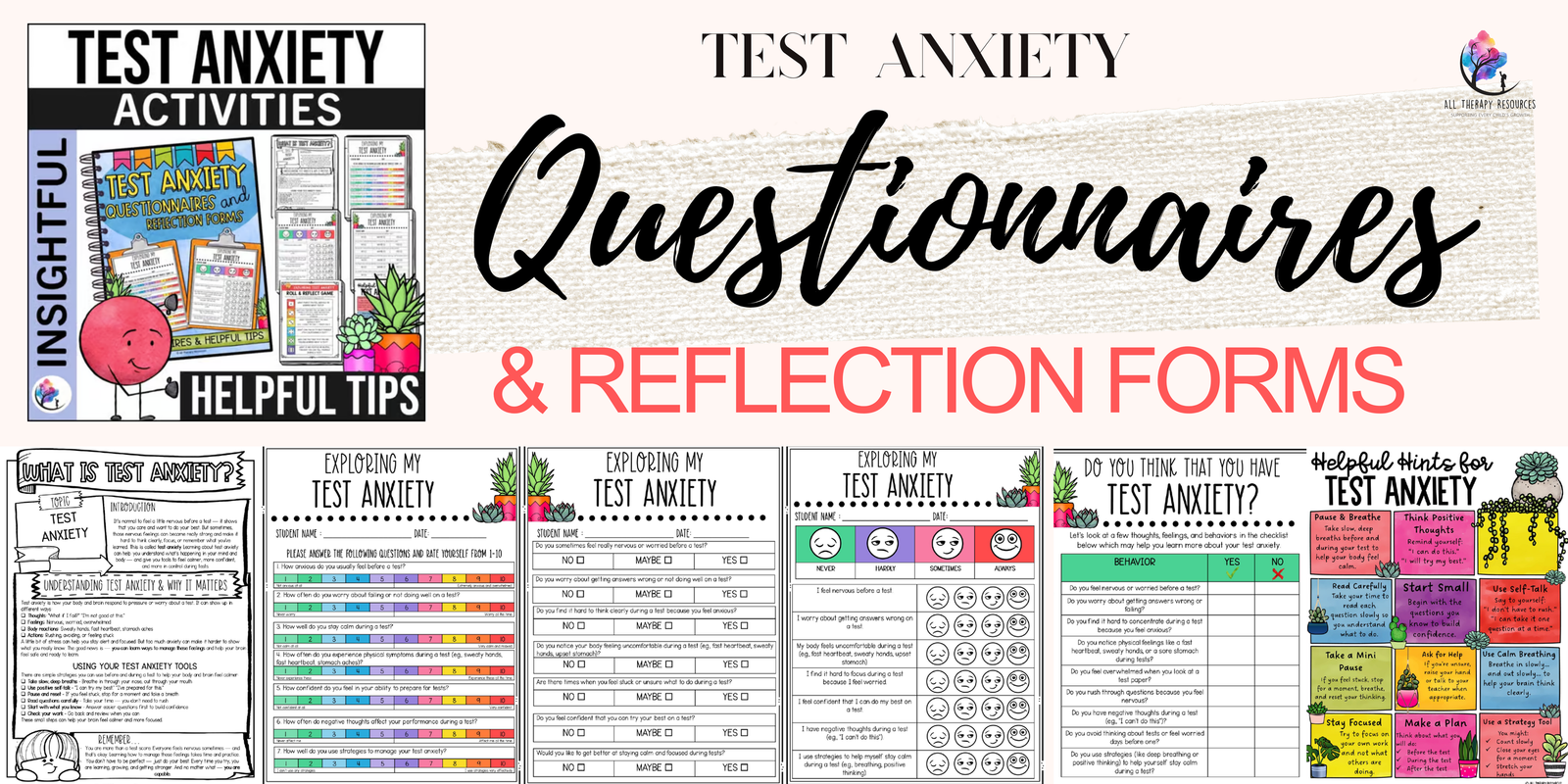
For example, tools like the reflection questionnaire allow students to rate their experiences across multiple areas (e.g., worry, confidence, physical symptoms) .
This is not just data collection.
This is self-awareness development.
And self-awareness is the foundation of all meaningful intervention.
Making the Invisible Visible for Students
One of the most significant shifts I see when using structured reflection tools is this:
Students begin to realize:
“Oh… this is actually happening to me.”
The moment a student can:
- Name their anxiety
- Recognize patterns
- See it reflected back to them
👉 It becomes something they can work with, not something that controls them.
The visual and accessible formats—including emoji-based scales and simple yes/no checklists—are particularly powerful for younger students or those who struggle with verbal expression .
This ensures that:
- Every student can access the content
- No student is excluded due to language or processing differences
What I’ve Seen in Practice
I’ve had students sit in sessions and say,
“I don’t know… I just hate tests.”
But when we slow things down and use structured questionnaires, something shifts.
A student might circle:
- “I feel nervous before a test”
- “I worry about getting answers wrong”
- “I find it hard to focus”
And suddenly, the conversation becomes clearer.
I’ve had students pause and say:
“I didn’t realize I actually feel all of that.”
That awareness opens the door to:
- More meaningful conversations
- More targeted strategies
- A deeper sense of being understood
And from a therapeutic standpoint—that’s where the real work begins.
Why Structured Templates Elevate Your Practice
There is a difference between:
- Asking general questions
- And using intentional, structured tools designed with clinical insight
The templates in this resource are not random worksheets.
They are thoughtfully designed to:
- Guide reflection in a logical progression
- Connect thoughts, feelings, and behaviors
- Support both assessment and intervention
They include:
- Rating scales for deeper insight
- Yes/No/Maybe check-ins for quick screening
- Visual tools for accessibility
- Reflection prompts to consolidate learning
This allows you to move from:
👉 “What’s going on?”
to
👉 “Here’s what we’re noticing—and here’s what we can do about it.”
Supporting Both Insight and Action
What makes this approach particularly effective is that it doesn’t stop at awareness.
It bridges into action.
The resource also includes:
- Helpful hints and strategy posters (e.g., breathing, positive self-talk, planning)
- Reflection questions to reinforce learning
- Activities that connect insight to real-world application
For example, students are guided to consider:
- What helps them feel calm
- Who they can go to for support
- What strategies they can use during a test
This aligns strongly with CBT principles, supporting students to:
- Recognize unhelpful thoughts
- Replace them with more helpful ones
- Build a practical coping toolkit
Trauma-Informed Practice: Why This Matters
A trauma-informed approach recognizes that anxiety is not simply a behavior to “fix.”
It is a response to perceived threat.
These tools:
- Avoid shame or judgment
- Normalize student experiences
- Provide safe, structured ways to explore feelings
They allow students to feel:
- Seen
- Understood
- Supported
And that emotional safety is what allows learning—and change—to occur.
Practical Ways to Use These Tools in Your Setting
These questionnaires and templates are incredibly flexible and can be used in:
- Initial screening for test anxiety
- Small group counseling sessions
- One-on-one support
- Whole-class SEL lessons
- Pre-test preparation programs
They can be used:
- As a starting point
- As a reflection tool
- As a progress monitoring strategy
Why This Approach Sets Your Practice Apart
There is a noticeable difference when you move from:
- General support
to - Intentional, evidence-informed intervention
Using structured reflection tools communicates to students:
“This matters. You matter. And we’re going to understand this properly.”
It elevates your work from reactive to clinically informed and deeply impactful.
Supporting Students with Tools That Truly Work
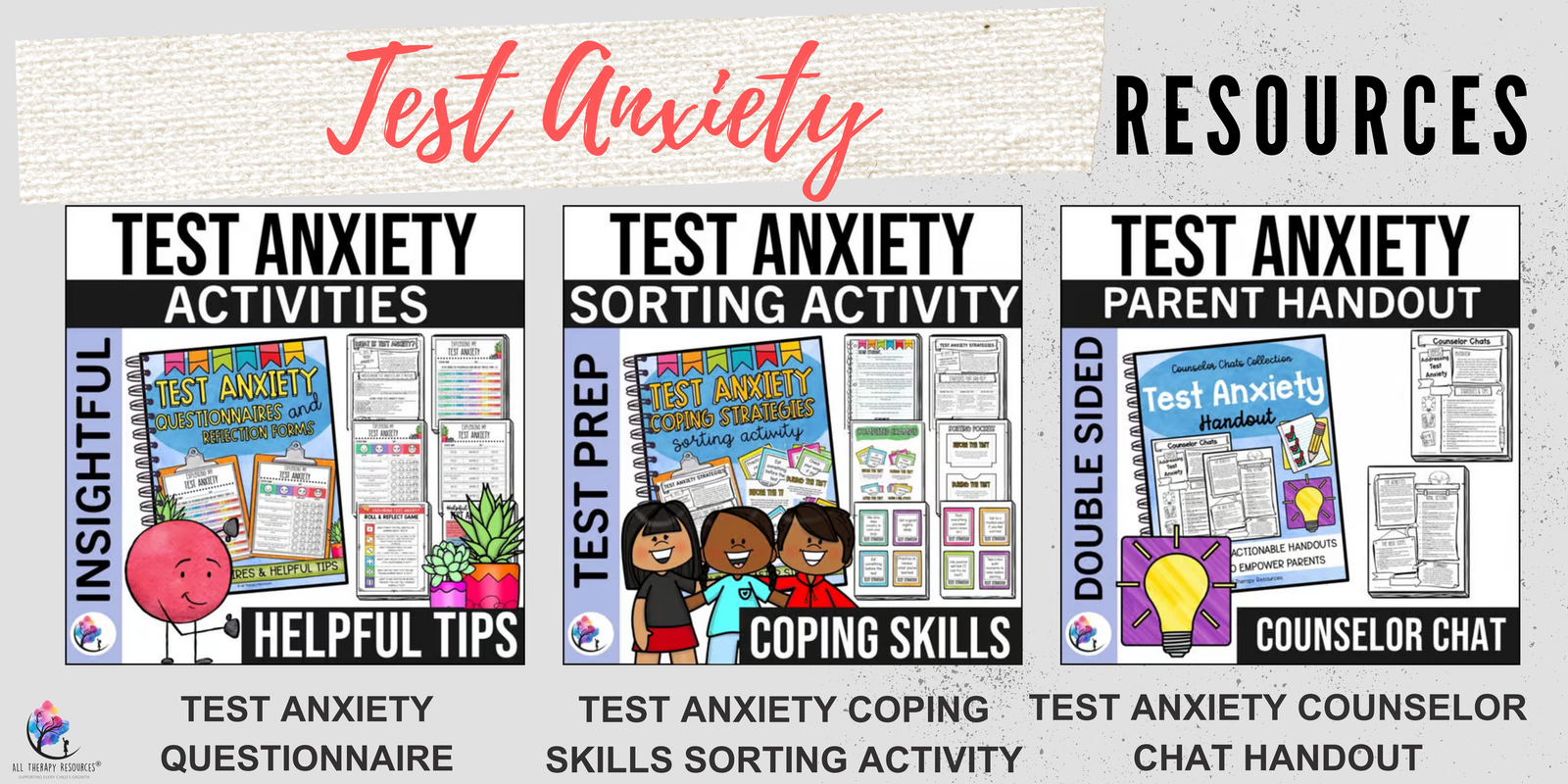
If you’re looking to strengthen your approach to test anxiety, the Test Anxiety Questionnaires & Reflection Forms Toolkit is designed to support exactly this level of depth and clarity.
It provides:
- Structured, thoughtful tools for assessment and reflection
- Developmentally appropriate formats
- A clear bridge between awareness and strategy
And importantly—if you’re part of the All Therapy Resources Membership, you already have access to this resource, along with a wide range of evidence-informed tools designed for real-world practice.
Final Reflection: Moving from Overwhelm to Understanding
Test anxiety doesn’t need to remain something vague, overwhelming, or misunderstood.
When we slow down and give students the tools to:
- Reflect
- Understand
- Recognize patterns
We empower them to move from:
👉 “I just feel anxious”
to
👉 “I understand what’s happening—and I know what to do.”
And that shift is where confidence begins.
Frequently Asked Questions (FAQ)
Why are self-reflective questionnaires important for test anxiety?
They help students identify and understand their thoughts, feelings, and physical responses, which is essential before teaching coping strategies.
Are these tools suitable for younger students?
Yes. The inclusion of visual scales and simplified formats makes them accessible for a wide range of developmental levels.
Can these be used in whole-class settings?
Absolutely. They work well for both group discussions and individual reflection activities.
How do these tools support evidence-based practice?
They align with CBT and SEL principles by helping students recognize patterns and build practical coping strategies.
Are these resources included in the ATR membership?
Yes. Members have access to these questionnaires and a wide range of related, evidence-informed resources.