Executive functioning activities for middle school help students learn the skills they are often expected to have already: planning, organizing, managing time and studying. Many students have never been shown how to do these things step by step. So assignments go missing, tasks take longer than expected and big projects get left until the night before. Being told to “get organized” or “try harder” doesn’t show them how.
In this article we look at five practical areas you can teach in a small group, advisory lesson or individual session: organization, time management, planning and prioritizing, study skills, and the everyday habits that support focus and memory. Each section includes a simple example you can try this week.
What executive functioning looks like in middle school
Executive functioning is an umbrella term for the skills that help us plan, organize, start and finish tasks, keep information in mind and stay focused. In middle school the demands on these skills jump: more teachers, more subjects, more homework and less adult structure. Students who coped well in elementary school can suddenly look disorganized or unmotivated, when what they really need are tools and practice.
It helps to talk about these skills without blame. A student who forgets homework isn’t lazy. They may not yet have a reliable system for remembering it. Framing it this way makes students far more willing to try something new.
1. Organization skills: a system for everything
Organization is about having a home for things, both physical (papers, folders, backpacks) and mental (what is due and when). Planners and checklists only help if students actually use them, so keep systems simple and check in on them often.
Picture a student whose backpack is a mix of crumpled worksheets and missing permission slips. Rather than a lecture, sit down together for a five-minute “backpack reset” and agree on one folder for things to hand in and one for things to keep. Then check in each week to see how it is going.
Try this in your next session: Ask students to empty their backpacks onto the table and sort everything into “hand in,” “keep” and “recycle.” Talk about what each pile shows them, then set one small organization goal for the week.
2. Time management: how long things really take
Many students underestimate how long tasks take, which makes it hard to plan an evening or a week. Practicing time estimates turns this into something students can see and adjust.
A simple script: “How long do you think your math homework will take tonight? Let’s write that down. Tomorrow, tell me how long it actually took.” After a few days, students start to notice their own patterns.
3. Planning and prioritizing: what comes first
Big projects feel overwhelming when they are one huge task. Teaching students to break a project into small steps, put dates on each step and decide what comes first makes the work feel doable.
Picture a student with a science project due in two weeks who hasn’t started. Together you might list the steps (choose a topic, find information, make the poster, practice presenting), then plan one or two steps for each few days. The project hasn’t changed, but now there is a path through it.
Try this in your classroom: Give small groups a sample project and a blank two-week calendar. Ask them to break the project into steps and place each step on the calendar. Compare plans and talk about what makes a plan realistic.
4. Study skills that help learning stick
Rereading notes the night before a test feels productive but often isn’t the most useful way to study. Show students a few active strategies they can choose from: quizzing themselves, explaining a topic to someone else, making flashcards, and spreading study over several short sessions instead of one long one.
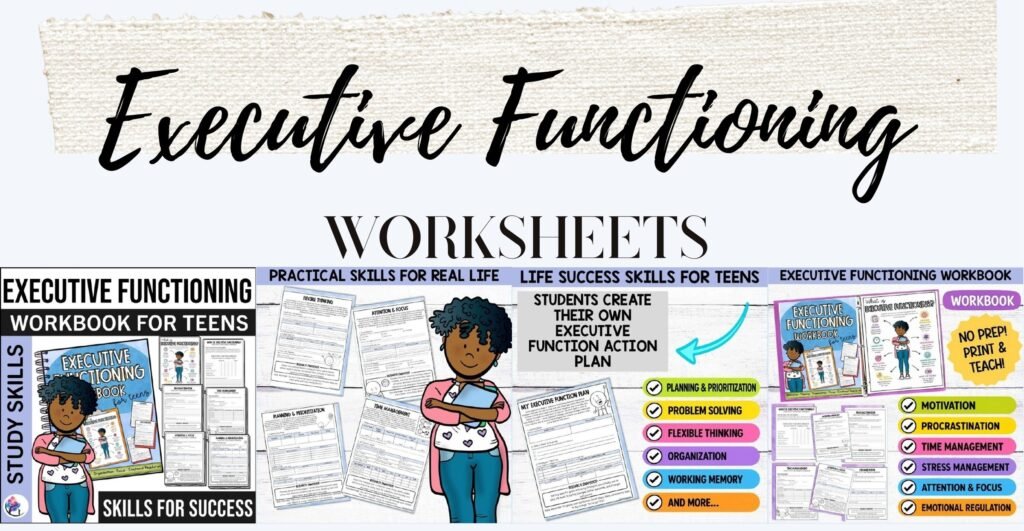
For a fuller set of activities that go beyond organization, our Executive Functioning Activities and Worksheets cover organization, study skills, procrastination and the habits that affect success. They suit middle and high school students in small groups or individual sessions. One reviewer on our shop shared that it “goes beyond basic organization and actually gets students thinking about procrastination, motivation, planning, emotional regulation and the habits that affect their success.”
5. Focus, memory and smart reminders
Students can only hold so much in their heads at once. Instead of trying to remember everything, teach them to “get it out of their head”: write it down, set a reminder, use a checklist, or leave things where they will see them. Remove distractions before starting, and use short work blocks with planned breaks.
A helpful question to ask: “What is one thing you keep forgetting? What could remind you so you don’t have to remember it?”
Practicing the skills with an executive functioning game
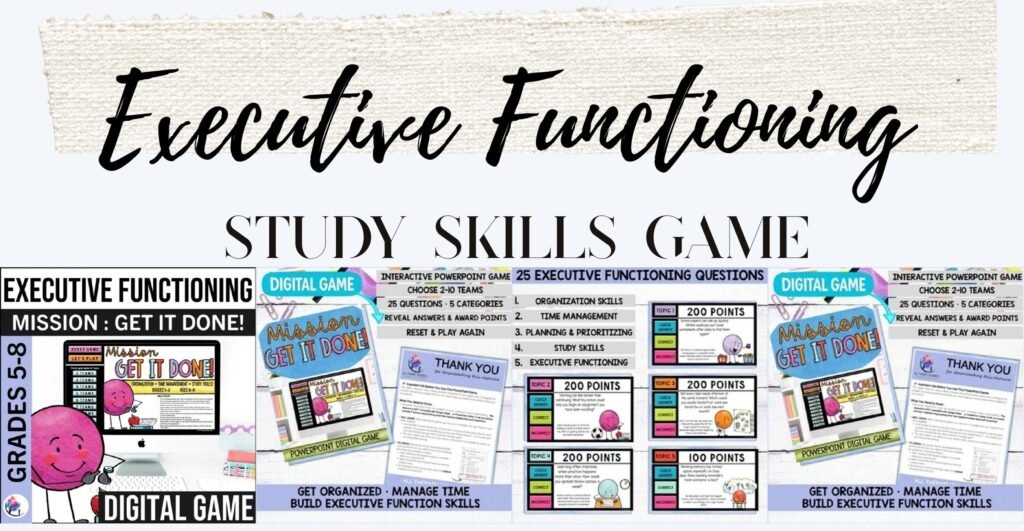
Games give students a low-pressure way to talk about what works for them. Teams discuss real school and home scenarios, answer out loud and hear a teaching point after each answer, so each question becomes a mini lesson.
| Skill area | What students practice | Practice it with |
|---|---|---|
| Organization skills | Planners, checklists and keeping track of tasks | Mission: Get It Done! game |
| Time management | Estimating time and building routines | Mission: Get It Done! game |
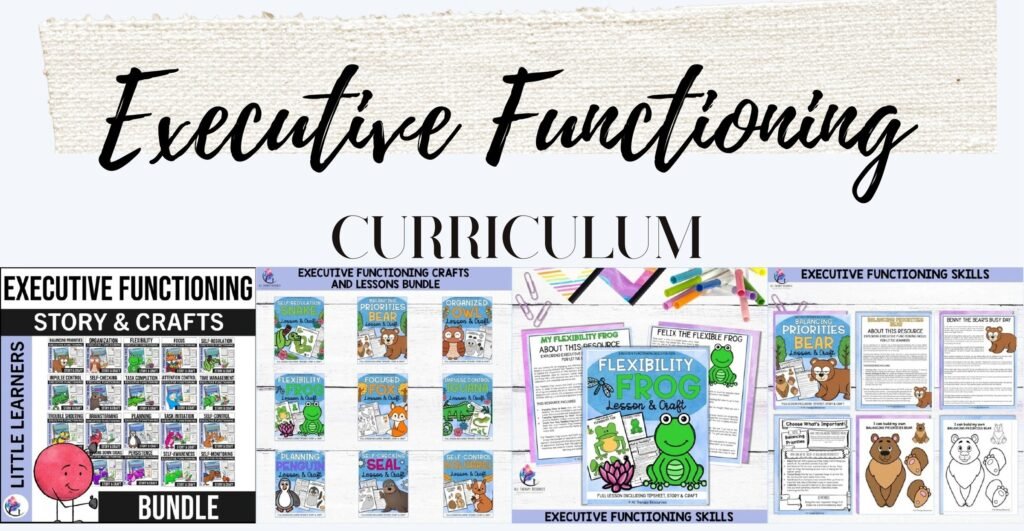
| Planning and prioritizing | Breaking down projects and choosing what comes first | Executive Functioning Curriculum |
| Study skills | Active strategies that help learning stick | Executive Functioning Worksheets |
| Focus and memory | Smart reminders and fewer distractions | Mission: Get It Done! game |
From our counseling room to yours: Mission: Get It Done! Executive Functioning Game is an interactive PowerPoint game for grades 5 to 8 with 25 questions across five categories: organization skills, time management, planning and prioritizing, study skills, and executive functioning. Students play in teams, the built-in scoreboard keeps track of points and every answer comes with a practical strategy students can use the next day. It works well for study skills groups, advisory and homeroom lessons, individual sessions and telehealth over screen share. It needs the desktop version of Microsoft PowerPoint.
Frequently asked questions
What are executive functioning skills?
They are the everyday thinking skills that help us plan, organize, manage time, start and finish tasks, keep information in mind and stay focused.
Who should teach executive functioning in middle school?
School counselors, school psychologists, special education and resource teachers, advisory teachers and occupational therapists all play a part. The most important thing is that students practice the same strategies across settings.
How can I help students who have ADHD or other learning differences?
The same strategies help, often with extra structure: visual checklists, shorter work blocks, more frequent check-ins and accommodations from the student’s IEP or 504 plan where relevant. Work with the student’s team and family so supports are consistent.
How often should students practice these skills?
Little and often works well. A short weekly check-in on planners, goals and upcoming deadlines keeps the skills alive after the lesson ends.
Looking for practical, ready-to-use resources to support your executive functioning lessons? The All Therapy Resources Membership provides access to a growing collection of thoughtfully developed executive functioning and SEL activities, interactive games, and therapeutic tools designed to save preparation time while supporting meaningful, skill-focused learning.