“Can I have a hug?” “Is it okay if I borrow your phone?” “Don’t send that photo without asking.” Consent shows up in students’ lives long before anyone talks about dating, which is why it belongs in school counseling from kindergarten onward. If you have been wondering how to teach consent in a way that fits your students’ age, feels calm rather than awkward, and stays within your school’s guidelines, this guide walks you through it grade band by grade band, with sample language, activities and lesson ideas you can use this week.
Consent education is not one talk. It is a set of skills that grow with students: asking first, noticing how someone else feels, saying no clearly, hearing no without pushing, and knowing when to get help. Those skills connect closely to the work you may already be doing on personal space, relational aggression and internet safety.
What Consent Means for Students at Every Age
At its simplest, consent means asking before you do something that involves another person, and respecting their answer. What changes with age is the context. For a kindergartner, consent is about hugs, high fives and personal space. For a seventh grader, it is about group chats, borrowed belongings and photos shared without permission. For a high school student, it includes dating, pressure and the difference between a free choice and a yes given out of fear.
National guidance reflects this developmental approach. The National Sex Education Standards include a Consent and Healthy Relationships strand, with learning goals set by grade span from the early elementary years through 12th grade. Consent skills also sit comfortably within the relationship skills and responsible decision-making competencies in the CASEL framework, so they fit naturally into SEL and school counseling lessons, not only health class.
Across every grade, a few core messages stay the same:
- Your body and your belongings belong to you. You get to decide who touches them.
- Ask first, then listen. A real answer can be yes, no or “not sure,” and all three deserve respect.
- A yes under pressure is not a real yes. Consent has to be freely given.
- You can change your mind. Saying yes once does not mean yes forever.
- Some things are never okay to keep secret. If something feels unsafe, tell a trusted adult.
Before You Teach: Setting Up a Safe Consent Lesson
Because consent touches on body safety and relationships, a little preparation goes a long way. Check your district’s policy on consent, body safety or healthy relationships instruction, including any requirement to notify families or offer an opt-out. Let your administrator and classroom teachers know what you are teaching and when, so they can support follow-up questions.
Set clear group agreements at the start: we talk about situations, not about people in this room; we don’t share personal stories in the group; anyone can pass; and if something comes up that you want to talk about privately, you can come and see me. Using story characters and scenarios, rather than asking students about their own experiences, keeps the lesson safe and still lets students practice real skills.
Finally, plan for the possibility of a disclosure. Students sometimes realize during a consent or body safety lesson that something that happened to them was not okay.
If a student discloses: stay calm, listen, and thank them for telling you. Use their words, avoid leading questions, and don’t promise to keep it a secret; instead, explain that you will need to tell people whose job is to help keep them safe. Follow your school or district protocol and your mandated reporting obligations, and document what the student said.
USA: Childhelp National Child Abuse Hotline 1-800-422-4453; 988 Suicide & Crisis Lifeline (call or text 988, chat at 988lifeline.org); in an emergency, call 911.
Australia: Kids Helpline 1800 55 1800; Lifeline 13 11 14 (text 0477 13 11 14); your state or territory child protection service (see the AIFS contacts page); in an emergency, call 000.
How to Teach Consent in Elementary School (Grades K-5)
With younger students, keep consent concrete and everyday. The focus is on body ownership, asking permission, reading feelings and knowing who to tell. Avoid frightening detail; the goal is confidence, not fear.
1. Ask, Listen, Respect
Teach a simple three-step routine: ask first (“Can I give you a hug?”), listen to the answer (words and faces), and respect it (“Okay, how about a high five instead?”). Practice with pretend scenarios such as borrowing a pencil, joining a game or giving a hug to a friend.
2. Yes, No or Not Sure?
Read short scenarios aloud and have students hold up a green, red or yellow card to show whether the person in the story is saying yes, no or “not sure.” Talk about what to do with a “not sure”: stop and check, rather than going ahead.
3. Notice the Clues
Show pictures of faces and body language and ask, “How might this person be feeling? Do they look comfortable?” This builds the empathy side of consent: noticing that someone has stepped back, gone quiet or looks worried, even if they haven’t said no.
4. My Trusted Adults
Have students trace their hand and write or draw a trusted adult on each finger, at home and at school. Close by naming the difference between a surprise (something fun that will be shared soon) and a secret that makes you feel worried or uncomfortable, which is always okay to tell.
Try this in your classroom: Teach the phrase “My body, my choice. Your body, your choice.” Then role-play a student who wants a hug and a friend who says, “No thanks.” Ask the class, “What could the first student say next?” Model a kind response, such as “Okay! Want to do a fist bump instead?”, and let pairs practice.
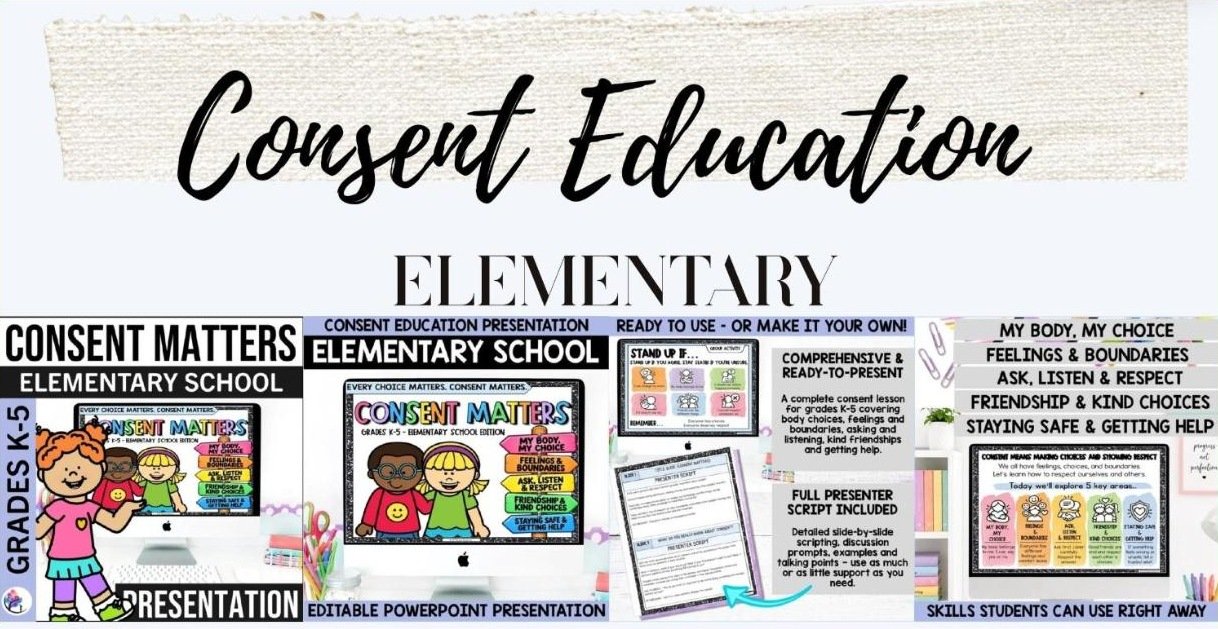
Our Consent Education Elementary Lesson for Grades K-5 pulls these ideas into one ready-to-teach PowerPoint. It moves through five topics (My Body, My Choice; Feelings and Boundaries; Ask, Listen and Respect; Friendship and Kind Choices; and Staying Safe and Getting Help), with story slides featuring Jayden, Maya and Zoe and interactive activities such as Yes, No, or Not Sure? and Notice the Clues. We like to teach it across a week, one topic a day, and the full presenter script means you always know what to say on a sensitive topic.
How to Teach Consent in Middle School (Grades 6-8)
Many middle schoolers assume consent only matters in dating. A strong middle school lesson widens that view: consent is part of everyday friendships, group chats, borrowing things and sharing photos. This is also the age when peer pressure and the wish to fit in make it harder to say no.
5. The Five Kinds of Boundaries
Introduce physical, emotional, social, digital and personal boundaries. Give small groups a card for each and ask them to brainstorm what respecting that boundary looks like. Digital boundaries often spark the most discussion: asking before posting a photo of someone, not reading someone’s messages, and not adding people to group chats without asking.
6. Respect or Pressure?
Read statements such as “Come on, everyone else is doing it” or “No worries, maybe next time” and have students decide whether each one respects a choice or adds pressure. Then rewrite the pressure statements into respectful ones.
7. Saying No, Hearing No
Practice both sides. Students rehearse clear, kind ways to say no (“No thanks, I’m not comfortable with that”) and respectful ways to hear it (“Okay, no problem”). Hearing no without sulking, pushing or telling others is a skill many students have never been taught directly.
Try this in your next lesson: Picture a student whose friend takes an unflattering photo and says, “I’m posting this, it’s funny.” Ask the group: Whose choice is it? What could the student say? What could a bystander say? Write the best responses on the board, such as “Please delete that. I didn’t say yes.”
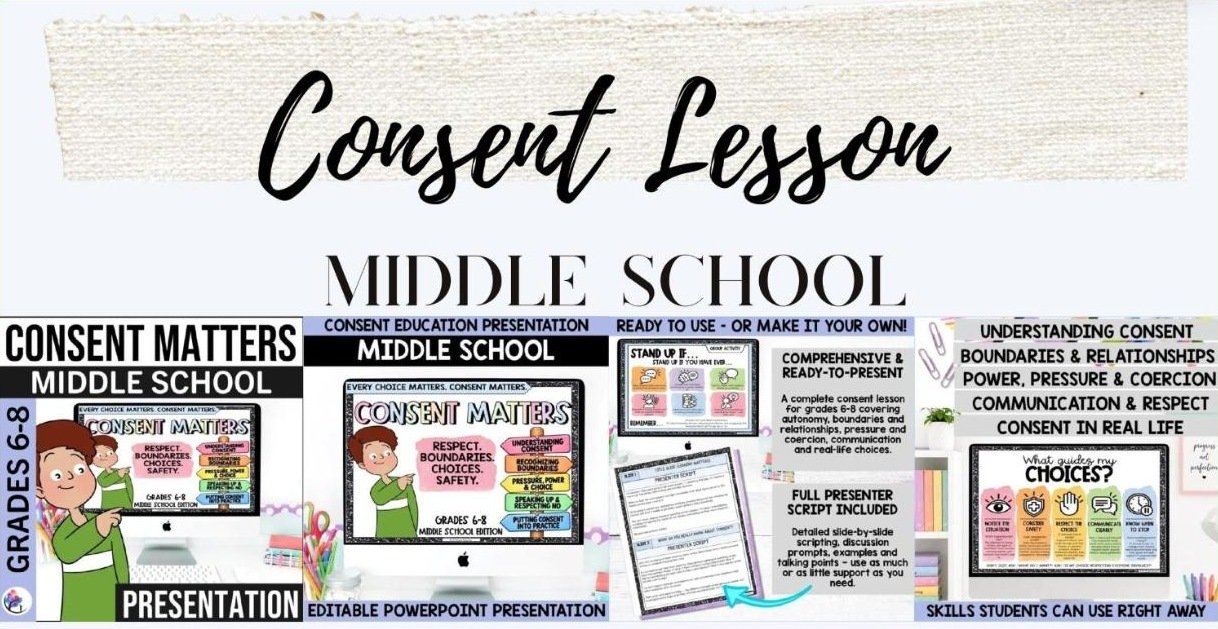
Our Consent Lesson for Middle School was written for exactly these situations: group chats, borrowing things, being pressured to “just go along with it” and photos shared without permission. It covers Understanding Consent; Recognizing Boundaries; Pressure, Power and Choice; Speaking Up and Respecting No; and Putting Consent into Practice. We find it works well in health class, advisory or a counseling classroom lesson, taught in one session or spread over a few, and the three student stories give middle schoolers a safe way to talk about real pressure without talking about themselves.
How to Teach Consent in High School (Grades 9-12)
High school students are ready for a deeper conversation: what freely given, informed and ongoing consent looks like, how power and pressure can quietly take away someone’s choice, and what healthy relationships look like in dating and friendships. Teens tend to engage most when lessons are honest, respectful and grounded in situations they recognize.
8. Freely Given, Informed and Ongoing
Unpack each part. Freely given: no pressure, threats or guilt. Informed: the person knows what they are agreeing to. Ongoing: anyone can change their mind at any point. Ask students to explain each one in their own words and give an everyday example.
9. Spotting Coercion
Share short scenarios that include subtle pressure, such as repeated asking, guilt (“If you cared about me, you would”), or threats to end the relationship. Students identify the pressure tactic and discuss why it means consent is not freely given. This pairs well with conversations about jealousy and control in relationships.
10. Being an Upstander
Discuss safe ways to step in when a peer is being pressured, at a party, in a group chat or in the hallway: distract, check in privately, get a friend involved or tell a trusted adult. Emphasize safety first: students don’t need to confront anyone to help.
Try this in your next lesson: Post four signs around the room: “Clear yes,” “Clear no,” “Pressured yes” and “Not sure.” Read short scenarios and have students move to the sign that fits. Ask, “What would need to change for this to be a clear, free choice?” The movement keeps energy up while the debrief does the teaching.
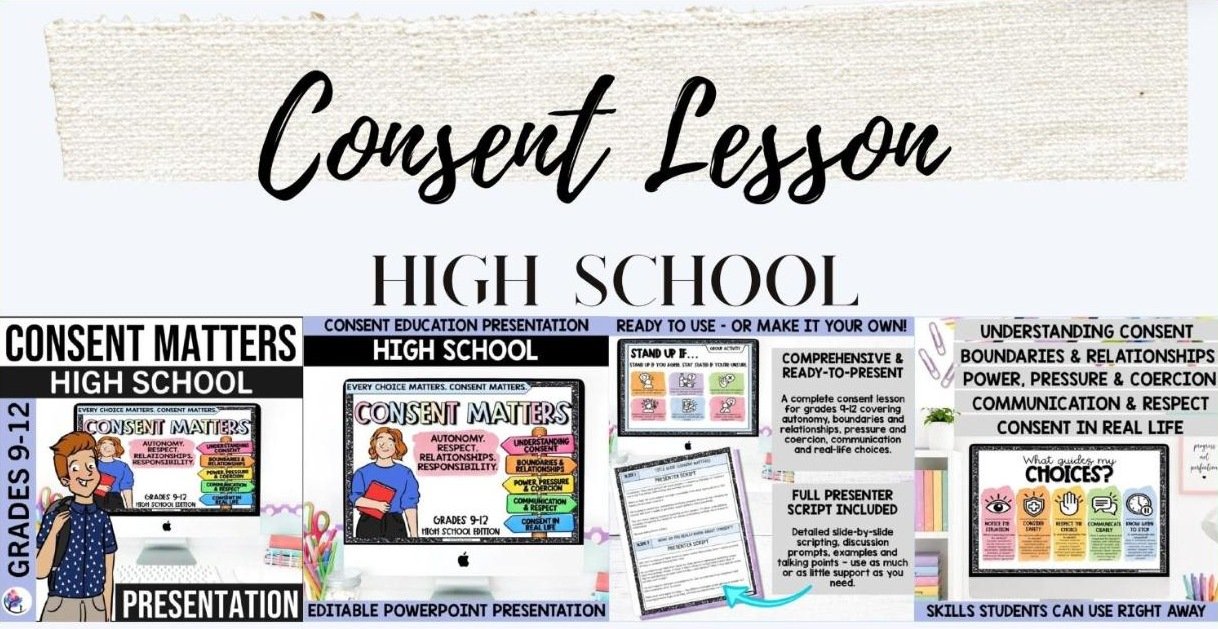
Our Consent Lesson for High School helps teens talk honestly about consent, boundaries, pressure and healthy relationships, using situations from dating, friendships, parties and group chats. It covers Understanding Consent; Boundaries and Relationships; Power, Pressure and Coercion; Communication and Respect; and Consent in Real Life, including digital privacy and being an upstander. It fits health class, relationships and sex education, advisory and counseling lessons, and the presenter script helps you keep a sensitive conversation calm and on track.
Consent at a Glance: What to Teach by Grade Band
| Grade band | Core focus | Sample language | Suggested ATR resource |
|---|---|---|---|
| K-5 | Body ownership, asking first, reading feelings, trusted adults | “Can I give you a hug?” “No thanks, how about a high five?” | Consent Education Elementary Lesson |
| 6-8 | Five kinds of boundaries, peer pressure, digital consent | “Please ask before you post a photo of me.” | Consent Lesson Middle School |
| 9-12 | Freely given, informed and ongoing consent; coercion; healthy relationships | “I care about you, and I’m not ready. Please respect that.” | Consent Lesson High School |
Teaching Consent Across the Whole School
Consent lessons have the most impact when students hear the same core messages year after year, in language that matches their age. A shared vocabulary (“ask, listen, respect,” “a pressured yes isn’t a real yes”) means teachers, counselors and families can reinforce the same ideas in the moment, whether that is on the playground or in a group chat conflict.
Some schools run a consent or body safety week, with each grade band taking the same theme at its own level. Others build one consent lesson into each year’s classroom guidance plan, so students revisit the skills as they grow. Either way, it helps to map out which grades get which lesson, so nothing is repeated or missed.
If you teach across grade levels, or want every level to share the same message, our Consent Lessons Bundle K-12 brings the elementary, middle school and high school presentations together. Each one is written for its own age group: younger students learn about body safety, feelings and asking first; middle schoolers work through boundaries, peer pressure and photos shared without permission; and high school students tackle coercion, healthy relationships and real-life choices. Every presentation is editable and includes a full presenter script.
Partnering With Families
Families are students’ first teachers on consent, and many welcome support with the language. Before a lesson, share a short note explaining what students will learn and the key phrases you will use. Afterward, suggest one simple conversation starter for home, such as “Today we talked about asking before a hug. How do we ask in our family?” or, for older students, “What would you do if a friend posted a photo of you without asking?”
Encourage families to model consent themselves: asking before tickling, respecting a child’s “stop,” and not insisting on hugs or kisses with relatives when a child is uncomfortable. Small everyday moments teach children that their no matters.
Frequently Asked Questions
At what age should you start teaching consent?
Consent education can begin in kindergarten, using simple, everyday ideas such as asking before a hug, respecting personal space and telling a trusted adult when something feels wrong. National guidance, such as the National Sex Education Standards, sets consent and healthy relationship learning goals from the earliest grades.
Is consent education the same as sex education?
Not in the early grades. For younger students, consent education focuses on body ownership, boundaries, empathy and asking permission in everyday situations. In high school, consent lessons often connect to dating and healthy relationships, and may be taught as part of health or sex education, depending on your district’s policy.
How do you teach consent without making it awkward?
Use story characters and scenarios rather than personal questions, set clear group agreements, keep language calm and matter-of-fact, and use interactive activities so students practice skills rather than just listen. A prepared script helps you stay steady if a tricky question comes up.
What should I do if a student discloses during a consent lesson?
Stay calm, listen, thank them for telling you and don’t promise secrecy. Follow your school or district protocol and your mandated reporting obligations, and connect the student with ongoing support.
Looking for practical, ready-to-use resources to support your consent, boundaries and healthy relationships lessons? The All Therapy Resources Membership provides access to a growing collection of thoughtfully developed counseling activities, interactive games, and therapeutic tools designed to save preparation time while supporting meaningful, skill-focused learning.