
A child is sobbing under a desk, refusing to transition, or shouting, “Leave me alone.” In that moment, the adult’s calm presence often matters more than the perfectly worded prompt. This parent-child co-regulation guide offers a practical framework for helping children borrow regulation from the adults around them before they are able to manage big feelings independently.
Co-regulation is not permissiveness, and it is not a way to prevent every difficult emotion. It is the responsive process through which an adult uses their own regulated body, voice, relationship, and environmental supports to help a child return to a manageable state. For professionals, it also provides a useful bridge between what happens in therapy, counseling, or school and what caregivers can realistically practice at home.
What Parent-Child Co-Regulation Looks Like
Children develop self-regulation gradually. They need repeated experiences of being supported through distress before they can reliably use coping tools on their own. A child may know how to name a feeling during a calm counseling session yet be unable to access that skill when they are hungry, overwhelmed by noise, embarrassed, or worried about getting in trouble.
Co-regulation begins with the adult noticing that a child is moving outside their window of tolerance. Signs vary by child. One may become loud and argumentative; another may go quiet, avoid eye contact, complain of a stomachache, or stop responding. The goal is not to diagnose the behavior in the moment. It is to recognize that the child may need support before they can process, problem-solve, or comply.
A co-regulating adult communicates, through both words and behavior: “You are having a hard time, and you do not have to handle this alone.” That message can be delivered while still holding an appropriate boundary. For example: “I won’t let you hit. I’m going to stay close while we get your body safe.”
Start With the Adult’s Nervous System
Children notice more than our language. They register facial expression, pace, volume, posture, and whether the adult appears rushed or threatened. This is why co-regulation can be difficult during a busy school day, a tense family routine, or a session when multiple needs are competing for attention.
Before responding, the adult may need a brief internal reset. Slow the exhale, soften the shoulders, lower the voice, and reduce the number of words. This does not mean adults must be perfectly calm. It means they aim to be grounded enough that they are not escalating alongside the child.
Professionals can normalize this for caregivers. A parent who becomes frustrated is not failing. Co-regulation includes repair. If an adult reacts sharply, they can later say, “I was frustrated and my voice got too loud. I’m sorry. I want to try that again.” Repair teaches children that relationships can remain safe even after hard moments.
Regulate before you reason
When a child is highly activated, lengthy explanations, questions, and consequences can feel like added demands. A child who is crying hard may not be able to explain what happened. A student who has just been corrected in front of peers may not be ready to identify a replacement behavior.
Begin with fewer words and a calm, concrete observation: “This feels like too much right now.” “Your body is telling me you need space.” “I’m here. We can pause.” Once the child’s breathing, voice, body movement, or attention becomes more settled, adults can shift toward reflection and problem-solving.
This sequence matters. Asking a child to use executive functioning skills while their nervous system is in survival mode often leads to more frustration for everyone involved.
Use Connection Without Overpowering the Child
Connection is supportive when it matches the child’s needs. Some children benefit from a nearby adult, gentle eye contact, or a familiar calming phrase. Others need reduced talking, physical distance, or a quiet space before they can reconnect. Trauma-informed practice means avoiding assumptions that every child experiences closeness in the same way.
Offer simple choices whenever possible: “Would it help if I sat here or gave you more room?” “Do you want water, a quiet minute, or to walk with me?” “Would you rather write it down or tell me?” Choices restore a small sense of control without asking the child to manage an overwhelming number of decisions.
Physical comfort should always be responsive and appropriate to the relationship and setting. Rather than assuming a hug will help, ask or observe. A child may prefer holding a sensory item, leaning against a chair, wrapping in a weighted lap pad when clinically appropriate, or simply knowing a trusted adult is nearby.
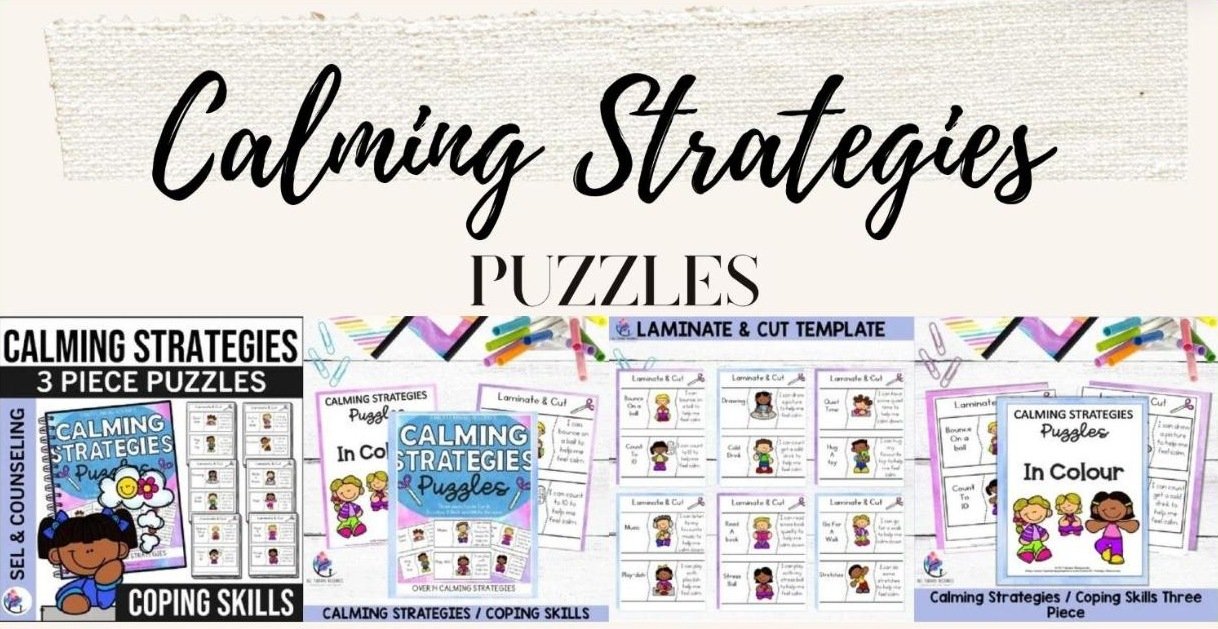
Choices are easier to offer in a hard moment when a child has already practiced them while calm. Our Calming Strategies Three Piece Printable Puzzles give young children a hands-on way to explore calming strategies and talk about which ones feel helpful, so the options you offer later are familiar rather than new. One educator shared, “This is an amazing resource and my little learners absolutely loved it!”
Practical Co-Regulation Strategies Across Settings
The most useful supports are often simple enough to use during real routines. The strategy should fit the child, the setting, and the level of distress.
At home
Caregivers can build co-regulation into predictable pressure points such as waking up, homework, meals, screen transitions, and bedtime. A visual routine, a five-minute warning, and a calm check-in may prevent some escalations before they begin. When a child does become upset, the caregiver can prioritize safety and connection over winning an argument.
For example, during a homework refusal, a parent might say, “This looks frustrating. Let’s take two minutes to reset, then we can decide whether to start with one problem or read the directions together.” The expectation remains, but the child receives support to re-enter the task.
In counseling and therapy
Clinicians can model co-regulation through pacing, attunement, and language. If a child becomes dysregulated while discussing a difficult event, it may be more helpful to orient to the room, use a grounding activity, or return to a familiar play-based task than to press for details.
Sessions can also help children and caregivers identify individualized cues and supports. Consider exploring questions such as: What does your body do when stress starts building? What helps you feel less alone? What makes support feel annoying or too close? These conversations create a shared plan that is easier to use outside the session.
Try this in your next session: Invite the caregiver and child to build a one-page “calm plan” together: three early signs (“my hands get tight”), two things that help (“water, sitting near Mom”) and one phrase the adult will say. Practice it once in the session while everyone is calm, then send it home.
In classrooms and school support spaces
School staff often need strategies that preserve dignity while keeping the group moving. A quiet, brief check-in can be more effective than a public correction. “Let’s step into the hallway for a minute” or “You can start with a reset spot, then we’ll make a plan” may reduce shame and increase cooperation.
Calm corners, break cards, visual coping menus, and predictable re-entry routines can support co-regulation when they are taught proactively. These tools are not consequences or places of exclusion. They work best when students understand how to access them, what to do there, and how adults will support their return to learning.
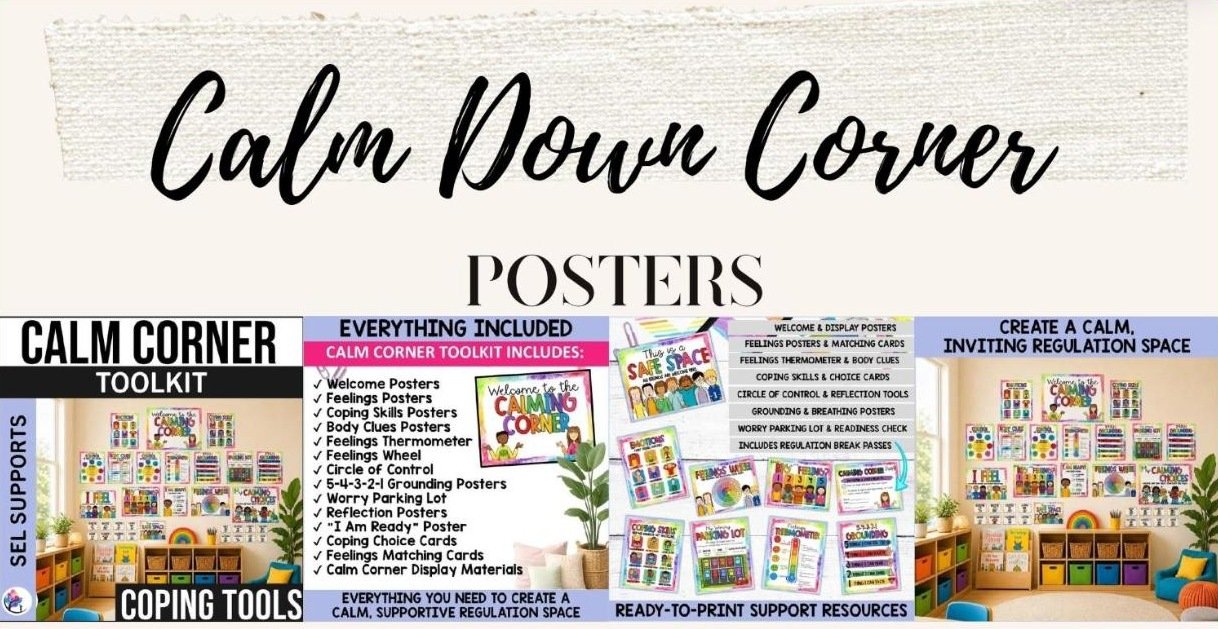
Our Calm Down Corner Posters and Visuals give students clear, concrete steps to follow in a reset space, which helps a calm corner become a taught routine rather than a time-out. Teach the visuals during a calm moment, practice using the space together, and agree on how students return to learning. One teacher wrote that the toolkit “has completely transformed my calm corner!”
Keep Boundaries Clear and Compassionate
A common concern is that validating feelings will reinforce unwanted behavior. Validation does not mean agreement, and co-regulation does not remove accountability. Adults can acknowledge the emotion while maintaining a limit: “You are really angry that the game ended. It is okay to be angry. It is not okay to throw the controller.”
The next step depends on the child’s state. If the child is still overwhelmed, return to regulation and safety. If they are calmer, invite repair: picking up materials, checking on someone who was hurt, practicing a different response, or planning for the next transition. Consequences are most likely to teach when the child can understand the connection between their actions and the repair.
Help Caregivers Build a Shared Language
Professionals can make co-regulation more usable by giving caregivers a few repeatable phrases rather than a long list of techniques. A shared language reduces the pressure to find perfect words during stressful moments.
Useful phrases may include: “I can see this is hard.” “Let’s help your body settle first.” “You are safe, and we can figure this out.” “I’m keeping the limit, and I’m staying with you.” The wording should sound natural to the family and align with the child’s developmental level and communication needs.
| Moment | What the adult might say | Why it helps |
|---|---|---|
| Distress is building | “I can see this is hard. I’m right here.” | Signals safety without adding demands |
| Behavior becomes unsafe | “I won’t let you hit. I’m staying close while we get your body safe.” | Holds the limit and the relationship together |
| The child is settling | “Your body looks calmer. Do you want to talk, or have one more minute?” | Offers a small choice as regulation returns |
| After the moment | “That was a hard moment. Let’s make a plan for next time.” | Moves toward repair and problem-solving |
For children with speech-language differences, neurodevelopmental differences, sensory needs, or histories of chronic stress, co-regulation plans may need additional visual, sensory, or communication supports. Collaboration among caregivers, educators, counselors, occupational therapy practitioners, and speech-language professionals can help ensure that supports are consistent without becoming rigid.
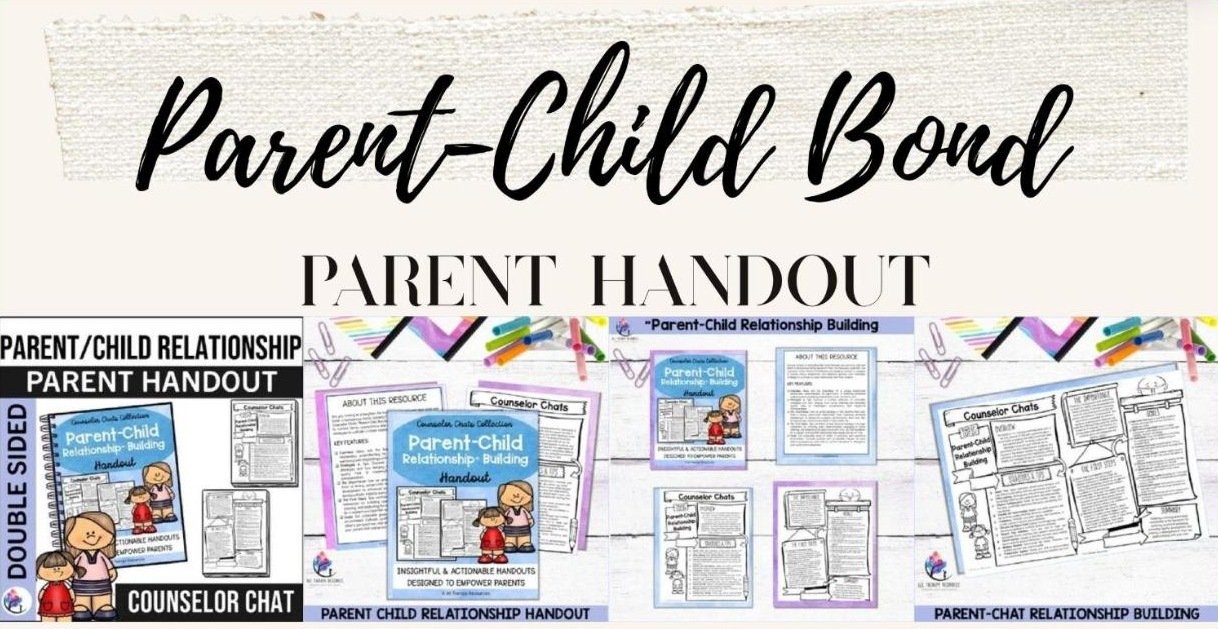
To support this at home, our Parent-Child Relationship Handout, part of our Coffee with the Counselor series, gives caregivers a short, practical take-home on strengthening connection with their child. Send it home after a parent meeting, or use it as a discussion guide in a family session alongside the phrases above.
When Co-Regulation Does Not Work Right Away
Even skilled adults will encounter moments when a child cannot settle quickly. The child may be overtired, hungry, overstimulated, grieving, ill, or responding to stressors adults cannot fully see. A strategy that worked yesterday may not work today.
When that happens, reduce demands, maintain safety, and stay curious. Notice patterns over time rather than judging one hard moment. If a child’s distress is frequent, intense, prolonged, or associated with safety concerns or major changes in functioning, caregivers and professionals should consider whether additional individualized assessment and support are needed.
Co-regulation is built through ordinary repetitions: a steady voice after a hard day, a patient pause before problem-solving, and a clear boundary delivered without shame. Each experience gives a child another opportunity to learn that big feelings can be survived, relationships can remain safe, and support is available while they grow their own capacity to cope.
Frequently Asked Questions
What is the difference between co-regulation and self-regulation?
Co-regulation is the support an adult provides, through a calm voice, presence, structure and connection, to help a child return to a manageable state. Self-regulation is the child’s growing ability to do this on their own. Self-regulation develops gradually, and repeated experiences of co-regulation are part of how children build it.
Does co-regulation mean giving in to the child?
No. Co-regulation pairs empathy with clear limits. An adult can acknowledge a feeling (“You are really angry”) while still holding a boundary (“It is not okay to throw the controller”), then return to repair once the child is calmer.
How can parents co-regulate when they feel stressed themselves?
Adults do not need to be perfectly calm, just grounded enough not to escalate. A slow exhale, fewer words and a lower voice can help. If a moment goes badly, repair matters: naming what happened and trying again shows children that relationships stay safe after hard moments.
When should a family look for more support?
If a child’s distress is frequent, intense or prolonged, or comes with safety concerns or major changes in sleep, eating, school or friendships, caregivers can talk with the school counselor, the child’s pediatrician or a licensed mental health professional about further assessment and support.
Looking for practical, ready-to-use resources to support co-regulation at home and at school? The All Therapy Resources Membership provides access to a growing collection of thoughtfully developed counseling activities, interactive games, and therapeutic tools designed to save preparation time while supporting meaningful, skill-focused learning.