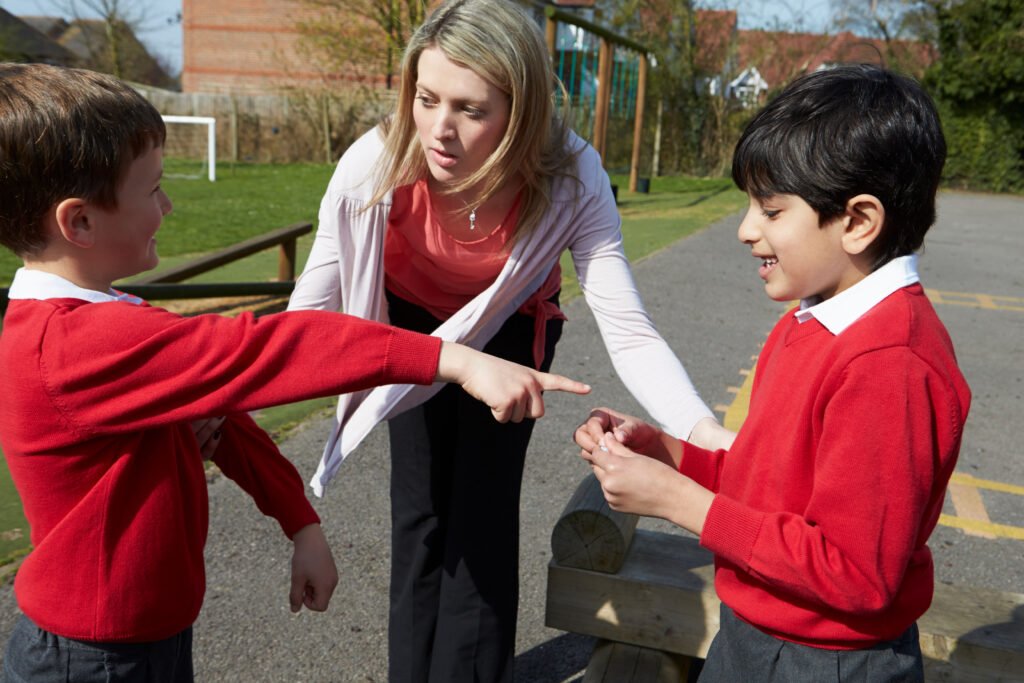
Two students arguing over a ball at recess. A group project falling apart because nobody feels heard. A friendship that turns cold after a misunderstood message. Conflict is part of every school day, and that is not a bad thing. Handled well, it is one of the best chances students have to practice listening, calming their bodies, and solving problems together. These conflict resolution activities for students give you practical, ready-to-use ways to teach those skills in the classroom, in small groups, and in individual sessions.
CASEL lists “resolving conflicts constructively” as part of relationship skills, one of the five core areas of social-emotional learning (CASEL framework). The good news is that these skills can be taught, practiced, and strengthened like any other skill.
Why Conflict Resolution Skills Need to Be Taught
Many students know they “should” solve problems calmly. What they often lack is a clear set of steps they can reach for when their heart is racing and their feelings are big. When we teach conflict resolution, we are teaching three things at once: noticing and calming strong feelings, communicating clearly and respectfully, and working toward a solution that feels fair to everyone involved.
Students also need to know the difference between conflict and bullying. A conflict is a disagreement between people with roughly equal power. Bullying involves a power imbalance and repeated, hurtful behavior. Conflict resolution activities are for conflicts. Bullying needs adult intervention and your school’s bullying response procedures, not a peer mediation conversation.
A Simple Conflict Resolution Framework Students Can Remember
Before any activity, give students a short, consistent set of steps. Use the same language in the classroom, the counseling office, and on the playground so the steps become familiar.
| Step | What students do | What it might sound like |
|---|---|---|
| 1 | Stop and calm down | “I need a minute to take some breaths before we talk.” |
| 2 | Say how you feel and what you need | “I feel left out when I’m not picked. I’d like a turn next time.” |
| 3 | Listen and repeat back | “So you were upset because you thought I took your spot?” |
| 4 | Brainstorm solutions | “We could take turns, play together, or choose a different game.” |
| 5 | Choose one and try it | “Let’s try taking turns and check in after recess.” |
Post the steps where students can see them, and practice them when everyone is calm. Students are far more likely to use a strategy in a heated moment if they have rehearsed it many times when nothing was at stake.
Conflict Resolution Activities for Elementary Students
Younger students learn best through stories, role-play, movement, and lots of repetition. Keep scenarios concrete and close to their daily lives: sharing, taking turns, being left out, and playground rules.
1. Feelings First Role-Play
Act out a simple scenario with a puppet or a volunteer, such as two students who both want the same book. Pause the role-play and ask the class: “What is each person feeling? What could they say instead of grabbing?” Then replay the scene using the new words.
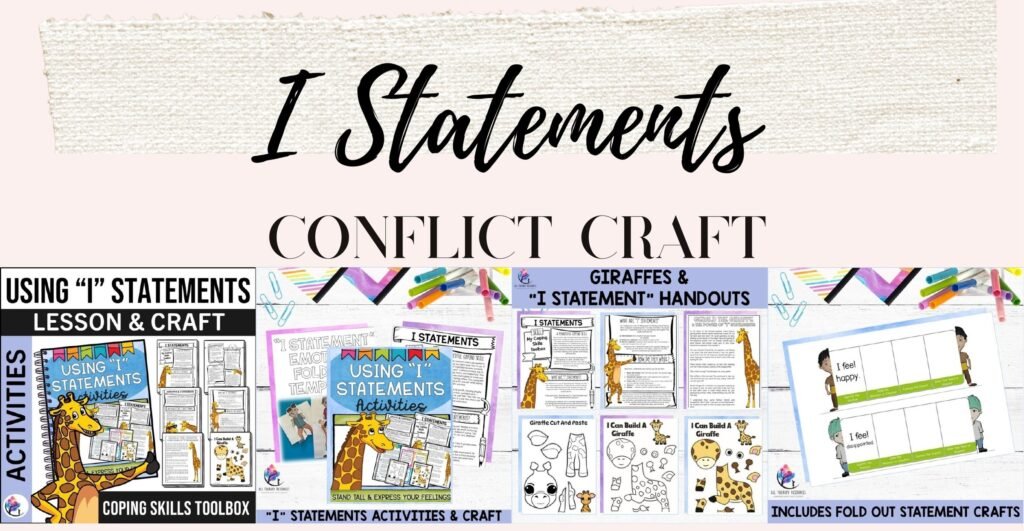
2. “I Statement” Practice
I statements help students describe a problem without blaming. Teach the pattern “I feel ___ when ___ because ___. I need ___.” Then give pairs a stack of scenario cards and have them turn a blaming sentence (“You always cheat!”) into an I statement (“I feel frustrated when the rules change in the middle of the game. I need us to agree on the rules first.”).
Try this in your classroom: Picture a student who usually yells “That’s not fair!” during games. Before the next game, ask them to practice one I statement with you privately. During the game, a quiet reminder (“Remember your I statement?”) gives them a clear script to reach for instead of an outburst.
From our counseling room to yours: our I Statements Conflict Resolution Activities and Craft introduces I statements through the story of Gerald the Giraffe, with discussion questions and a hands-on craft that helps elementary students remember the pattern. It works well as a whole-class lesson or a small group session, and the craft gives students something to take home to keep practicing. One educator shared, “This was a great lesson to help my kids learn about conflict resolution.”
3. Solution Wheel
Create a wheel with simple solutions: take turns, share, apologize, ask an adult, walk away and cool down, play something else. When a small conflict comes up, students can visit the wheel together and choose an option. This builds independence and reduces the number of minor disputes that need an adult to step in.
Conflict Resolution Activities for Middle School Students
In middle school, conflicts often move into friendship groups, group chats, and social status. Students in this age group respond well to discussion, perspective-taking, and real-life scenarios that respect their growing independence.
4. Perspective Swap
Give small groups a short scenario, such as a friend who wasn’t invited to a weekend hangout. Assign each student a different person in the story and ask them to explain the situation from that person’s point of view. Then discuss: “What did you notice when you saw it from the other side?” This builds the perspective-taking skills that sit at the heart of resolving conflict. For more ideas, see our guide to teaching empathy in schools.
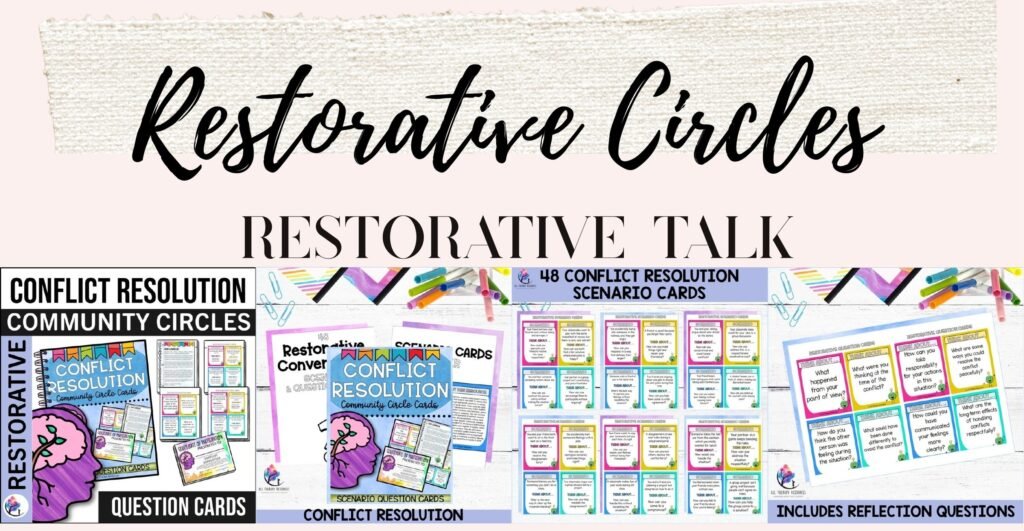
5. Restorative Community Circles
Community circles give students a structured, predictable space to talk about conflict, harm, and repair. Use a talking piece, set clear agreements, and start with low-risk questions before moving to scenarios. Restorative questions such as “What happened?”, “Who has been affected?” and “What can we do to make things right?” help students focus on repairing relationships rather than assigning blame. Our article on community circles in schools walks through how to set them up.
Try this in your next session: Open the circle with a light question (“What is one thing that helps you calm down?”), then read one scenario card aloud and pass the talking piece. Close by asking each student to name one thing they could say next time a similar conflict happens.
Our Conflict Resolution Restorative Circles Questions provides realistic scenario cards and reflective questions designed for exactly this kind of circle. It is a pick-up-and-go resource for counselors and teachers who want to run a meaningful conflict resolution circle without spending an evening writing questions, and it suits upper elementary and middle school groups.
Conflict Resolution Activities for High School Students
Teens face conflicts in friendships, romantic relationships, family life, and online spaces. They benefit from activities that treat them as capable decision-makers and connect conflict skills to the relationships they care about most.
6. Conflict Style Reflection
Introduce common conflict styles, such as avoiding, giving in, competing, compromising, and collaborating. Ask students to reflect privately on which style they use most with friends, with family, and online. Then discuss when each style might be helpful and when it might make things worse. The goal is flexibility, not labeling anyone.
7. Repair Conversations
Teens often know how to argue but are less sure how to repair. Practice short repair scripts: “I’m sorry I said that. I was frustrated, but it wasn’t fair to you.” Then talk about what makes an apology feel genuine and what to do if the other person isn’t ready to talk yet. Our article on rupture and repair explores why these small moments matter.
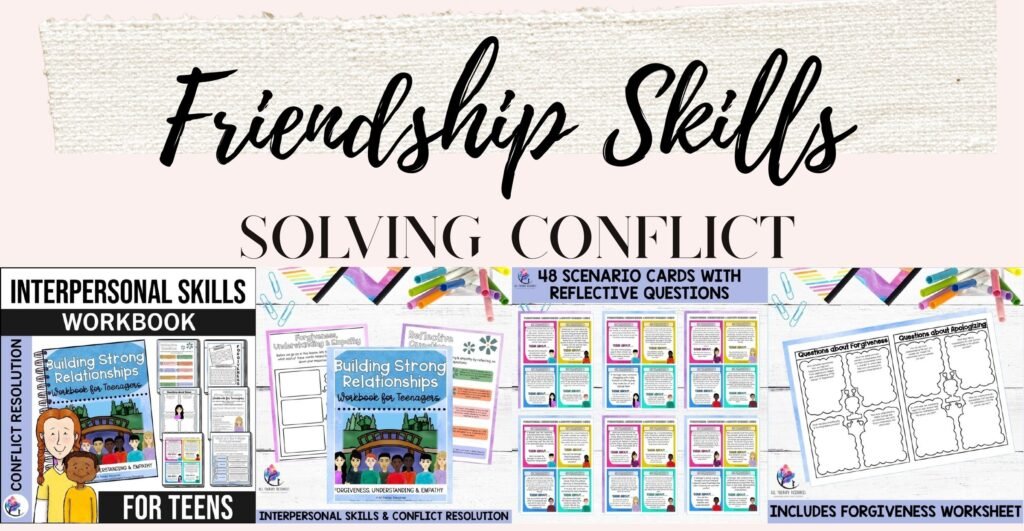
For older students, our Interpersonal Skills and Conflict Resolution Workbook for Teens explores forgiveness, understanding, and empathy through structured activities, making it a good fit for small groups, advisory, or health and family studies classes. One educator described it as an “easy and quick resource to use with my students who need support with conflict management,” and another used it in a Family Studies 11 class.
Tips for Making Conflict Resolution Lessons Stick
- Practice when calm. Rehearse the steps during lessons so students can use them during real conflicts.
- Use shared language. Ask teachers and staff to use the same steps and phrases across the school.
- Coach in the moment. Short prompts (“What’s your I statement?”) help students apply what they learned.
- Notice and name success. When students solve a problem on their own, tell them specifically what they did well.
- Keep safety first. Students should always know when a situation needs an adult, such as bullying, threats, or anyone getting hurt.
Frequently Asked Questions
What age should conflict resolution be taught?
Conflict resolution can be taught from the early elementary years, starting with simple skills like taking turns and naming feelings, and building toward perspective-taking and repair conversations in middle and high school.
What is the difference between conflict and bullying?
Conflict is a disagreement between people with roughly equal power. Bullying is repeated, hurtful behavior where there is a power imbalance. Bullying should be handled by adults using your school’s procedures, not through peer mediation.
How long should a conflict resolution lesson be?
Most elementary lessons work well in 20 to 30 minutes, while middle and high school sessions can run 30 to 45 minutes with discussion. Short, regular practice is usually more useful than one long lesson.
Can conflict resolution activities be used in small groups?
Yes. Small groups are a great fit because students can role-play, give each other feedback, and practice the steps with more support than a whole class allows.
Looking for practical, ready-to-use resources to support your conflict resolution lessons? The All Therapy Resources Membership provides access to a growing collection of thoughtfully developed counseling activities, interactive games, and therapeutic tools designed to save preparation time while supporting meaningful, skill-focused learning.