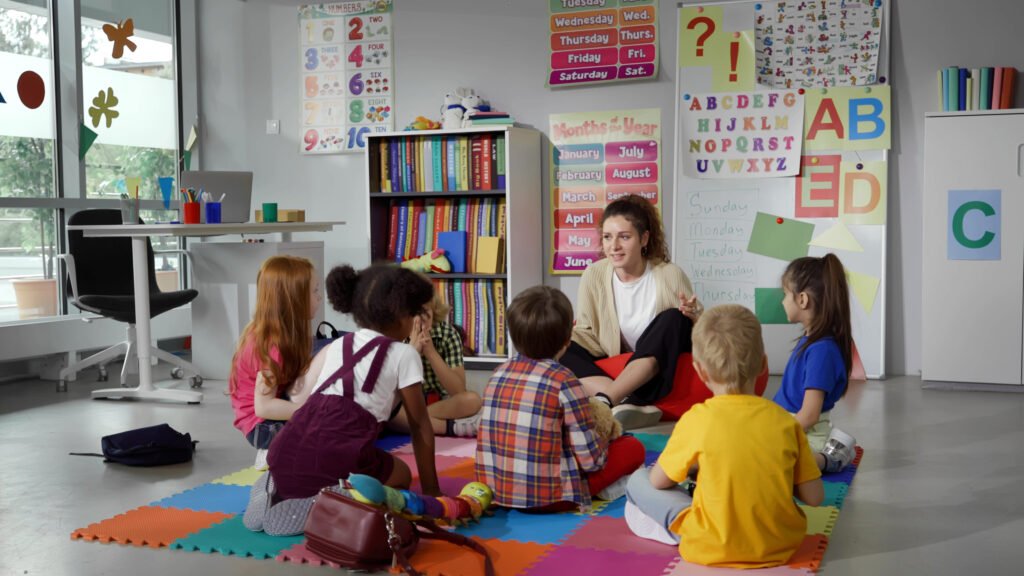
Have you ever worked with a student who could not seem to calm down, focus or engage, no matter how many strategies you tried? Or a student who looked compliant and quiet but was emotionally disconnected and shut down?
In classrooms and school counseling spaces, behavior is often treated as a choice or a skill gap. Research on stress and development points to another important layer: behavior is strongly shaped by the state of a student’s nervous system. When students feel unsafe, overwhelmed or disconnected, the thinking skills that learning depends on become much harder to reach.
Understanding nervous system regulation in the classroom is not about excusing behavior. It is about responding in ways that support regulation, learning and long-term emotional health. This guide explores how the nervous system shows up in classroom settings, what dysregulation can look like, and how educators and counselors can use trauma-informed, brain-based strategies day to day.
Why the Nervous System Matters for Learning
Learning does not happen in isolation from the body. Researcher Stephen Porges uses the term neuroception to describe how the nervous system evaluates whether a situation is safe, dangerous or life-threatening, a process that does not require conscious awareness. Neuroception is part of Porges’ polyvagal theory. The theory is widely used in trauma-informed practice, but several of its physiological claims are debated by researchers, so it is best treated as a helpful framework rather than settled science.
What is well established is that stress affects the thinking brain. Research from Amy Arnsten’s lab at Yale describes how acute, uncontrollable stress leads to a rapid loss of prefrontal cortex function, while more automatic emotional responses linked to the amygdala are strengthened. In practical terms, when a student is dysregulated:
- Planning, reasoning and problem-solving become harder to access
- Attention, memory and impulse control are reduced
- Emotional reactions intensify
- Instructions and logical explanations are harder to take in
In contrast, when students feel safe and regulated, they are far more available for problem-solving, emotional regulation, social connection and academic learning. In other words, regulation is a foundation for learning.
Try this in your classroom: before a demanding task, take a 60-second “ready check.” Ask students to notice their body: “Is your engine running fast, slow or just right?” Model one slow breath together, then begin. The check takes almost no time and gives you useful information about who may need extra support before the lesson starts.
A Simple Overview of Nervous System States
For educators, it helps to think about nervous system states in practical terms rather than clinical language. Most students move between three broad states throughout the day. The table below is a simplified guide, not a diagnostic tool: the same behavior can have many causes, and every student is different.
| State | What it may look like | What often helps |
|---|---|---|
| Regulated (safe and connected) | Calm enough to listen, engage, ask questions and work with others | Teaching new skills, reflection, problem-solving, practicing calming strategies |
| Hyperaroused (fight or flight) | Restless, anxious, angry, impulsive, loud or disruptive | Fewer words, a calm voice, movement, space, a predictable next step |
| Hypoaroused (shutdown or freeze) | Withdrawn, flat, tired, “checked out” or overly compliant | Gentle connection, warmth, light movement, small and achievable tasks |
Want more? Explore our Flipping Your Lid and neuroscience resources, calm corner toolkits and trauma-informed support resources.
These states are not behaviors to correct. They are signals to interpret.
What Nervous System Dysregulation Looks Like in the Classroom
Dysregulation is often mislabeled as defiance, lack of motivation or poor self-control. Often it is a stress response showing up in the body. Common classroom signs include:
- Difficulty sitting still or focusing
- Emotional outbursts or tears
- Avoidance of tasks
- Frequent bathroom or nurse visits
- Perfectionism or sudden shutdown
- Overreactions to small stressors
Some students move quickly between hyperarousal and shutdown depending on the setting, the time of day or the demands placed on them. These signs can also be linked to sensory needs, attention difficulties, learning challenges, hunger, sleep or health issues, so it is worth looking for patterns and collaborating with families and colleagues rather than assuming one cause.
Picture a student who puts their head down every time a timed writing task begins. A behavior lens might see work refusal. A regulation lens asks a different question: what happens in this student’s body when the timer starts? Shifting the focus from “managing behavior” to supporting regulation often opens up more effective options, such as a quiet countdown, a sentence starter or a short movement break first.
Trauma-Informed Classrooms Support the Nervous System First
Trauma-informed practice recognizes that past experiences shape how a student’s nervous system responds to stress. SAMHSA notes that the effects of trauma can range from hypervigilance or a constant state of arousal to numbing and avoidance. Brain imaging research has also found that children exposed to family violence showed heightened amygdala and anterior insula responses to angry faces, a pattern the researchers suggest may be an adaptation to living with ongoing threat.
In the classroom, students with trauma histories may:
- Have heightened threat responses
- Struggle with transitions and unexpected changes
- Read neutral cues, such as a raised voice or a frown, as unsafe
- Experience frequent dysregulation
A trauma-informed classroom does not mean lowering expectations. It means creating conditions where students can meet them. SAMHSA’s six principles of a trauma-informed approach (safety; trustworthiness and transparency; peer support; collaboration and mutuality; empowerment, voice and choice; and cultural, historical and gender issues) translate into everyday classroom practices such as:
- Predictability and routine
- Emotional and physical safety
- Choice and a sense of control
- Connection before correction
- Regulation before instruction
For a deeper look at what this requires in practice, see our article on what trauma-informed classrooms require beyond posters and calm corners.
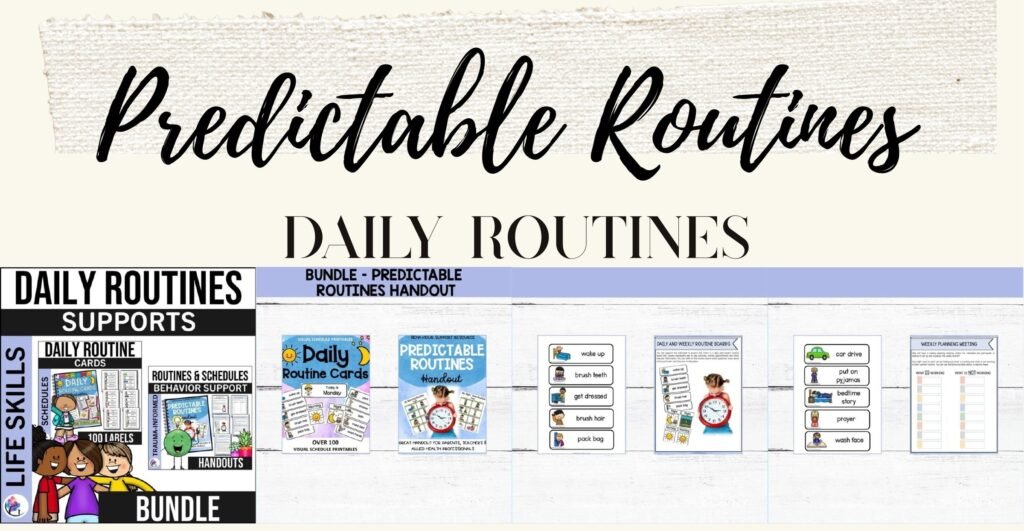
Try this in your classroom: predictability is one of the simplest ways to lower stress for students who are on high alert. Our Predictable Routines Handout and Daily Routine Cards Bundle pairs a handout explaining why routines build safety and consistency with visual daily routine cards students can follow. It suits early learners, special education settings and any student who struggles with transitions. Post the cards for the day each morning, preview any changes before they happen, and invite a student to move the card when a task is finished. The handout is also useful to share with families so routines feel consistent between home and school.
Practical Nervous System Supports Teachers Can Use Daily
You do not need to be a neuroscientist to support the nervous system. Small, consistent practices make a meaningful difference over time:
- Calm, predictable transitions with a warning before changes
- Visual schedules and clear expectations
- Movement breaks throughout the day
- Access to a quiet or grounding space
- Neutral, regulated adult responses
Even the tone of an adult’s voice can shift the emotional climate of a room. A calm, steady adult offers students something to lean on when their own regulation is wobbly.
Here is what this can sound like during a hard transition: “I can see it’s tricky to stop. We have two minutes left, then we’ll pack up together. Do you want to finish this line or put a sticky note where you stopped?” Short sentences, a clear next step and a small choice help lower the sense of threat. For calming ideas students can use on their own, see our guide to trauma-informed grounding activities for children.
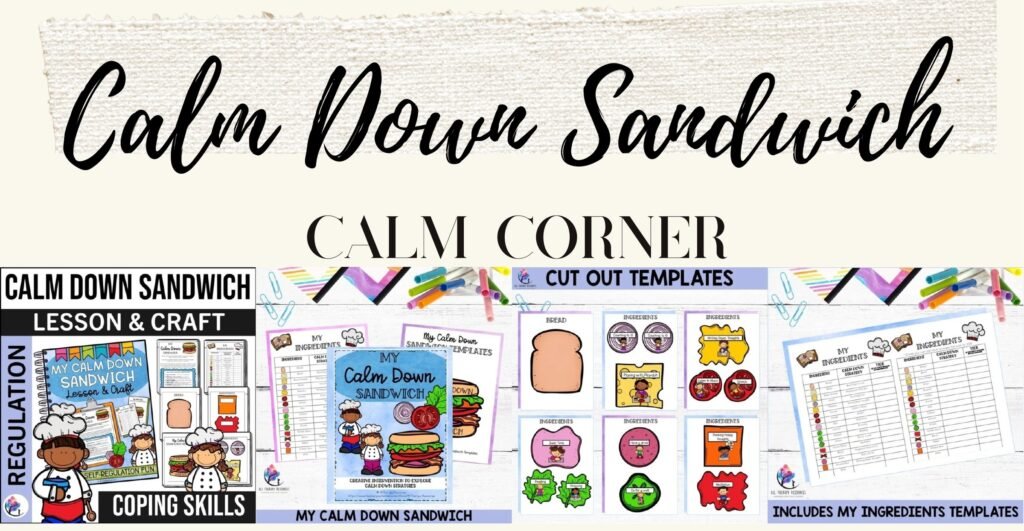
Try this in your next session: a calm space works best when students have practiced what to do there before they need it. Our Calm Down Corner Printables: Calm Down Sandwich Lesson and Craft invites students to think about a situation that felt overwhelming, then “build” a sandwich of calming strategies that would help. It works well in individual counseling, small groups, lunch bunch or a classroom SEL lesson. Laminate the pieces so students can write, wipe and update their choices, then keep a finished sandwich in your calm corner as a ready-made reminder of what helps.
The Role of Co-Regulation in Schools
Children learn self-regulation through co-regulation. A report for the U.S. Office of Planning, Research and Evaluation describes co-regulation as an interactional process in which caregivers, including teachers, offer support, coaching and modeling within a warm and responsive relationship. The same report recommends co-regulation from birth through young adulthood, with the type of support changing as students grow.
In a school setting, co-regulation can look like:
- An adult staying calm during emotional moments
- Validating feelings without escalating
- Sitting or kneeling nearby rather than standing over a student
- Offering presence before problem-solving
A useful reminder to share with staff: we rarely help a student calm down by telling them to calm down. We help by staying regulated ourselves. Co-regulation does not always mean being quiet and still, either; sometimes it means matching a student’s energy first, as we explore in Co-Regulation Isn’t Always Calm: Matching Energy to Build Trust.
Try this in your next session: when a student is escalated, use the “low, slow and few” approach. Lower your body, slow your voice and use few words: “I’m here. You’re safe. We’ll figure it out together.” Wait before adding anything else. Once the student is calmer, you can move on to reflection and problem-solving.
Why Traditional Behavior Approaches Often Miss the Mark
Systems that focus only on consequences can unintentionally increase stress for a student who is already dysregulated. When dysregulated students are:
- Publicly corrected
- Isolated without support
- Given lectures during emotional moments
their nervous systems are more likely to register threat than guidance.
This is why trauma-informed, neuroscience-informed approaches emphasize timing. Teaching, reflecting and repairing tend to be far more effective once a student is regulated. Accountability still matters; it simply comes after calm. A quick sequence many educators find helpful is: regulate first (“Let’s take a breath together”), then relate (“That was a lot. I’m glad you’re okay”), then reason (“What could we try next time?”).
Helping Students Understand Their Own Nervous Systems
One of the most helpful shifts in education is teaching students about their own nervous systems. When students understand that:
- Their body often reacts before their thinking brain catches up
- Big feelings are a normal part of being human, not failures
- Regulation is a skill that can be practiced
shame tends to decrease and students are more willing to take responsibility for their choices.
Simple, age-appropriate language works best:
- “Your body is in alarm mode.”
- “Your brain needs help feeling safe.”
- “Let’s help your nervous system settle.”
Picture a third grader who has learned the “flipped lid” hand model. After recess, instead of shouting, they hold up an open hand and tell the teacher, “My lid flipped.” That one gesture gives the adult a clear cue to offer calm and support, and it gives the student language for what is happening inside. This builds emotional literacy and coping skills over time. For more brain-based teaching ideas, see our guide to brain-based SEL.
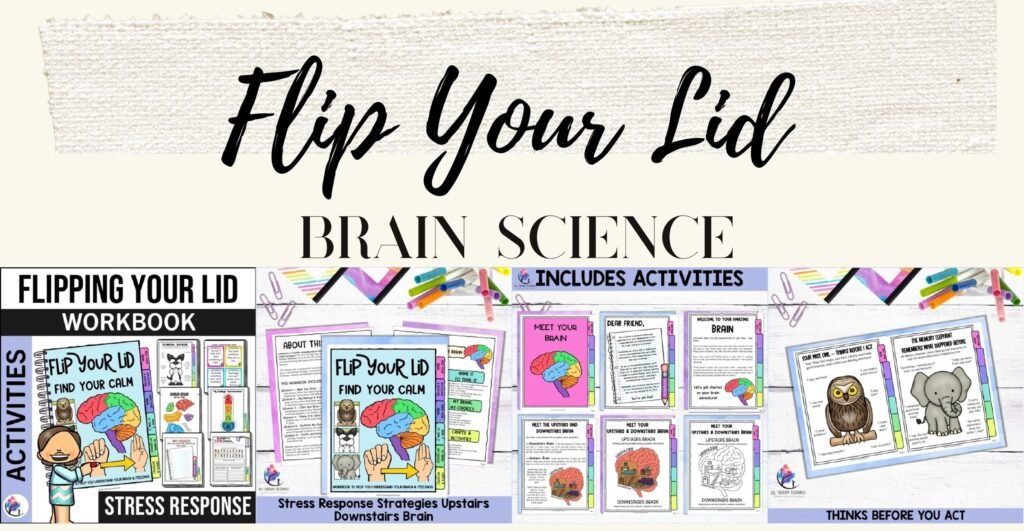
Try this in your next lesson: if you would like a structured way to teach this, our Flip Your Lid, Find Your Calm Workbook walks elementary students through six lessons, from meeting the upstairs and downstairs brain (with the Wise Owl, Guard Dog and Memory Elephant characters) to calming strategies, naming feelings and body clues, and making helpful choices. Use one lesson a week in a classroom SEL block or an emotional regulation group, and keep the shared language going afterwards: “Is your Guard Dog barking? Let’s help it settle.”
Final Thoughts: Regulated Students Learn Better
Understanding the nervous system shifts how we see behavior. Instead of asking, “Why won’t they behave?” we begin asking, “What does this student’s nervous system need right now?”
When classrooms support regulation, students are more likely to feel safe, relationships strengthen, and learning becomes more accessible for everyone. Trauma-informed, nervous-system-aware teaching is not an add-on. It is part of the foundation.
Frequently Asked Questions
Can nervous system regulation be taught in academic classrooms?
Yes. Regulation can be built into daily instruction through predictable routines, adult modeling, shared language for feelings and body signals, and short, consistent practices such as breathing or movement breaks.
Is dysregulation the same as misbehavior?
No. Dysregulation describes a stress state in the body and brain. Behavior is often a response to that state, which is why calming comes before teaching or problem-solving.
Does this mean students shouldn’t have consequences?
No. It means consequences, reflection and repair are more effective once a student is regulated, rather than in the middle of a stress response.
Can adults’ nervous systems affect students?
Yes. Co-regulation research highlights the role of warm, responsive adults who model and coach regulation. A calm adult presence is one of the most useful supports a student can have during a hard moment.
References
- Porges, S. W. (2009). The polyvagal theory: New insights into adaptive reactions of the autonomic nervous system. Cleveland Clinic Journal of Medicine, 76(Suppl 2), S86–S90.
- Giroux, C., Ahlers, D., & Miawotoe, A. (2023). Polyvagal approaches: Scientifically questionable but useful in practice. Journal of Psychiatry Reform, 10(11).
- Arnsten Lab, Yale School of Medicine. Research: Uncontrollable stress and prefrontal cortex function.
- SAMHSA (2014). SAMHSA’s concept of trauma and guidance for a trauma-informed approach.
- McCrory, E. J., et al. (2011). Heightened neural reactivity to threat in child victims of family violence. Current Biology, 21(23).
- Murray, D. W., Rosanbalm, K., & Christopoulos, C. (2016). Self-regulation and toxic stress report 4: Implications for programs and practice (OPRE Report 2015-97).
Looking for practical, ready-to-use resources to support your nervous system regulation and trauma-informed classroom work? The All Therapy Resources Membership provides access to a growing collection of thoughtfully developed SEL and counseling activities, interactive games, and therapeutic tools designed to save preparation time while supporting meaningful, skill-focused learning.