
Many students walk past the school counselor’s office every single day without actually knowing what a school counselor does.
Some children think the counselor is only for “bad behavior.”
Some believe they will get in trouble if they visit.
Some worry that asking for help means something is “wrong” with them.
Some teenagers quietly assume…
“My problems aren’t serious enough.”
“I should be able to handle this on my own.”
“No one would understand anyway.”
And honestly, many students are carrying huge feelings long before they ever ask for support.
That is why “Meet the School Counselor” activities matter so much at the beginning of the school year.
Not because students simply need to memorize the counselor’s role.
But because students need to understand something much deeper:
there is a safe adult in the building whose job is to help them navigate being human.
Children Cannot Access Support They Do Not Understand
One thing that becomes very clear in schools is that students are far more likely to seek help when they understand:
who the counselor is,
what the counselor does,
how counseling works,
and when it is appropriate to ask for support.
And honestly, many students never receive clear explanations around this.
Instead, they create assumptions based on:
peer conversations,
past experiences,
fear,
misinformation,
or stigma.
Some children think counselors are only there for “big problems.”
Some teenagers worry about confidentiality.
Some students fear being judged.
Others quietly assume adults are too busy to care.
That uncertainty matters more than many people realize.
Because when children do not understand support systems, they are far less likely to access them when they truly need them.
Emotional Safety Often Begins With Predictability
One thing neuroscience consistently shows us is that predictability helps regulate the nervous system.
Children feel safer when they understand:
what to expect,
who adults are,
how systems work,
and what happens if they ask for help.
Uncertainty can feel emotionally overwhelming for many students — especially anxious students, neurodivergent learners, trauma-affected children, or students already carrying emotional stress.
That is one reason introducing the school counselor early in the year can be so powerful.
It reduces ambiguity.
Students begin learning…
- who the counselor is
- where to find them
- what kinds of things they help with
- when they can ask for support
- what confidentiality means
- what emotional safety can look like at school
And honestly, for some students, simply knowing there is a supportive adult available can lower anxiety significantly.
Children Rarely Say “I Need Emotional Support”
One thing I’ve learned over the years is that children and teenagers rarely walk into school saying:
“I am struggling emotionally and require support.”
Instead, we often see…
headaches,
school refusal,
friendship conflict,
anger,
withdrawal,
avoidance,
shutdown,
behavioral outbursts,
perfectionism,
or complete disengagement.
And honestly, many students do not even realize themselves that what they are experiencing could be helped through supportive connection and counseling.
That is why counselor awareness matters so deeply.
Students need repeated opportunities to understand that counselors support far more than crisis situations.
School counselors often help students with…
friendships,
anxiety,
stress,
grief,
self-esteem,
emotional regulation,
coping skills,
family changes,
academic pressure,
future planning,
conflict resolution,
and emotional wellbeing.
And honestly?
Sometimes children simply need one emotionally safe adult who helps them feel less alone in what they are carrying.
Middle School Students Often Carry More Anxiety Than Adults Realize
One thing I’ve noticed especially in middle school settings is that students are often navigating enormous emotional complexity underneath the surface.
Friendship shifts.
Identity development.
Peer pressure.
Academic stress.
Social comparison.
Fear of embarrassment.
Fear of exclusion.
Pressure to “fit in.”
Many middle school students desperately need support while simultaneously feeling terrified to ask for it.
That is why introducing the counselor in engaging, approachable, non-threatening ways matters so much.
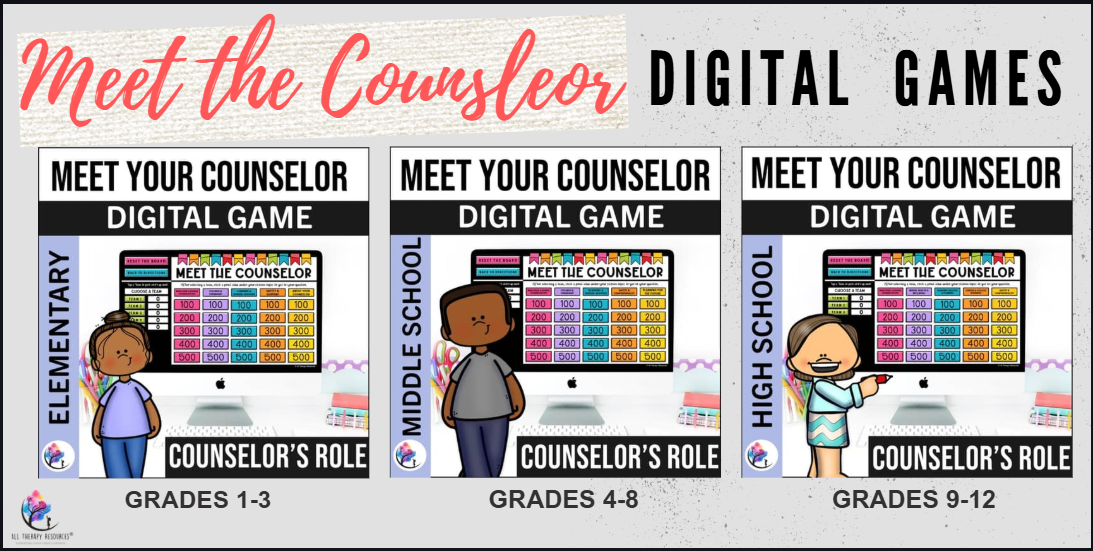
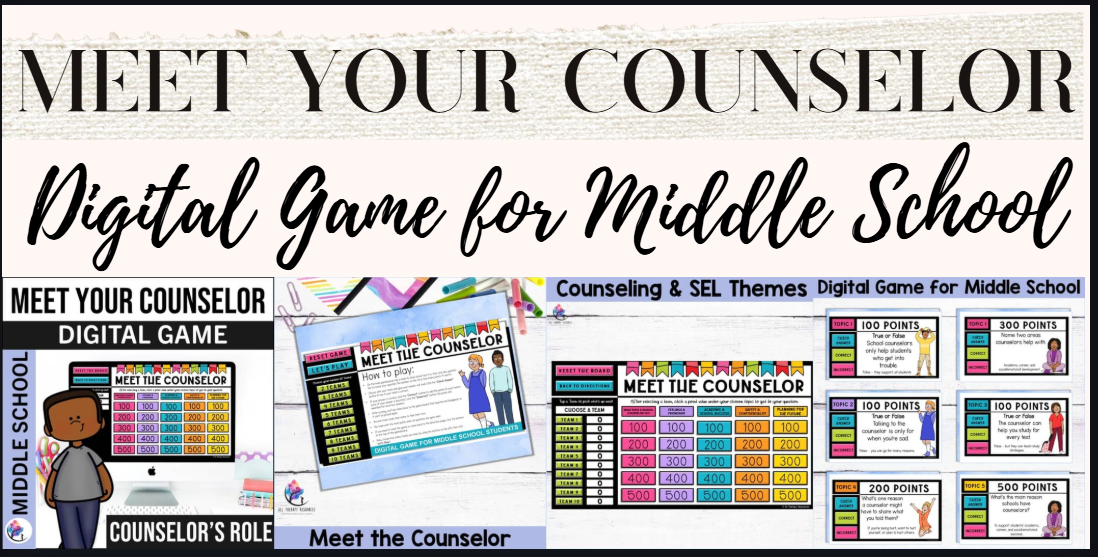
Our Meet the Counselor Digital Games were designed to help students explore topics such as friendships, feelings, confidentiality, academic success, planning for the future, and emotional wellbeing in ways that feel interactive and emotionally safe rather than intimidating.
Because honestly, students are far more likely to seek support later if the counselor already feels familiar and approachable earlier.
High School Students Often Worry About Being Judged
Teenagers can become incredibly skilled at masking emotional distress.
Some high school students carry anxiety silently for years.
Some normalize stress levels that are actually overwhelming.
Some fear that asking for help will make them appear weak, dramatic, or incapable.
Social stigma around mental health still affects many teenagers deeply.
That is why high school counselor awareness matters so much.
Students need clear conversations around…
mental health,
stress,
coping skills,
college readiness,
career planning,
confidentiality,
and emotional support.
But perhaps even more importantly, they need adults who normalize help-seeking without shame.
Research consistently shows that supportive school relationships act as protective factors for student mental health, emotional regulation, academic engagement, and resilience. Students are more likely to seek support when they experience trusted, emotionally safe relationships with adults in school environments.
Many students are quietly waiting for permission to ask for help.
Younger Students Need Counselor Introductions to Feel Safe and Friendly
Children especially, “meeting the counselor” should feel warm, playful, and reassuring.
Young children often interpret unfamiliar adults through emotional safety rather than job titles.
They need opportunities to understand:
“This is someone who helps.”
“This is someone safe.”
“This is someone I can talk to.”
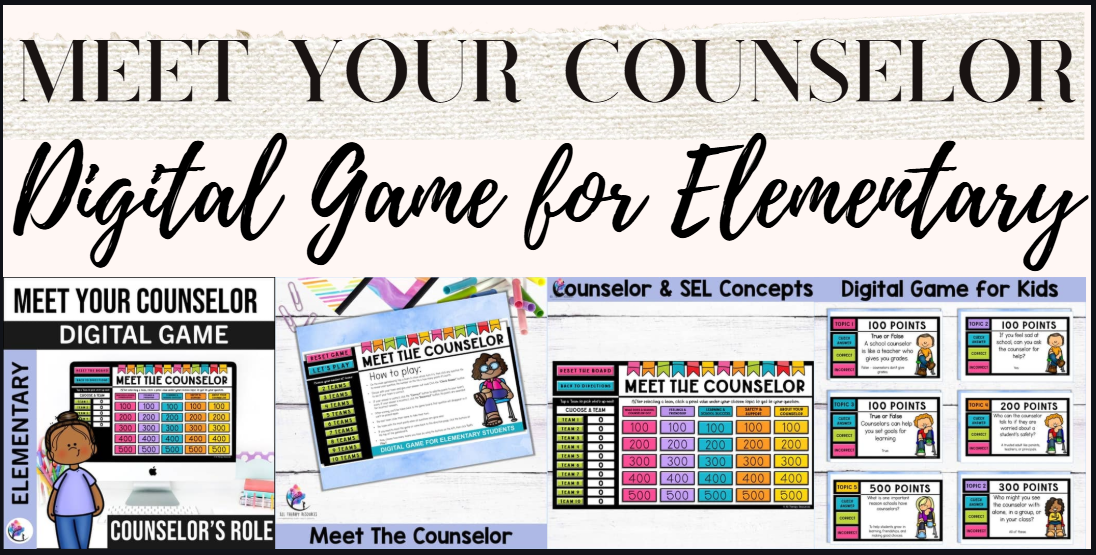
That is one reason interactive SEL games and counselor introduction activities can work so beautifully for elementary students.
They help children learn about:
feelings,
friendship,
school routines,
teamwork,
coping skills,
and emotional wellbeing
while simultaneously building familiarity with the counselor role itself.
And honestly, children are far more likely to seek support from adults they already feel emotionally connected to.
School Counselors Often Carry the Emotional Climate of the School
One thing I think people outside education sometimes underestimate is how much emotional holding school counselors do every single day.
Counselors are often quietly supporting:
grief,
anxiety,
panic attacks,
friendship conflict,
family stress,
trauma responses,
school refusal,
self-esteem struggles,
identity questions,
academic overwhelm,
and nervous system dysregulation — often all before lunchtime.
Students frequently enter counseling spaces carrying emotions they have not felt safe expressing anywhere else.
That is why relationship-building at the beginning of the school year matters so much.
Not because counselors need students to “like” them.
But because trust is often what allows students to finally exhale enough to ask for support.
Counselor Awareness Reduces Shame Around Help-Seeking
Students often believe needing support means they are failing somehow.
Especially high-achieving students.
Especially perfectionistic students.
Especially older students who feel pressure to appear “fine.”
That is why counselor education matters.
When schools normalize counseling support as part of wellbeing — rather than something only connected to crisis or discipline — students begin viewing support differently.
Not as punishment.
Not as weakness.
But as part of being human. That shift can become life-changing for some students.
Get the Tea with Angie – Founder of All Therapy Resources
One thing I’ve learned over the years is that some students spend months silently struggling before they ever ask for help.
Not because they do not need support.
But because they are unsure whether…
they are allowed,
they will be believed,
their feelings matter,
or anyone actually has time for them.
Many children become very good at hiding distress.
The smiling student may be carrying panic internally.
The “behavior” student may feel deeply disconnected.
The quiet student may feel invisible.
The perfectionistic student may be exhausted.
That is why I care so deeply about helping students understand the role of the school counselor early in the school year.
Because sometimes one supportive relationship changes how a child experiences school entirely.
Sometimes simply knowing…
“There is an adult here who will listen”
becomes the thing that helps a student feel emotionally safer walking through the school gates each morning.
And honestly? Those relationships matter more than people realize.
Remember
“Meet the School Counselor” activities are about far more than introducing a job title.
They are about helping students understand:
support exists,
safe adults exist,
help-seeking is healthy,
feelings matter,
and emotional wellbeing deserves care too.
Because children and teenagers learn best when they feel emotionally safe, connected, and supported within the school environment.
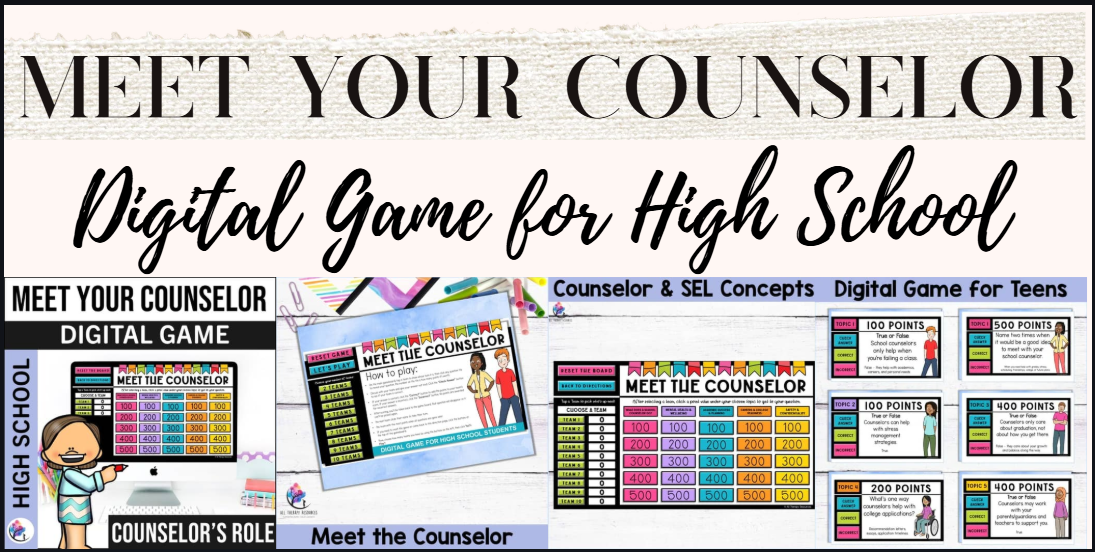
If you are looking for engaging, trauma-informed “Meet the Counselor” activities, SEL games, and back-to-school counseling lessons, our Meet the Counselor Digital Games are designed to help students build trust, understand emotional support systems, reduce stigma around help-seeking, and feel more confident accessing counseling support throughout the school year.
Continue Helping Students Feel Seen, Safe, and Supported
For many students, meeting the school counselor is about far more than simply knowing where the counselor’s office is. It is about helping children understand that support exists, safe adults are available, emotions matter, and asking for help is a strength — not a weakness.
Inside the All Therapy Resources Membership, you’ll find a growing collection of trauma-informed counseling, SEL, and wellbeing resources designed to help students:
• Build trust with school support staff
• Reduce anxiety around counseling services
• Strengthen emotional literacy and coping skills
• Develop confidence in help-seeking
• Explore emotional safety and regulation
• Build positive school connections and belonging
• Navigate friendships, stress, and school challenges in healthy ways
All of the resources discussed throughout this article, including our “Meet the Counselor” activities and digital counseling games, are already included inside the membership. New resources are added regularly to support real-world school counseling, wellbeing, and therapeutic practice.