Some students steady themselves after a hard week, a poor grade or a falling-out with a friend, while others find it much harder to get back on track. Building resilience in students is one of the most common goals we hear from school counselors and educators, and it is also one of the better-researched areas of child development. The encouraging message is that resilience is not a fixed trait. It grows from relationships, skills and environments that adults can influence every day.
Below, we look at four key areas (supportive relationships, social-emotional learning, growth mindset and mindfulness), how strong the evidence is for each, and what each looks like in practice.
What Is Resilience in Students?
Resilience researcher Ann Masten describes resilience as good outcomes in spite of serious threats to adaptation or development. One of her best-known conclusions is that resilience is common and usually comes from ordinary human adaptive systems rather than rare or special qualities, which is why she called it “ordinary magic” (Masten, 2001).
Resilience is not about “toughing it out,” hiding feelings or bouncing back on a timetable. From a trauma-informed perspective, it also does not mean adversity was acceptable or that a struggling student simply lacks grit. It describes what can develop over time when a young person has enough support, skills and safety around them.
What the Research Says About Building Resilience in Students
Supportive Relationships
Relationships run through almost every strand of resilience research. The Center on the Developing Child at Harvard University identifies at least one stable, committed relationship with a supportive parent, caregiver or other adult as the most common factor among children who develop resilience. These relationships help buffer children from developmental disruption and build capacities such as planning, monitoring and regulating behavior.
School relationships count, too. A meta-analysis of 99 studies, from preschool through high school, found that positive teacher-student relationships were associated with greater school engagement (medium to large associations) and achievement (small to medium associations), while negative relationships were linked to poorer outcomes (Roorda et al., 2011). These are associations rather than proof of cause, but they fit what many school staff see.
Connection is built in small, predictable moments: greeting students by name, brief check-ins, noticing effort, and staying calm and curious when a student is struggling. Picture a student who shuts down after a low test score. Rather than “You’ll be fine, just study harder,” an adult might say: “That score looks like it hit hard. You don’t have to talk about it now. I’m free at lunch if you’d like to make a plan together.” The relationship stays steady even when things go wrong. Our article on relationship-based practice explores why this matters for behavior, too.
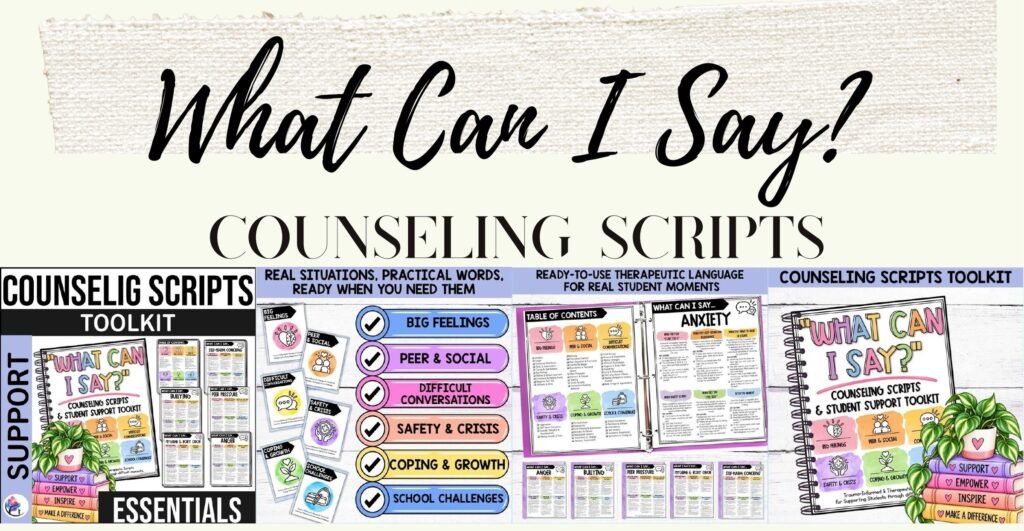
Try this in your next session: if you sometimes wonder what to say in those unexpected moments, our What Can I Say? Counseling Scripts Toolkit offers trauma-informed language for big emotions, difficult conversations, boundaries and repair, with brief guidance on what may be happening beneath a student’s words or behavior. Written for counselors, psychologists, teachers and support staff, the scripts can be used as written or adapted to your style and the student’s age, so it works well as a quick reference before a check-in or restorative conversation.
Social-Emotional Learning (SEL)
SEL programs explicitly teach skills such as self-awareness, self-management, social awareness, relationship skills and responsible decision-making, the same skills resilient students draw on when they name a feeling, calm their body or ask for help.
The strongest evidence here comes from a meta-analysis of 213 school-based, universal SEL programs involving more than 270,000 students from kindergarten through high school (Durlak et al., 2011). Compared with control groups, students in SEL programs showed significant improvements in social and emotional skills, attitudes, behavior and academic performance, including an 11-percentile-point gain in achievement. Outcomes were influenced by whether programs followed recommended practices for skill-building and whether there were implementation problems, so how SEL is taught matters as much as whether it is taught.
Picture a small group of fourth graders practicing a coping plan. The counselor models first: “When I feel frustrated, I notice my shoulders get tight. I can take three slow breaths, then ask, ‘What’s one small thing I can try next?'” Students then talk through scenarios, choose a strategy that fits them and rehearse it before trying it in class. Short, explicit, repeated practice like this helps a skill travel beyond the lesson. Our guide to coping skills activities for students has more ideas.
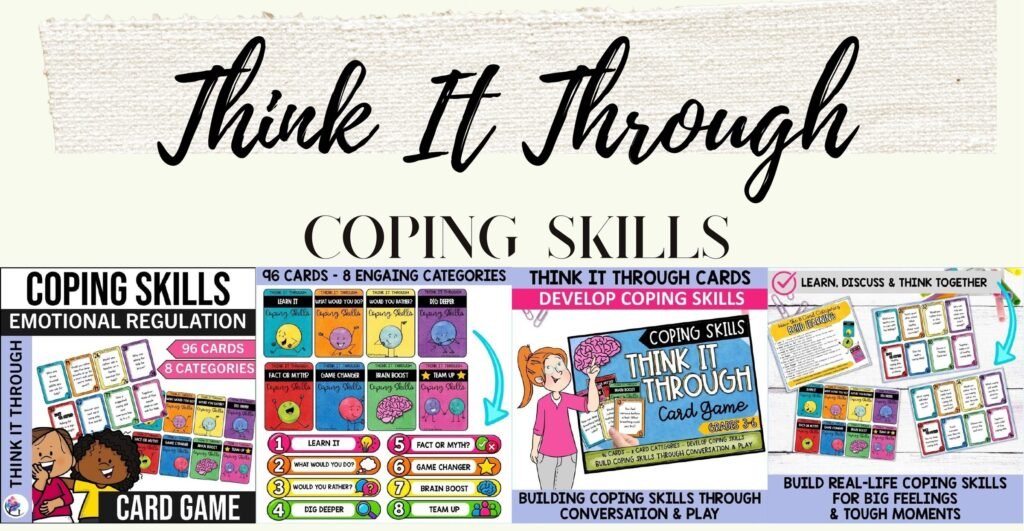
From our counseling room to yours: our Think It Through Coping Skills Cards turn this kind of practice into a conversation game for children, with 96 cards across eight categories such as “What Would You Do?”, “Fact or Myth?” and “Team Up.” Use a few cards as a warm-up in an individual session, or play in a small group so students compare strategies. One reviewer wrote, “I love the variety of coping strategies because students can explore what genuinely works for them instead of being given the same few suggestions.”
Growth Mindset
A growth mindset is the belief that abilities can develop through effort, effective strategies and help from others. In Carol Dweck’s early experiments with fifth graders, children praised for their intelligence showed less persistence, less enjoyment and poorer performance after a failure than children praised for their effort (Mueller & Dweck, 1998).
The wider evidence is more mixed than popular posters suggest. Two meta-analyses found that the overall link between growth mindset and achievement, and the overall effect of mindset interventions, were weak, although students from low socioeconomic backgrounds or who are academically at risk may benefit (Sisk et al., 2018). A national US study found that a short online growth mindset intervention (under an hour) improved grades among lower-achieving secondary students, with effects depending on school context and appearing where peer norms supported the message (Yeager et al., 2019). Growth mindset is a helpful lens rather than a stand-alone fix.
In practice, focus on the process. Picture a student who says, “I’m bad at math.” An adult might respond: “Math feels hard right now. You haven’t figured out this type of problem yet. Let’s look at what you tried and pick one new strategy.” Pair the “power of yet” with concrete strategies and real support, so struggling never sounds like a lack of effort. For more ideas, see our guide to cultivating a growth mindset in schools.
Mindfulness and Stress Regulation
Mindfulness practices such as slow breathing and noticing the senses are widely used in schools to help students manage stress, and the research is promising but mixed. In a trial with 100 fourth and fifth graders, students in classrooms using the MindUP mindfulness curriculum showed greater improvements in cognitive control, emotional control, empathy, optimism and peer acceptance than students in a social responsibility program (Schonert-Reichl et al., 2015).
On the other hand, the large MYRIAD trial across 84 UK schools found that a 10-lesson school-based mindfulness program was not superior to schools’ usual social-emotional teaching for adolescents’ risk of depression or well-being one year later (Kuyken et al., 2022). Mindfulness fits best as one tool within a broader SEL approach.
Keep practices short, invitational and trauma-informed: offer eyes-open options, let students choose an anchor (their breath, feet on the floor or a sound in the room) and never require stillness or silence. Picture a class returning from a noisy recess. The teacher says: “Let’s take one minute to land. You can rest your eyes or look at a spot on your desk. Notice three sounds you can hear, then take two slow breaths.” Our article on integrating mindfulness into school curriculums explores this further.
Try this in your next group: for a structured option, our Mindfulness Small Group Counseling Curriculum Bundle includes separate seven-session “Mindfully Me” curriculums for elementary, middle and high school, covering mindful moments, feelings, the senses, breathing and gratitude. Each is ASCA-aligned and includes parent/guardian letters, teacher nomination forms and pre and post outcome measures, so you can run the group and track progress without building it from scratch.

Putting the Research Into Practice
Use this quick reference to match each research area to everyday practice. The strategies are professional recommendations, so adapt them to your students’ ages, needs and setting.
| Research area | What the evidence suggests | Try this | Suggested ATR resource |
|---|---|---|---|
| Supportive relationships | Consistent evidence that caring adult relationships protect and support students | Greetings by name, two-minute check-ins, repair after conflict | What Can I Say? Counseling Scripts Toolkit |
| Social-emotional learning | Strong evidence for well-implemented, skill-focused programs | Teach, model and rehearse one coping skill at a time | Think It Through Coping Skills Cards |
| Growth mindset | Mixed: small effects overall, more promising for some students and school contexts | Praise effort and strategy, add “yet,” pair with real support | Fixed vs Growth Mindset Bundle |
| Mindfulness | Promising but mixed; best as part of a broader SEL approach | Short, invitational practices built into daily routines | Mindfulness Small Group Counseling Curriculum Bundle |
No single program builds resilience on its own. The research points to a combination of steady relationships, explicit skill-building, a culture where mistakes feel safe and practical regulation tools, offered consistently over time.
Frequently Asked Questions
What is the most important factor in building resilience in students?
Research consistently points to relationships. Having at least one stable, committed relationship with a supportive adult is identified as the most common factor among children who develop resilience, and school staff can be part of that support.
Does teaching growth mindset build resilience?
It can help, particularly for students who are academically at risk, but overall effects in research are small and depend on context. It works best alongside concrete strategies and a school culture that backs up the message.
Is mindfulness effective for students?
Findings are mixed. Some elementary programs have shown benefits for self-regulation and social skills, while a large UK trial found a school-based mindfulness program was no better than usual social-emotional teaching for adolescents’ mental health. Use mindfulness as one invitational tool within a wider SEL approach.
References
- Masten (2001): Ordinary magic: Resilience processes in development, American Psychologist
- Center on the Developing Child at Harvard University: Resilience
- Roorda et al. (2011): The influence of affective teacher-student relationships on students’ school engagement and achievement
- Durlak et al. (2011): The impact of enhancing students’ social and emotional learning
- Mueller & Dweck (1998): Praise for intelligence can undermine children’s motivation and performance
- Sisk et al. (2018): To what extent and under which circumstances are growth mind-sets important to academic achievement?
- Yeager et al. (2019): A national experiment reveals where a growth mindset improves achievement
- Schonert-Reichl et al. (2015): Enhancing cognitive and social-emotional development through a mindfulness-based SEL program
- Kuyken et al. (2022): Effectiveness and cost-effectiveness of universal school-based mindfulness training (MYRIAD)
Looking for practical, ready-to-use resources to support your resilience and SEL lessons? The All Therapy Resources Membership provides access to a growing collection of thoughtfully developed counseling activities, interactive games, and therapeutic tools designed to save preparation time while supporting meaningful, skill-focused learning.