
There is something deeply vulnerable about asking a child or teenager to think about their future.
On the surface, career exploration can look fairly simple. We ask students what they enjoy, what they are good at, or what they want to become one day. Schools hold career days. Students complete interest inventories. Adults encourage goal setting and future planning.
But underneath those conversations is often something much deeper emotionally.
Because when children think about the future, they are not just thinking about careers.
They are thinking about who they believe they are.
They are quietly asking themselves questions like:
“Am I capable?”
“Do I belong in spaces like that?”
“Could someone like me actually succeed?”
“What if I fail?”
“What if I choose wrong?”
“What if I never figure it out?”
I think adults sometimes underestimate just how emotionally loaded future-thinking can become for children and teenagers.
Especially for students who already carry anxiety, perfectionism, low self-esteem, learning struggles, trauma, social comparison, or fear of disappointing others.
That is why I believe career exploration needs to be approached through a far more compassionate, trauma-informed, and emotionally supportive lens.
Because healthy future planning should not feel like pressure.
It should feel like possibility.
Children Begin Forming Beliefs About Their Potential Earlier Than We Realize
One thing I have noticed repeatedly over the years is that children begin building internal stories about themselves very early.
Sometimes those stories sound hopeful:
“I’m creative.”
“I’m good at helping people.”
“I love building things.”
“I want to make a difference.”
But other times, those stories become painfully limiting.
“I’m not smart enough.”
“I’m bad at school.”
“Other people are better than me.”
“I could never do something like that.”
Many children carry these beliefs quietly.
Adults may only see the surface behavior — the disengagement, avoidance, joking, procrastination, or lack of confidence — without fully realizing the deeper beliefs sitting underneath.
What is important to understand is that the brain is constantly gathering information about identity and self-worth. Neuroscience shows us that repeated thought patterns and emotional experiences gradually strengthen neural pathways over time. In simple terms, the more often children think something about themselves, the more automatic and deeply rooted those beliefs can become.
This is why language matters so much.
The way adults speak to children about learning, success, intelligence, mistakes, strengths, and possibility genuinely shapes how children begin seeing themselves over time.
And honestly, some students are not lacking ability nearly as much as they are lacking belief in their own potential.
The Nervous System Plays a Bigger Role in Motivation Than Many People Realize
Schools are slowly becoming more aware that motivation is not always simply about effort or attitude.
Sometimes students are emotionally overwhelmed long before adults recognize it.
Children who are anxious, dysregulated, highly stressed, or emotionally exhausted often struggle with future-oriented thinking because the brain is focused primarily on coping in the present moment.
The prefrontal cortex — the part of the brain responsible for planning, decision-making, organization, goal setting, and problem-solving — functions best when children feel emotionally regulated and psychologically safe.
When stress becomes chronic, the nervous system often shifts into protection mode rather than exploration mode.
That changes how students engage with learning, planning, and future thinking altogether.
A student who appears “unmotivated” may actually feel deeply overwhelmed internally.
A student avoiding career conversations may be carrying intense fear about failure.
A student refusing to participate may already believe they are incapable.
Children rarely say these things out loud.
Instead we often see shutdown, disengagement, perfectionism, procrastination, or complete avoidance.
That is why emotionally safe learning environments matter so much. Students are far more able to imagine possibilities for themselves when they feel supported rather than judged.
Career Exploration Should Be About Discovery, Not Pressure
I think one of the biggest mistakes adults unintentionally make is treating career exploration as though children need immediate certainty.
“What do you want to be?”
“What career path are you choosing?”
“What’s your long-term plan?”
Honestly, those questions can feel enormous for young people who are still discovering:
who they are,
what matters to them,
what they enjoy,
how they learn,
and where they feel most connected.
Healthy career exploration should create room for curiosity rather than fear.
Because identity development is not linear.
Children grow.
Interests evolve.
Strengths emerge over time.
Confidence develops through experience.
And many adults eventually work in careers they never could have predicted as children.
Students need opportunities to safely explore possibilities without feeling like every decision defines their entire future.
That emotional flexibility matters deeply.
Especially for perfectionistic students who often feel intense pressure to “get it right.”
Younger Children Need Space to Dream Without Limits
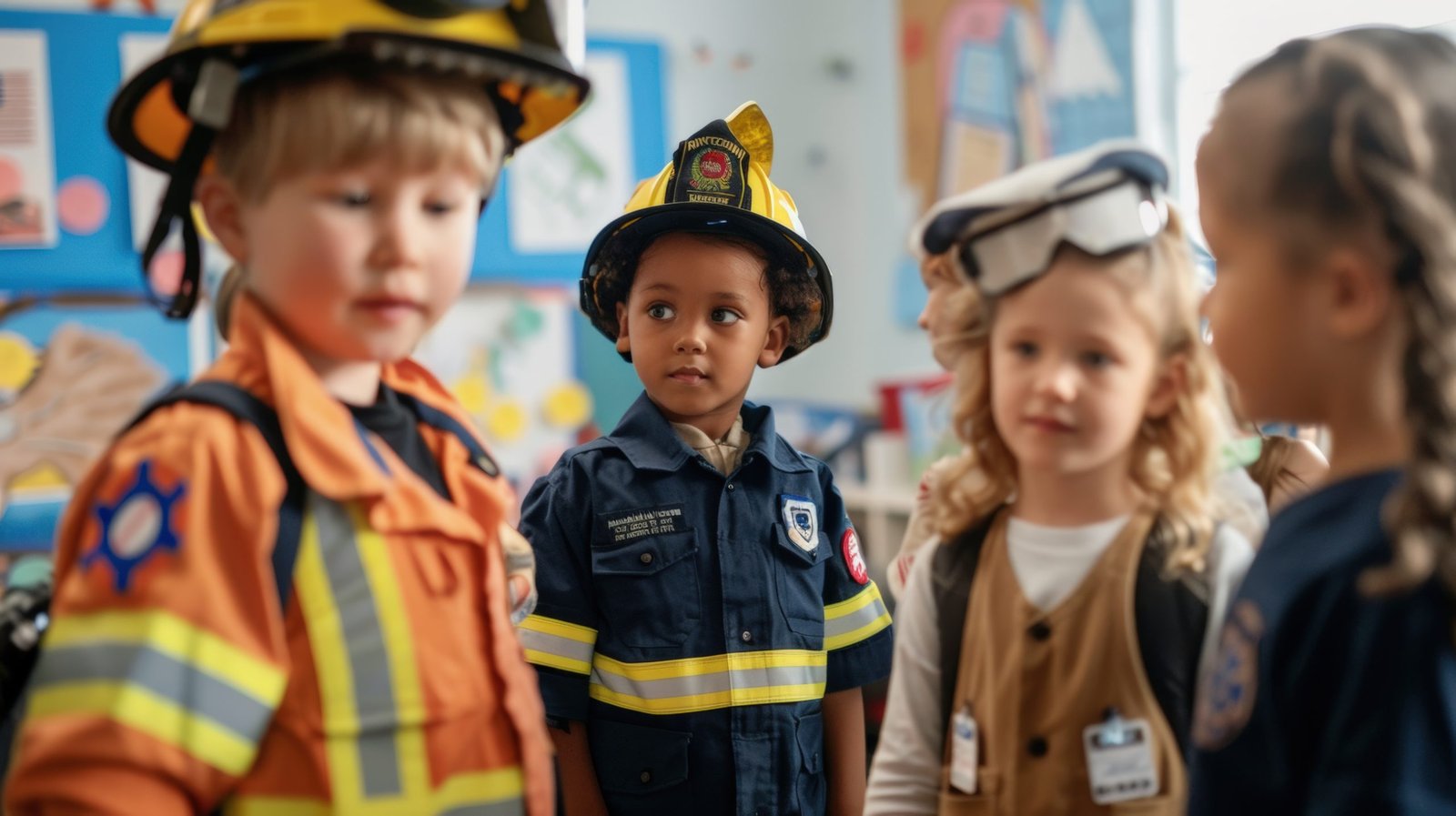
With younger students, career exploration should feel imaginative, playful, and expansive.
Young children naturally think through creativity, storytelling, role play, and curiosity. They are often drawn toward careers because of connection, fascination, or emotion rather than status or achievement.
A child may want to become a veterinarian because they deeply love animals.
Another may dream of becoming a teacher because school feels safe and meaningful to them.
Another may become fascinated by building, helping, inventing, performing, or protecting others.
Those early moments of curiosity matter.
Because children begin building a sense of:
“What feels meaningful to me?”
“What strengths do I notice in myself?”
“How can I contribute to the world around me?”
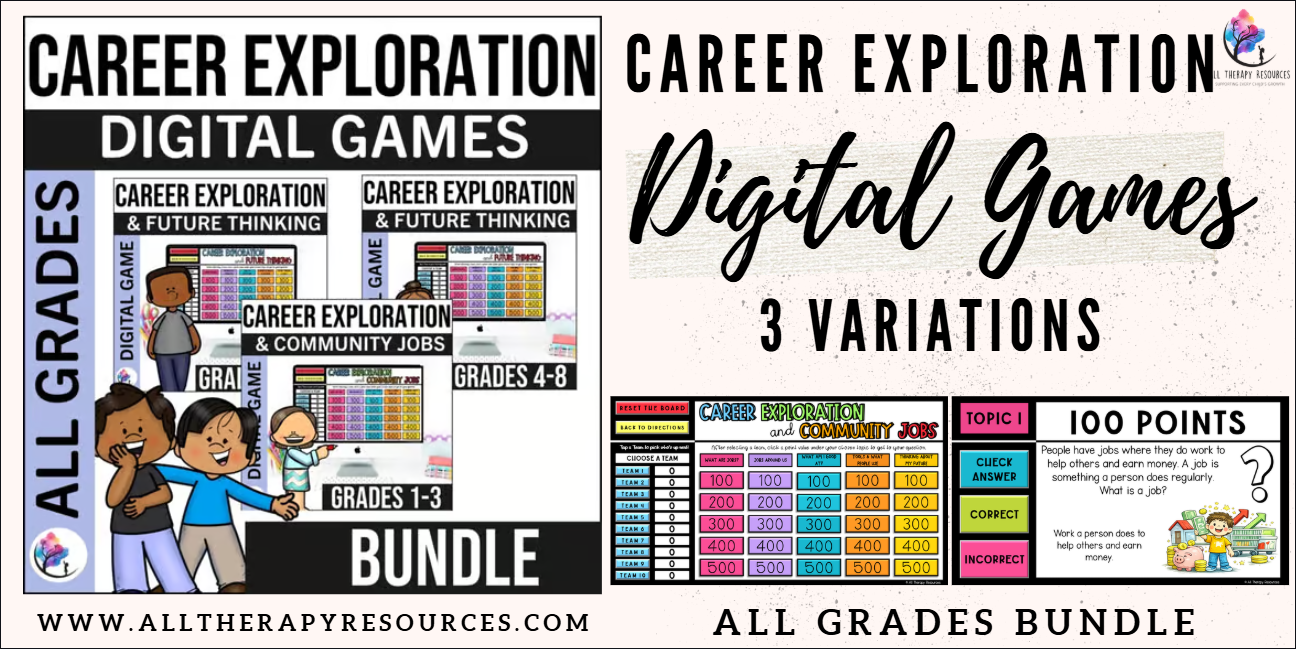
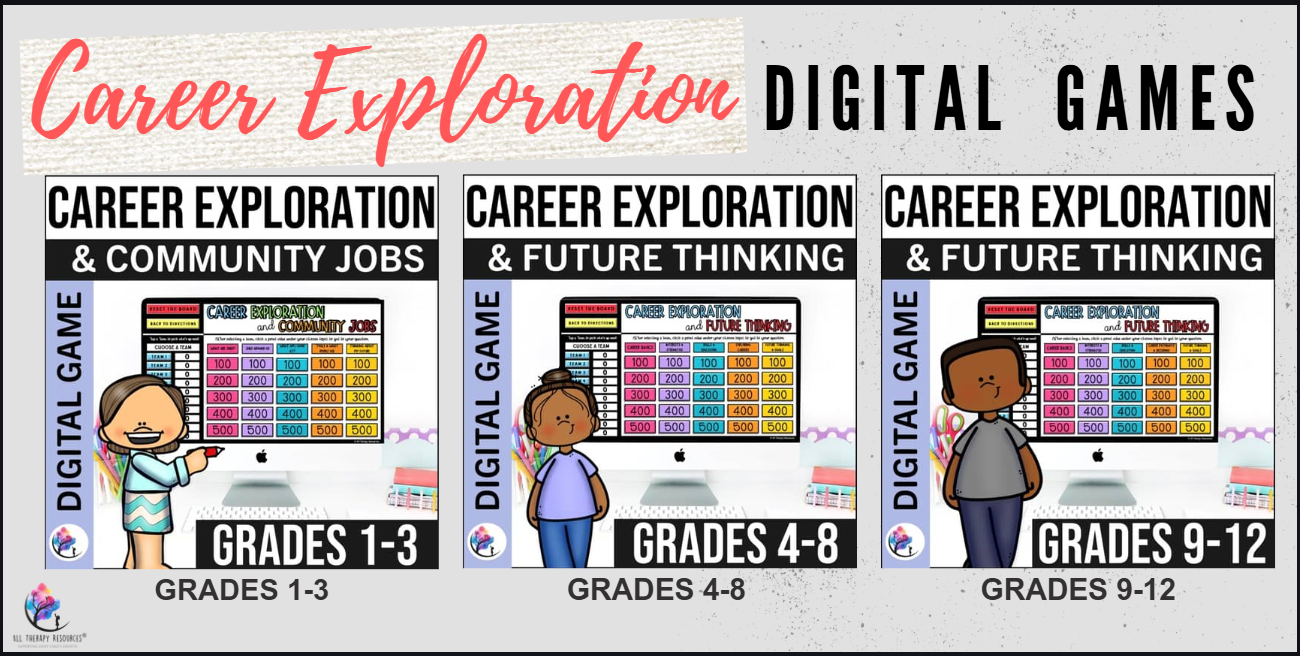
That is why our Career Exploration Elementary Digital Game focuses not simply on careers themselves, but on helping children safely explore interests, community roles, strengths, and future possibilities in engaging and developmentally appropriate ways.
Middle School Is Often Where Self-Doubt Starts Getting Louder
Middle school can be such a tender developmental stage emotionally.
Students become increasingly aware of comparison, achievement, popularity, identity, and perceived success. Many begin measuring themselves against peers constantly, even if adults do not fully realize it.
This is often the age where students quietly begin narrowing their sense of possibility.
Some students stop trying things because they fear embarrassment.
Others become highly perfectionistic.
Some withdraw completely from challenges where success is not guaranteed.
Many middle school students are carrying far more fear than adults realize.
Fear of failing publicly.
Fear of looking “stupid.”
Fear of disappointing people.
Fear of not being enough.
That is why career exploration at this age needs to focus just as much on emotional safety and self-awareness as it does on future planning.
Students need repeated reminders that they do not need to have their entire future figured out at thirteen years old.
They need opportunities to explore strengths, interests, values, and possibilities in environments that feel supportive rather than evaluative.
Our Career Exploration Middle School Digital Game was created to support exactly that kind of reflective, emotionally safe exploration.
Teenagers Often Carry Invisible Anxiety About the Future
By high school, future-related anxiety can become incredibly intense for some students.
Teenagers are navigating academic pressure, identity development, social comparison, financial fears, college expectations, family pressure, and growing awareness about adulthood all at once.
Some teenagers already feel exhausted by the weight of trying to succeed before they have even entered adulthood.
One thing I often notice is that many teens quietly believe there is one “correct” path they are supposed to follow.
If they fall behind, change direction, struggle academically, or feel uncertain, they may interpret that uncertainty as personal failure.
But life rarely unfolds in perfectly predictable ways.
Most adults change.
Grow.
Adapt.
Shift careers.
Discover new passions.
Rebuild after setbacks.
Learn through experience.
That is why healthy career readiness work should focus not only on planning skills, but also on resilience, flexibility, self-awareness, and confidence-building.
Students need to understand that their worth is not dependent on having every answer immediately.
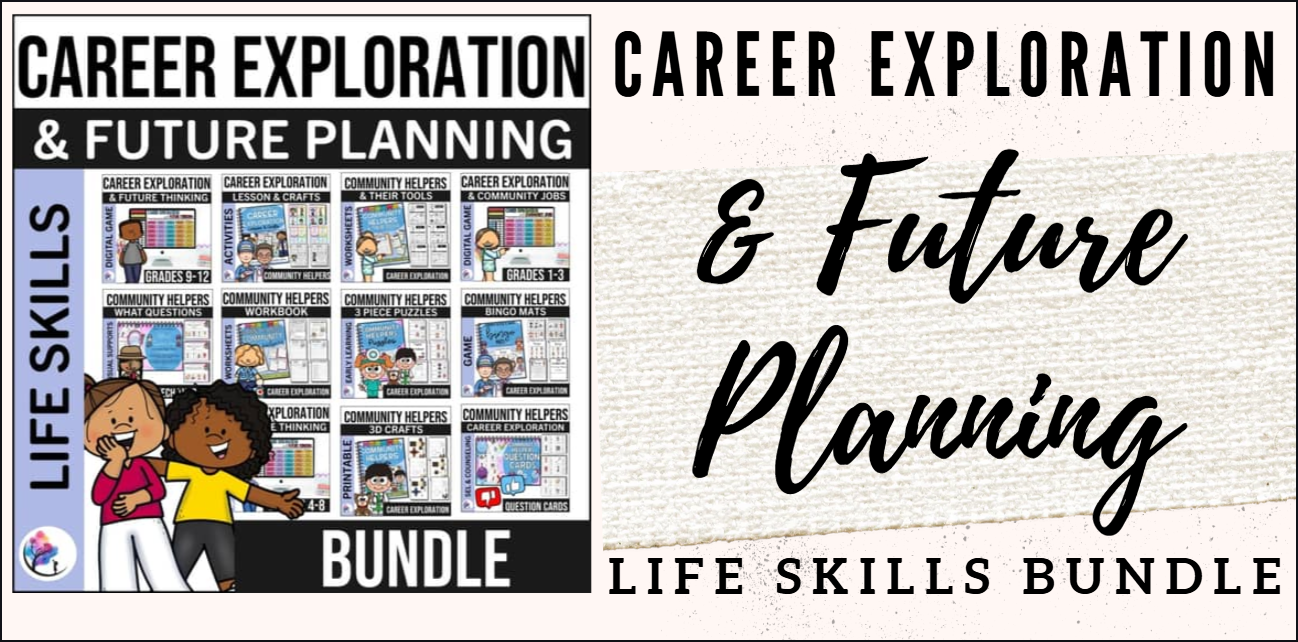
Our College and Career Readiness Digital Games for high school students were designed to help teenagers explore future pathways, strengths, interests, and planning skills in ways that feel encouraging and reflective rather than fear-driven.
Curiosity Is One of the Most Powerful Learning States
One of the most fascinating things neuroscience teaches us is that curiosity changes how the brain engages with learning.
When children feel curious, emotionally safe, and interested, the brain becomes far more receptive to exploration, memory formation, creativity, and flexible thinking.
Fear tends to narrow thinking.
Curiosity opens it.
That is why students often engage much more deeply when learning feels:
interactive,
strength-based,
collaborative,
creative,
and emotionally safe.
When students feel safe enough to wonder, imagine, explore, and ask questions without fear of humiliation or failure, future-thinking becomes much more accessible.
And this is why children need more spaces where exploration feels safe again.
Get the Tea with Angie – Founder of All Therapy Resources
I’ve learned over the years is that children are often quietly listening to every message the world gives them about who they are allowed to become.
Some children move through the world feeling naturally confident in their potential.
Others slowly begin shrinking themselves without adults fully noticing.
Not always because someone directly told them they could not succeed.
But because repeated experiences of comparison, anxiety, academic struggles, perfectionism, or low confidence quietly convinced them that certain opportunities belonged to “other people.”
And honestly, I think one emotionally safe adult can make an enormous difference in that process.
One adult who notices strengths.
One adult who sees potential beyond grades.
One adult who values curiosity over perfection.
One adult who reminds a child that success does not have to look the same for everyone.
Because sometimes career exploration is not really about careers at all.
Sometimes it is about helping children slowly rebuild belief in themselves.
Helping them imagine that there might actually be space for them in the future too.
Remember
Career exploration is about far more than preparing children for jobs.
At its core, it is about helping students develop:
self-awareness,
hope,
confidence,
curiosity,
identity,
resilience,
and belief in their own possibilities.
Many children and teenagers do not need more pressure about the future.
They need more emotionally safe opportunities to explore who they are becoming.
Looking for More Trauma-Informed Resources?
If you found the ideas and strategies in this article helpful, many of the resources discussed throughout this post are available inside the All Therapy Resources Membership.
Our membership includes a growing library of counseling, SEL, speech therapy, OT, behavior, and educational resources designed to support real-world practice in schools, clinics, and therapeutic settings.
Inside the membership, you’ll find:
- Interactive digital games
- Trauma-informed counseling resources
- Social-emotional learning activities
- Speech and OT supports
- Behavior and regulation tools
- Printable activities, handouts, and therapy materials
- New resources added regularly