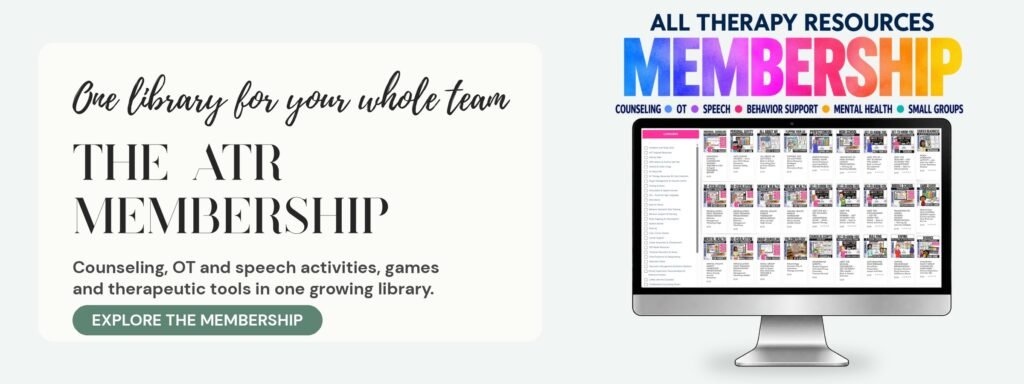
In most schools, the counselor, the occupational therapist, the speech-language pathologist and the school psychologist all support the same students, often in the same week. Yet each professional usually searches for resources alone, in different places, using different language. A school counseling resources membership that serves the whole team can change that.
This article looks at what a multidisciplinary therapy resources membership offers, what to look for before you join one and how school teams can use a shared library to plan more consistent support for students.
Why Multidisciplinary Matters in Schools
Student needs rarely fit neatly into one discipline. A student with big emotions may also have sensory needs and difficulty expressing what they feel. When the counselor teaches a calm-down routine, the OT supports sensory regulation and the SLP builds feelings vocabulary, progress is stronger when everyone uses the same words and visuals.
Picture a second grader who melts down during transitions. The counselor introduces a “pause and breathe” routine, the OT adds a heavy-work movement break before transitions and the SLP practices the phrase “I need a break” with a visual card. Three professionals, one shared plan, and one consistent message for the student.
Try this with your team: At your next student support meeting, agree on one shared phrase and one shared visual for the skill you are targeting. Write them at the top of the student’s plan so every adult uses the same language.
What to Look for in a Therapy Resources Membership
Not every membership is built for school-based practice. Before you subscribe, check these features:
| What to check | Why it matters |
|---|---|
| Covers several disciplines | Counselors, OTs, SLPs, psychologists and teachers can find resources in one place and use shared language. |
| Organized by role, topic and grade | You find what you need quickly instead of scrolling through everything. |
| Ready to use | Resources should work the next day with minimal adaptation. |
| Clinically informed and trauma-sensitive | Activities should respect emotional safety and avoid forced disclosure. |
| Regular additions | A library that keeps growing stays relevant to changing caseloads. |
| Flexible plans | Monthly and annual options let you choose what fits your budget. |
If you are building your classroom lessons as well, our guide to building a comprehensive school counseling program shows where shared resources fit.
How School Counselors Use a Shared Library
For counselors, a membership is most useful when it covers all three tiers: classroom lessons, small group curriculums and individual counseling tools, plus the forms and data tools that support documentation. Having these in one place makes it easier to keep the same skill language from a class lesson through to a small group.
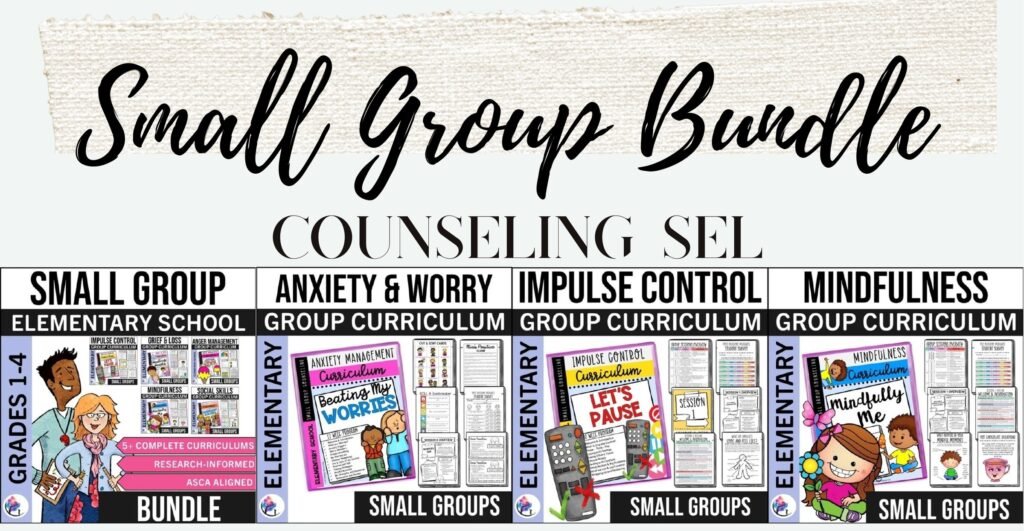
From our counseling room to yours: the Small Group Counseling Curriculum Bundle for Elementary brings together structured, multi-session elementary groups with session plans and activities, so you can run Tier 2 groups that build on the skills taught in class lessons.
How OTs Use a Shared Library
Occupational therapists support regulation, fine motor skills, play and daily routines. When OT resources sit in the same library as counseling tools, it becomes easier to connect sensory strategies with emotional regulation lessons, and to share simple visuals with teachers.
Try it in your next OT session: the Play Skills Program for Developing Social Play gives structured activities for turn taking, sharing and interacting with peers. One reviewer wrote, “This is a great resource for developing social play skills!” and another found it “helpful to coach communication partners on encouraging play skills,” which makes it useful for OT, speech and counseling teams working together.

How SLPs and Psychologists Use a Shared Library
Speech-language pathologists need visuals, communication supports and social communication activities, while school psychologists often look for psychoeducation, assessment-adjacent tools and resources to recommend to staff and families. A multidisciplinary library means both can find materials that match what the counselor is already teaching.
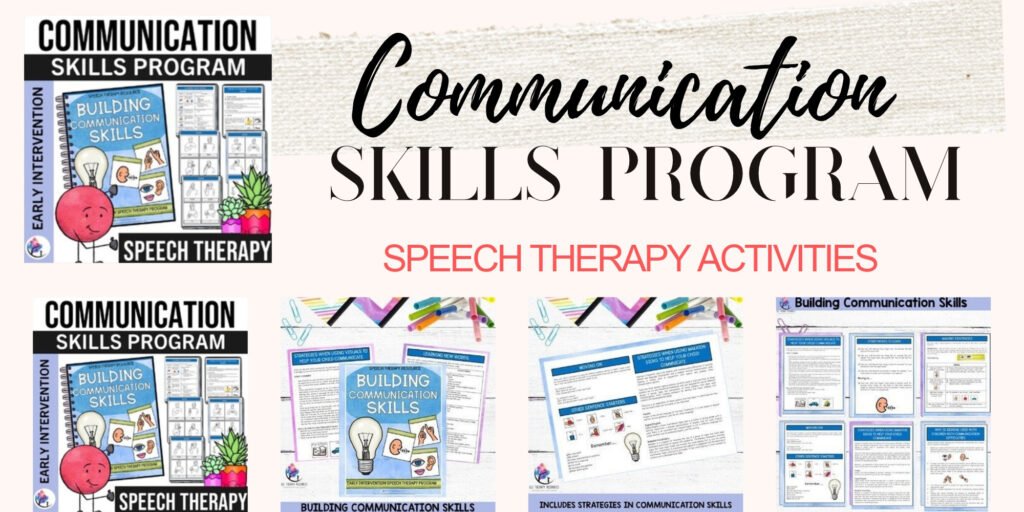
For communication support: the Key Word Signs Communication Visuals support early communication with signs and visuals for therapy sessions, classrooms and home. A reviewer called it “Such a well-designed and practical resource for supporting communication development,” and another shared that it “has been a really great resource for my students in OT services.” As with any signing resource, check that the signs match the sign system used in your region.
Making a Membership Worth It
- Plan by month: use monthly themes to plan lessons and sessions ahead instead of searching week by week.
- Share with your team: agree which resources you will use for shared goals.
- Explore by role: start with your own discipline, then look at what colleagues use for the same students.
- Revisit regularly: new resources are added over time, so check back each month.
Frequently Asked Questions
What is a multidisciplinary therapy resources membership?
It is a single subscription library with resources for several school-based professions, such as counseling, occupational therapy, speech-language pathology, psychology and teaching, instead of one discipline only.
Is a membership better than buying individual resources?
It depends on how you work. If you need one resource for this week, an individual purchase makes sense. If you plan across the year or support many students and topics, a membership usually saves time and gives you more variety.
Can a whole school team share one membership?
Check the membership’s terms of use, as licenses usually cover individual use. Many teams choose individual memberships so each professional has full access.
Are the resources suitable for different grade levels?
Look for a library organized by grade band, from early learning through high school, so each professional can find developmentally appropriate tools.
Looking for practical, ready-to-use resources to support your whole school support team? The All Therapy Resources Membership provides access to a growing collection of thoughtfully developed counseling, OT, speech and language and SEL activities, interactive games, and therapeutic tools designed to save preparation time while supporting meaningful, skill-focused learning. It is one of the few memberships built for counselors, OTs, SLPs, psychologists and educators together, with English and Spanish resources and monthly or annual options.