Finding the right printable games for social skills groups often feels like searching for a needle in a haystack of generic classroom activities. You need materials that engage students without feeling childish, teach specific skills without lecturing, and fit into your existing small group counseling curriculum planning. The most effective resources work as therapeutic tools, not time-fillers. They give students a structured place to practice interpersonal skills with psychological safety. This matters because students who struggle socially often feel real anxiety during unstructured peer interactions, so direct instruction or cold role-play can feel threatening rather than helpful.
Why Game-Based Learning Works for Social Skills Groups
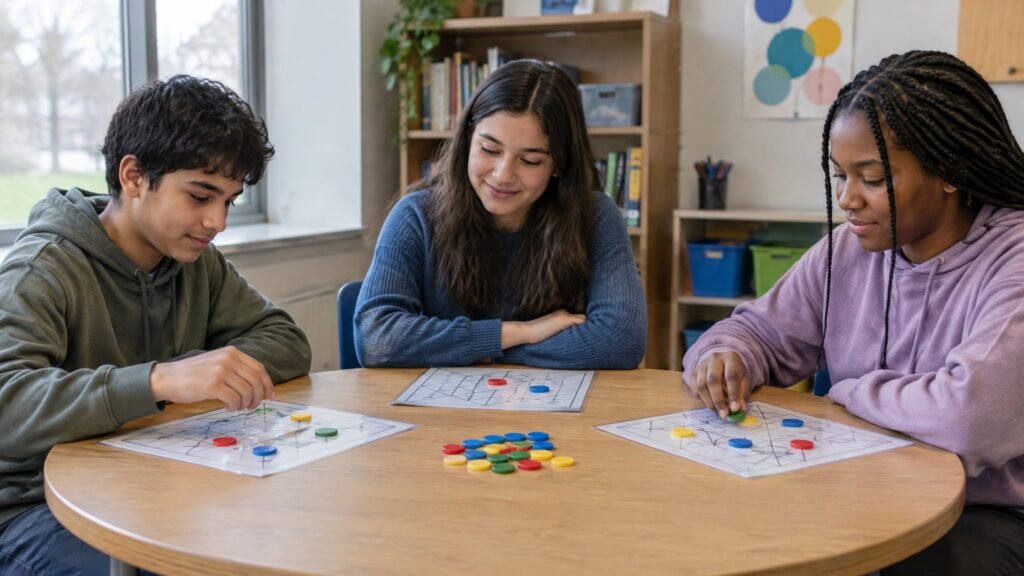
Think of a game as a social laboratory: a place to test interpersonal moves at lower stakes than an unstructured hallway or lunch table allows. Rules and turn-taking create predictability, and that predictability lowers the guard of an anxious learner. When you bring out a board game or card activity, the focus shifts from personal performance to the game itself. That shift reduces defensiveness and opens the door to real connection.
Reducing Anxiety Through Structured Play
Trauma-informed facilitation of social skills groups depends on predictable routines and clear boundaries. Printable games with consistent rules provide that structure, while still leaving room for authentic peer connection. Students who have experienced relational trauma or repeated social rejection often walk into a group bracing for failure or judgment. A well-designed game gives them a neutral “third object” to focus on besides each other, so a student can take part without feeling exposed or watched.
This outside structure acts as a regulating scaffold for students whose inner sense of safety is still fragile.
Creating Safe Opportunities for Peer Feedback
Direct correction during social skills instruction can trigger shame, and shame shuts down learning fast. Games sidestep this because feedback lives inside the play. When a student makes a poor choice during a friendship game, the consequence belongs to the story or the game rules, not to an adult’s critique. Peers will comment on game decisions in ways they would never say in open discussion, and those moments become natural social learning rather than evaluation.
Try this in your next session: Before the first turn, set two group rules on a card in the middle of the table: “We cheer for good tries” and “We can pass and come back.” When a student hesitates, you might say, “Do you want to answer now, or pass and come back to it?” Offering the choice out loud tells the whole group that participation is safe.
Elementary Printable Games for Foundational Friendship Skills
Younger students need concrete, visually engaging formats that match where they are developmentally. Elementary learners respond best when printable games for social skills groups pair bright visuals with simple rules, reinforcing foundational skills like naming feelings, taking turns, and reading body cues. These early experiences with structured social play build the groundwork for more complex interpersonal thinking later on.
Digital SEL Games for Emotional Recognition
Scenario-based digital games ask students to make an active choice, so they practice coping decisions instead of just hearing about emotional regulation. Projecting the game for the whole group also lets you track individual turns and pause for discussion when a situation sparks a real-life connection.
Adapting Printables for Early Learners
Physically handling game pieces supports hands-on learning and grounds abstract social ideas in something concrete, which matters a great deal for early elementary students. Laminating cards and boards helps them survive several groups a week. Pair printed components with fidgets or movement breaks for students who find it hard to stay seated. Printing a prompt question directly on each card also keeps your prompting consistent, even in the middle of a behavior interruption.
Try this in your classroom: Picture a first grade group playing a feelings card game. When a student draws “Your friend took your spot in line,” pause and ask, “What does your body feel like? What could you do?” Then let the student act out their choice with a puppet. Turning the answer into a quick action helps younger children remember the skill.
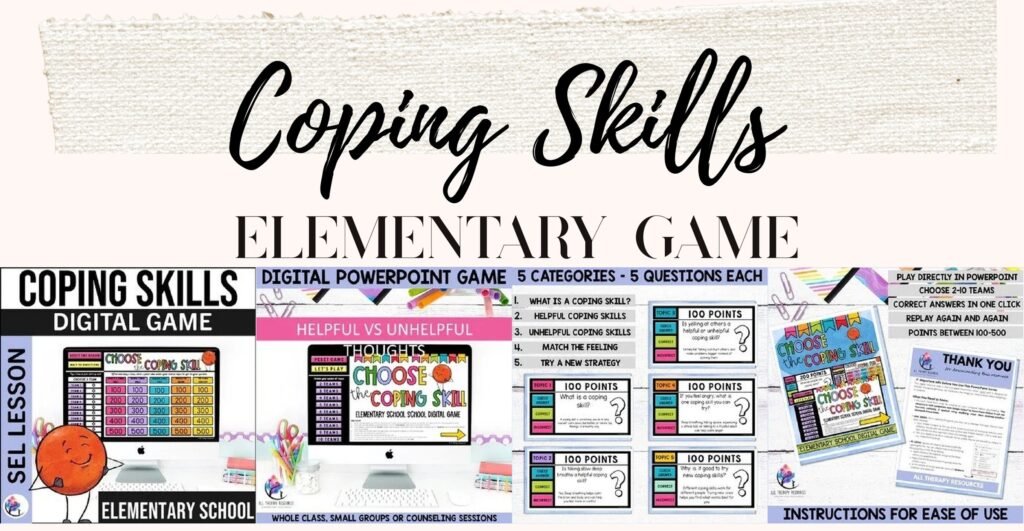
For a ready-to-play option, our Choose the Coping Skill: Elementary School Digital Game is an interactive PowerPoint game that helps young students recognize feelings, explore coping tools, and practice healthy choices when emotions feel big. Use it with a small group to open a session on calm-down strategies, then have each student pick one coping tool to try that week. One elementary educator said it “made learning about coping strategies feel interactive and approachable instead of like a lecture.”
Middle School Social Skills Games and Curriculum
The developmental shift toward peer approval and identity in grades six through eight calls for resources that respect pre-teen maturity while still addressing more complex social dynamics. Generic elementary materials tend to fall flat because students read them as babyish, yet adult-oriented content misses the friendship skills middle schoolers are actively building. Effective small groups at this stage target skills like joining a conversation, disagreeing respectfully, and handling exclusion, without triggering resistance.
Navigating Complex Peer Dynamics Through Play
Sequenced sessions can target specific friendship skills, like joining in or disagreeing respectfully, through repeated game-based practice rather than one-off lessons. Middle school social life involves real power dynamics and shifting friendships, so pre-teens benefit from practicing those moves in a low-stakes game before they try them at the cafeteria table or in a group project.
Bilingual Options for Inclusive Group Counseling
Culturally responsive support is more than translation. It calls for resources that reflect different communication styles and family values around relationships. Using bilingual SEL support strategies lets multilingual learners access social skills instruction in their home language while they continue building English. When students see their language reflected in counseling materials, it tells them their whole self belongs in the group, which strengthens the relationships that make growth possible.
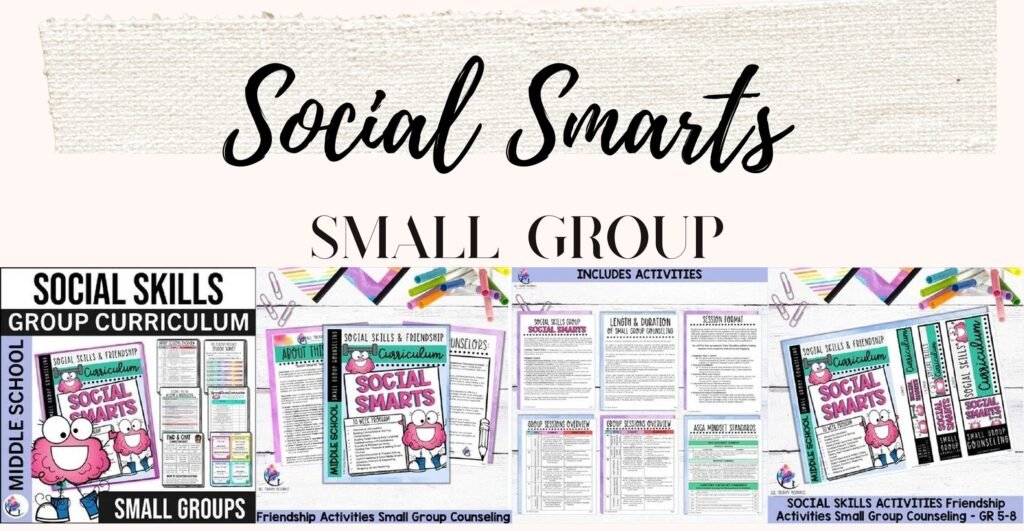
If you’d like a full sequence rather than single games, our Social Smarts Middle School Small Group Counseling Curriculum offers 10 interactive sessions for grades 6 to 8, with guided discussions, role-plays, and reflection activities on empathy, digital communication, peer pressure, and conflict resolution. Run one session a week across a term, and use the role-play scenarios as the “game” portion of each group. One middle school counselor wrote that “each session is meaningful and easy to run,” and that their students especially enjoyed the lessons on peer pressure and digital friendships. Another uses it with special education students who need extra help with social skills.
High School Peer Interaction Games and Counseling Strategies
Adolescents need approaches that honor their growing independence and connect social-emotional learning to real stressors: academic pressure, college and career decisions, the uncertainty of what comes next. Childish graphics or patronizing scenarios will undercut your credibility with this group straight away, so printable games for social skills groups need mature design and content that applies to their lives. Framing skill practice as preparation for adulthood, rather than fixing a deficit, fits what teens need developmentally: competence and self-determination.
Respecting Adolescent Autonomy in Skill Practice
High school students do better with activities that treat them as active agents in their own development. Pairing adolescent identity exploration activities with social skills practice recognizes that teens are working out who they are and how they want to relate to others at the same time. Games that offer real choices, without preachy messaging, land better because they mirror the decisions teens already make every day.
Connecting Coping Skills to Real-World Stressors
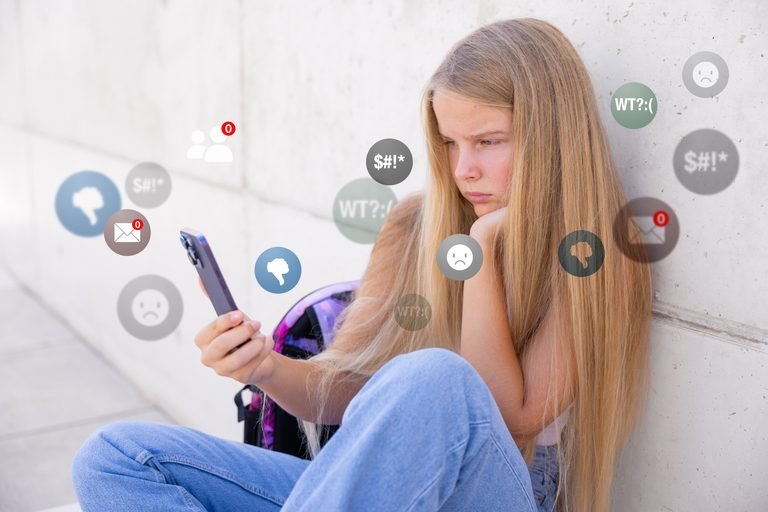
Scenario games work well with teens when the situations feel real: test stress, social media pressure, a friendship falling apart. Unlike a generic coping skills list, a game asks students to weigh options and consider consequences, which builds decision-making alongside emotional awareness. Digital delivery suits how comfortable teens already are with technology and allows private reflection inside a group setting.
Try this in your next session: After each scenario, ask two quick questions: “What would most people do here?” and “What would you want to do, if no one was watching?” The gap between those answers often opens the most honest discussion of the session, without anyone being put on the spot.
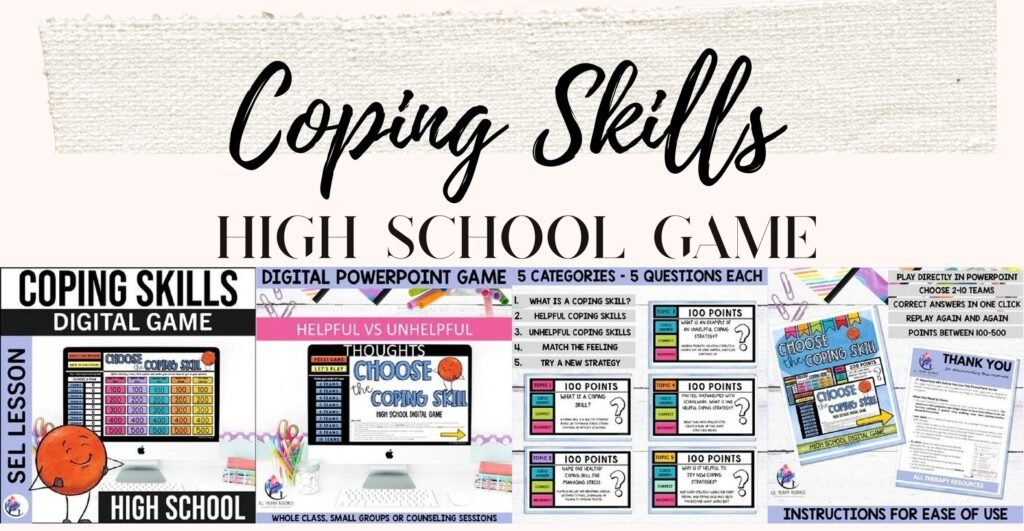
Our Choose the Coping Skill: High School Digital Game brings this into a ready-to-use PowerPoint game, with realistic school and life situations that ask teens to think critically about how they handle stress and strong emotions. It fits a Tier 2 stress management group or an advisory lesson. One reviewer said it “worked really well with older students,” and that the questions helped students consider how they manage stress in their own lives.
Facilitating Social Skills Bingo and Scenario Card Games
Low-prep formats like social skills bingo and scenario cards give you flexibility when your caseload is varied and your schedule unpredictable. They let you target one goal, such as conflict resolution or conversation starters, without committing to a full curriculum, which suits drop-in groups or short-term work. Swap generic prompts for situations drawn from your students’ current challenges while keeping the game structure that provides psychological safety. Repeating the same skill across different formats prevents boredom while reinforcing the learning.
| Grade band | Game formats that work well | Skills to target | Suggested ATR resource |
|---|---|---|---|
| Elementary | Picture card games, simple board games, projected scenario games | Naming feelings, turn-taking, calm-down choices | Choose the Coping Skill: Elementary |
| Middle school | Scenario cards, role-play rounds, bingo with real-life prompts | Joining in, respectful disagreement, peer pressure | Social Smarts Middle School Curriculum |
| High school | Choice-based digital scenarios, discussion cards | Stress management, decision-making, healthy coping | Choose the Coping Skill: High School |
Printable games don’t replace skilled clinical facilitation or individualized assessment. They work best as one part of a planned intervention.
Helping Skills Carry Over From Group Games to Daily Life
Skills practiced in the counseling office stay there unless students can use them during unstructured moments like a hallway transition or lunch. Intentional debriefing bridges that gap by helping students connect game scenarios to what is happening in their lives outside the group. Brief reflection moments built into the game reinforce learning without turning play into an interrogation. Tracking progress through observation notes rather than formal tests protects the relationship while still giving you something to share with stakeholders.
Debriefing Questions That Bridge Contexts
Good debriefing goes beyond “What did you learn?” and connects a specific game moment to students’ daily social world. Questions like “When did something similar happen this week?” or “Which strategy from the game might work in the cafeteria?” prompt concrete transfer instead of a vague summary. Timing matters. A quick check-in right after a meaningful game moment captures the insight while it is fresh. Model this bridging language yourself first, then gradually hand it over to students as the group builds trust.
Tracking Progress Without Disrupting Flow
Documentation should serve the group, not interrupt it, so fold data collection into natural pauses: setup, cleanup, and transitions. Simple tally marks or a brief note taken during those moments protect play time while still meeting accountability needs. Exit tickets or rating scales add student self-report without lengthy discussion.
Selecting Evidence-Informed Resources for Your Caseload
Whether a printable game is truly therapeutic or simply recreational comes down to its alignment with SEL standards, developmental appropriateness, and clinical intention. A quality resource states clear learning goals, gives you facilitator guidance for processing, and offers support for different learner needs. Evidence-informed design means the activity draws on established frameworks for social and emotional learning, not just good looks or entertainment value. Your professional judgment still matters most when adapting any resource to your own students and setting.
Frequently Asked Questions
How do I adapt social skills games for students with different developmental levels in the same group?
Adjust prompt complexity, add visual supports for younger learners, or offer a choice of response such as drawing or speaking. Pair students thoughtfully so peers can support each other. Focus on shared themes like friendship and feelings while varying how deeply each student is asked to reflect.
What makes a social skills game therapeutic rather than just fun?
Therapeutic games have clear learning goals, facilitator guidance for processing, and chances to practice skills with feedback in a psychologically safe structure. The key difference is whether the activity builds specific skills through deliberate design or simply fills time pleasantly.
How can I use bilingual social skills games effectively if I am not fluent in Spanish?
Partner with bilingual staff to co-facilitate where possible, so pronunciation and cultural nuance are accurate. Even when your own Spanish is limited, using the games signals respect for students’ home language. Having matching English materials on hand lets every student take part fully.
What debriefing questions actually help students use skills beyond the counseling office?
Ask specific bridging questions like “When did something similar happen this week?” or “Where could you try this tomorrow?” rather than general reflections. Help students name the real-life cues that should remind them to use the skill, and model those connections yourself first.
Looking for practical, ready-to-use resources to support your social skills groups? The All Therapy Resources Membership provides access to a growing collection of thoughtfully developed counseling activities, interactive games, and therapeutic tools designed to save preparation time while supporting meaningful, skill-focused learning.