Some children walk into the counseling room ready to talk. Others shrug, stare at the floor, answer every question with “I don’t know,” or tell you plainly that they don’t want to be there. If you work with children and teens, you will meet a resistant child in therapy sooner rather than later, and it can leave even experienced practitioners second-guessing themselves.
The good news is that resistance is not a dead end. It is information. A child who pushes back is telling you something about safety, control, past experiences with adults, or how they feel about being “sent” to see you. This guide walks through practical, trauma-informed ways to engage a resistant child in therapy or school counseling, with sample scripts, low-pressure activities and ideas you can use in your next session.
What Resistance in Therapy Often Means for Children
Children rarely choose counseling for themselves. A parent, teacher or administrator usually makes the referral, so the child may arrive feeling judged, in trouble or simply confused about why they are there. Seen through that lens, silence and refusal often make sense.
Common reasons a child may resist include:
- Feeling unsafe: children who have experienced trauma may have learned that adults are unpredictable, so holding back is a form of protection.
- Loss of control: being told where to go and what to talk about can feel like one more decision made without them.
- Shame or worry about being “bad”: many children assume counseling means they did something wrong.
- Loyalty to family: a child may worry that talking about home will get someone in trouble.
- Not having the words yet: younger children, and many teens, simply don’t have the vocabulary to describe what they feel.
- Past experiences with helpers: if earlier support felt rushed or unhelpful, the child may expect the same from you.
When we shift from “this child won’t cooperate” to “this child is protecting something,” our response changes. We stop trying to get past the resistance and start working with it.
Try this in your next session: Before you ask anything, name the situation openly. “I’m guessing you didn’t pick coming here today. A lot of kids don’t. You don’t have to talk about anything you don’t want to. We can just hang out and figure out if this is a place that could be useful for you.” This one statement lowers the stakes and hands back a little control.
Start With Safety and Choice, Not Questions
Direct questions are often the fastest way to shut a resistant child down. “How are things at home?” or “Why did you hit him?” can feel like an interrogation, especially in a first session. A trauma-informed approach puts physical and emotional safety first, then builds trust through predictability and choice.
Make the session predictable
Explain what will happen, how long you will meet and what happens to the things they share (in age-appropriate language, including the limits of confidentiality). Predictability helps a guarded nervous system settle. A simple visual of the session, such as “check in, choose an activity, wrap up,” can help younger children know what to expect.
Offer real choices
Small, genuine choices give a child some control back: where to sit, which activity to start with, whether the door is open or closed (within your setting’s policies), or whether they draw, build or play a game. Keep options to two or three so the choice feels easy rather than overwhelming.
Let silence be okay
Many practitioners rush to fill silence. With a resistant child, comfortable quiet can be a gift. Sitting side by side while you both work on something removes the pressure of eye contact and conversation. Picture a student who refuses to speak but agrees to build with blocks while you build beside them. Ten minutes in, they might comment on your tower. That small comment is engagement.
Use Play and Creative Activities to Lower the Pressure
For many children, play is a more natural language than talk. Play-based and creative activities let a child communicate indirectly, through a character, a drawing, a sand scene or a game, without having to say “this is about me.” This is one reason play therapy approaches are so widely used with children who find talking difficult. If you use sand trays, our guide to sand tray therapy prompts has ideas for gentle, open-ended starting points. And play is not only for little ones; older children and teens often respond well too, as we explore in Play Therapy Isn’t Just for Young Children.
Low-pressure options that work well with resistant children include:
- Drawing or coloring side by side: invite them to draw anything, then get curious about the picture rather than the child. “Tell me about this part.”
- Play dough and fidget-friendly tasks: busy hands often make for easier talking.
- Puppets or figures: a child may let a puppet say what they can’t.
- Feelings dice or cards: a roll of the dice makes sharing feel like part of a game rather than a demand.
- Sand tray scenes: building a world in the sand lets a child show rather than tell.
The key is to follow the child’s lead. Reflect what you notice (“That dinosaur is guarding the castle”) without rushing to interpret it. Over time, the child learns that you are interested in their world, not just in getting answers.
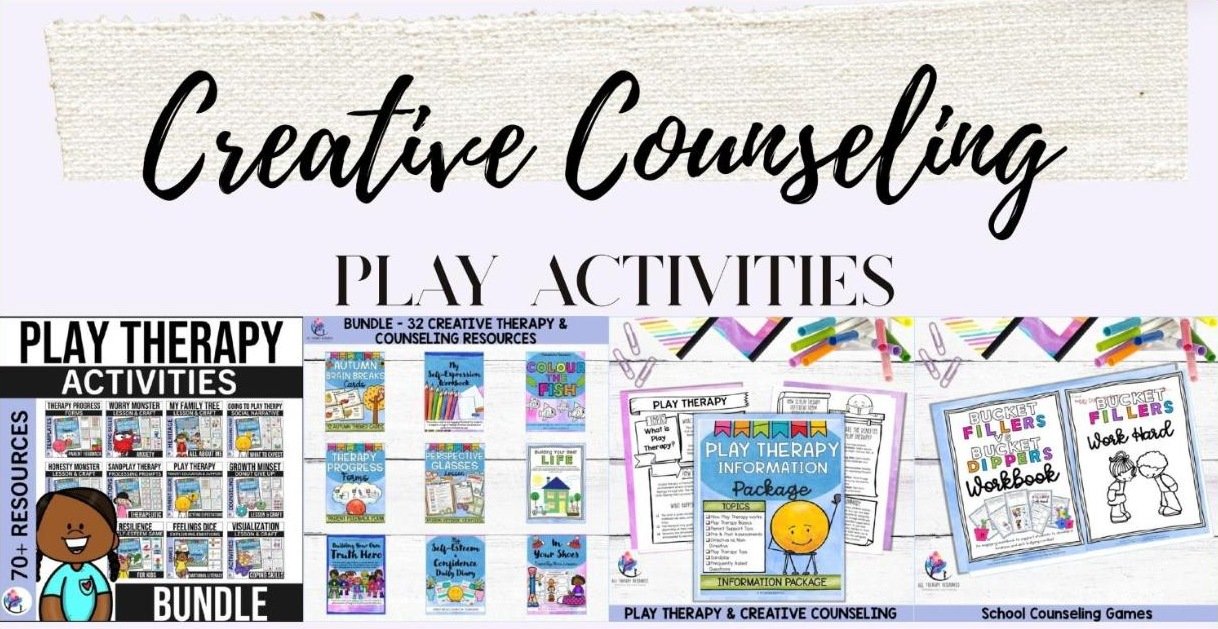
If you want a ready-made toolkit for this kind of work, our Play Therapy & Creative Counseling Activities Bundle brings together play-based and creative interventions for children and teens, including sandplay therapy prompts, feelings dice and play dough mats, mindfulness coloring pages, a worry monster activity and self-esteem and resilience games. It suits elementary and middle school counselors and therapists who want several low-pressure entry points on hand, so a hesitant child can choose the activity that feels safest that day. Try offering two options from the bundle at the start of a first session and letting the child pick.
Talk Less, Reflect More: Language That Builds Trust
How we speak matters as much as what we do. Motivational interviewing, which informs much of how we work at ATR, encourages practitioners to avoid arguing, lecturing or pushing for change, and instead to listen, reflect and draw out the person’s own reasons. With children, that translates into a few simple habits.
Reflect instead of question
Swap some of your questions for reflections. Instead of “Why are you upset?”, try “Something about today feels frustrating.” Reflections show you are paying attention without requiring an answer.
Agree with the resistance
When a child says “This is stupid,” arguing usually backfires. You might say, “Yeah, being pulled out of class to talk to a grown-up you don’t know can feel pretty pointless.” Agreeing with their experience (not necessarily their conclusion) often softens the standoff.
Get curious about what they care about
Ask about their interests before their problems. Games, pets, sports, music, a favorite show. These conversations are not a detour from the work; they are the foundation of it.
Here are a few quick swaps you can use:
| Instead of saying… | Try saying… |
|---|---|
| “Why won’t you talk to me?” | “You get to decide how much you share. I’m not going anywhere.” |
| “What’s wrong?” | “It looks like today has been a lot.” |
| “You need to tell me what happened.” | “If you ever want to tell me about it, I’d like to hear. For now we can just play.” |
| “This will help you, I promise.” | “Let’s see together whether this is useful for you.” |
| “Don’t you want things to get better?” | “What would make school a little easier this week?” |
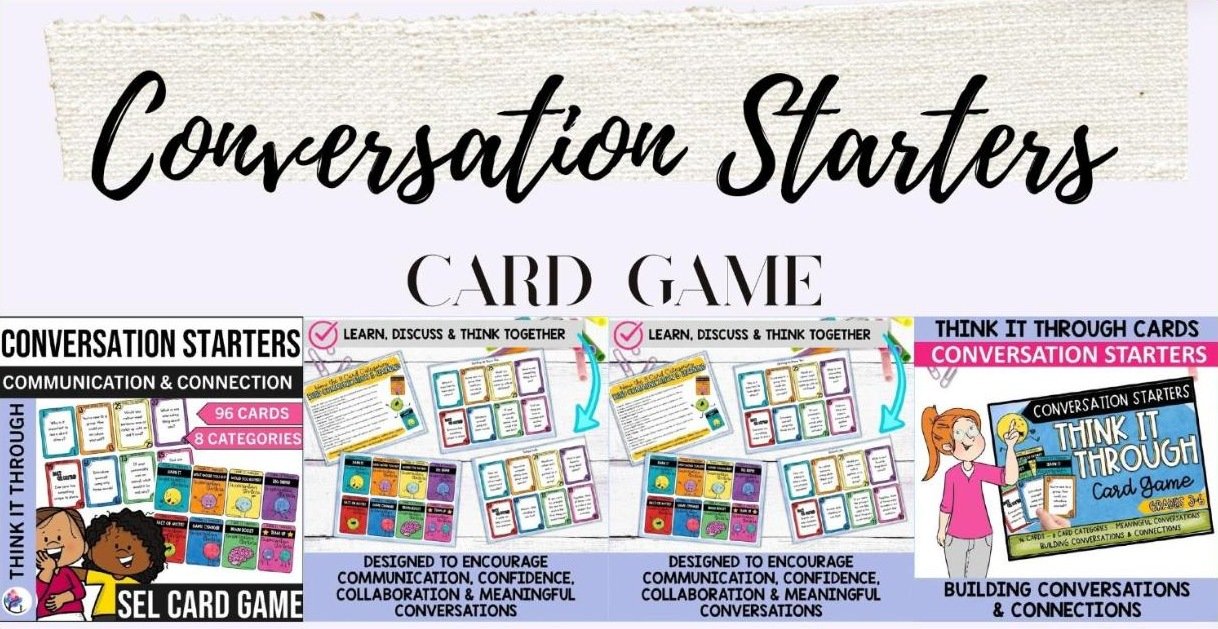
Conversation cards can also take the pressure off. When the question comes from a card instead of from you, it feels less personal and more like a game. Our Conversation Starters Card Game is an interactive card game with eight categories of discussion prompts plus special gameplay cards, designed to help students practice communication skills and build confidence through play. It works well for elementary and middle school students in individual sessions, small groups and lunch bunch. One counselor who used it with a lunch bunch shared that “even my quieter students started joining in,” and another noted they could see themselves using the cards “in groups, individual sessions, and even for quick check-ins.” With a resistant child, try letting them choose which cards you both answer, and answer first yourself to model that it is safe.
A Sample First Session Plan for a Resistant Child
Every child is different, but having a loose structure helps you stay calm and responsive. Here is one way a 30-minute first session might look.
- Welcome and name it (3 minutes): greet them warmly, acknowledge they may not have chosen to come, and explain what happens in your sessions and the limits of confidentiality in simple terms.
- Offer a choice (2 minutes): lay out two or three activities, such as drawing, a card game or play dough, and let them choose.
- Parallel activity (15 minutes): do the activity together. Reflect what you notice, comment on the activity rather than the child, and let pauses happen.
- Gentle check-in (5 minutes): use a low-demand tool, such as pointing to a feelings chart or picking a card, to see how they are feeling now.
- Close with predictability (5 minutes): thank them for coming, tell them when you will see them next, and let them choose the activity for next time.
Notice what this plan does not include: no pressure to explain why they were referred, no worksheet on the problem behavior and no demand for eye contact. Those can come later, once trust is in place.
Adapting Your Approach by Age
Younger children (grades K to 2)
Young children often show resistance through clinging to a parent, hiding, crying or refusing to enter the room. Keep sessions short, play-based and highly predictable. Let a caregiver stay for part of the first session if your setting allows it, and use toys, puppets and play dough to invite connection.
Upper elementary (grades 3 to 5)
Children at this age often respond well to games with rules, drawing and “would you rather” style questions. Humor helps. Many are acutely aware of what peers think, so be mindful of how they are collected from class.
Middle and high school students
Teens are often most sensitive to feeling talked down to or controlled. Be transparent, respect their autonomy and avoid anything that feels babyish. Walking and talking, side-by-side tasks, music and honest conversation about what they want from school or life can open doors. Expect to earn trust over several sessions rather than one.
Build Engagement Through Skills the Child Can Use Right Away
Once a child begins to engage, offering something practical can strengthen the relationship. Children are more likely to come back when they leave with something that helps, such as a calming strategy for a tough class or a way to handle a worry at bedtime. Exploring coping skills is often a less threatening entry point than talking about the referral concern directly, and it lets the child be the expert on what works for them.
Try this in your next session: Spread out a handful of coping strategy cards and ask, “Which of these have you tried? Which ones would never work for you?” Children who won’t talk about feelings will often happily tell you which strategies are “dumb.” That opinion is a doorway into a real conversation about what does help.
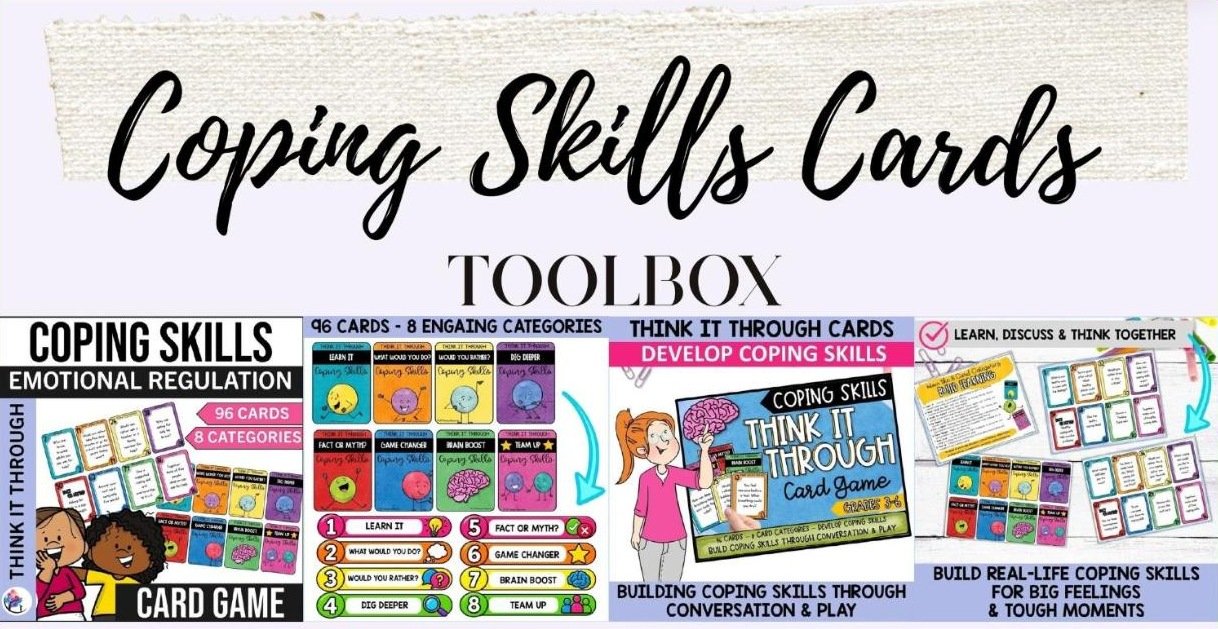
For this kind of strengths-based, choice-led conversation, our Coping Skills Cards Activity is a conversation card game that helps students explore emotions, practice coping strategies and solve everyday challenges through interactive play. It suits elementary and middle school students in individual sessions or small groups. One counselor described it as “such a great addition to my counseling toolbox,” noting that students “can explore what genuinely works for them instead of being given the same few suggestions.” That sense of choice is exactly what a resistant child needs.
When Resistance Signals Something More
Most resistance is a normal response to a new adult and an unfamiliar situation. Sometimes, though, a child’s withdrawal, fear or refusal may be linked to something more serious, such as harm at home, bullying or thoughts of self-harm. Stay alert to sudden changes, statements that worry you and signs of fear about going home. It is also worth consulting a supervisor or colleague if a child’s resistance is not easing over time, so you can review your approach together. Our article on rupture and repair with children offers ideas for rebuilding trust when a session goes sideways.
If a child discloses harm or you are worried about their safety: stay calm, listen and thank them for telling you. Don’t promise to keep it a secret; explain gently that you may need to tell someone whose job is to help keep them safe. Follow your school or district protocol and your mandated reporting obligations, and document what was said.
USA: 988 Suicide & Crisis Lifeline (call or text 988, chat at 988lifeline.org), Childhelp National Child Abuse Hotline 1-800-422-4453, or 911 in an emergency.
Australia: Lifeline 13 11 14 (text 0477 13 11 14), Kids Helpline 1800 55 1800, your state or territory child protection service, or 000 in an emergency.
Frequently Asked Questions
How do you engage a resistant child in therapy?
Start with safety, predictability and choice rather than direct questions. Acknowledge that they may not have chosen to come, offer two or three low-pressure activities, follow their lead in play and use reflections instead of questions. Trust usually builds gradually over several sessions.
What should I do if a child refuses to talk in counseling?
Let them know talking is optional and that you are happy to spend time together anyway. Side-by-side activities such as drawing, building or games let a child participate without speaking. Many children begin to talk once the pressure to do so is removed.
Is resistance in therapy a bad sign?
Not necessarily. Resistance is often a protective response to feeling unsafe, judged or out of control. Treating it as information about what the child needs, rather than as defiance, usually leads to better engagement.
What activities work best for a resistant child?
Low-demand, play-based activities tend to work well: drawing, play dough, puppets, sand tray, feelings dice and conversation card games. Choose activities that let the child communicate indirectly and that they can opt into.
How long does it take to build rapport with a resistant child?
It varies widely. Some children warm up within a session, while others, especially those with trauma histories or difficult past experiences with adults, may need many sessions. Consistency, reliability and patience matter more than speed.
Final Thoughts
Engaging a resistant child in therapy is less about finding the perfect technique and more about becoming a safe, predictable and curious adult in that child’s life. When we slow down, offer choice and meet children through play, resistance often softens into connection. From our counseling room to yours, be patient with the child and with yourself. The quiet sessions are often doing more work than they seem.
Looking for practical, ready-to-use resources to support your work with hesitant and resistant children? The All Therapy Resources Membership provides access to a growing collection of thoughtfully developed counseling activities, interactive games, and therapeutic tools designed to save preparation time while supporting meaningful, skill-focused learning.