
Some of the most important conversations we can have with children are not actually about behavior.
They are about thinking.
About learning how to slow down before judging someone.
How to consider different perspectives.
How to understand fairness.
How to repair harm.
How to sit in the uncomfortable space where situations are not completely black and white.
Many children are growing up in a world that encourages very fast judgments.
Quick opinions.
Quick reactions.
Quick labeling.
Quick outrage.
But thoughtful decision-making takes something very different.
It takes reflection.
Emotional regulation.
Perspective-taking.
Curiosity.
Critical thinking.
And the ability to tolerate complexity without immediately needing a “good guy” and a “bad guy.”
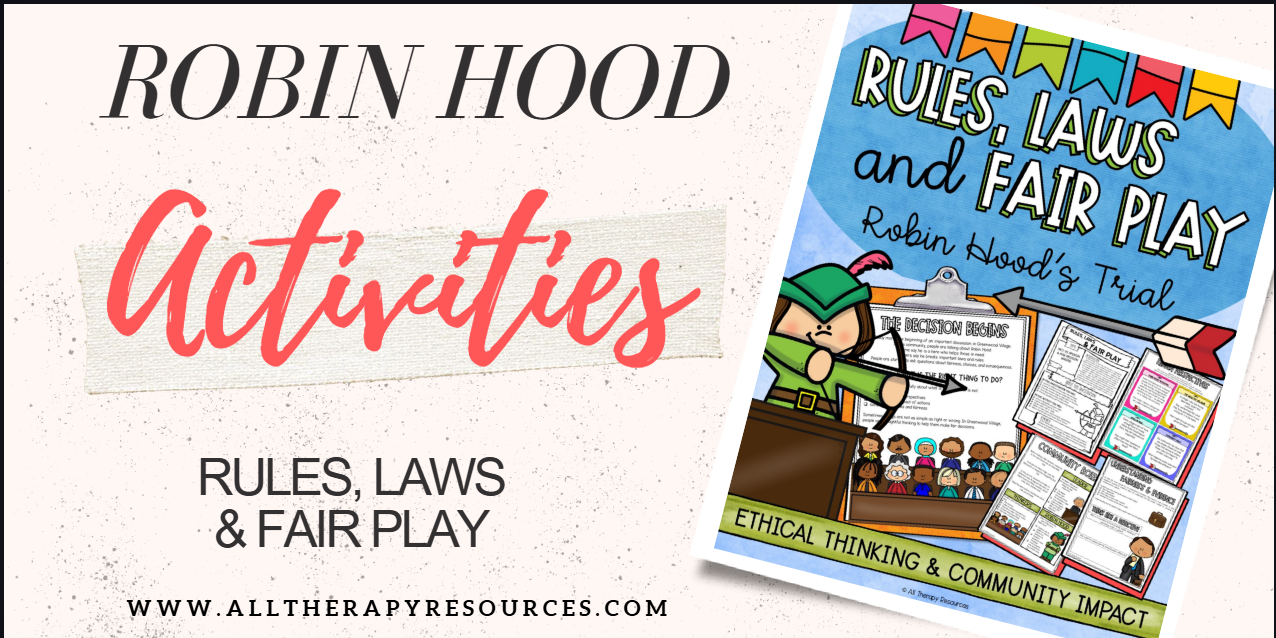
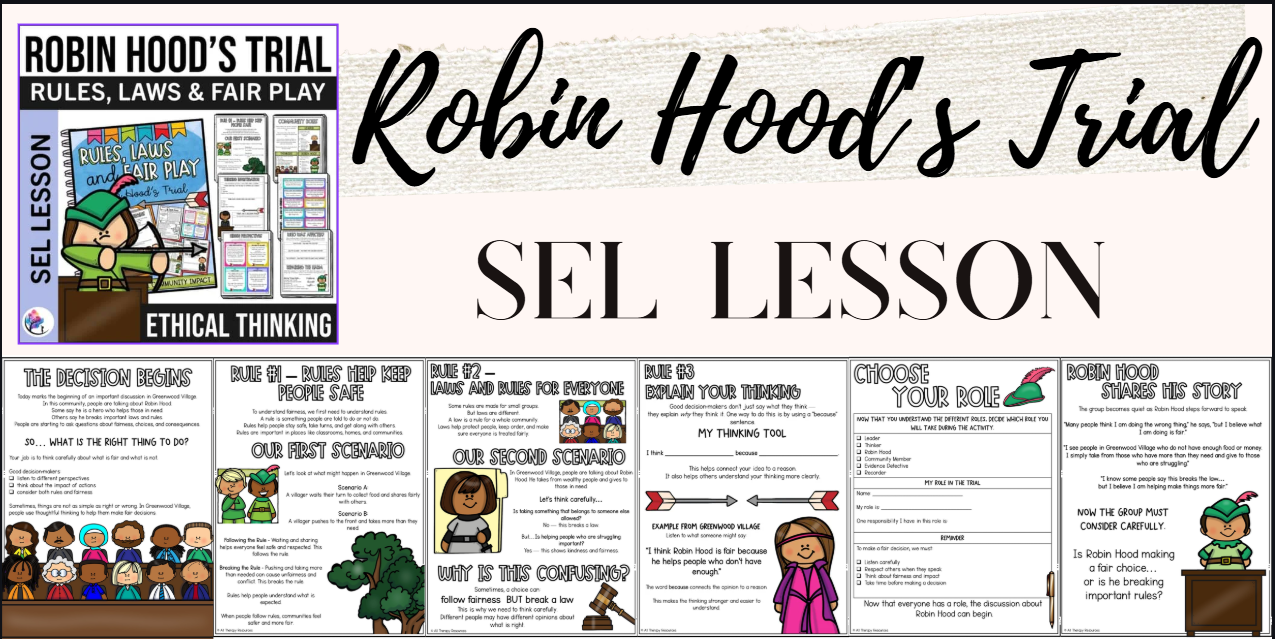
That is one of the reasons we loved creating and utilizing our ethical thinking and community impact lesson called “Robin Hood’s Trial – Rules, Laws and Fair Play.”
Because underneath the Robin Hood story is something much deeper:
helping children learn how to think carefully about people, choices, fairness, consequences, and community impact.
Children Often See the World in “All or Nothing” Thinking
Younger children especially tend to search for certainty.
They want to know…
Who was right?
Who was wrong?
Who broke the rule?
Who should get in trouble?
And honestly, that makes sense developmentally.
Clear answers feel safe.
But life becomes much more complicated as children grow.
Sometimes people break rules while trying to help others.
Sometimes intentions are good but harm still occurs.
Sometimes fairness and rules do not feel perfectly aligned.
Sometimes people experience the exact same situation very differently.
And that is where ethical thinking becomes so important.
Not teaching children what to think.
But teaching them how to think thoughtfully.
The Difference Between Rules, Laws, and Fairness
One thing we really wanted students to explore in this lesson was the idea that rules, laws, opinions, and fairness are not always the same thing.
Because honestly, many children have never really been invited to think deeply about that distinction.
Rules help communities function safely.
Laws exist to create structure and protection.
But fairness often involves emotions, perspectives, experiences, and human impact too.
And sometimes those things feel straightforward.
Other times they feel deeply messy.
That is exactly what makes ethical thinking such an important life skill.
Children need opportunities to sit with questions like,,,
- What makes something fair?
- Can a person have good intentions and still cause harm?
- Why might different people view the same situation differently?
- What happens when rules and compassion feel like they are competing?
- How do we repair harm when mistakes happen?
Those are not just classroom discussions.
Those are lifelong social-emotional skills.
Sometimes Behavior Makes More Sense Once We Understand the Full Story
One of the most powerful lessons children can learn is this:
There is often more happening underneath the surface than we first realize.
Children rarely say:
“I reacted strongly because this situation triggered fear, shame, embarrassment, or hurt in me.”
Instead we often see…
anger,
shutdown,
defensiveness,
blame,
or impulsive reactions.
And honestly?
Adults do it too.
One thing we included in the Robin Hood lesson was the idea of “hidden perspectives” and looking at situations from multiple viewpoints.
Because perspective-taking changes people.
When children begin understanding that different people carry different experiences, emotions, fears, and needs, they often become:
more thoughtful,
less reactive,
and more compassionate.
Not permissive.
Not without accountability.
But more human.
Intent and Impact Are Not Always the Same Thing
This is such an important conversation for children.
Especially in friendships, classrooms, and social situations.
Because many children genuinely do not understand yet that:
good intentions do not automatically erase impact.
A child might say:
“I was only joking.”
“I didn’t mean to upset them.”
“I was trying to help.”
And honestly, sometimes they truly were.
But emotional harm can still happen.
Helping students understand the difference between intent and impact builds emotional intelligence in such powerful ways.
It teaches children:
- accountability without shame
- empathy without humiliation
- reflection without defensiveness
And those skills matter deeply for healthy relationships later in life.
Why Ethical Thinking Matters for Emotional Regulation Too
Emotionally reactive children often struggle to pause long enough to consider multiple perspectives.
Because when the nervous system feels overwhelmed, the brain often searches for immediate certainty.
Who is wrong?
Who is to blame?
Who caused this?
But thoughtful problem-solving usually requires slowing down.
Breathing.
Listening.
Reflecting.
Considering context.
Taking in new information.
That is why ethical thinking and emotional regulation are actually deeply connected.
Children who can pause and reflect are often better able to…
- solve conflicts
- repair friendships
- tolerate disagreement
- handle frustration
- make fair decisions
- avoid impulsive reactions
Those are skills many adults still struggle with too.
Community Impact: Helping Children Understand “We Affect Each Other”
One thing I really loved weaving throughout this lesson was the idea of community impact and collective responsibility.
Because children are not just learning as individuals.
They are learning how to exist alongside other humans.
How their choices affect:
friends,
classrooms,
families,
teams,
and communities.
And honestly, I think children thrive when they feel part of something bigger than themselves.
When students begin understanding:
“My actions affect other people,”
their thinking often shifts from:
“What do I want right now?”
to:
“How does this affect the people around me?”
That is the foundation of empathy, fairness, and responsible decision-making.
Restorative Thinking Helps Children Move Beyond Punishment
One thing I care deeply about is helping children understand that mistakes are not just about punishment.
They are opportunities for reflection, accountability, and repair.
That is why restorative thinking matters so much.
Instead of only asking:
“Who is in trouble?”
we begin asking:
- Who was affected?
- What happened?
- What feelings may people be carrying?
- How can we make things right?
- What can we learn from this?
That shift changes everything.
Because shame rarely creates meaningful growth.
Connection, reflection, and accountability do.
Children who feel emotionally safe enough to reflect are often far more willing to take responsibility for their actions.
Why Interactive Ethical Thinking Activities Work So Well
Children engage far more deeply when they are invited into a story rather than simply being lectured.
Stories create emotional safety.
Students can explore difficult ideas through characters and scenarios without feeling personally exposed.
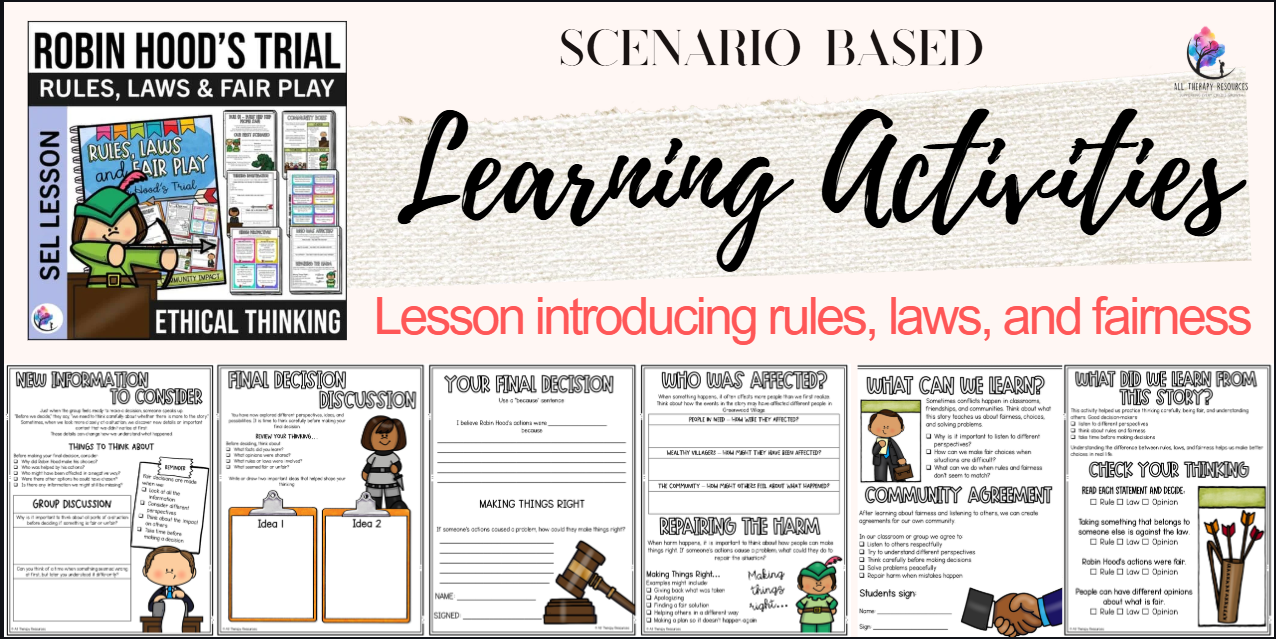
That is exactly why the Robin Hood trial format works so beautifully.
Students are not simply memorizing rules.
They are practicing…
perspective-taking,
critical thinking,
ethical reflection,
community awareness,
decision-making,
and respectful discussion.
The resource guides students through roles, discussions, evidence, reflection questions, fairness investigations, and restorative thinking activities that encourage deeper emotional and social understanding.
Those are conversations children remember.
Get the Tea with Angie – Founder of All Therapy Resources
One thing I’ve learned over the years is that children are often far more capable of deep thinking than adults expect.
When given emotionally safe opportunities, children ask incredible questions.
Questions about fairness.
Justice.
Compassion.
Consequences.
Intentions.
Belonging.
Responsibility.
Some of the most meaningful classroom conversations happen when adults stop rushing children toward “the right answer” and instead help them explore the thinking underneath.
Because life is rarely as simple as… good people versus bad people.
Sometimes good people make harmful choices.
Sometimes people are reacting from pain.
Sometimes rules exist for important reasons.
Sometimes fairness feels complicated.
Sometimes everyone in the situation is carrying something different emotionally.
Helping children sit with that complexity builds wisdom.
Not just compliance.
And let’s face it…the world needs more thoughtful humans right now.
Humans who can pause before judging.
Humans who can listen before reacting.
Humans who can consider impact, context, fairness, and repair.
Those skills begin in childhood.
Remember
Learning about rules, laws, and fair play are about so much more than behavior management.
They are opportunities to help children develop…
critical thinking,
empathy,
emotional regulation,
ethical reasoning,
perspective-taking,
community awareness,
and restorative problem-solving skills.
Because ultimately, thoughtful decision-making is not about raising children who simply follow rules out of fear.
It is about helping children become humans who can think carefully, act compassionately, and contribute positively to the communities around them.
Frequently Asked Questions
Why is ethical thinking important for children?
Ethical thinking helps children develop empathy, fairness, perspective-taking, emotional regulation, problem-solving, and thoughtful decision-making skills that support healthy relationships and community participation.
What is restorative thinking in schools?
Restorative thinking focuses on reflection, accountability, repairing harm, and understanding impact rather than relying only on punishment or blame.
Why do children struggle with perspective-taking?
Perspective-taking is a developmental skill that requires emotional regulation, empathy, and cognitive flexibility. Many children need explicit opportunities to practice understanding different viewpoints.
How can stories support SEL learning?
Stories create emotional safety and allow students to explore complex emotions, decisions, fairness, and consequences through characters and scenarios rather than personal exposure.
What skills does the Robin Hood ethical thinking lesson teach?
The lesson supports critical thinking, fairness, emotional regulation, restorative practices, empathy, perspective-taking, community impact awareness, and respectful discussion skills.
Continue the Conversation Around Ethical Thinking
If you are looking for engaging social-emotional learning resources that help students explore fairness, accountability, empathy, perspective-taking, and thoughtful decision-making, our Robin Hood’s Trial Rules, Laws, and Fair Play lesson was designed to bring these important conversations to life in meaningful and age-appropriate ways.
At All Therapy Resources, we believe ethical thinking is not just about classroom behavior — it is about helping children develop emotional insight, community awareness, compassion, and reflective problem-solving skills that support lifelong wellbeing and relationships.
Inside the All Therapy Resources Membership, you’ll find a growing collection of SEL, counseling, behavior, and wellbeing resources designed to support deeper conversations around:
• Fairness and justice
• Emotional regulation
• Perspective-taking
• Conflict resolution
• Restorative thinking
• Respectful relationships
• Decision-making and social responsibility
All of the resources discussed throughout this article are already included inside the membership, with new materials added regularly to support real-world school and therapeutic practice.