A student taps a pencil through the whole lesson, starts the worksheet with real enthusiasm, then stalls halfway down the page. Another blurts the answer before you finish the question, then looks crushed when you remind them about hand raising. If you support children and teens with ADHD, these moments are familiar, and they can leave both the student and the adult feeling stuck.
The good news is that small, predictable changes to the classroom often make a big difference. This guide brings together practical ADHD classroom strategies for teachers, school counselors, special education staff and paraprofessionals: how to set up the room, give instructions that stick, build in movement, break work into doable steps, teach self-monitoring and respond calmly when attention drifts. Each section includes examples and sample language you can use tomorrow.
What ADHD Can Look Like in the Classroom
ADHD (attention-deficit/hyperactivity disorder) is a neurodevelopmental condition that affects attention, activity level and impulse control. In a busy classroom, that can show up as:
- Losing track of multi-step directions or starting a task and drifting partway through
- Fidgeting, leaving the seat or needing to move to stay alert
- Calling out, interrupting or acting before thinking
- Misplacing materials, forgetting homework or underestimating how long a task will take
- Strong focus on high-interest tasks, with a much harder time on tasks that feel long or repetitive
None of this reflects effort or character. Many students who look unmotivated are overwhelmed by the demands placed on attention and executive functioning (we explore this more in The Students Who Seem “Lazy” Are Often Overwhelmed). It also helps to remember that ADHD does not always look loud. Some students, often girls, present as quiet, daydreamy or anxious, so their needs are easy to miss. Our article on masked behavior in girls covers what to watch for.
A helpful starting question is: Where in the day does attention break down, and what does this student need at that moment? Pick one or two strategies below that fit, use them consistently for a couple of weeks, and adjust from there.
Set Up the Room to Support Attention
The physical environment does a lot of quiet work. A few thoughtful adjustments can reduce distractions before you ever need to redirect.
- Seat with purpose. Near the point of instruction and away from high-traffic spots such as the door, pencil sharpener or a busy window. Seating near a calm, focused peer can help too.
- Reduce visual clutter at eye level. Keep the front of the room simple, and post only what students need for the current lesson.
- Make materials easy to find. Labeled bins, a consistent spot for finished work and a simple desk checklist cut down on lost time.
Visual supports matter here. A posted agenda, a picture or word schedule on the desk and a clear “what to do when you finish” chart all reduce the number of verbal reminders a student needs. Our guide on how to use visual schedules with children walks through setting these up step by step.
Try this in your classroom: Tape a small three-box card to the student’s desk: Get ready, Do the work, Check it. Point to the box instead of repeating the direction. It is a quiet, private prompt that keeps the student moving without drawing attention to them.
Give Instructions That Stick
Long verbal directions are one of the most common points where attention breaks down. By the third step, the first one has often slipped away. Shorter, visual and checked instructions help every student, and they make a real difference for students with ADHD.
Keep directions short and visual
- Get attention first (a cue, eye contact or a name) before giving the direction.
- Give one or two steps at a time, then pause.
- Write or show the steps on the board as you say them.
- Model the first item together so the student sees what “done” looks like.
Check for understanding without putting the student on the spot
Rather than asking “Does everyone understand?”, which almost always gets nods, ask the student to show you the first step. A sample script:
“Before you start, point to the first thing you’re going to do.” Then: “Great. Do that part, and I’ll check back in two minutes.”
Build Movement Into the Day
Many students with ADHD think better when they can move. Rather than spending energy trying to stop all movement, plan for it. Short, structured movement breaks help students reset and return to work, and they tend to work best when they are predictable rather than earned or withheld.
- Scheduled brain breaks of one to three minutes between tasks or after a stretch of seated work
- Movement jobs such as handing out papers, delivering a note to the office or wiping the board
- Standing options, such as a standing spot at the back or side of the room for part of a lesson
- Quiet fidget tools with clear rules (it stays in your hand and doesn’t distract others)
For students who seek strong body input, heavy work such as carrying books or pushing chairs in can be especially calming. Our article on heavy work activities for the classroom has more ideas you can fold into everyday routines.
Try this in your classroom: Picture a student who starts to slump and drift around the 20-minute mark of a reading block. Instead of a reminder to focus, say to the whole class: “Quick reset. Stand up, and let’s pull a brain break card.” After one minute of movement, give a clear restart cue: “Back to page 12, first paragraph.” The break is short, it includes everyone, and the student returns to work without being singled out.
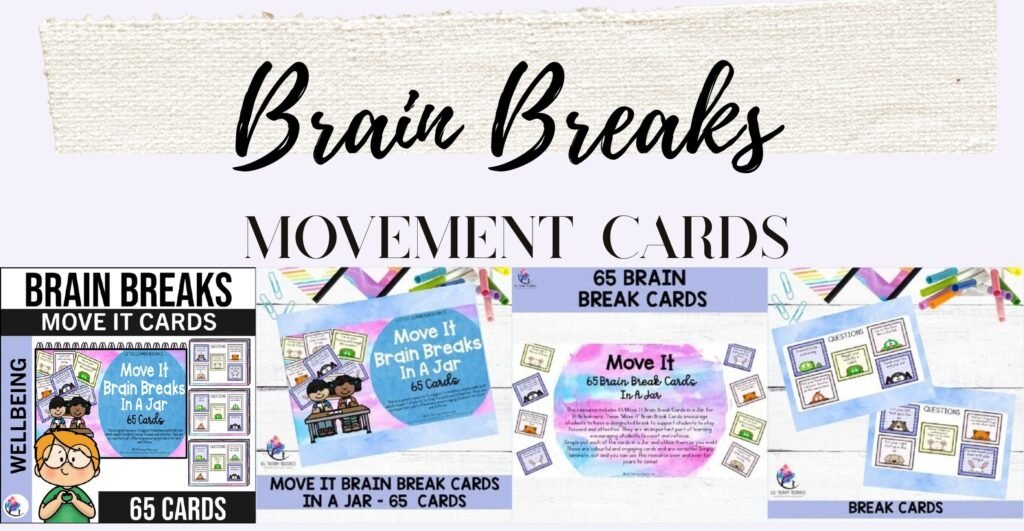
If you’d like a ready-made way to run these breaks, our Brain Breaks Movement Cards in a Jar give you 65 quick movement prompts to pull out whenever the class needs a reset. They suit younger students, special education rooms and OT or counseling sessions, and they work well as a scheduled break between lessons or as a calm transition activity. One educator shared: “I have seen an increase in the students engagement, attention to task and work productivity when I use this resource.”
Break Work Into Doable Pieces
A full page of math problems can feel endless to a student who struggles to sustain attention. The work itself may be within reach. The size of it is the barrier. Chunking makes the finish line visible.
- Fold or cover the page so only one section shows at a time.
- Use a visual timer for short work sprints (for example, five or ten minutes), followed by a quick check-in or break.
- Try first-then language: “First finish these three problems, then you can get a drink of water.”
- Mark the stopping points on a longer assignment with small checkboxes the student ticks as they go.
These strategies also build executive functioning skills over time: planning, starting tasks, monitoring progress and finishing. If you’re looking for structured practice, our post on the best task cards for building executive functioning skills shares ideas you can use in small groups or class lessons.
Teach Self-Monitoring So Students Build Independence
Adult prompts help in the moment, but the long-term goal is for students to notice and manage their own attention. Self-monitoring tools give students a simple, concrete way to check in with themselves.
How to introduce a self-monitoring checklist
- Choose one or two target behaviors written in positive terms, such as “I started my work” or “I raised my hand to speak.”
- Teach it when things are calm, not during a difficult moment. Practice with an example together.
- Set a check-in rhythm that matches the student, such as at the end of each work block or each class period.
- Review it together briefly, celebrating what went well and choosing one small thing to try next time.
A short, private conversation keeps the focus on growth rather than mistakes: “You marked yes for starting your work in three out of four blocks today. What helped you get going?” Questions like this help students notice their own strategies, which builds confidence and ownership.
Try this in your next session: Ask the student to rate their focus at the end of a work block on a simple 1 to 5 scale, then compare your rating with theirs. When the two ratings start to match, the student is learning to read their own attention accurately, which is a skill they can take into every class.
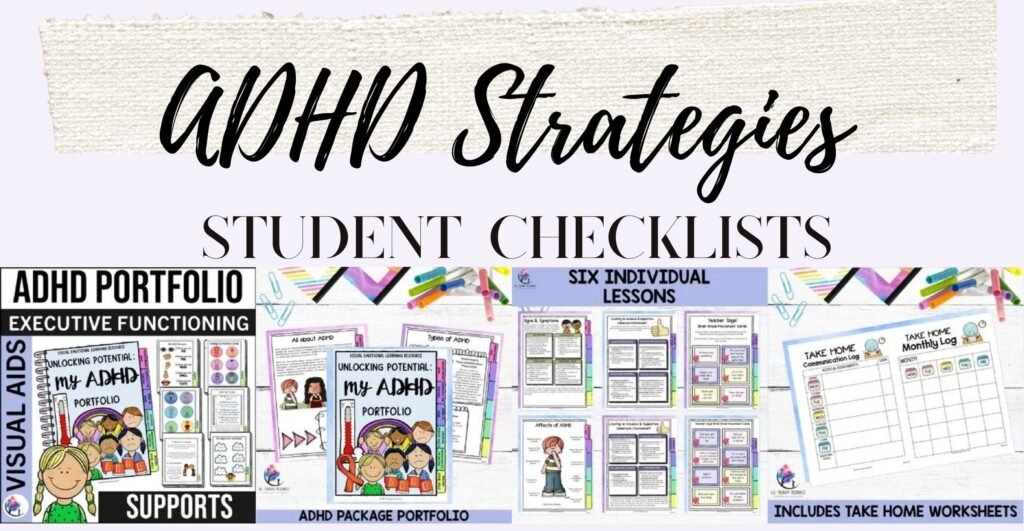
For a complete set of tools, our ADHD Strategies and ADHD Student Checklists portfolio brings together six lessons on understanding ADHD, visual aid cards, accommodation checklists, behavior charts and take-home worksheets. It works well for special education teachers, counselors and support teams who want consistent visuals and language across settings. One special education teacher wrote: “As a sped teacher this is a great resource. It is especially handy for being able to train paras with no previous experience.” That makes it a practical choice when several adults support the same student.
Respond to Impulsivity and Off-Task Moments Calmly
Even with strong supports in place, there will be moments of calling out, wandering or drifting. How adults respond in those moments shapes whether the student re-engages or digs in. A calm, brief and private response usually works better than a public correction.
Quiet redirection ideas
- Private signals agreed on in advance, such as a tap on the desk or a sticky note with a picture cue
- Proximity: moving closer while continuing to teach
- Name the next step, not the problem: “Pencil on question four.” rather than “Stop playing with that.”
- Specific praise soon after the student gets back on track: “You got right back to it. Nice.”
If a pattern continues, step back and look at what happens before and after the behavior. When does it happen most? What does the student get or avoid? Our guide to behavior support in schools explains how to use that information to plan supports that address the need behind the behavior.
Teach Focus Strategies Directly
Students benefit from learning about attention, not only being asked to pay it. Short counseling lessons, small groups or class SEL sessions can teach practical focus strategies and give students words for what helps them. Useful topics include:
- Noticing when attention has drifted and choosing a way to come back
- Asking for help or a break in an appropriate way
- Using tools such as timers, checklists and fidgets responsibly
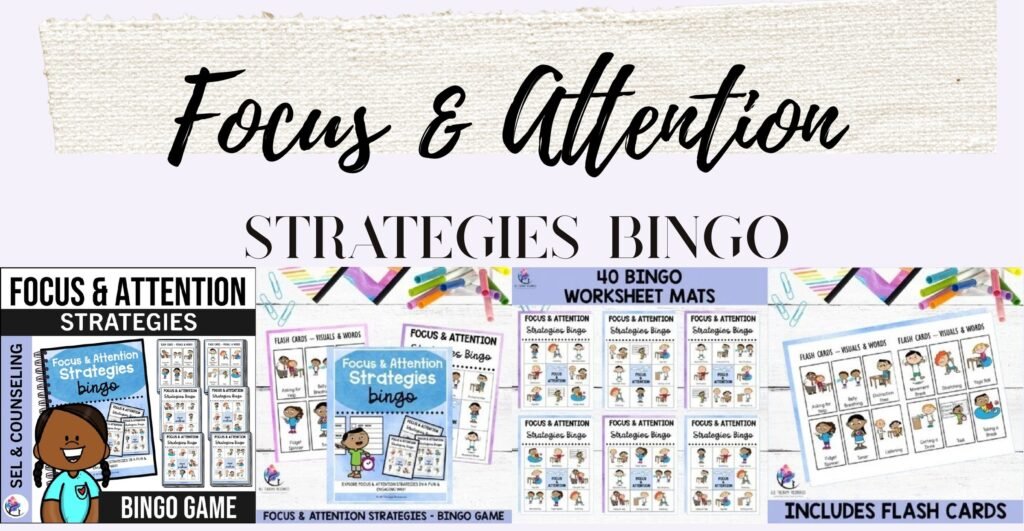
Our Focus and Attention Strategies Bingo game does exactly this. Students learn and discuss practical focus strategies through bingo mats and visual flash cards, which makes it a good fit for small groups, classroom SEL lessons and counseling sessions. One reviewer said: “This is a fun and engaging way to explore these strategies. It opened up some great conversations as a group.” Try pausing after each called card to ask, “When might this strategy help you this week?”
Quick Reference: ADHD Classroom Strategies by Challenge
Use this table as a starting point when planning supports for a student or talking with a teacher about what to try first.
| Classroom challenge | Try this | Suggested ATR resource |
|---|---|---|
| Losing track of directions | One or two steps at a time, written on the board, with a quick check-back | ADHD Strategies and Student Checklists |
| Restless or slumping during seated work | Scheduled brain breaks, movement jobs and a standing option | Brain Breaks Movement Cards |
| Stalling on long assignments | Chunk the page, use a visual timer and mark stopping points | ADHD Strategies and Student Checklists |
| Calling out or interrupting | Private signals, an “ideas for later” note and specific praise | Focus and Attention Strategies Bingo |
| Not noticing when attention drifts | Self-monitoring checklist and a 1 to 5 focus rating | Focus and Attention Strategies Bingo |
Partner With Families and the Wider Team
Strategies work best when the student hears the same language and sees the same tools across settings. A few practical steps:
- Agree on shared words for key strategies (for example, “reset,” “first step” or “focus check”) so teachers, counselors, paraprofessionals and families use the same cues.
- Share what is working, not only concerns. A short weekly note that names one success builds trust with families.
- Coordinate with the student’s plan. If the student has a 504 plan or IEP, make sure classroom strategies line up with the documented accommodations, and bring new ideas to the team rather than changing supports informally.
Remember that ADHD is a medical diagnosis made by qualified professionals. If you notice ongoing attention difficulties in a student who has not been assessed, share your observations with your school team and follow your school or district’s referral process, rather than suggesting a diagnosis to families.
Frequently Asked Questions
What are the most effective ADHD classroom strategies to start with?
Start with the supports that reduce the most friction for the least effort: purposeful seating, short visual instructions with a quick check-back, scheduled movement breaks and chunked assignments. Try one or two consistently for a couple of weeks before adding more, so you can see what is helping.
How can I help a student with ADHD without singling them out?
Use whole-class routines wherever possible, such as brain breaks for everyone, posted steps on the board and timers for the whole group. For individual support, use private signals, desk cards and brief one-on-one check-ins rather than public reminders.
Should students with ADHD be allowed to use fidgets?
Many students focus better with a quiet way to move their hands. Set clear expectations first (it stays in your hand, it stays quiet and it doesn’t become a toy) and treat fidgets as a tool the student learns to use responsibly. If a fidget becomes a distraction, try a different option rather than removing support entirely.
How do I handle a student with ADHD who constantly calls out?
Respond briefly and calmly, give the student a way to hold their thought (such as an “ideas for later” note), and praise hand raising as soon as you see it. If the pattern continues, look at when it happens most and plan supports with your team.
Can school counselors support students with ADHD?
Yes. School counselors can teach focus and self-monitoring strategies through individual sessions, small groups and classroom lessons, help coordinate consistent supports with teachers and families, and contribute to 504 and IEP planning within their school’s processes.
Looking for practical, ready-to-use resources to support your ADHD classroom strategies? The All Therapy Resources Membership provides access to a growing collection of thoughtfully developed behavior support activities, interactive games, and therapeutic tools designed to save preparation time while supporting meaningful, skill-focused learning.