A child who barely says two words at the table will often chat away when they are “the vet” checking a toy puppy, or “the baker” taking your donut order. That is the quiet power of pretend play. These dramatic play social skills ideas show speech-language pathologists, occupational therapists, play therapists and early childhood teachers how to set up themed dramatic play centers that build social communication, language, fine motor skills and regulation, all while children are busy playing.
Why Dramatic Play Builds Social Skills, Language and Regulation
In dramatic play, children take on a role, follow a simple script, share materials and respond to someone else’s ideas. That gives them natural, repeated practice with skills we often target in therapy: requesting, commenting, turn-taking, asking and answering questions, sequencing, problem-solving and staying with a shared plan.
The American Academy of Pediatrics’ clinical report The Power of Play describes developmentally appropriate play with parents and peers as an important opportunity to promote social-emotional, cognitive, language and self-regulation skills. Themed dramatic play centers are one practical way to bring that kind of play into a therapy room or classroom, with the adult guiding it toward specific goals.
Setting Up a Dramatic Play Center for Therapy
A good therapy-focused dramatic play center is simple, predictable and built around a few clear roles. A few tips that make a big difference:
- Give every child a role. Role badges (doctor, patient, cashier, customer) tell children what to do and say.
- Add visual supports. Signs, menus, checklists and picture cards give children words to use and help those who are still building language.
- Model, then step back. Play a role yourself first, then hand it over. Expand on what children say (“You want a donut. You want a pink donut with sprinkles!”).
- Plan your targets. Choose one or two goals per child before you start, so the play stays purposeful.
- Build in an ending. A “closed” sign, a final checklist item or a timer helps children finish the play calmly.
| Skill | What it looks like in play | Suggested ATR resource |
|---|---|---|
| Requesting and turn-taking | Ordering food, buying a ticket, waiting for your turn at the counter | Donut Shop Dramatic Play |
| Empathy and perspective-taking | Caring for a sick pet, asking how the “owner” feels | Vet Clinic Dramatic Play |
| Sequencing and following directions | Getting ready for an emergency call, step by step | Fire Station Dramatic Play |
| Describing and WH questions | Uncovering fossils and explaining what you found | Dinosaur Dig Dramatic Play |
| Social conversation | Chatting with a client while you “style” their hair | Hair Salon Dramatic Play |
Try this in your next session: Before play starts, rehearse one short script with the child: “Hi, what would you like?” “I would like ___, please.” “Here you go!” Then let the play run, and prompt the script only when needed. Short, repeated scripts give children a reliable way into the interaction.
Community Helper Play: Empathy, Sequencing and Conversation
Community helper themes are familiar to young children, so they can step into the role quickly. They are a natural fit for empathy, following steps and back-and-forth conversation.
Vet Clinic
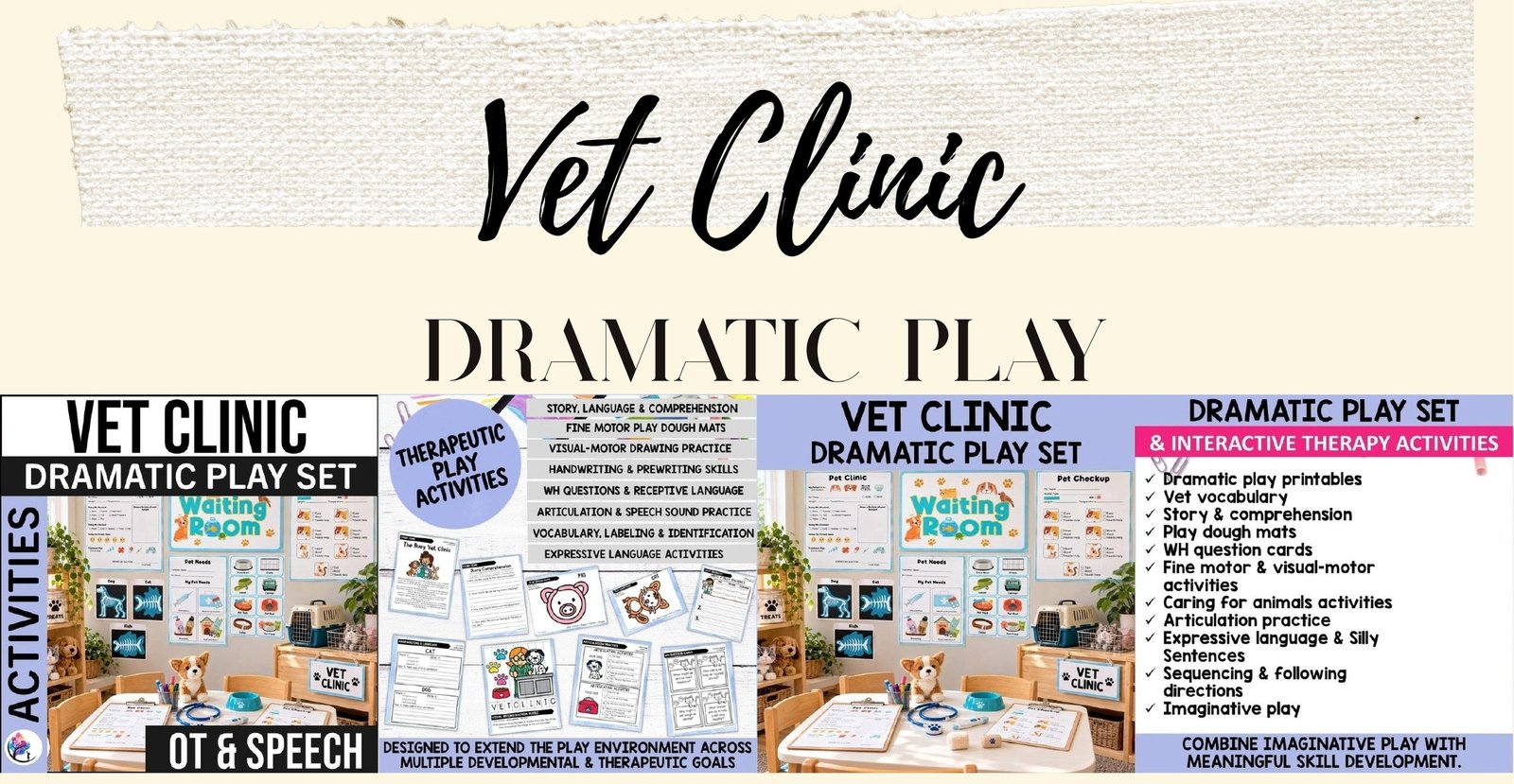
Children check in pets, examine them and explain what each patient needs. We love this theme for perspective-taking: ask, “How do you think the puppy feels?” or “What could you say to the owner?” Our Vet Clinic Dramatic Play Set includes clinic printables, a story with comprehension questions, 12 WH question cards, animal play dough mats, handwriting and drawing activities, articulation practice and silly sentence building, so you can move from play to a targeted task without changing theme.
Fire Station
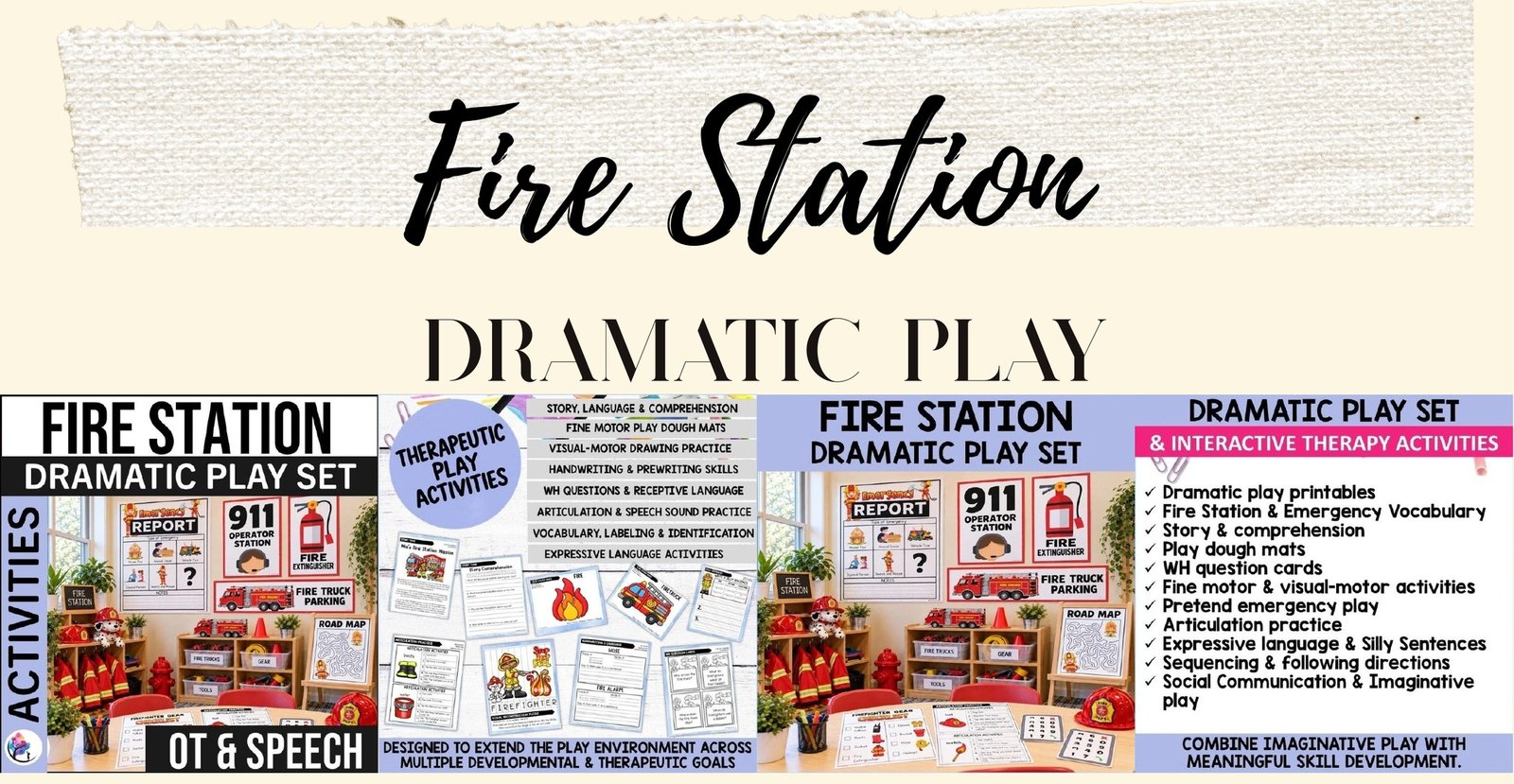
Children answer emergency calls, check their gear and practice safety steps. The gear checklist is a great way to target sequencing and following multi-step directions. Our Fire Station Dramatic Play Set adds emergency reports, firefighter role-play materials, a story, WH question cards, articulation practice, play dough mats and a visual reconstruction puzzle for visual perception and fine motor work.
Eye Doctor
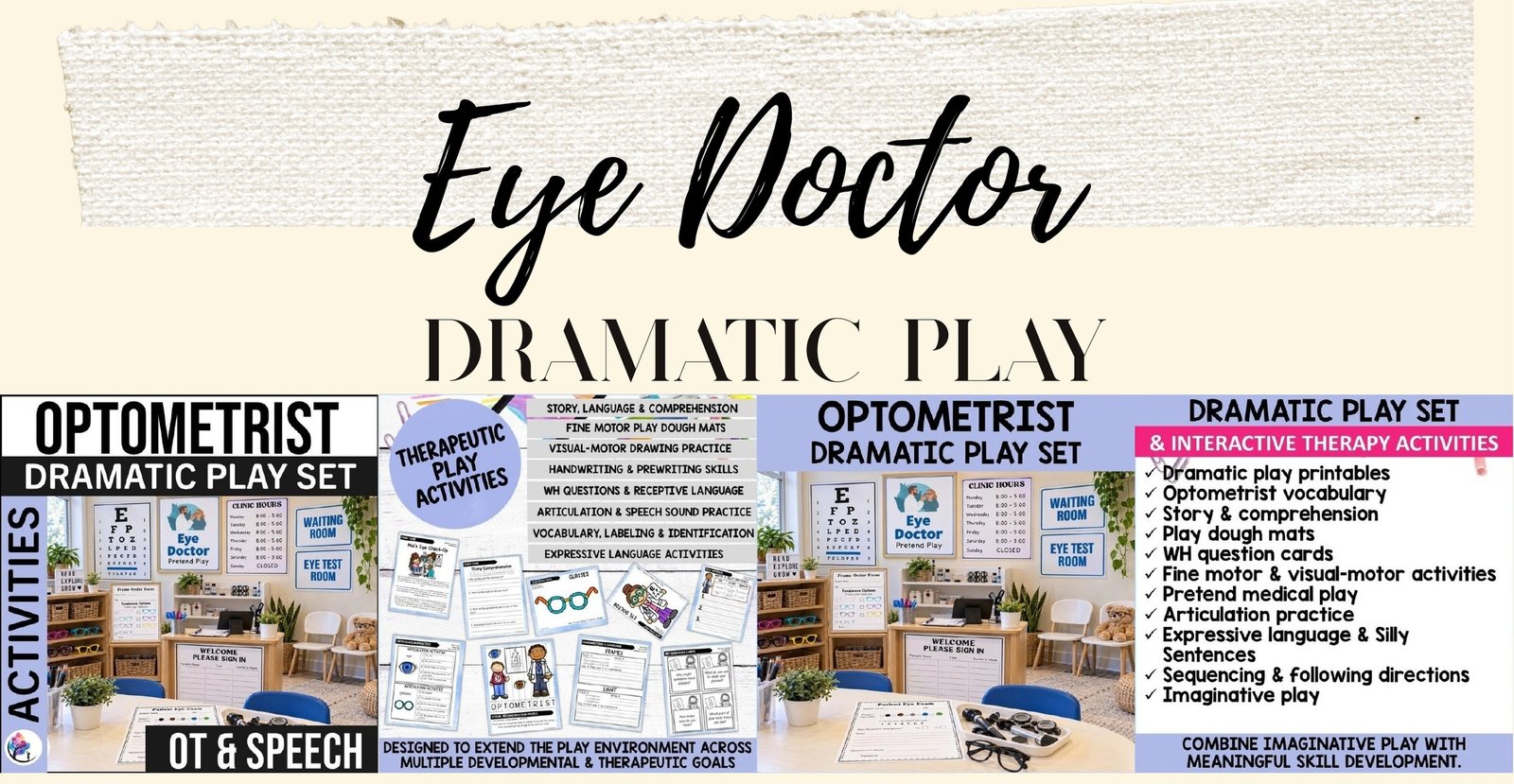
Children run eye charts, fit glasses and help their “patients” see clearly. This theme is a good match for visual perception and visual-motor goals alongside language. Our Optometrist (Eye Doctor) Dramatic Play Set includes eye charts, patient charts and sign-in sheets, a glasses-making activity, play dough mats, a story and comprehension activity, WH question cards and articulation practice.
Hair Salon
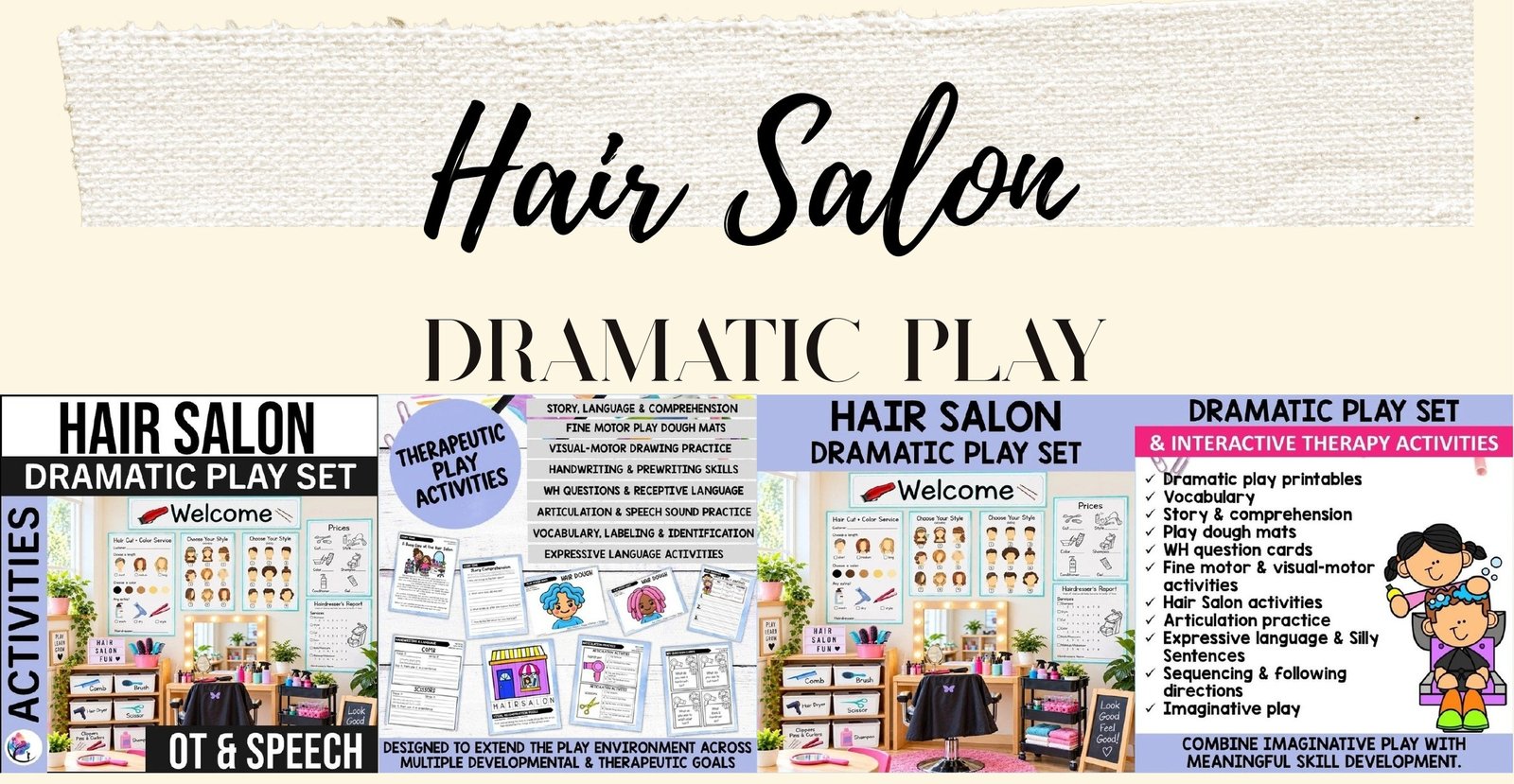
Children book appointments, “wash and style” hair and chat with their clients. It is one of our favorite themes for social conversation, because chatting with the client is part of the role. Our Hair Salon Dramatic Play Set pairs salon printables with a story and comprehension questions, WH question cards, play dough mats, handwriting, drawing and cutting practice, and sentence-building activities.
Shop Play: Requesting, Money and Turn-Taking
Shop and service themes come with a built-in script: greet, order, pay, say thank you. That makes them ideal for requesting, making choices, turn-taking and early money skills.
Donut Shop
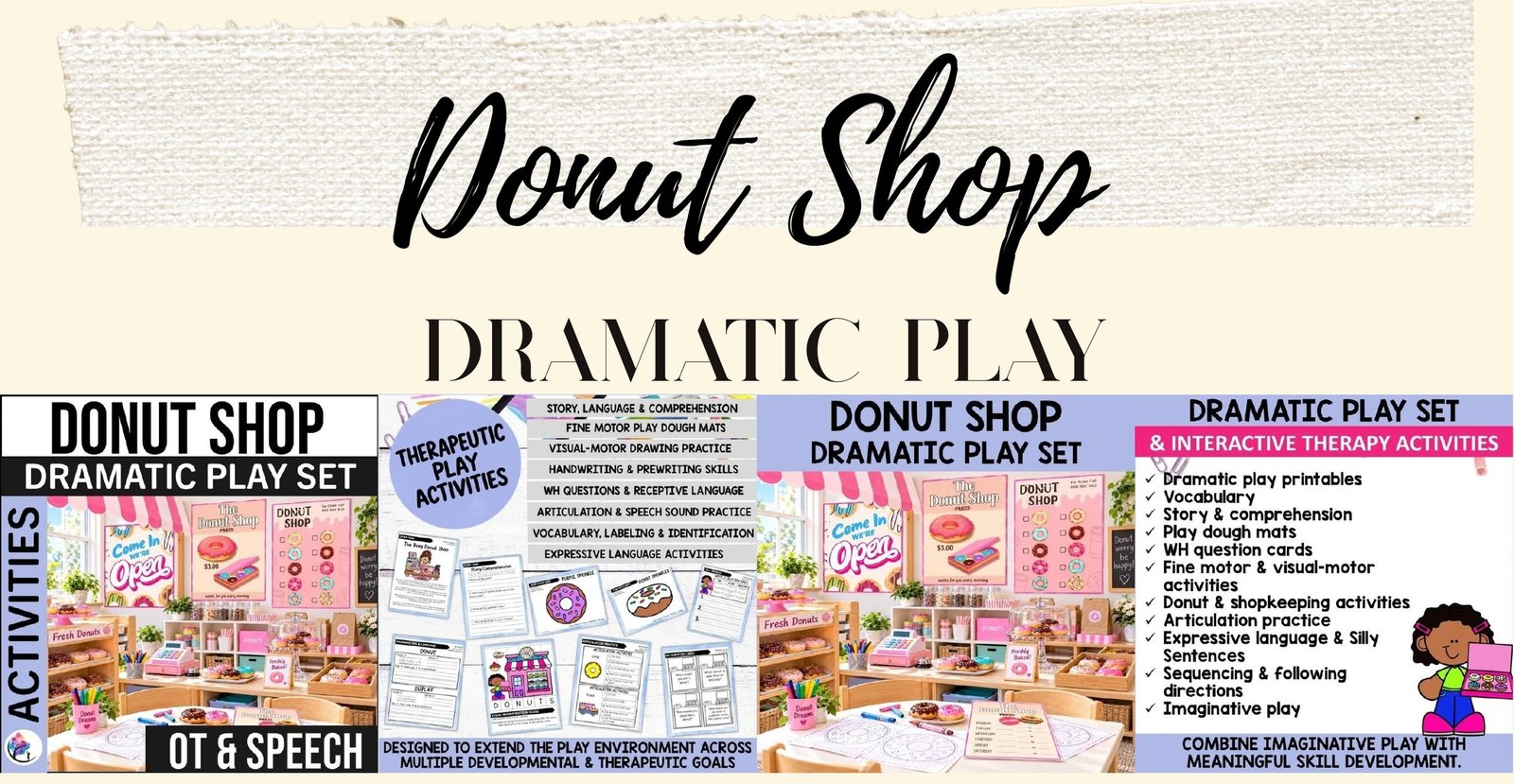
Children take orders, decorate donuts and serve customers. Use the menu as a visual support for requesting, and build in choices (“chocolate or strawberry?”) to practice decision-making. Our Donut Shop Dramatic Play Set includes bakery printables, The Busy Donut Shop story with comprehension questions, 12 WH question cards, play dough mats, handwriting and pre-writing practice, articulation activities and Silly Sentences.
Movie Theater
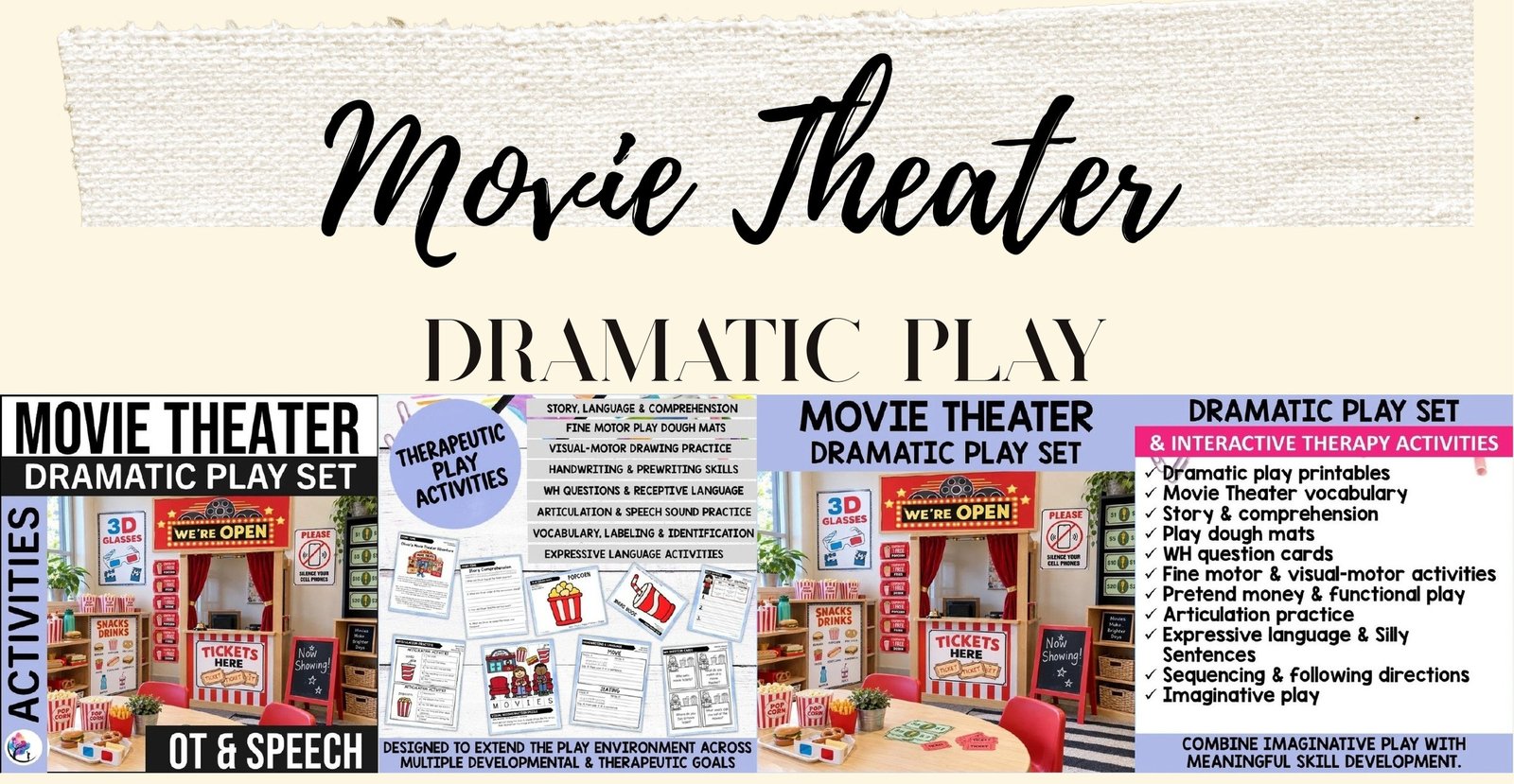
Children sell tickets, serve snacks and help the audience find their seats. Waiting in line and taking turns at the ticket booth give lots of practice with patience and polite requests. Our Movie Theater Dramatic Play Set includes ticket booth and concession materials, pretend money, a Now Showing display, a story with comprehension questions, 12 WH question cards and themed articulation and handwriting practice.
Discovery and Creative Play: Describing, Questions and Fine Motor
Science and art themes spark curiosity, which makes them perfect for describing, asking questions, sequencing and purposeful hand use.
Space Station
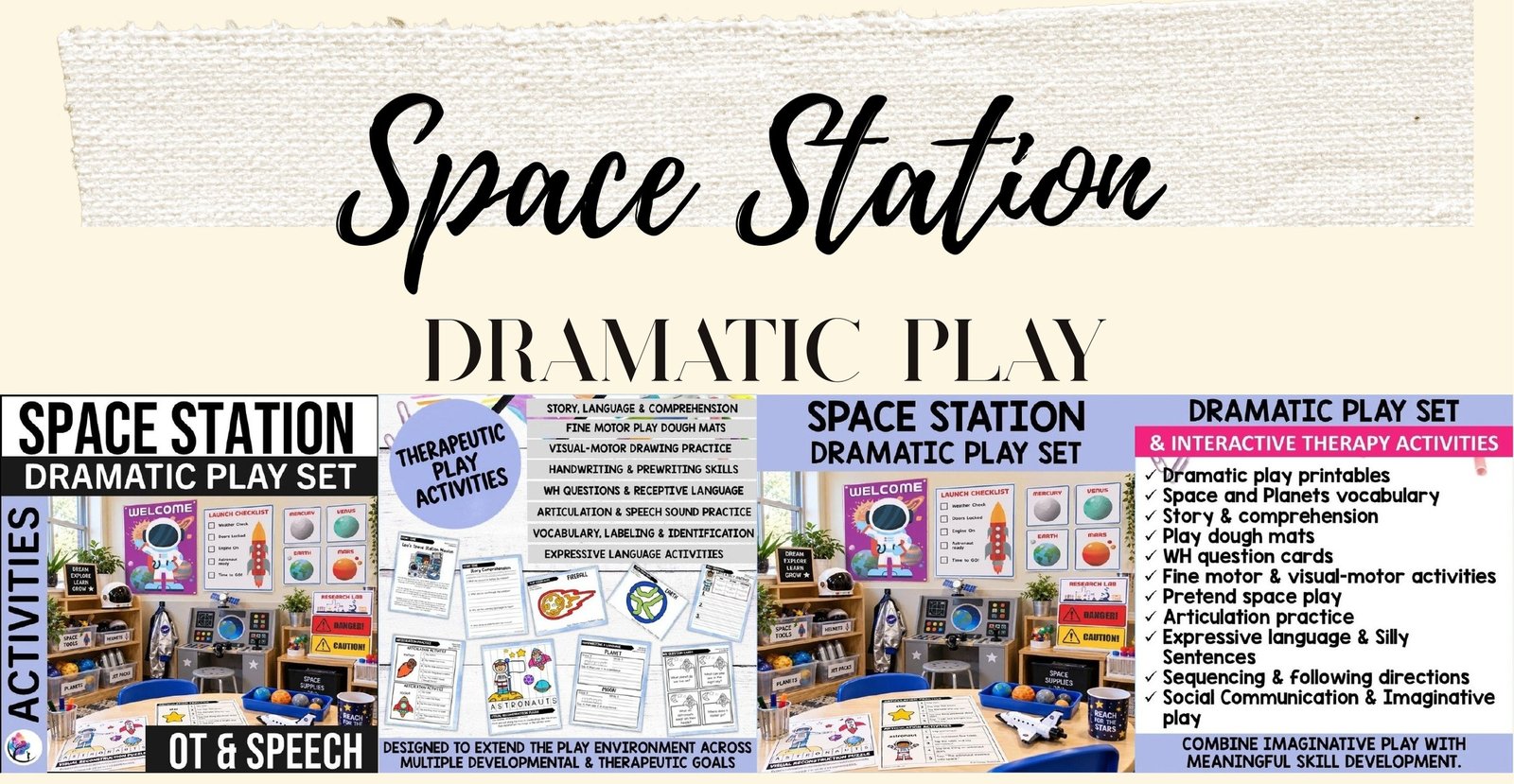
Children prepare for launch, run experiments and report back to mission control. A launch checklist is a fun way to practice sequencing and following directions. Our Space Station Dramatic Play Set includes astronaut and scientist role badges, planet vocabulary cards, space food and lab printables, play dough mats, WH question cards, a visual reconstruction puzzle and articulation practice.
Dinosaur Dig
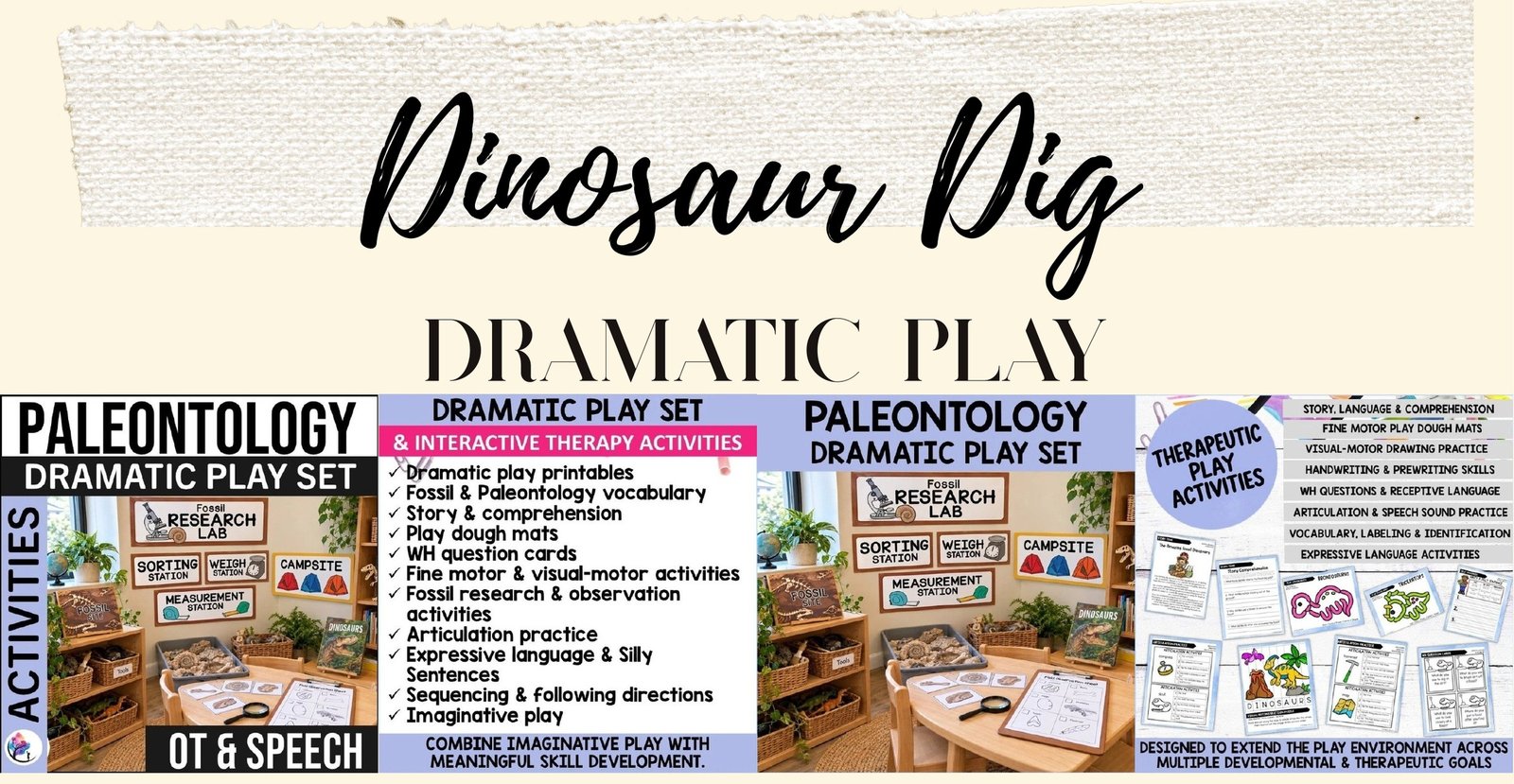
Children excavate fossils, label dinosaur bones and share their discoveries. Ask them to describe each find (size, shape, color) before they sort it. Our Paleontology (Dinosaur Dig) Dramatic Play Set includes dig site and fossil lab printables, sorting, weighing and measuring activities, a dig check-off list, play dough mats, WH question cards and a story with sequencing activities.
Entomology Lab
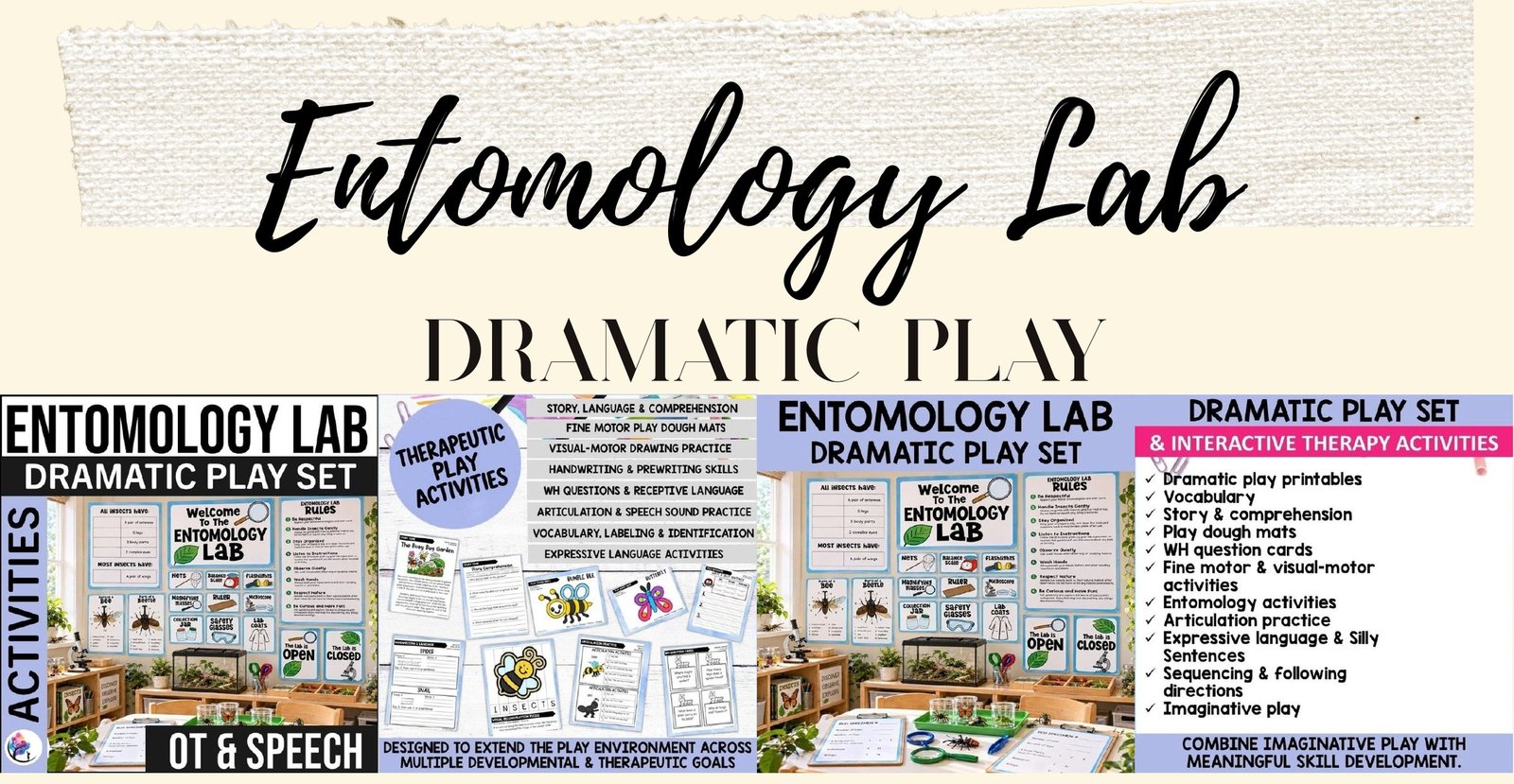
Children collect insects, sort specimens and record what they observe. It is a natural fit for categorizing, describing and asking questions. Our Entomology Lab Dramatic Play Set includes bug lab printables, The Busy Bug Garden story with comprehension questions, bee, spider and butterfly play dough mats, insect drawing activities, WH question cards and a visual reconstruction insect puzzle.
Art Studio
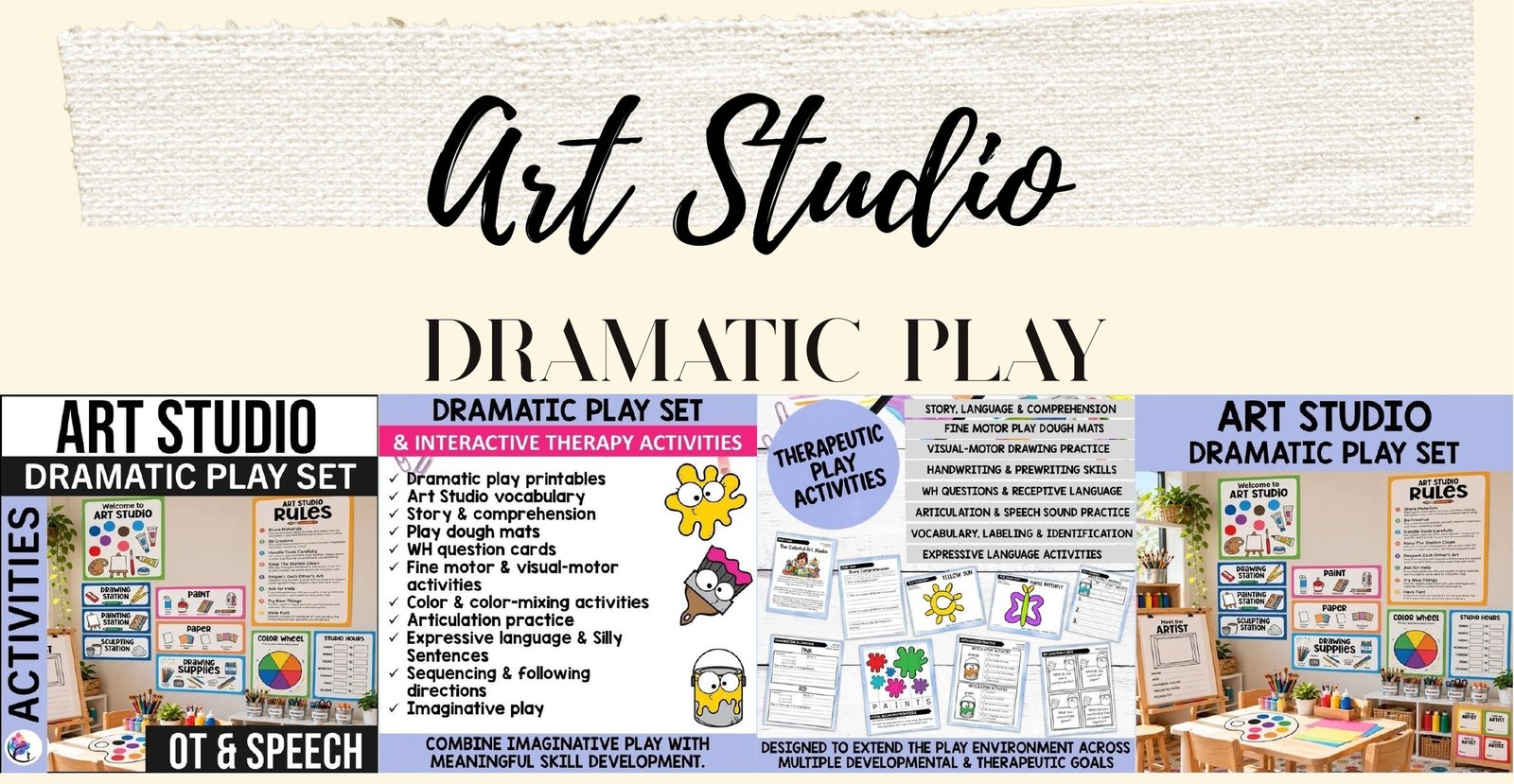
Children mix colors, paint, run an art show and talk about what they made. Asking “Tell me about your picture” is a simple, open way into describing and narrative language. Our Art Studio Dramatic Play Set includes studio printables, The Colorful Art Studio story, color-themed play dough mats, a visual-recall drawing activity, color-mixing concepts, WH question cards and art-themed Silly Sentences.
Supporting Regulation During Dramatic Play
Pretend play can be exciting, and for some children that excitement tips into dysregulation. A little structure keeps play fun and calm:
- Use a visual schedule for the session: play, task, play, clean up. Our post on how to use visual schedules with children has more ideas.
- Script the hard moments. Practice “Can I have a turn when you’re done?” and “I’m still using it” before play starts.
- Offer a calm role. The cashier, receptionist or “lab recorder” roles suit children who need a quieter way to join in.
- Use a timer or “closing time” sign so the end of play is predictable.
Try this in your next session: If two children both want the same role, name the problem and offer a choice: “You both want to be the vet. You can take turns with the timer, or one of you can be the vet and one the nurse, then swap.” It turns a flashpoint into problem-solving practice.
If you would like all ten themes ready to rotate through the year, our Dramatic Play Centers Bundle brings together every set in this post: Art Studio, Donut Shop, Entomology Lab, Fire Station, Hair Salon, Movie Theater, Optometrist, Paleontology, Space Station and Vet Clinic. Each one pairs themed pretend play printables with speech, language and fine motor activities, so you can change the theme every few weeks while keeping your goals the same.
Frequently Asked Questions
What social skills does dramatic play build?
Dramatic play gives children practice with turn-taking, sharing materials, requesting, greeting, commenting, asking and answering questions, following a shared plan and solving small problems with a partner.
How do I use dramatic play in speech therapy?
Choose a theme, plan one or two targets per child, model the role and its key phrases, then let the play run while you prompt and expand. Follow up with a short themed task, such as WH questions or a story, to practice the same vocabulary in a more structured way.
Can dramatic play support occupational therapy goals?
Yes. Play dough mats, cutting, tracing, drawing and handling small play pieces all give purposeful fine motor and visual-motor practice inside the theme, which can feel more motivating than working on the same skills at the table.
What age is dramatic play best for?
Themed dramatic play is most often used in preschool and early elementary, and with older students who are working on early language, social communication or play skills.
Looking for practical, ready-to-use resources to support your speech, OT and play-based sessions? The All Therapy Resources Membership provides access to a growing collection of thoughtfully developed speech, OT and play-based activities, interactive games, and therapeutic tools designed to save preparation time while supporting meaningful, skill-focused learning.