Team building is often treated as a “nice extra,” something to squeeze in at the start of the year or on a special activity day. For school counselors, teachers and school psychologists, it is much more than that. Well-planned team building activities for students give young people a safe, structured way to practice the skills that make learning, positive behavior and wellbeing possible: listening, cooperating, solving problems and trusting the people around them.
The real question is how to build teamwork, trust and connection in a way that feels safe, inclusive and meaningful for every student, including those who struggle socially, emotionally or behaviorally. This guide looks at why team building matters, how to approach it through a trauma-informed lens, practical activities you can run across grade levels, and how to debrief so the skills carry over into everyday school life. If you are setting up a new class or group, it pairs well with our guide to building classroom community at the start of the school year.
Why Team Building Activities for Students Matter
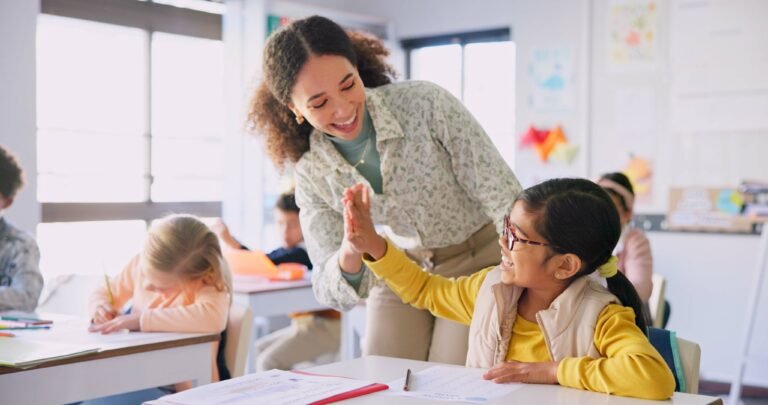
Team building is not only about getting students to work together. It is about helping them feel that they belong, that they are valued, and that their voice matters within a group. The CDC describes school connectedness as students’ belief that adults and peers at school care about their learning and about them as people. In a large national survey of high school students, those who reported higher connectedness were less likely to report poor mental health and several health risk behaviors. The study was cross-sectional, so it shows an association rather than cause and effect, but it reinforces how much peer and adult relationships matter.
When students feel disconnected from peers or adults, we often see:
- Increased behavior challenges
- Withdrawal or social avoidance
- Difficulty with group work
- Low engagement and motivation
- Conflict and peer issues
Intentional team building supports social-emotional learning (SEL), a positive classroom climate, peer relationships and communication, cooperation, and a sense of belonging and inclusion.
Team Building Through a Trauma-Informed Lens
Not all students experience group activities as safe or enjoyable. For some, “teamwork” can bring up anxiety, memories of past conflict, or feelings of exclusion. SAMHSA’s guidance on a trauma-informed approach names safety, trustworthiness, peer support, collaboration, and voice and choice among its key principles, and each of these translates naturally into how we run group activities.
Trauma-informed team building focuses on:
- Psychological safety over competition
- Choice and voice within activities, including the option to observe first
- Clear expectations and a predictable structure
- Cooperation rather than winning
- Opportunities for reflection and discussion
Picture a student who stands at the edge of every group game, arms folded, refusing to join. Pushing them to participate often increases resistance. Offering a role with lower social demand, such as timekeeper, materials manager or “observer who reports back,” lets them stay connected to the group while they decide whether it feels safe. You might say, “You can watch this round and tell us one thing you noticed the team did well. You can join in whenever you are ready.” For more on what this looks like day to day, see what trauma-informed classrooms require.
Low-pressure openers matter, too. Activities where every answer is acceptable and no one is put on the spot are a gentle first step before more interactive challenges. Our list of ice-breakers for counseling groups has more ideas.
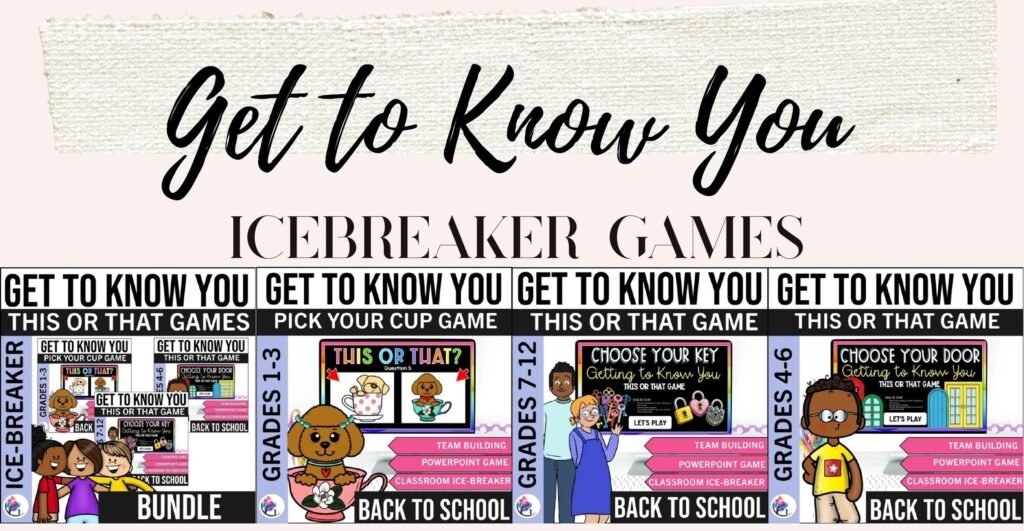
Try this in your next session: start with a choice-based warm-up before any team challenge. Our Get to Know You Activities Game includes three “This or That” PowerPoint games with age-appropriate versions for Grades 1–3, 4–6 and 7–12. Because students simply pick an option and share as much or as little as they like, it suits new classes, advisory, morning meetings and the first session of a counseling group. Ask students to notice who chose the same option as them, then use those pairs for the next activity so groupings feel natural rather than assigned.
The Core Skills Team Building Develops
Effective team building activities intentionally target key life and learning skills. When done well, they help students practice:
- Listening and communication
- Problem-solving and flexible thinking
- Cooperation and shared responsibility
- Empathy, kindness and respect
- Emotional awareness and regulation
- Accountability and decision-making
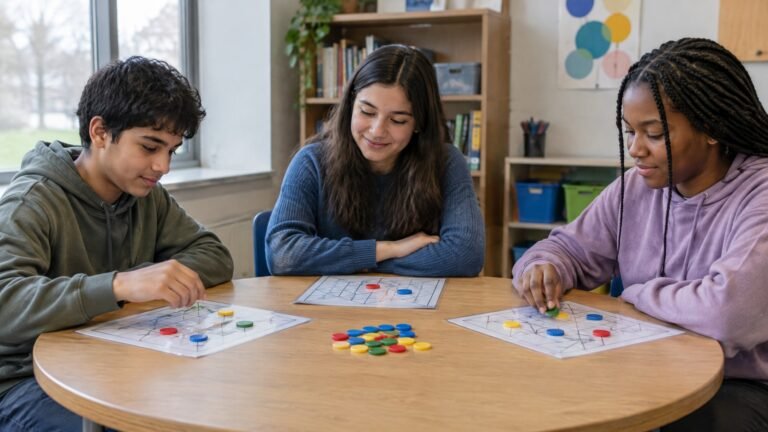
Structure is what turns a fun game into skill practice. A review of cooperative learning research (Gillies, 2016) notes that placing students in groups does not by itself produce cooperation. Groups work better when tasks build in shared goals, individual responsibility, encouragement of one another, explicitly taught social skills, and time to reflect on how the group worked together. The same review describes a meta-analysis of 148 studies in which cooperative goal structures were associated with higher achievement and more positive peer relationships among early adolescents than competitive or individualistic ones.
In practice, that might look like giving each student a role card (reader, recorder, encourager, checker) and naming the skill before you begin: “Today our team skill is building on each other’s ideas. Listen for someone saying, ‘Yes, and…’” Many of the same skills underpin friendship, which we explore in our friendship skills activities guide.
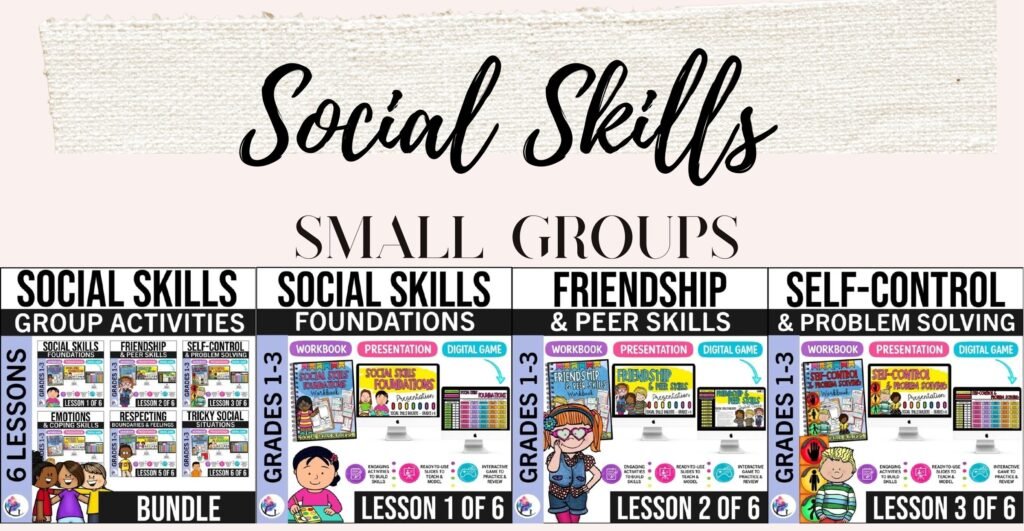
From our counseling room to yours: if you want to teach these skills in a structured sequence, our Social Skills Activities, Games & Worksheets bundle offers six complete lessons covering listening, conversation, friendship, group behavior and more. Each lesson includes a PowerPoint presentation, workbook pages, discussion and reflection tasks, and an interactive game, so it works well for small group counseling, SEL classes and intervention programs. Teach one skill explicitly, then use a team challenge in the next session so students can practice it with peers.
Practical Team Building Activities for Busy School Staff
School professionals are stretched thin, so team building needs to be effective and realistic. These principles help it fit into real school settings:
- Use short, structured activities that fit into existing lessons or counseling sessions
- Choose activities with clear roles so every student can participate
- Embed reflection questions to deepen learning
- Focus on collaboration rather than speed or competition
- Repeat activities to build familiarity and confidence
The quick activities below need few materials and can be adapted for most grade levels.
| Activity | How it works | Skill practiced | Minutes |
|---|---|---|---|
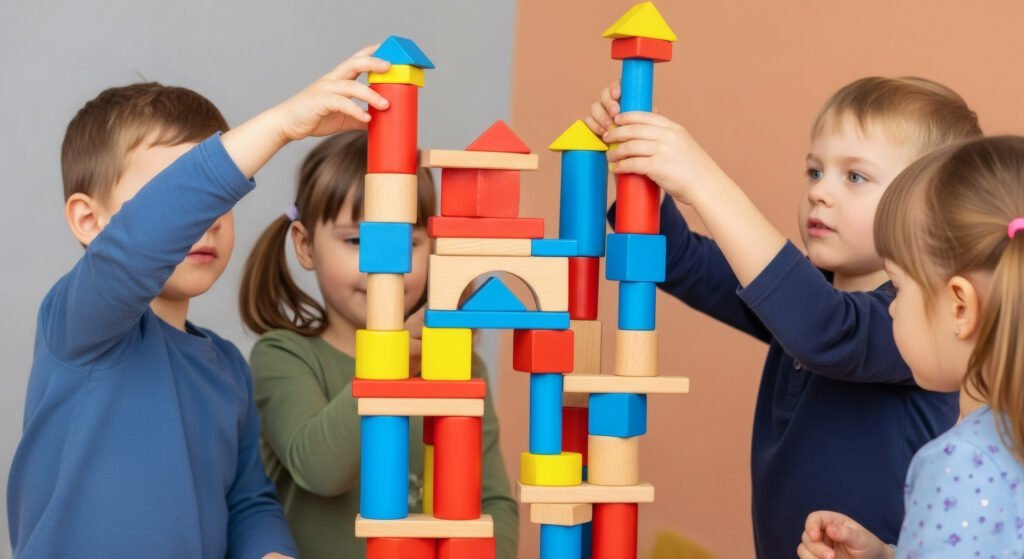
| Build It Together | Small groups build the tallest stable tower they can from blocks or paper, with each person holding a role. | Cooperation, shared responsibility | 10–15 |
| Story Chain | Each student adds one sentence to a group story, building on the sentence before. | Listening, flexible thinking | 5–10 |
| Common Ground | Pairs find three things they have in common and one thing that is different, then share with the group. | Communication, belonging | 5–10 |
| Silent Line-Up | Without talking, the group lines up by birthday month or another neutral detail using gestures only. | Nonverbal communication, problem-solving | 5–10 |
| Team Mission Debrief | After any challenge, the group answers three reflection questions about how they worked together. | Reflection, accountability | 5 |
Want more ready-to-use options? Browse our team building resources or try the Teamwork & Collaboration Lesson for a structured group challenge.
Try this in your classroom: before Build It Together, name the team skill and give a sentence starter for it, such as “Can we try your idea next?” or “What do you think we should do?” Halfway through, pause and ask each group to share one moment when someone used it. Students learn that how the team works matters as much as the height of the tower.
Using Digital Games to Build Teamwork and SEL Skills
Digital team building activities can be especially helpful in busy schools because they reduce prep time, offer a consistent structure, engage students visually, and work in whole-class, small-group or virtual settings. When students are working toward a shared goal, such as solving a series of clues to “escape” a challenge, cooperation has a clear purpose and conversation flows more naturally.
To keep digital games collaborative rather than competitive, have groups share one device or screen, rotate who controls it, and require the group to agree on each answer before moving on. Follow every game with a short debrief so the focus stays on teamwork, not on which group finished first.
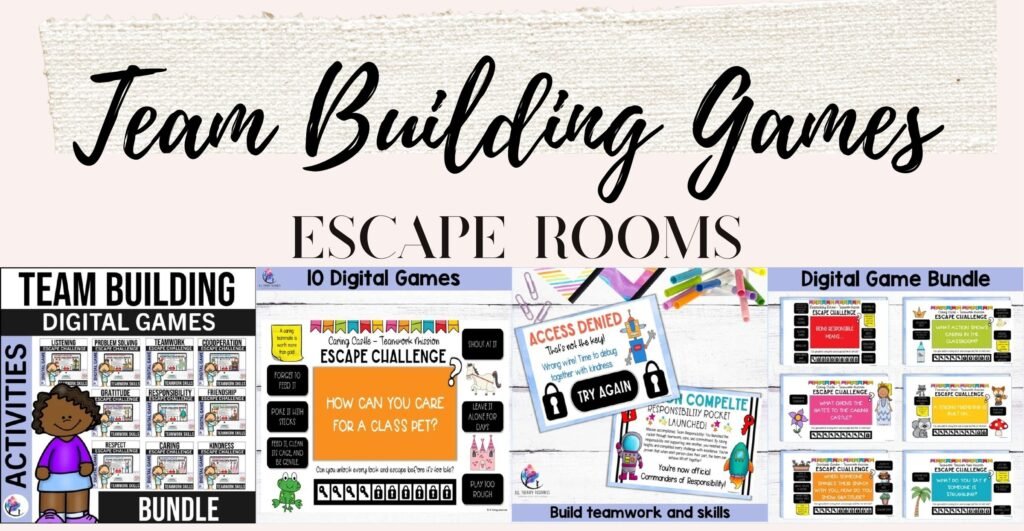
Try this in your next session: our Team Building Activities Digital Escape Rooms Bundle includes 10 SEL-aligned digital games, each focused on a different skill, including listening, problem-solving, teamwork, cooperation, gratitude, responsibility, friendship, respect, compassion and kindness. It is designed with middle school students in mind and suits advisory, morning meetings, SEL lessons and small group counseling. Choose the game that matches the skill your group needs most, and use one game per session across a term so students build familiarity with the format and can focus on working together.
Building Team Culture Across Grade Levels
Team building is not a one-time event. It is a process that grows with students. In the early elementary years, it often focuses on basic cooperation: taking turns, sharing materials and using kind words, with plenty of visuals and short, repeated practice. Upper elementary and middle school students can handle more complex challenges involving group decisions, fairness and disagreement. As students mature, team building expands into leadership, responsibility and empathy for different perspectives.
What remains constant is the need for:
- Consistent language around teamwork across classrooms and counseling
- Safe opportunities to practice collaboration
- Adults modeling respect and inclusion
- Reflection on what worked and what didn’t
When schools commit to ongoing team building, students have more chances to feel connected, not only to their peers but to the school itself.
Debriefing: Where the Learning Happens
The most valuable part of a team building activity is often the conversation afterward. Reflecting on how the group worked together (what Gillies calls group processing) helps students notice their own contributions and carry the skill into the next group task.
Keep debriefs short and predictable. Three questions are usually enough:
- What helped our team work well today?
- What was tricky, and how did we handle it?
- What is one thing we will try next time?
Keep feedback specific and behavior-based. Rather than “Great teamwork, everyone,” try, “I noticed Sam asked for Mia’s idea before the group decided. That helped everyone feel included.” Specific feedback gives students a skill they can repeat. Picture a small group that rarely speaks to one another: over several sessions, short challenges followed by the same three questions give them a shared language for noticing what is going well.
Frequently Asked Questions
Why are team building activities important in schools?
They give students structured practice with social-emotional skills such as listening, cooperation and problem-solving, and they support peer relationships and a sense of belonging. School connectedness is associated with better mental health and fewer health risk behaviors among students.
How can team building be trauma-informed?
Prioritize safety, predictability and choice. Explain the activity before it starts, avoid competitive or high-pressure formats, let students observe before joining, avoid activities that require personal disclosure or unwanted physical contact, and always include a calm debrief.
Can team building activities be used in counseling groups?
Yes. Short cooperative challenges are a natural fit for small group counseling, especially early in a group when members are building trust. Our guide to planning a small group counseling curriculum shows how to sequence them across sessions.
What age groups are team building activities suitable for?
Team building can be adapted from kindergarten through high school. Younger students benefit from simple, visual, hands-on tasks, while older students can take on more complex challenges, leadership roles and deeper reflection.
Looking for practical, ready-to-use resources to support your team building and classroom community work? The All Therapy Resources Membership provides access to a growing collection of thoughtfully developed counseling and SEL activities, interactive games, and therapeutic tools designed to save preparation time while supporting meaningful, skill-focused learning.