

There is something incredibly powerful about watching a child realize:
“Wait… I can actually do this.”
You see it in the child who usually avoids writing tasks but suddenly stays engaged for twenty minutes during a directed drawing activity. You see it in the student who struggles with confidence but proudly carries their finished drawing across the room to show someone. You see it in the child who normally becomes overwhelmed by multi-step tasks but slowly begins following directions, organizing information, and experiencing success one step at a time.
And honestly, I think directed drawing activities are often misunderstood and understated.
From the outside, they can appear very simple. Sometimes people view them as filler activities, “fun art tasks,” or quiet time activities. But underneath those step-by-step drawings, an enormous amount of neurological, motor, cognitive, speech, and emotional development is taking place simultaneously.
As Occupational Therapists and Speech Therapists know, children learn best when multiple systems in the brain and body are working together in meaningful and engaging ways. Directed drawing naturally combines visual processing, motor planning, sequencing, attention, language processing, executive functioning, bilateral coordination, and emotional regulation all within one structured activity.
That is what makes these activities so powerful clinically.
Because children are not simply drawing.
They are building foundational developmental skills through emotionally safe and motivating experiences.
The Brain Is Coordinating Multiple Systems at Once During Directed Drawing
One of the reasons directed drawing activities are so beneficial from both an Occupational Therapy and Speech Therapy perspective is because they require children to integrate multiple areas of functioning simultaneously.
As children follow step-by-step drawing instructions, the brain is constantly processing visual input, organizing motor output, maintaining attention, sequencing information, monitoring spatial awareness, recalling directions, and adjusting movements in real time. This process heavily engages visual motor integration skills, which refers to the brain’s ability to coordinate visual information with motor responses.
Visual motor integration is foundational for so many everyday childhood tasks. Research consistently highlights the importance of visual motor skills for handwriting, copying, spatial organization, classroom participation, self-care tasks, and overall academic performance. Difficulties in visual motor integration can often impact a child’s ability to form letters accurately, maintain spacing, organize written work, or visually track information effectively.
What is important to remember, however, is that children struggling with these skills do not always present in obvious ways.
Sometimes the child appears distracted.
Sometimes they rush.
Sometimes they avoid the task completely.
Sometimes they become perfectionistic or emotionally reactive.
Many children begin believing they are “bad at school” long before adults recognize that the task itself may be neurologically demanding for them.
Directed drawing creates opportunities for children to strengthen these visual motor pathways in ways that feel far less threatening than traditional academic tasks often do.
Fine Motor Development Is Deeply Connected to Functional Participation
Fine motor development is frequently oversimplified into conversations about pencil grasp alone.
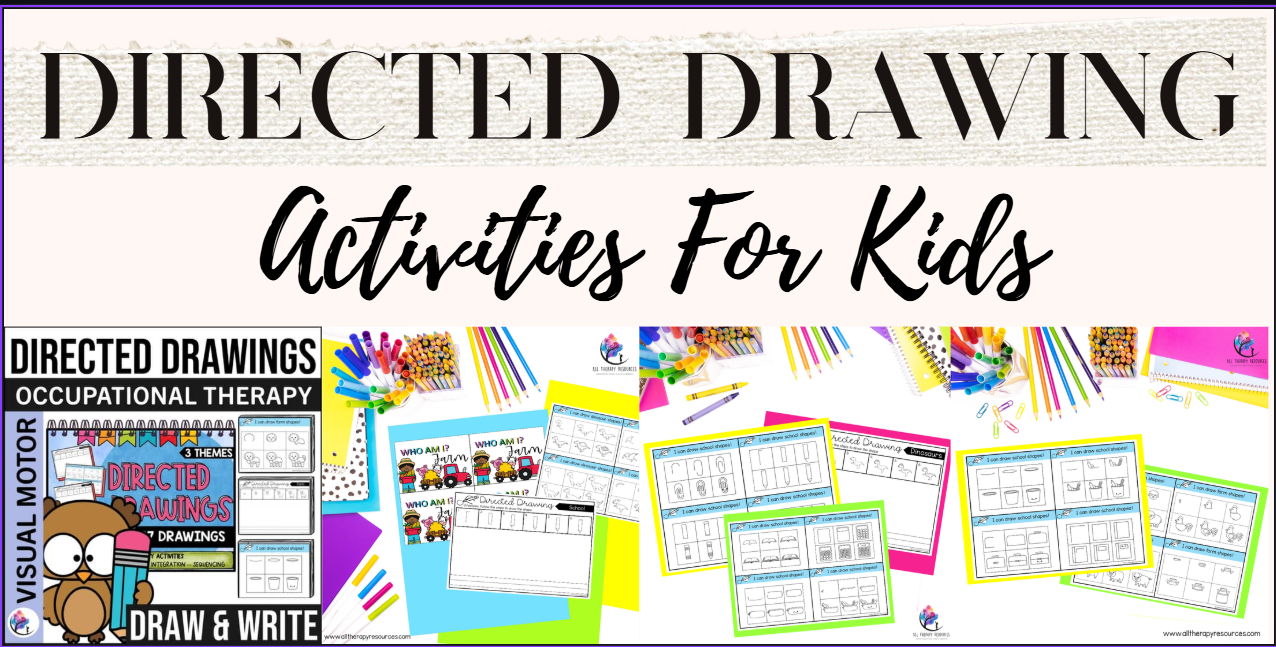
But from an Occupational Therapy perspective, fine motor skills involve a much broader range of developmental foundations. Children require adequate hand strength, intrinsic muscle development, bilateral coordination, wrist stability, finger isolation, motor planning, and endurance in order to participate successfully in classroom and everyday functional tasks.
Directed drawing activities naturally encourage repeated practice of these skills through purposeful movement.
As children create shapes, lines, curves, and details, they are strengthening the small muscles within the hands while also improving coordination and control. These repeated motor experiences support the development of more refined and efficient hand movements over time.
What I love about directed drawing from a therapeutic perspective is that the practice feels meaningful.
Children are often far more motivated to participate in fine motor activities when they feel creative, achievable, and engaging. This is especially important for children who have already developed frustration or avoidance around handwriting and table-top tasks. Motivation and emotional safety play a huge role in neurological learning and skill acquisition.
Research within pediatric Occupational Therapy consistently supports the idea that children learn motor skills most effectively through meaningful and motivating activities rather than isolated repetitive drills alone. When children experience success during motor tasks, the nervous system becomes more regulated and more open to continued learning.
That emotional component matters far more than many people realize.
Sequencing Skills Support Both Academic Learning and Executive Functioning
Another reason directed drawing activities are so clinically valuable is because they strongly support sequencing skills.
Sequencing refers to the ability to organize information and actions in a logical order. This skill is closely connected to executive functioning, motor planning, language processing, reading comprehension, storytelling, and task completion.
Children who struggle with sequencing often become overwhelmed by tasks involving multiple steps because the brain has difficulty organizing and holding information efficiently. You may notice children skipping steps, becoming disorganized, losing track of directions, or shutting down during tasks that feel cognitively demanding.
Directed drawing activities provide structured opportunities to practice sequencing in highly supportive ways.
Children learn to slow down and process…
first this,
then this,
then this.
That predictable structure can be incredibly regulating for many children, particularly those who experience anxiety, executive functioning challenges, ADHD, or neurodevelopmental differences.
And honestly, there is something neurologically calming about predictable progression. The nervous system often feels safer when children understand what is expected and can anticipate what comes next.
Speech and Language Development Is Embedded Throughout the Activity
One thing I think is often overlooked is just how language-rich directed drawing activities can become.
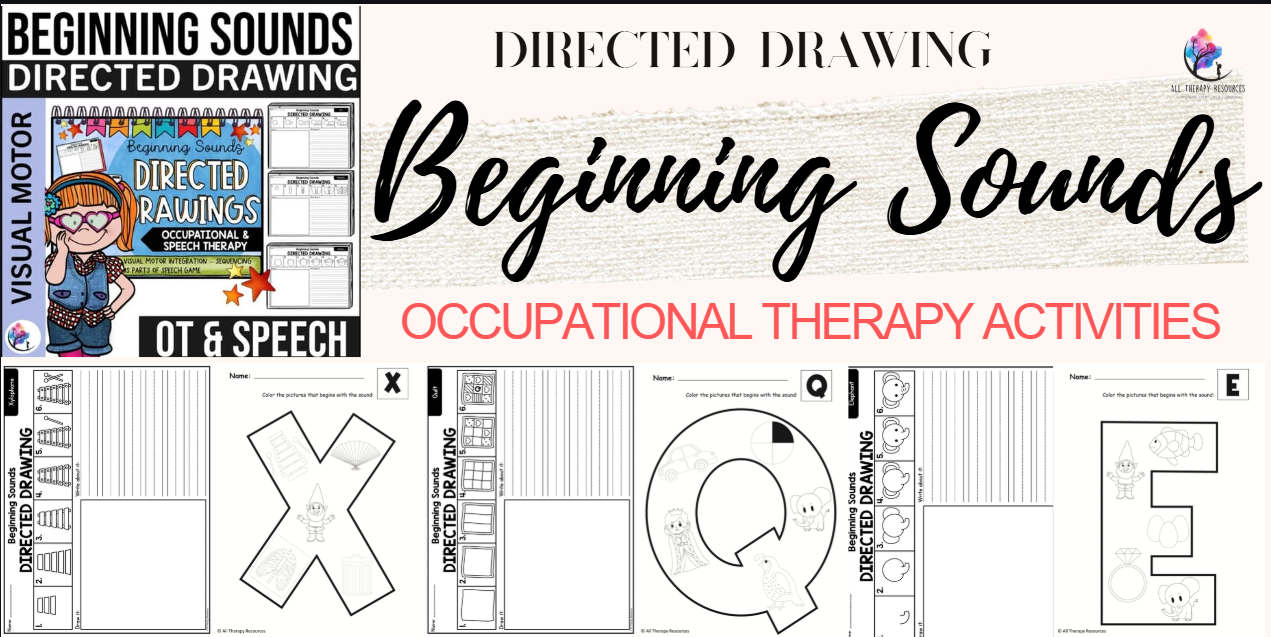
From a Speech Therapy perspective, these activities provide meaningful opportunities to target receptive language, expressive language, listening comprehension, vocabulary development, sequencing language, and spatial concepts in naturalistic ways.
Children are constantly processing verbal directions such as:
“Draw a circle above the square.”
“Add two small lines beside the triangle.”
“Make the line curve downward.”
These instructions require children to interpret and respond to complex language while simultaneously coordinating motor actions. That level of cognitive-linguistic integration is significant.
Directed drawing activities also naturally support expressive language development as children describe their drawings, explain steps, retell processes, ask questions, and engage in conversational interaction around the activity itself.
What is particularly beautiful about this process is that many children communicate more freely when their nervous system feels regulated and their hands are engaged in purposeful activity.
Speech-language pathologists often recognize that language development is strengthened within meaningful, socially connected, and emotionally safe interactions rather than isolated drill-based learning alone.
Directed drawing provides exactly that kind of integrated therapeutic opportunity.
Emotional Regulation and Confidence Are Quietly Developing Too
One of the most meaningful parts of directed drawing activities has very little to do with the final picture itself.
It is the emotional experience children are having while they create.
Many children today move through environments that feel fast, overstimulating, demanding, and performance-focused. Some children carry enormous anxiety around getting things “right.” Others become overwhelmed by open-ended tasks because unpredictability feels emotionally unsafe.
Directed drawing offers something different.
It provides structure without excessive pressure.
Creativity without chaos.
Predictability without rigidity.
Children know there are steps to follow, but they are also given room to create, adjust, and experience success gradually.
Many children desperately need more opportunities to feel successful in calm and manageable ways.
Not perfect.
Not exceptional.
Just capable.
That feeling matters deeply for nervous system regulation and self-esteem development.
Research in child development and educational psychology shows that confidence is strengthened through experiences of mastery and competence. Small achievable successes help reinforce a child’s willingness to persist, tolerate frustration, and engage in future learning experiences.
This is especially important for children who have already internalized beliefs such as…
“I’m bad at drawing.”
“I can’t do this.”
“I always mess things up.”
Sometimes one successful experience can begin softening those internal narratives.
Mistakes Become Part of the Learning Process
Something I personally love about directed drawing activities is that they gently normalize imperfection.
A line may look different.
A shape may not be exact.
A step may need adjusting.
That is where important emotional learning begins happening.
Children start discovering that mistakes do not have to become emergencies.
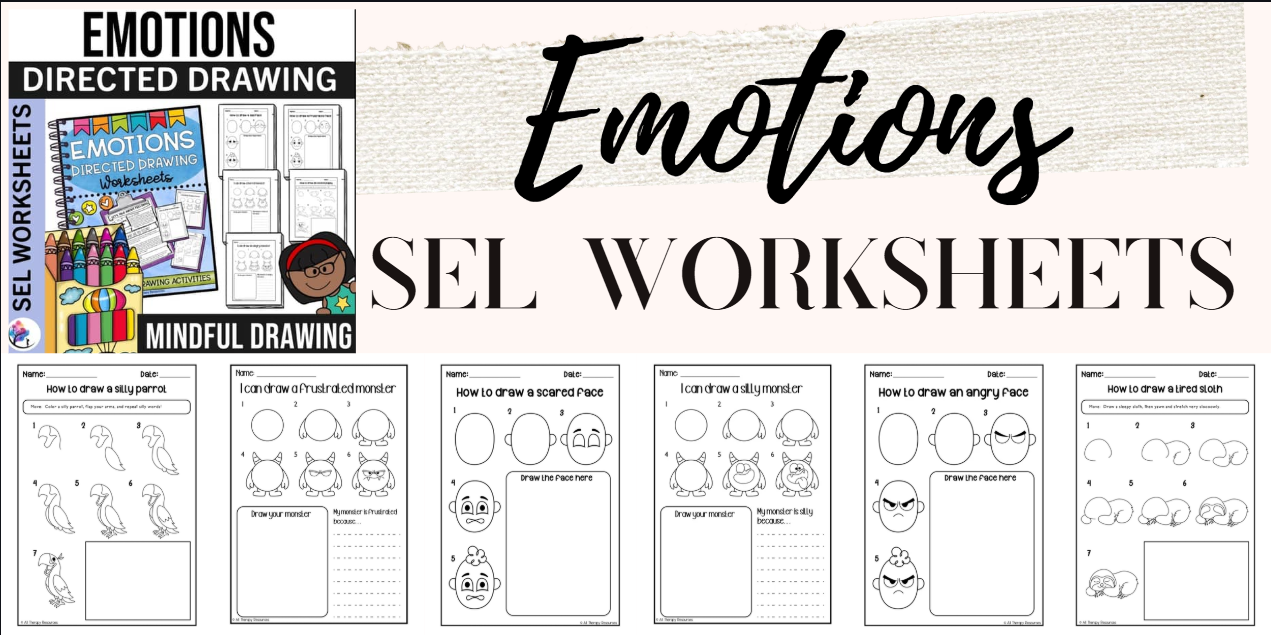
For perfectionistic children especially, this can be incredibly therapeutic. Directed drawing shifts the focus away from flawless performance and toward process, flexibility, and persistence.
That subtle emotional shift matters.
Because children who can tolerate small mistakes during manageable activities are often gradually building resilience for larger challenges later too.
Real-World Insights
Children often reveal far more during creative activities than adults initially realize.
Some children grip the pencil so tightly because they are terrified of getting it wrong.
Some rush through because slowing down feels uncomfortable emotionally.
Some erase repeatedly because mistakes feel deeply unsafe to them.
Some completely light up the moment they realize they are capable of creating something independently.
And honestly, those moments matter.
Because underneath the drawing activity is often a child slowly rebuilding confidence in themselves.
That is one of the reasons we care so deeply about creating directed drawing activities that feel structured, supportive, engaging, and developmentally appropriate. Not because every child needs to become an artist, but because children deserve opportunities to strengthen foundational developmental skills while also experiencing calm, confidence, and success along the way.
Remember
Directed drawing activities support far more than creativity alone.
These activities strengthen visual motor integration, sequencing, motor planning, fine motor development, receptive and expressive language, executive functioning, attention, emotional regulation, and confidence-building skills in highly integrated and meaningful ways.
Some of the most powerful therapeutic learning experiences happen when children simply feel safe enough to participate, explore, and slowly begin believing: “Maybe I actually can do this.”
Continue Building Skills Through Therapy Activities
If you are looking for engaging directed drawing activities that support more than just art skills, our Occupational Therapy and Speech Therapy resources are designed to strengthen fine motor development, visual motor integration, sequencing, attention, expressive language, confidence, and emotional engagement through meaningful hands-on learning experiences.
At All Therapy Resources, we believe some of the most powerful therapeutic learning happens when children feel successful, connected, and safe enough to participate without fear of getting things “wrong.”
Inside the All Therapy Resources Membership, you’ll find a growing collection of:
• Directed drawing activities
• Fine motor and visual perception resources
• Speech and language supports
• OT therapy activities
• Multi-sensory learning experiences
• Emotional regulation and confidence-building supports
• Play-based and developmentally supportive learning materials
All of the resources discussed throughout this article are already included inside the membership, with new therapy and educational resources added regularly to support real-world clinical and classroom practice.